ASTM A193 B8 vs B8M Studs: 304 vs 316 Stainless Pressure Bolting
ASTM A193 B8 vs B8M is an important material comparison for piping buyers, EPC procurement teams, equipment manufacturers, and maintenance departments sourcing stainless stud bolts for pressure vessels, valves, flanges, fittings, and other demanding industrial assemblies. Grade B8 is based on Type 304 austenitic stainless steel, while Grade B8M is based on Type 316 stainless steel. The addition of molybdenum in Type 316 generally provides improved resistance to localized corrosion in many chloride-containing environments, but material selection still depends on the actual service conditions.
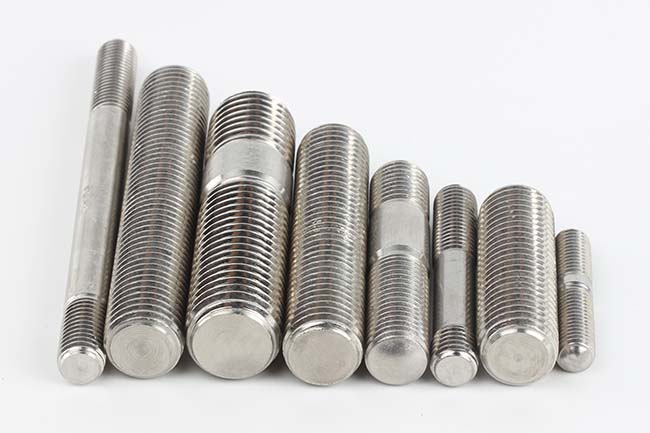
ASTM A193/A193M-26 is the current ASTM specification for alloy-steel and stainless-steel bolting used for high-temperature or high-pressure service and other special-purpose applications. The specification covers bolting materials and components including studs and stud bolts. Buyers should treat the grade, class, dimensions, thread, matching nuts, surface condition, inspection, and documentation as separate purchasing requirements rather than assuming that “B8” or “B8M” alone defines the complete finished fastener.
Flybear supplies standard, special, and custom industrial fasteners for OEM, EPC, maintenance, and distributor requirements. Buyers comparing stainless pressure bolting can review the industrial stud range and provide the required ASTM specification, grade and class, thread, dimensions, quantity, application, and inspection requirements for technical review.
ASTM A193 B8 vs B8M: Quick Comparison
| Selection Factor | ASTM A193 B8 | ASTM A193 B8M |
|---|---|---|
| Stainless Type | Type 304 austenitic stainless steel | Type 316 austenitic stainless steel |
| Key Material Difference | Chromium-nickel stainless composition | Molybdenum-bearing chromium-nickel stainless composition |
| Corrosion Selection | Suitable for many general industrial corrosion environments when engineering requirements permit | Often evaluated where greater resistance to localized corrosion in chloride-containing environments is required |
| Mechanical Condition | Available in specified ASTM classes and treatment conditions | Available in specified ASTM classes and treatment conditions |
| Typical Applications | Valves, flanges, equipment, machinery and general stainless pressure bolting | Chemical, process, marine-adjacent and other applications where Type 316 chemistry is specified |
| Automatic Substitution? | No. Grade, class, dimensions, environment, mating components and project specifications must be verified before substitution. | |
What Is ASTM A193 Grade B8?
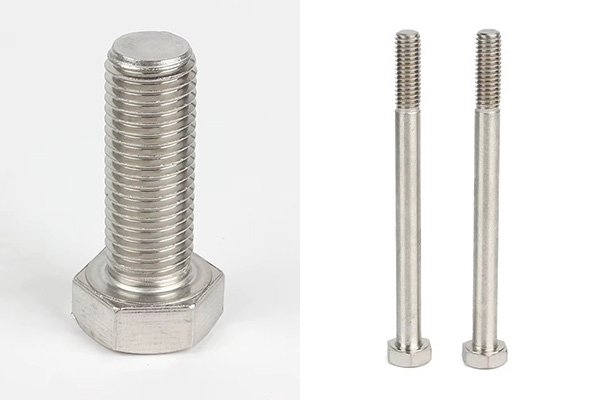
ASTM A193 Grade B8 is an austenitic stainless bolting grade associated with Type 304 stainless steel. It is used for applicable bolts, studs, stud bolts, and other bolting components within the scope of ASTM A193/A193M.
Type 304 is widely used in industrial equipment because it provides a useful combination of corrosion resistance, fabrication characteristics, and mechanical performance. However, B8 should not be described simply as an ordinary commercial 304 stainless rod. ASTM A193 controls additional requirements related to chemistry, treatment condition, mechanical properties, testing, and product conformity.
For purchasing purposes, buyers should specify the full grade and required class rather than writing only “304 stud bolt.” A general-purpose 304 threaded rod is not automatically equivalent to an ASTM A193 B8 pressure-bolting component.
What Is ASTM A193 Grade B8M?
ASTM A193 Grade B8M is an austenitic stainless bolting grade associated with Type 316 stainless steel. The “M” grade should not be interpreted as merely a commercial naming variation of B8; it represents a different material chemistry under the ASTM specification.
Type 316 contains molybdenum, which generally improves resistance to pitting and crevice corrosion compared with Type 304 in many chloride-containing environments. This is one reason B8M stud bolts are often evaluated for process equipment, chemical service, outdoor installations, and applications where the environmental conditions are more demanding.
This does not mean B8M is suitable for every chloride, seawater, chemical, or high-temperature environment. Concentration, temperature, oxygen level, crevices, deposits, cleaning chemicals, and galvanic interactions can all affect corrosion performance. Severe environments may require another stainless grade or a more corrosion-resistant alloy.
304 vs 316 Studs: Corrosion Is the Main Material Difference
The most common reason for comparing 304 vs 316 studs is corrosion resistance. Both B8 and B8M are austenitic stainless bolting grades, but B8M’s Type 316 chemistry gives it an advantage in many environments where localized corrosion is a concern.
When reviewing the application, consider:
- Chloride concentration.
- Continuous or intermittent moisture exposure.
- Outdoor, coastal, or marine-adjacent conditions.
- Process chemicals and cleaning agents.
- Operating and cleaning temperatures.
- Crevices around flanges, washers, and nuts.
- Contact with dissimilar metals.
- Whether corrosion deposits can remain trapped around the joint.
If the environment is relatively mild and the equipment specification permits Type 304 bolting, B8 can be an appropriate choice. If the specification requires Type 316 chemistry or the service environment justifies greater localized-corrosion resistance, B8M may be the better candidate. The final choice should follow the equipment design, applicable code, and owner or EPC specification.
Class 1 vs Class 2 Is Separate from B8 vs B8M
Another major sourcing issue is the ASTM class or material condition. Buyers should not assume that all B8 stud bolts or all B8M stud bolts have the same mechanical properties.
Within ASTM A193, austenitic stainless grades can be supplied in different specified conditions. Class 1 products are solution treated, while Class 2 products involve solution treatment followed by strain hardening. The resulting mechanical requirements differ, and Class 2 requirements can also vary with diameter.
This means two RFQs reading “ASTM A193 B8M stud bolt” can still describe different products if one project requires Class 1 and another requires a strain-hardened class.
A controlled RFQ should therefore identify:
- ASTM A193/A193M grade.
- Required class or condition.
- Stud diameter.
- Thread and finished length.
- Any project-specific mechanical requirements.
Do not apply one universal tensile or yield value to all B8 or B8M products without checking the current ASTM tables for the specified grade, class, and diameter.
Mechanical Strength Should Not Be Chosen from Alloy Name Alone
Buyers sometimes assume that 316 automatically provides higher mechanical strength because it is often considered the more corrosion-resistant stainless option. That is not a reliable selection method.
The mechanical properties of ASTM A193 stainless bolting depend on grade, class, treatment condition, diameter, and the specific requirements of the standard. Corrosion alloy selection and mechanical strength selection should therefore be treated as related but separate engineering decisions.
For a flange or pressure-equipment joint, confirm that the selected B8 or B8M class meets the design requirement before changing material for corrosion reasons.
Thread and Stud Geometry Still Need Separate Specifications
ASTM A193 primarily controls bolting material and mechanical requirements. It does not replace the need to define the finished stud configuration.
An RFQ for stainless stud bolts should identify:
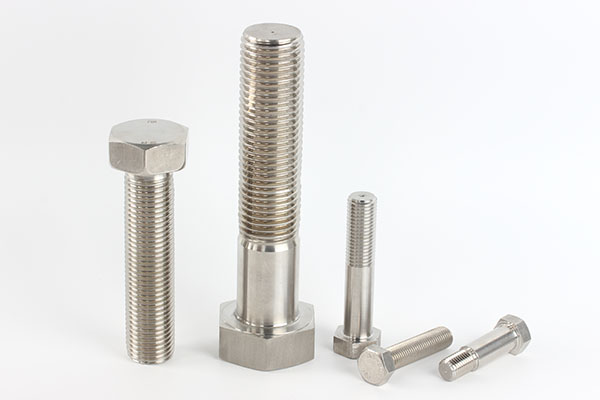
- Continuous-thread, flange-bolting, double-end, or drawing-specific configuration.
- Nominal diameter.
- UNC, UNF, metric, or other specified thread.
- Pitch or threads per inch.
- Thread class or tolerance where required.
- Finished stud length.
- End preparation.
For inch-series stud geometry, an applicable ASME fastener standard or project drawing may be used in addition to ASTM A193. Buyers should not assume that two B8M studs from different suppliers are dimensionally identical if the dimensional requirement was omitted from the inquiry.
Matching Nuts for B8 and B8M Stud Bolts
Pressure-bolting assemblies should specify the mating nuts rather than leaving them for the supplier to select by assumption. ASTM A194/A194M-26 is the current ASTM specification covering carbon-steel, alloy-steel, and stainless-steel nuts for high-pressure or high-temperature service within its scope.
The required nut grade should follow the piping specification, equipment standard, or engineering requirement. Buyers should not infer that any stainless nut with the correct nominal thread is automatically compatible with the stud.
Confirm:
- Nut standard and grade.
- Thread series and class.
- Number of nuts per stud.
- Material condition.
- Surface treatment or lubricant.
- Proof-load or other inspection requirements.
Galling Risk in Stainless Stud Bolt Assemblies
Austenitic stainless threaded assemblies can be susceptible to galling, a form of adhesive wear that may occur when mating metal surfaces slide under pressure. In severe cases, threads can seize during tightening or removal.
Galling risk depends on several variables rather than simply whether the stud is B8 or B8M. Important factors include thread finish, material pairing, surface cleanliness, lubrication, installation speed, tightening load, and repeated assembly.
For stainless pressure bolting, buyers and assembly teams should follow the approved project lubrication and tightening procedure. Do not introduce a lubricant, anti-seize compound, or coating without checking its compatibility with the process fluid, operating temperature, torque procedure, and customer specification.
Should Stainless Stud Bolts Be Coated?
Stainless stud bolts are often used without a heavy protective coating because corrosion resistance comes primarily from the stainless alloy itself. However, particular projects may specify surface treatments, lubricants, coatings, or identification finishes for assembly, friction control, anti-galling behavior, or environmental reasons.
A coating should not be used to convert an unsuitable base stainless grade into the correct corrosion-resistant material. If Type 316 chemistry is required by the service specification, applying a coating to B8 does not make it equivalent to B8M.
Where a coating or lubricant is specified, review its effect on:
- Thread fit.
- Coefficient of friction.
- Torque-to-tension relationship.
- Operating temperature.
- Chemical compatibility.
- Inspection and documentation.
ASTM A193 B8 vs B8M Application Matrix
| Application Condition | Grade to Evaluate | Selection Reason |
|---|---|---|
| General stainless industrial bolting in a relatively mild environment | B8 | Type 304 chemistry may satisfy the project when corrosion conditions are not especially aggressive |
| Specification explicitly requires Type 316 stainless | B8M | B8M corresponds to the Type 316 stainless bolting grade |
| Chloride-containing process or outdoor environment | B8M / Engineering Review | Type 316 generally offers improved localized-corrosion resistance, but actual service severity must be evaluated |
| Severe marine or aggressive chemical service | Materials Engineering Review | Neither B8 nor B8M should be assumed suitable without checking the actual corrosion environment |
| Higher mechanical requirement | Verify ASTM Class | Mechanical properties depend on class, condition, diameter, and grade rather than 304 vs 316 alone |
| Existing pressure-equipment replacement | Match Approved Specification | Do not change B8 to B8M or B8M to B8 without engineering and project approval |
Quality Control for B8 and B8M Stud Bolts
Quality control should verify both stainless material identity and finished fastener requirements. Depending on the project, inspection can include material certificate review, spectrometric material verification, dimensions, thread gauging, tensile or hardness testing as applicable, surface inspection, marking, and traceability.
Flybear’s quality control process supports dimensional and Go/No-Go thread inspection, material verification, hardness and tensile testing, optical inspection, coating evaluation when specified, and packaging/document review according to agreed order requirements.
For pressure-service projects, buyers should identify required material test reports and traceability before quotation. Documentation requirements can influence material sourcing, production control, inspection, and order cost.
Common Procurement Risks
- Ordering “304 studs” instead of ASTM A193 B8. Commercial 304 threaded material is not automatically pressure-bolting grade.
- Ordering B8M without specifying the class. Mechanical requirements can differ significantly between treatment conditions.
- Assuming B8M is always necessary because it is 316. Material choice should follow the actual corrosion environment and project specification.
- Assuming B8 and B8M are interchangeable. Their chemistry and corrosion behavior differ, and substitutions require engineering approval.
- Ignoring stud dimensions and thread class. ASTM A193 does not eliminate the need for a complete finished-part specification.
- Leaving matching nuts unspecified. Nut grade, thread, surface condition, and documentation should be controlled with the stud assembly.
- Ignoring galling during assembly planning. Stainless thread behavior depends on materials, surface condition, lubrication, and installation procedure.
- Requesting certificates after production. Material and traceability requirements should be included in the original RFQ.
RFQ Checklist for ASTM A193 B8 vs B8M Studs
To obtain a technically comparable quotation from a stud bolt supplier, provide:
- ASTM A193/A193M edition required by the project.
- Grade B8 or B8M.
- Required ASTM class or condition.
- Applicable dimensional standard or approved drawing.
- Stud configuration.
- Diameter, thread series, pitch or TPI, and thread class.
- Finished length and tolerance.
- Matching nut specification, grade, and quantity.
- Surface treatment, coating, lubricant, or passivation requirement where applicable.
- Order quantity.
- Equipment or piping application.
- Operating temperature and corrosion environment.
- Critical chemical or chloride exposure information.
- Required material certificates, mechanical test reports, marking, and traceability.
- Dimensional, thread, material, and surface inspection requirements.
If the project requires non-standard lengths, special thread combinations, unusual end geometry, or another drawing-controlled stainless stud, Flybear can also support custom fastener requirements based on the approved technical specification.
FAQ
What is the main difference between ASTM A193 B8 and B8M?
B8 is based on Type 304 austenitic stainless steel, while B8M is based on Type 316 stainless steel. Type 316 contains molybdenum and generally offers improved resistance to localized corrosion in many chloride-containing environments.
Is B8M stronger than B8?
Not automatically. Mechanical performance depends on ASTM class, treatment condition, product diameter, and grade. Material selection for corrosion resistance should not be confused with selection of the required mechanical class.
Can B8 replace B8M?
Substitution should not be assumed. B8 and B8M have different material chemistry and corrosion characteristics. Any substitution should be checked against the service environment, design specification, and purchaser approval requirements.
What does Class 2 mean for B8 or B8M studs?
Class 2 austenitic stainless bolting is supplied in a solution-treated and strain-hardened condition under ASTM A193. Its mechanical requirements depend on the applicable grade and diameter, so the current ASTM tables should be used for specification and inspection.
Why can stainless stud bolts gall?
Galling is adhesive wear that can develop between loaded sliding metal surfaces. Stainless threaded assemblies can be susceptible depending on material pairing, finish, cleanliness, lubrication, installation speed, and tightening conditions.
What information should buyers send for B8 or B8M stud bolt quotations?
Provide the ASTM grade and class, dimensional standard or drawing, diameter and thread, length, matching nuts, surface condition, quantity, service environment, and required inspection, marking, traceability, and certificate documents.
Conclusion
The ASTM A193 B8 vs B8M decision is primarily a comparison between Type 304 and Type 316 stainless pressure bolting, but corrosion chemistry is only one part of the specification. Buyers also need to identify the ASTM class, stud geometry, thread, matching nuts, surface condition, mechanical requirements, operating environment, inspection, and documentation.
B8 is suitable for many industrial applications where Type 304 stainless meets the project requirements, while B8M is commonly evaluated where Type 316 chemistry provides a more appropriate corrosion-resistance profile. Neither grade should be substituted solely on price, availability, or the assumption that all stainless pressure bolting is equivalent.
For standard or project-specific B8 and B8M studs, Flybear can support technical requirement review and quotation. Send your standard or drawing, grade and class, size and thread, finished length, surface requirements, matching nuts, quantity, application, and inspection or certificate requirements through the Flybear contact page.