DIN 931 vs DIN 933 Hex Bolts: Partial Thread or Full Thread?
DIN 931 vs DIN 933 is primarily a comparison between a partial thread hex bolt and a full thread hex bolt, but industrial buyers should look beyond thread coverage before placing an order. Bolt diameter, length, property class, material, dimensional standard, thread tolerance, coating, joint design, and inspection requirements can all affect whether the selected fastener is correct for an assembly.
DIN 931 is traditionally associated with hexagon head bolts that have an unthreaded shank between the head and the threaded portion. DIN 933 is traditionally associated with hexagon head fasteners threaded up to or close to the head according to the applicable dimensional requirements. These legacy DIN descriptions remain familiar in industrial purchasing, but buyers working from new drawings should also check whether the project specifies the corresponding ISO standard family.
The practical question is therefore not simply, “Which bolt is better?” A better question is: “Does the joint need a controlled unthreaded grip section, or does it benefit from thread engagement over most of the bolt length?”
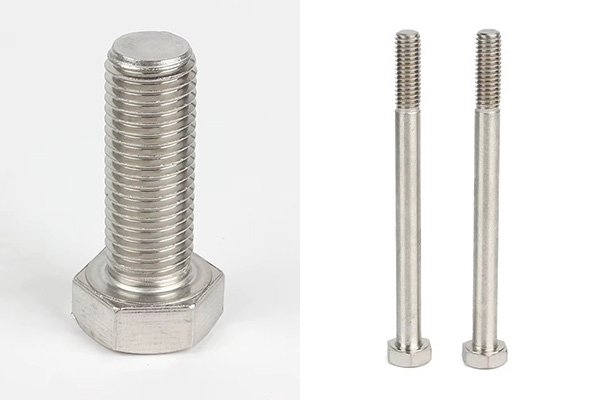
DIN 931 vs DIN 933: Main Differences
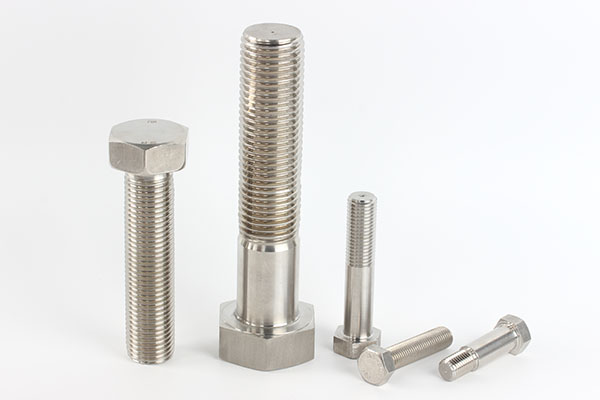
The most visible difference between these two types of DIN hex bolts is the amount of thread along the bolt body. DIN 931 has a defined unthreaded shank for applicable bolt lengths, while DIN 933 uses a fully threaded configuration according to the standard.
| Comparison Point | DIN 931 | DIN 933 |
|---|---|---|
| General configuration | Hex head bolt with partial thread and unthreaded shank | Hex head fastener with thread extending toward the head |
| Typical purchasing term | Partial thread hex bolt | Full thread hex bolt |
| Grip area | Can provide a smooth, full-diameter shank through part of the joint | Threads can extend through more of the clamped assembly |
| Adjustment flexibility | Thread engagement is limited by the specified thread length | Offers more flexibility where nut position varies along the bolt |
| Joint-design consideration | Often selected where the unthreaded section is intentionally positioned within the joint | Often selected where extended thread engagement is useful |
| Modern standard reference | Check the applicable ISO 4014 requirement when specified | Check the applicable ISO 4017 requirement when specified |
This table is a selection overview, not a dimensional interchangeability statement. A DIN bolt and an ISO bolt with the same nominal diameter and length should not automatically be treated as identical. Head dimensions, thread length, tolerances, product grade, and other dimensional details must be checked against the actual standard named on the drawing or purchase order.
How a Partial Thread Hex Bolt Works
A partial thread hex bolt contains both an unthreaded shank and a threaded end. When the dimensions are correctly selected, the smooth shank can pass through part of the clamped components while the nut engages the threaded section beyond the joint.
This configuration can be useful in assemblies where engineers want the full-diameter shank positioned through a hole or across a shear plane. Threads have a different geometry and effective cross-section from the smooth shank, so the location of the threaded portion can matter in mechanically loaded joints.
This does not mean that a partial thread bolt is automatically stronger than a full thread bolt. Joint strength depends on the complete design, including bolt property class, material, diameter, preload, loading direction, hole condition, clamped materials, nut engagement, and installation procedure. The correct thread configuration should follow the engineering drawing or validated joint design.
Partial thread bolts are commonly considered in machinery, construction equipment, rail assemblies, automotive systems, energy equipment, and general industrial structures where bolt grip length is an intentional part of the connection design.
When an Unthreaded Shank Can Be Useful
An unthreaded shank can provide a smooth bearing surface within accurately located holes. It can also help keep the threaded portion away from a specific interface when the designer does not want threads positioned there.
However, this benefit only exists if the bolt length and thread length are correctly matched to the joint thickness. If a partial thread bolt is too short, the nut may not obtain adequate thread engagement. If it is too long or the thread length is unsuitable, the unthreaded shank may interfere with tightening before the required clamp load is reached.
For this reason, procurement teams should provide the required bolt standard and length instead of asking a supplier to select thread length based only on photographs or general application descriptions.
How a Full Thread Hex Bolt Works
A full thread hex bolt provides thread along most of the usable bolt body according to its dimensional standard. This gives designers and assemblers greater flexibility in nut position, especially where clamped thickness varies or where a relatively short fastener is used.
Fully threaded bolts can be practical for brackets, equipment frames, machinery covers, mounting assemblies, and other industrial connections where an unthreaded grip section is not specifically required. They can also simplify purchasing in some applications because one threaded configuration may accommodate several similar grip thicknesses.
However, flexibility should not be confused with universal suitability. If a joint is specifically engineered around a smooth shank in a hole or across a shear plane, replacing the specified partial thread bolt with a fully threaded product can alter the joint geometry. Such substitutions should be reviewed by the responsible engineer.
The reverse is also true. A partial thread bolt should not automatically replace a fully threaded fastener. The smooth shank may prevent the nut from advancing far enough to clamp a thin assembly.
Why Bolt Thread Length Matters
Bolt thread length is one of the most important dimensions to verify when comparing DIN 931 and DIN 933. For a partially threaded fastener, the amount of threaded length is defined by the applicable standard and varies with nominal diameter and bolt length.
Buyers should therefore avoid specifying a DIN 931 bolt by diameter and overall length while assuming that any thread length is acceptable. A supplier needs the correct standard, nominal size, and length to determine the required geometry.
Several assembly problems can result from incorrect thread length:
- The nut may reach the end of the usable thread before the joint is fully clamped.
- The threaded portion may extend into an area intended for the smooth shank.
- The unthreaded section may interfere with washers, spacers, or thin components.
- The bolt may technically fit the hole but fail to match the engineering drawing.
- A replacement bolt may have the same diameter and overall length but a different grip configuration.
For replacement parts, maintenance projects, and imported equipment, these issues are particularly important. An old machine may be described using a legacy DIN designation while a new sourcing system lists the corresponding ISO product. Dimensional verification should be completed before changing the specified standard.
DIN 931 vs DIN 933 and Modern ISO Standards
Industrial fastener terminology often continues long after standards have evolved. DIN 931 and DIN 933 remain recognizable purchasing terms in international fastener markets, especially for existing machinery, spare parts, established bills of materials, and distributor catalogs.
For current engineering work, buyers should also recognize ISO 4014 and ISO 4017. ISO 4014 covers hexagon head bolts with a partially threaded configuration, while ISO 4017 covers hexagon head screws with a fully threaded configuration. DIN Media identifies legacy DIN 931 and DIN 933 documents as withdrawn and shows replacement paths into the corresponding ISO-based standards. ISO currently publishes ISO 4014:2022 and ISO 4017:2022 for these product families.
This standard transition does not justify automatic substitution. When an OEM drawing specifies DIN 931, purchasing teams should not simply change the purchase order to ISO 4014 without checking dimensions and obtaining approval where required. The same principle applies when moving from DIN 933 to ISO 4017.
Standard Requirement vs Market Practice
It is useful to separate two ideas. The standard requirement is what the applicable DIN, ISO, customer, or drawing specification actually requires. Market practice is the terminology that suppliers and distributors commonly use to describe a product.
A quotation may describe a product as “DIN 931 / ISO 4014 type” for commercial convenience, but an engineering purchase order should identify the precise standard required. This reduces uncertainty about dimensions, tolerances, marking, mechanical properties, and inspection.
Buyers reviewing standard or special hex fasteners can browse the industrial bolt product category when preparing an RFQ, while the final purchase specification should still define the exact dimensional requirement.
Property Class Is Separate from the Dimensional Standard
Another common procurement mistake is treating DIN 931 or DIN 933 as if the designation completely defines bolt strength. It does not. A dimensional standard defines the fastener geometry, while mechanical properties are selected separately according to the required material and property-class specification.
For carbon and alloy steel metric bolts, project drawings may specify property classes such as 8.8, 10.9, or another required class. Stainless steel fasteners use a different material and property designation system. The exact selection should be based on the engineering requirement rather than on the assumption that all DIN 931 or DIN 933 bolts have the same strength.
A complete RFQ should therefore identify information such as:
- Dimensional standard
- Nominal thread diameter
- Bolt length
- Thread pitch where required
- Property class or material grade
- Surface coating or finish
- Quantity
- Inspection and documentation requirements
If the fastener is drawing-based rather than a standard catalog item, the drawing should control the dimensions and tolerances. The supplier can then review which manufacturing standard or material specification applies to the custom component.
Choosing Between Partial Thread and Full Thread Bolts
The best selection method begins with the joint rather than with supplier availability. Engineers and sourcing teams should review how the fastener passes through the assembly, where the nut will finish, what part of the bolt crosses the loaded interfaces, and how much adjustment is needed.
| Application Question | Partial Thread May Be Preferred When | Full Thread May Be Preferred When |
|---|---|---|
| Is a smooth shank required through the joint? | Yes, when the design intentionally uses an unthreaded grip section | No, when threads through the grip are acceptable |
| Does clamped thickness vary? | Only if the specified grip and thread lengths still fit the range | Can provide greater nut-position flexibility |
| Does the drawing specify DIN 931 or ISO 4014? | Follow the partial-thread dimensional requirement | Do not substitute without approval |
| Does the drawing specify DIN 933 or ISO 4017? | Do not substitute without approval | Follow the full-thread dimensional requirement |
| Is it a replacement for existing equipment? | Measure and verify the original specification before changing standards | |
This approach is more reliable than choosing a bolt only by diameter. Two M-series bolts with the same nominal diameter and overall length can interact differently with an assembly if one has an unthreaded shank and the other does not.
Coating and Surface Treatment for DIN Hex Bolts
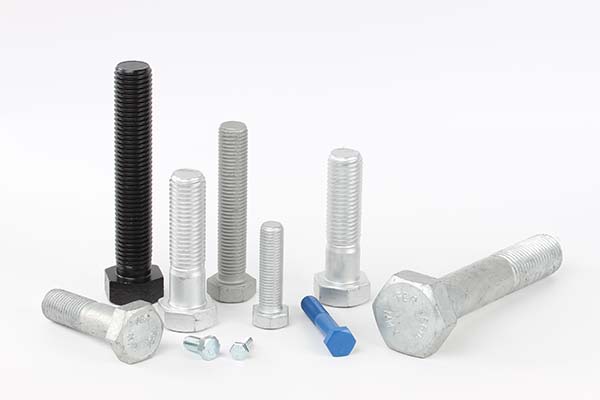
After selecting the correct geometry and property class, the buyer should specify the surface treatment. Common industrial projects can require zinc-based finishes, zinc flake systems, phosphate coatings, black finishes, or other project-defined treatments depending on material and environment.
No coating should be treated as a universal corrosion solution. Performance depends on coating specification, thickness, substrate preparation, environment, installation damage, mating parts, and service conditions. If salt-spray testing is required, the requested test method and acceptance criteria should be included in the order rather than inferred from the coating name.
Coating thickness also matters to threads. Excessive build-up can interfere with assembly, while changes in surface friction can influence torque-to-tension behavior. For controlled bolted joints, coating and lubrication should therefore be considered as part of the fastening system rather than as a cosmetic option added after bolt selection.
Quality Control for DIN 931 and DIN 933 Bolts
A technically correct purchase specification still needs manufacturing and inspection controls. For industrial bolts, the inspection plan can include material-document review, dimensional inspection, thread inspection, mechanical-property verification, coating inspection, appearance checks, and packing verification according to the actual order.
Flybear supplies standard fasteners, special fasteners, and drawing- or sample-based custom parts for industrial sourcing requirements. Depending on the agreed specification, relevant inspection capabilities can include material certificate review, dimensional inspection, thread go/no-go inspection, hardness and tensile testing, coating-thickness inspection, appearance inspection, salt-spray testing when required, and quantity, label, and packing verification.
These activities should not be interpreted as a fixed inspection package for every bolt order. The required tests, sampling level, reports, acceptance criteria, and third-party involvement should be agreed before production. Buyers can review the company’s quality control capabilities when preparing their inspection requirements.
Thread Inspection Is Especially Important
A hex bolt can have the correct head dimensions and material but still create assembly problems if its thread is outside the required tolerance. Go/no-go gauging is a practical method for checking whether the manufactured thread meets the specified acceptance condition.
For coated fasteners, final thread inspection should reflect the condition required by the purchase specification. If the buyer has specific requirements for post-coating fit, mating nuts, or assembly tests, those details should be communicated during quotation.
Custom Bolts When DIN 931 or DIN 933 Is Not Enough
Standard metric hex bolts cover many industrial assemblies, but OEM projects frequently require geometry that does not exactly match a catalog standard. Examples can include special grip lengths, nonstandard overall lengths, modified heads, reduced or enlarged sections, special thread locations, unusual coatings, or drawing-defined tolerances.
In those cases, forcing the part into a DIN 931 or DIN 933 description can create ambiguity. It is often better to quote the component as a drawing-based custom fastener and separately identify the material, property class, thread standard, and any dimensions derived from a recognized specification.
Industrial sourcing teams can review the broader fastener product range when consolidating bolts, nuts, screws, washers, and custom parts within one sourcing program.
Procurement Checklist for DIN 931 vs DIN 933
Before requesting a quotation, buyers should provide enough technical information for the supplier to distinguish between a standard catalog bolt and a project-specific fastener.
- Confirm the exact standard. State DIN 931, DIN 933, ISO 4014, ISO 4017, or the drawing-defined requirement.
- Define partial or full thread. Do not rely only on a product photograph.
- Provide diameter and length. Include the metric thread designation and overall bolt length.
- Check bolt thread length. For partially threaded bolts, ensure the standard thread length suits the joint grip.
- Specify property class or material. Do not assume this is automatically defined by the dimensional standard.
- Define coating. Include the applicable coating specification and inspection requirements where necessary.
- Identify the application. Machinery, structural equipment, rail, automotive, energy, and other applications can have different technical priorities.
- Provide drawings when available. This is particularly important when replacing existing or nonstandard parts.
- State inspection requirements. Include certificates, dimensional reports, mechanical tests, thread checks, coating checks, or third-party inspection where required.
- Confirm packaging and labeling. Grade, size, finish, and lot identification should match the purchase specification.
Providing these details also makes supplier quotations easier to compare. Without a complete specification, two quotations that appear to cover the same “DIN hex bolt” may actually be based on different materials, coatings, tolerances, inspection scopes, or standards.
Common Buying Mistakes to Avoid
One common mistake is assuming DIN 931 and DIN 933 are interchangeable because both have hex heads. The difference in thread coverage can directly affect how the bolt fits and clamps the assembly.
Another mistake is assuming that DIN 931 and ISO 4014, or DIN 933 and ISO 4017, can always be substituted without a dimensional review. Legacy and current standards may be closely related, but the required dimensions and edition should still be checked against the engineering documentation.
A third mistake is specifying only “8.8 hex bolt” without stating the dimensional standard. Property class alone does not define whether the bolt should be partial or full thread.
Finally, procurement teams should avoid changing coating, material, or property class based solely on availability. A commercially convenient substitution can create an engineering or compliance issue if it changes the approved fastener specification.
Frequently Asked Questions About DIN 931 vs DIN 933
Is DIN 931 a partial thread bolt?
DIN 931 is traditionally used for hexagon head bolts with an unthreaded shank and a specified threaded portion. The exact thread length depends on the applicable standard dimensions, bolt diameter, and length.
Is DIN 933 fully threaded?
DIN 933 is traditionally used for hexagon head fasteners with thread extending toward the head according to the applicable standard. It is therefore commonly described in the market as a full thread hex bolt or hex head screw.
Can DIN 931 replace DIN 933?
Not automatically. A DIN 931 partial thread bolt may have an unthreaded shank where a DIN 933 fastener would have thread. This can affect nut position, grip length, and joint geometry. Any substitution should be checked against the drawing and application requirements.
Is DIN 931 the same as ISO 4014?
They represent closely related partial-thread hex bolt product families, and ISO 4014 is commonly encountered in modern specifications where legacy projects used DIN 931. However, buyers should not state that they are dimensionally identical without checking the applicable editions and required dimensions.
Is DIN 933 the same as ISO 4017?
DIN 933 and ISO 4017 are associated with fully threaded hex head fasteners, but standard transition does not eliminate the need for dimensional verification. Follow the exact standard listed on the current drawing or obtain engineering approval for a change.
Does DIN 931 or DIN 933 determine bolt strength?
No. The dimensional standard and the bolt mechanical-property requirement are separate parts of the specification. The purchase order should state the required property class or material in addition to DIN 931, DIN 933, ISO 4014, ISO 4017, or another dimensional standard.
Which information should I send to a bolt supplier?
Send the required standard, diameter, length, property class or material, coating, quantity, inspection requirements, and application details. For custom or replacement components, include a drawing or sample information whenever possible.
Image ALT Suggestions
- DIN 931 vs DIN 933 partial thread and full thread hex bolt comparison
- DIN 931 partial thread hex bolt with unthreaded shank
- DIN 933 full thread hex bolt for industrial assembly
- Hex bolt thread length and grip length comparison diagram
- Industrial DIN hex bolts dimensional and thread inspection
Final Selection Guidance
DIN 931 vs DIN 933 should be decided by the required thread configuration and the complete joint specification. DIN 931 is the traditional choice when a partial thread hex bolt with an unthreaded shank is required, while DIN 933 is used when the application requires a full thread hex bolt. Neither configuration is universally better.
For new projects and replacement sourcing, verify the exact dimensional standard, bolt thread length, property class, material, coating, tolerances, and inspection requirements before approving a substitution. Where an existing drawing uses a legacy DIN designation, also check whether the project intends to retain that specification or move to the corresponding ISO standard.
For a quotation, send your bolt requirements with the standard, size, property class or material, coating, quantity, and drawing or application details. A complete specification allows the sourcing and manufacturing teams to review standard fasteners or custom alternatives without relying on assumptions about thread length, material, or finish.