DIN 7603A Copper Washers: Selection for Fluid Connections
A DIN 7603A copper washer is used for static sealing in fluid connections designed to accept a flat metal sealing ring. For designers, maintenance teams and buyers, selecting the right part requires more than matching the thread diameter. Ring geometry, copper condition, sealing-face dimensions and assembly requirements all influence whether the connection seals correctly.
This guide explains how to interpret the designation, read dimensions and prepare a purchasing specification. It focuses on selecting and inspecting the washer for the actual joint, with product information available from Flybear.
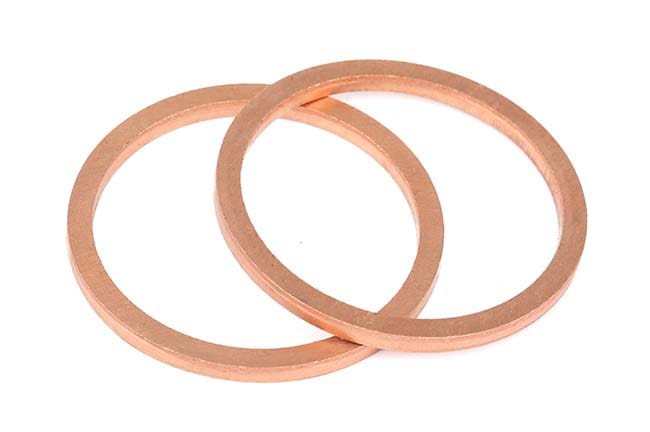
What Does DIN 7603A Mean?
DIN 7603:2001-05 is the current edition of the standard titled “Sealing rings.” The commercial description DIN 7603A, also written DIN7603A, refers to the standard with Form A specified.
Form A identifies a flat sealing-ring design. The letter A does not, by itself, specify copper. The material must be identified separately because flat sealing rings are also offered in other materials.
For procurement, separate the standard, form, material, size and material condition into clear fields. A description such as “DIN washer, M14, copper” leaves several details unresolved.
The standard reference identifies the component requirements. It does not independently establish an operating-pressure rating or installation torque for every assembly using that component.
How an Annealed Copper Sealing Washer Creates a Seal
A copper crush washer relies on deformation under clamping load. Soft copper conforms to small irregularities in the mating faces, helping close leakage paths at the sealing interface.
Annealing softens copper and improves its ability to deform. An annealed copper sealing washer therefore needs a defined material condition as well as the correct dimensions. Two rings with the same outside diameter, inside diameter and thickness may behave differently if their material conditions differ.
This conformability has limits. The washer should not be expected to repair a deeply scratched seat, compensate for an unsupported sealing face or correct an unsuitable fitting design.
For the corresponding product, review the DIN7603A annealed copper sealing washer and confirm the order requirements against the mating assembly.
DIN 7603A Copper Washer Dimensions: What to Check
Identify all three ring dimensions
A flat sealing ring is described by its inside diameter, outside diameter and thickness. These dimensions perform different functions:
- Inside diameter: Provides clearance around the relevant thread or shank and helps determine where the ring sits.
- Outside diameter: Defines the outer extent of the sealing contact and must suit the available seating area.
- Thickness: Affects the assembled position of the fitting and must match the intended sealing arrangement.
Do not select a washer using only a label such as M12 or M18. The thread designation does not fully describe the washer or the sealing face.
Distinguish nominal size from actual dimensions
Published Type A copper-ring catalogs can distinguish nominal dimensions from actual dimensions. These representative examples show why a nominal size should not automatically become an inspection limit.
| Nominal ID × OD × thickness, mm | Catalog actual ID, mm | Catalog actual OD, mm |
|---|---|---|
| 12 × 16 × 1.5 | 12.2 | 15.9 |
| 14 × 18 × 1.5 | 14.2 | 17.9 |
| 18 × 22 × 1.5 | 18.2 | 21.9 |
These are catalog reference values before applying the associated tolerances. Use the applicable standard and approved drawing to establish acceptance limits; the table is not a complete inspection specification.
Check the mating geometry
Review the fitting shoulder, any undercut or chamfer, and the housing’s sealing land. The ring must contact the intended faces without interference or an unintended gap.
For a proposed thickness change, check thread engagement and the final position of the fitting. A thicker washer can change the assembly even when both diameters remain unchanged.
When replacing an unidentified part, obtain the equipment drawing or approved part number. Measurements from a used, compressed washer are useful evidence, but they may not reproduce its original dimensions.
Material Grade, Annealed Condition and Surface Finish
“Copper” identifies a material family; it is not always a sufficient material specification. State the required copper grade or reference the controlling drawing. Confirm whether the supply condition must be annealed and whether a hardness requirement applies.
Do not assign a hardness value from an unrelated catalog. If hardness is an acceptance criterion, agree on the requirement, test method and suitability of the measurement for the washer’s thickness.
Specify the required surface condition separately. For an uncoated copper ring, clarify cleanliness and acceptable surface defects. If a coating or other treatment is proposed, review its effect on the sealing interface before approval.
Material records, condition verification and visual inspection address different questions. A chemical composition report alone does not demonstrate the required softness or confirm that the sealing faces are free from damage.
Match the Washer to the Connection and Service Conditions
Confirm where the connection seals
In a connection designed for a flat sealing washer, sealing occurs at the intended mating faces. Parallel-thread fittings can use different sealing arrangements, including metal gaskets and elastomer-based designs.
Identify the actual arrangement before ordering a hydraulic copper washer. A shared thread size does not establish that different fitting-end designs accept the same seal.
Record the fluid and operating envelope
Provide the fluid specification, normal working pressure, relevant pressure peaks and operating-temperature range. Include cleaning chemicals or other exposures that could affect material compatibility.
Copper should be evaluated against the complete service environment. A general description such as “oil resistant” does not establish suitability for every fluid formulation or operating condition.
Keep working pressure separate from proof-test and burst-test conditions. Any pressure claim should apply to the particular washer and connection arrangement, with the assembly method and acceptance criteria identified.
Typical application review points
- Pumps and valves: Check the plug or fitting seat, pressure cycles and fluid specification.
- Lubrication and drain connections: Confirm the service replacement procedure and sealing-face condition.
- Hydraulic machinery: Identify the approved fitting configuration and assembly requirements.
- Automotive fluid connections: Follow the equipment manufacturer’s part and service specifications.
Installation: Use the Approved Joint Procedure
Use the tightening requirement specified for the connection. A general bolt torque chart does not establish the seating load needed by a copper sealing ring.
Before assembly, confirm the washer identity, inspect the sealing faces and remove contamination using the approved cleaning method. Check that an old washer has not remained attached to the fitting or housing.
Seat the ring correctly and follow the specified assembly conditions, including lubrication where required. Do not add another washer to correct fitting position unless the drawing expressly requires that arrangement.
After assembly, verify the joint using the equipment’s leak-test procedure. Record the test medium, pressure, duration and acceptance criterion when these form part of production approval.
Replacement after disassembly
Include new copper sealing rings in maintenance kits where the service procedure requires replacement. Their sealing action involves deformation, so an apparently undamaged used ring is not automatically suitable for another installation.
Reuse or reconditioning should follow an approved equipment-specific procedure. A workshop heat treatment does not, by itself, confirm the original dimensions, material condition or sealing performance.
Common Purchasing and Inspection Mistakes
| Mistake | Better specification practice |
|---|---|
| Ordering only by thread size | Include inside diameter, outside diameter, thickness and tolerances. |
| Treating “A” as the copper material designation | Specify Form A and the required copper material separately. |
| Accepting a similarly colored washer | Verify material identity rather than relying on appearance. |
| Approving a substitute from a photograph | Compare controlled dimensions, material condition and mating geometry. |
| Increasing torque whenever leakage occurs | Check the part, seat condition and assembly procedure before corrective action. |
Agree on Quality Checks Before Production
Define incoming inspection around the approved specification. Typical review items include ring dimensions, flatness where specified, edge condition, surface damage, material identity and the required annealed condition.
Separate component conformity from assembly performance. A dimensional report can establish whether a washer meets the drawing, but the completed fluid connection still needs its own validation.
Use the available quality control and inspection information to identify which checks and documents should be included in the quotation. Agree on sampling, lot identification and report requirements before production begins.
If the required geometry differs from the standard design, submit it for a custom component review. Clearly identify the drawing-controlled differences rather than describing the entire part as standard.
RFQ Checklist for DIN 7603A Copper Washers
An industrial washer supplier can prepare a more useful quotation when the enquiry includes:
- Reference: DIN 7603 edition, Form A, drawing number and revision where applicable.
- Dimensions: Complete ring size, tolerances and any special geometric requirements.
- Material: Copper grade, required annealed condition and specified hardness criteria.
- Surface: Required finish, cleanliness and acceptable defect criteria.
- Application: Fitting or plug details, fluid, pressure and temperature conditions.
- Quantity: Order quantity, packaging units and identification requirements.
- Documentation: Material records, inspection reports, traceability and any required certificates.
List unresolved details explicitly. Ask suppliers to identify deviations in their offers so purchasing can compare equivalent requirements.
Frequently Asked Questions
Is DIN 7603 still a current standard?
DIN Media lists DIN 7603:2001-05 as current. Specify the applicable edition in controlled purchasing documents and check its status when updating the specification.
Does DIN 7603A always mean copper?
No. Form A identifies the flat sealing-ring design. Copper must be specified separately, together with the required material condition.
Why choose an annealed copper sealing washer?
Annealing produces a softer material condition that supports deformation at the sealing faces. The required condition should match the connection’s design and assembly requirements.
Can I order a washer simply as “M14”?
That description is incomplete. Provide the full ring dimensions, tolerances, material and condition, or an approved part number that defines them.
What torque should I use?
Use the torque or assembly method approved for the specific fitting, housing and seal combination. DIN 7603A alone does not provide a universal installation torque.
Turn the Standard Reference into a Complete Specification
Selecting a DIN 7603A copper washer means matching the flat ring’s dimensions and copper condition to the sealing faces and operating requirements. Clear purchasing and inspection criteria help prevent avoidable substitution and assembly errors.
Send Flybear your copper sealing washer enquiry with the standard or drawing, complete size, material condition, finish, quantity, application and inspection requirements. Include the mating connection details when suitability or replacement geometry needs review.