ISO 4014 vs ISO 4017: Choosing the Right Hex Bolt Standard
ISO 4014 vs ISO 4017 is one of the most common comparisons for buyers and engineers sourcing metric hex bolts for machinery, automotive equipment, construction systems, rail transit, energy projects, and general industrial assembly. The main practical difference is straightforward: ISO 4014 covers hexagon head bolts that typically include an unthreaded shank, while ISO 4017 covers hexagon head screws with thread extending along the specified fastener length. That difference can affect grip length, thread engagement, assembly flexibility, and where threads are positioned inside a joint.
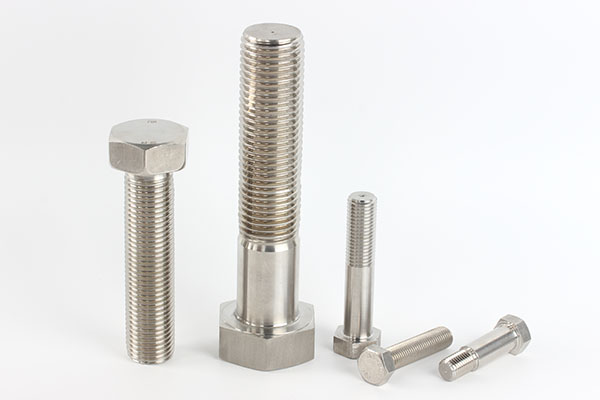
However, choosing between the two standards requires more than deciding between a partially threaded bolt and a fully threaded bolt. Property class, material, diameter, length, dimensional tolerance, thread specification, surface treatment, mating nut, washer arrangement, and application load must also be confirmed. For industrial procurement, the safest approach is to treat ISO 4014 or ISO 4017 as the dimensional product standard and then separately define the mechanical and surface requirements needed for the application.
Table of Contents
- What Is ISO 4014?
- What Is ISO 4017?
- ISO 4014 vs ISO 4017: Main Differences
- Partial Thread vs Full Thread
- Dimensions and Product Grades
- Property Class and Material Selection
- Coating and Surface Treatment
- Application and Selection Guide
- Quality Control and Inspection
- Procurement Checklist
- Frequently Asked Questions
What Is ISO 4014?
ISO 4014 is the international product standard for hexagon head bolts with product grades A and B. The current published edition is ISO 4014:2022. It covers steel and stainless-steel fasteners with ISO metric coarse pitch threads from M1.6 through M64.
For sourcing purposes, ISO 4014 is generally associated with a partially threaded bolt. Depending on the nominal length and diameter, part of the fastener below the head remains as an unthreaded shank while the threaded portion is located closer to the end.
This geometry is useful when the design benefits from having a smooth shank through part of the clamped components. For example, an engineer may prefer the unthreaded section to pass through aligned holes while positioning the threaded portion primarily where the nut engages.
The exact thread length should not be estimated from appearance or from a generic supplier drawing. It should be checked against the applicable ISO product requirements and the ordered diameter and length. ISO 888 is also relevant to nominal and thread-length definitions used by fastener product standards.
What Is ISO 4017?
ISO 4017 is the corresponding international product standard for hexagon head screws with product grades A and B. The current published edition is ISO 4017:2022, and it also covers steel and stainless-steel products with metric coarse pitch threads from M1.6 to M64.
ISO 4017 is commonly selected when a fully threaded bolt configuration is required. In practical industrial terminology, buyers often still call the product a hex bolt even though the ISO title uses “hexagon head screws.”
A full-thread configuration provides flexibility when the clamped material thickness varies or when thread engagement is needed close to the underside of the head. This can be useful in machinery, brackets, fabricated equipment, general industrial assemblies, and applications with relatively short grip lengths.
Full threading does not automatically make ISO 4017 stronger or weaker than ISO 4014. Mechanical performance depends on the specified property class, material condition, diameter, engaged thread, joint design, preload, and loading conditions. The dimensional standard and the mechanical property specification should therefore be reviewed separately.
ISO 4014 vs ISO 4017: Main Differences
| Selection Factor | ISO 4014 | ISO 4017 |
|---|---|---|
| Product description | Hexagon head bolt | Hexagon head screw |
| Typical thread configuration | Partially threaded | Fully threaded |
| Unthreaded shank | Normally present where the standard size and length combination provides it | Normally not used as the main grip section |
| Metric thread range in current standard | Coarse pitch M1.6 to M64 | Coarse pitch M1.6 to M64 |
| Product grades | A and B | A and B |
| Steel property classes | Specified separately according to the applicable mechanical-property requirement | Specified separately according to the applicable mechanical-property requirement |
| Stainless-steel grade | Specified separately according to the applicable stainless fastener requirement | Specified separately according to the applicable stainless fastener requirement |
| Typical selection reason | Smooth shank needed through part of the grip | Thread required along most or all of the usable fastener length |
The table highlights why the phrase ISO hex bolt standard does not identify a complete fastener specification. ISO 4014 and ISO 4017 primarily establish product characteristics and dimensional requirements. Buyers still need to define the required property class or stainless-steel grade, coating, size, inspection requirements, and other application-specific details.
Partially Threaded Bolt vs Fully Threaded Bolt
The choice between partial and full threading should begin with the joint geometry. A partially threaded ISO 4014 bolt provides an unthreaded shank that can sit within the grip of the assembled components. A fully threaded ISO 4017 fastener provides more freedom to position a nut or threaded component along its length.
When a Partially Threaded Bolt Can Be Useful
An unthreaded shank can be valuable when the designer wants a smooth cylindrical section passing through the joint. If the assembly is designed correctly, this can help keep threads away from a shear plane and provide a consistent bearing surface through the connected components.
Partially threaded bolts are therefore widely considered for machinery joints, structural brackets, equipment frames, construction machinery, rail assemblies, and other connections where the grip length is known and controlled.
The designer must still check the actual standard thread length. If the selected bolt is too short for the stack thickness, threads may enter a location where the designer expected a smooth shank. If it is excessively long, additional washers or an unsuitable nut position may result. Selection should be based on dimensions rather than only nominal diameter.
When a Fully Threaded Bolt Can Be Useful
A fully threaded ISO 4017 fastener is convenient when the joint has a short or changing grip length, when adjustment is important, or when a threaded hole is located close to the fastener head. It can also simplify purchasing for equipment that uses several different material stack thicknesses but shares a common diameter.
Full threading increases the usable threaded engagement range, but it does not remove the need for correct joint design. Engineers should still verify thread engagement, mating material strength, preload requirements, washer use, hole geometry, and whether the threaded section will be subjected to transverse loading.
ISO Hex Bolt Dimensions and Product Grades
ISO 4014 and ISO 4017 both specify characteristics for product grades A and B. Product grade is related to dimensional accuracy and tolerances; it should not be confused with a mechanical property class such as 8.8, 10.9, or 12.9.
This distinction is particularly important when preparing an RFQ. Writing “ISO 4017 10.9” communicates two different requirements: ISO 4017 identifies the product geometry, while 10.9 identifies a mechanical property class under the applicable mechanical-property standard.
Similarly, nominal diameter does not describe every important dimension. Buyers may need to verify:
- Nominal thread diameter
- Thread pitch
- Nominal fastener length
- Thread length for ISO 4014
- Width across flats
- Head height
- Under-head geometry
- Chamfer and end configuration
- Thread tolerance
- Product grade and dimensional tolerance
For this reason, two fasteners that appear visually similar should not automatically be considered interchangeable. A legacy DIN item, an ISO item, and a drawing-defined hex bolt may have differences in dimensions or tolerances even when the nominal diameter and length are identical.
Buyers comparing standard items can review the industrial bolt product range before finalizing the standard, size, material, and finish required for quotation.
Property Class and Material Selection
One of the most important purchasing principles is that ISO 4014 and ISO 4017 do not by themselves define the complete strength requirement. Carbon-steel and alloy-steel bolt property classes are selected under the applicable mechanical-property specification, while stainless-steel grades are addressed through the relevant stainless fastener standard.
Common industrial inquiries may specify property classes such as 8.8, 10.9, or 12.9, but higher strength should not automatically be considered better. The correct class depends on joint design, preload, mating threads, fatigue conditions, environment, temperature, installation method, and engineering requirements.
For stainless metric hex bolts, the purchaser should also state the required stainless grade and property class rather than simply requesting “stainless ISO 4017.” Corrosion resistance depends on the selected material and actual exposure conditions; the ISO product number alone does not guarantee a particular corrosion performance.
A complete sourcing specification can therefore take a format such as:
ISO product standard + nominal size and length + property class or material grade + thread requirement + coating or finish + inspection/documentation requirement.
This approach helps suppliers quote equivalent technical scopes and makes commercial comparisons more meaningful.
Coating and Surface Treatment for Metric Hex Bolts
Surface treatment should be specified separately from the ISO dimensional standard. Depending on the application, buyers may request zinc-based coatings, zinc flake systems, black finishes, phosphate-based treatments, or other project-approved surface conditions.
The appropriate finish depends on corrosion exposure, required friction behavior, assembly process, temperature, mating components, appearance requirements, and applicable customer specifications. A coating should never be selected only from its color or a general corrosion claim.
Coating thickness also matters because excessive buildup can influence thread fit. For coated threaded fasteners, the manufacturer and purchaser should agree on the relevant coating specification, thickness requirement, thread allowance, and inspection method.
Installation behavior must also be considered. Different coatings and lubricants can produce different friction conditions, meaning identical tightening torque does not necessarily create identical clamp load. Where preload is important, engineering teams should base tightening requirements on the actual fastener and surface condition being used.
How to Choose ISO 4014 or ISO 4017 by Application
Machinery and Equipment Manufacturing
Machinery manufacturers often use both standards. ISO 4014 can be appropriate where a smooth shank passes through machine frames, brackets, housings, or aligned components. ISO 4017 can be useful where joint thickness varies, full thread engagement is required, or equipment contains tapped holes.
Automotive and Commercial Equipment
Automotive and equipment applications can involve high-volume assembly, controlled tightening, vibration, and special coatings. In these situations, thread configuration is only one factor. Property class, fatigue performance, friction condition, installation torque strategy, and dimensional consistency can be equally important.
Construction Equipment
Heavy machinery and construction equipment often use bolts in joints exposed to vibration, impact, weather, dirt, and repeated maintenance. A partially threaded configuration may be desirable where the unthreaded shank forms part of the loaded grip, while full thread can be advantageous for adjustable or shorter connections.
Rail Transit and Energy Equipment
Rail and energy applications may have project-specific material, coating, traceability, and inspection requirements beyond the base ISO product standard. Buyers should therefore provide drawings and technical specifications instead of assuming that a standard ISO designation defines every acceptance criterion.
For projects involving several fastener families, the broader fastener product range can help sourcing teams consolidate bolts, screws, nuts, washers, and other standard or drawing-based parts within one procurement package.
Can ISO 4014 and ISO 4017 Be Interchanged?
ISO 4014 and ISO 4017 should not be treated as automatically interchangeable. Although their hex head form may appear similar and the same nominal diameter can be available under both standards, changing from partial thread to full thread changes the geometry of the loaded portion of the fastener.
An engineer considering a substitution should verify at least the grip length, thread position, thread engagement, joint shear plane, property class, head and body dimensions, coating, mating nut or tapped hole, and installation method.
For noncritical general assembly, a designer may determine that either configuration is acceptable. For engineered machinery, safety-related equipment, rail applications, or drawing-controlled components, a change of standard should normally follow the customer or engineering approval process.
Quality Control for ISO 4014 and ISO 4017 Bolts
Consistent supply requires more than checking the marking on the bolt head. Inspection should be matched to the purchase specification and may include material-document review, dimensional measurement, thread gauging, hardness testing, tensile testing, surface-treatment inspection, coating-thickness checks, appearance inspection, quantity verification, labeling, and packing control.
Flybear supports standard fasteners, special fasteners, and drawing- or sample-based custom parts for industrial sourcing projects. Inspection activities can be defined according to the actual product and order specification rather than assumed as a fixed test package.
Thread inspection is especially relevant for coated metric hex bolts. Go/no-go gauges can help verify functional thread acceptance, while dimensional inspection checks features such as diameter, length, head geometry, and other drawing or standard requirements.
Mechanical testing should also correspond to the material and specified property class. Hardness and tensile testing may be included when required by the applicable standard, inspection plan, or customer specification. Surface-treatment and coating-thickness inspection can be added where the finish is a controlled purchase requirement.
Sourcing and quality teams can review the available quality control process when preparing an inspection scope for standard or custom fastener orders.
ISO 4014 vs ISO 4017 Procurement Checklist
For an accurate quotation, send more than a short description such as “M16 hex bolt.” The following information can significantly reduce technical assumptions during sourcing:
- Standard: Specify ISO 4014 or ISO 4017 and the required edition if controlled by the project.
- Size: Provide nominal diameter and fastener length.
- Thread: Confirm metric coarse pitch or any drawing-specific thread requirement.
- Thread configuration: Confirm partial thread or full thread where this is functionally important.
- Property class: State the required mechanical property class for steel fasteners.
- Material: Identify carbon steel, alloy steel, stainless steel, or another drawing-defined material.
- Coating: Provide the exact finish or coating specification rather than a general color description.
- Quantity: Include order quantity and, when relevant, expected packaging quantities.
- Inspection: State required dimensional, thread, hardness, tensile, coating, or other inspections.
- Documentation: Identify required material certificates, inspection reports, labeling, and traceability.
- Application: Provide the machinery, equipment, assembly, or joint details when engineering review is needed.
- Drawing: Attach the customer drawing whenever nonstandard geometry or special requirements apply.
This specification-driven process is especially useful for distributors and OEM buyers consolidating multiple fastener items. A supplier can distinguish standard products from drawing-based special parts and identify technical questions before production instead of after delivery.
Custom Hex Bolts When ISO 4014 or ISO 4017 Is Not Enough
Standard ISO products cover many industrial requirements, but not every joint fits a catalog dimension. An OEM may need a special thread length, nonstandard body length, different head geometry, special material, customer-specific marking, controlled coating, drilled feature, reduced shank, or another drawing-defined characteristic.
In these cases, the drawing should become the controlling product definition while applicable ISO requirements can still be referenced for selected features. It is important to identify which dimensions follow the standard and which dimensions have been intentionally modified.
Custom manufacturing also requires agreement on inspection. Critical dimensions should be clearly identified, and the buyer should state whether material certificates, dimensional reports, thread inspection, mechanical testing, surface inspection, or coating verification are required.
A one-stop sourcing approach can be useful when a project combines standard ISO 4014 and ISO 4017 bolts with special fasteners, nuts, washers, and drawing parts. It allows the procurement team to organize specifications and documentation across the complete fastener package rather than treating every item as an unrelated purchase.
Frequently Asked Questions About ISO 4014 vs ISO 4017
Is ISO 4014 partially threaded?
ISO 4014 is the hexagon head bolt standard and is generally used for partially threaded configurations. The actual thread length depends on the nominal diameter and bolt length, so the required dimensions should be checked against the applicable standard rather than estimated.
Is ISO 4017 fully threaded?
ISO 4017 is the hexagon head screw standard and is commonly used when a fully threaded configuration is required. Buyers should still check the exact size, length, thread, and dimensional requirements for the ordered item.
Is ISO 4017 stronger than ISO 4014?
No. The product standard does not by itself determine that one fastener is stronger than the other. Mechanical strength depends mainly on the specified property class, material, diameter, heat-treatment condition, and joint design. An ISO 4014 and an ISO 4017 fastener can be ordered in the same property class where the applicable standards and size range permit.
Can I replace an ISO 4014 bolt with ISO 4017?
Only after verifying the joint. Changing from partial to full thread can place threads within the grip or shear plane and can alter how the fastener behaves in the assembly. Check the drawing, grip length, mechanical requirement, thread engagement, and customer approval requirements before substitution.
What information should I send when requesting a quotation?
Send the standard, diameter, length, property class or material, coating, quantity, inspection requirements, and application or drawing details. This provides a clearer basis for technical review and pricing than a generic description such as “metric hex bolt.”
Image ALT Suggestions
- ISO 4014 vs ISO 4017 metric hex bolt comparison
- ISO 4014 partially threaded hex bolt
- ISO 4017 fully threaded hex bolt
- Metric hex bolts with different thread lengths
- Industrial ISO hex bolt dimensional inspection
Conclusion: Selecting the Correct ISO Hex Bolt Standard
ISO 4014 vs ISO 4017 ultimately comes down to the required fastener geometry and joint design. ISO 4014 is the logical starting point when a partially threaded hex bolt with an unthreaded shank is needed, while ISO 4017 is commonly selected when a fully threaded metric hex bolt provides the required engagement and assembly flexibility.
The standard number alone is not a complete purchasing specification. Engineers and buyers should also verify diameter, length, thread, property class or stainless-steel grade, coating, dimensional tolerance, inspection scope, and the conditions of the actual application. When replacing one standard with another, dimensional and functional compatibility should be reviewed rather than assumed.
For standard or drawing-based industrial fasteners, send your fastener specification with the required ISO standard, size, property class or material, coating, quantity, drawing, and application details. A complete inquiry makes it easier to review product selection, custom requirements, quality control, documentation, and export supply as one sourcing package.