Rail Transit Fastening Solutions for Rolling Stock and Railway Equipment
Rail transit fastening solutions are essential for maintaining reliable mechanical connections across rolling stock, bogies, braking systems, carbody structures, interior assemblies, electrical equipment, doors, couplers, trackside systems, and railway maintenance equipment. Rail vehicles operate under repeated vibration, dynamic loading, acceleration, braking forces, temperature changes, moisture, dust, and long service cycles, making fastener selection an important part of both equipment design and maintenance planning.
For rolling stock manufacturers, railway equipment suppliers, system integrators, maintenance companies, distributors, and procurement teams, selecting a fastener involves more than matching diameter and length. Material, property class, thread configuration, head geometry, locking method, surface treatment, dimensional tolerance, installation access, corrosion resistance, and maintenance requirements can all affect the performance of the finished joint.
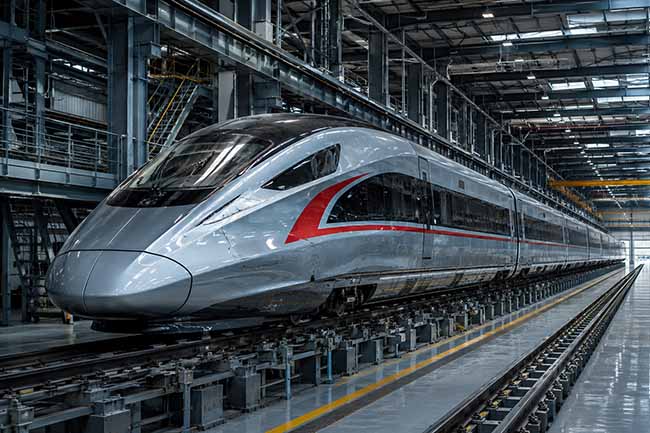
A practical railway fastener sourcing strategy combines standardized bolts, screws, nuts, washers, pins, inserts, and threaded components with custom drawing-based parts where specialized rolling stock or railway equipment requires non-standard dimensions or functions.
Complete Fastening Support for Rail Transit Equipment and Assemblies
Rail transit systems contain a wide range of fastening applications with different mechanical and environmental requirements. Bogie assemblies may require high-strength bolts and precision locating components, carbody structures need reliable connections for brackets and structural modules, passenger interiors require serviceable and compact hardware, and electrical systems may use smaller screws, inserts, standoffs, and corrosion-resistant components.
Flybear supports one-stop sourcing of standard and custom fastening components for rail transit projects, helping buyers consolidate bolts, screws, nuts, washers, pins, studs, rivet nuts, threaded inserts, locking components, and drawing-based fasteners according to the technical requirements of different railway assemblies.
Rail Transit Fastening Solutions for Rolling Stock
Rolling stock includes metro trains, passenger rail vehicles, locomotives, light rail vehicles, trams, maintenance vehicles, and other railway equipment. Each vehicle contains numerous mechanical connections across its body structure, running gear, equipment cabinets, interiors, doors, HVAC systems, and underfloor equipment.
Hex bolts, socket head cap screws, flange bolts, studs, nuts, washers, locking nuts, rivet nuts, and precision pins may all be used depending on the assembly. The selected fastener should match the expected loading, connected material, environmental exposure, maintenance frequency, and installation method.
Railway equipment frequently requires repeated inspection and servicing throughout its operating life. Fasteners should therefore provide reliable clamping while also supporting efficient maintenance where components must be removed and reinstalled.
For controlled or safety-relevant joints, the fastener specification should follow the rolling stock manufacturer’s drawing, applicable engineering requirements, and approved maintenance procedures.
High-Strength Fasteners for Bogie Assemblies
Bogies support the rail vehicle and contain critical mechanical systems including wheelsets, suspension components, brake equipment, motors, gear units, brackets, and supporting frames. Fasteners used in these assemblies may experience vibration, cyclic loading, impact forces, and repeated changes in direction and speed.
High-strength hex bolts, socket screws, flange bolts, studs, nuts, and hardened washers may be specified according to the joint design. Property classes such as 8.8, 10.9, or 12.9 may be considered for metric fasteners where appropriate, but the final selection must follow the equipment manufacturer’s engineering requirements.
Higher strength alone does not guarantee a reliable bolted joint. Correct preload, thread engagement, bearing surfaces, joint stiffness, material compatibility, and tightening procedures are also important. Fasteners used in dynamically loaded railway equipment should therefore be considered as part of the complete mechanical connection.
Precision pins and shoulder components may also be used where accurate positioning is required. In these cases, the threaded fastener can provide clamp load while the locating feature controls component alignment.
Fasteners for Rail Vehicle Carbody Structures
Rail vehicle carbodies combine structural frames, panels, brackets, equipment supports, roof modules, underfloor systems, and access components. Depending on the vehicle design, these assemblies may use steel, stainless steel, aluminum, composite materials, and other engineering materials.
Fastener selection should consider the material combination as well as the structural load. Bolts, flange screws, rivets, threaded inserts, rivet nuts, and custom components may be used to join removable or permanently installed structures.
Where lightweight aluminum structures are used, thread engagement and bearing pressure require particular attention. Excessive tightening can damage softer threaded material even when the fastener itself has sufficient strength.
Threaded inserts, self-clinching components, or rivet nuts may provide practical reusable threads in thin sections. These options can simplify assembly when access to the back of a panel or closed profile is limited.
Vibration-Resistant Fasteners for Railway Equipment
Vibration is a major fastening consideration throughout rail vehicles. Wheel-rail interaction, propulsion systems, braking, compressors, HVAC equipment, and continuous vehicle movement can subject joints to repeated mechanical excitation.
Reliable vibration resistance begins with correct joint design and installation. Adequate preload, suitable thread engagement, clean bearing surfaces, appropriate fastener strength, and controlled tightening all contribute to maintaining a stable connection.
Where additional locking is required, prevailing-torque nuts, lock nuts, serrated flange fasteners, locking washers, mechanical locking systems, or other approved solutions may be used according to the application.
The locking method should also reflect maintenance requirements. Components that are regularly inspected or replaced may need reusable locking solutions, while other connections may be designed for less frequent disassembly.
Fasteners for Railway Brake Systems
Railway brake assemblies include calipers, brake discs, brackets, actuators, piping supports, housings, and related mechanical components. These systems operate under repeated loading and may experience vibration, heat, contamination, and demanding maintenance cycles.
Bolts, socket screws, studs, nuts, washers, and precision pins may be used depending on the brake design. Fastener material, mechanical properties, surface treatment, and dimensional requirements should always follow the brake equipment manufacturer’s specification.
Temperature can be an important factor near braking components. The selected fastener and any surface treatment or locking system must remain compatible with the expected operating environment.
Replacement fasteners used during brake maintenance should match the original technical requirements rather than being selected only by thread size. Grade, geometry, finish, thread pitch, and installation instructions should all be verified.
Fasteners for Traction Motors and Drive Systems
Electric traction motors, gearboxes, couplings, bearing housings, and drive components require reliable fastening under vibration, torque, and repeated operating loads. These systems may contain high-strength bolts alongside precision locating and mounting components.
Socket head cap screws and flange bolts can provide compact fastening where installation space is limited. Studs may be useful where housings need to be accurately positioned before final tightening or where repeated servicing could otherwise wear threaded holes.
Precision dowel pins or shoulder fasteners can support alignment between motor, gearbox, and mounting structures. In these applications, dimensional consistency can directly influence equipment positioning.
Custom fasteners may be required where standard head shapes, thread lengths, or shoulder dimensions cannot meet the geometry of specialized rail propulsion equipment.
Fastening Solutions for Railway Doors and Access Systems
Passenger doors, equipment access doors, cab doors, maintenance covers, and associated mechanisms combine hinges, actuators, guide systems, brackets, sensors, and locking components. These assemblies must support repeated opening and closing cycles while remaining practical to service.
Socket screws, machine screws, shoulder bolts, pins, lock nuts, washers, and threaded inserts may be used depending on the mechanism. Shoulder screws and precision pins can be particularly useful in pivoting or guided assemblies where controlled movement is required.
Fastener head geometry should also be considered where space is limited. Low-head, countersunk, or internal-drive screws may help reduce interference with moving components or adjacent panels.
For components that are regularly removed, fastening solutions should provide repeatable installation without unnecessarily increasing maintenance time.
Fasteners for Passenger Seats and Interior Assemblies
Rail vehicle interiors contain passenger seats, luggage systems, partitions, handrails, ceiling panels, wall panels, flooring accessories, tables, signage, lighting systems, and various service components. These assemblies often require fasteners that combine secure attachment with clean appearance and convenient maintenance.
Machine screws, socket screws, countersunk screws, flange screws, nuts, washers, rivet nuts, threaded inserts, and captive fasteners may be used according to the interior design.
Captive screws can be useful for removable panels because the hardware remains attached when the panel is opened. Rivet nuts and self-clinching components can create reusable threads in sheet metal structures where conventional nuts are difficult to access.
Visible fasteners may also require particular head styles or finishes to match the interior design, while concealed structural connections may prioritize strength and installation efficiency.
Fasteners for HVAC and Auxiliary Systems
Rail vehicles use HVAC units, fans, compressors, ducting, pumps, cooling equipment, and other auxiliary systems to support passenger comfort and vehicle operation. These systems can generate vibration and may require periodic servicing.
Fasteners may include bolts, socket screws, flange screws, studs, lock nuts, washers, rivet nuts, and smaller machine screws. Structural mounting points should provide stable support, while removable covers and filter-access areas may require fasteners optimized for serviceability.
Roof-mounted or underfloor equipment can experience moisture, dust, temperature changes, and other environmental exposure. Material and surface finish should therefore be selected according to the actual installation location.
Fasteners for Rail Electrical and Control Equipment
Modern rail vehicles contain extensive electrical and electronic systems including traction control equipment, batteries, converters, communications systems, passenger information equipment, sensors, lighting, control cabinets, and wiring supports.
Electrical cabinets and enclosures may use machine screws, SEMS screws, captive screws, rivet nuts, threaded inserts, standoffs, nuts, and washers. These components can simplify the assembly of panels, covers, modules, and internal supports.
Where fasteners participate in an electrical or grounding connection, material and surface requirements should follow the equipment designer’s electrical specification. Hardware used only for mechanical mounting may have different requirements.
Compact electronics assemblies may also need custom standoffs, miniature screws, or spacers with tightly controlled dimensions.
Corrosion-Resistant Fasteners for Rail Transit
Railway equipment can be exposed to rain, condensation, cleaning fluids, humidity, dust, outdoor contaminants, and changing temperatures. Underfloor assemblies and exterior equipment may experience particularly demanding conditions.
Stainless steel fasteners may be considered where corrosion resistance is a priority, while carbon or alloy steel fasteners can use suitable protective coatings where permitted by the engineering specification.
Surface treatments may include zinc-based coatings, zinc flake systems, phosphate treatments, or other application-specific finishes. The correct finish should reflect environmental exposure, fastener material, friction requirements, dimensions, and connected materials.
Coating selection should not be based on corrosion resistance alone. Surface treatment can also influence thread fit and the relationship between installation torque and bolt preload.
Fasteners for Outdoor and Trackside Railway Equipment
Rail transit infrastructure extends beyond the vehicle itself. Signaling cabinets, platform equipment, trackside sensors, barriers, communication systems, maintenance equipment, electrical enclosures, and support structures all require reliable fastening components.
These installations may operate outdoors for long periods and experience rain, temperature cycling, industrial pollution, and vibration from passing trains. Stainless steel or coated fasteners may therefore be considered according to the equipment specification.
Anchor components, hex bolts, machine screws, rivet nuts, threaded rods, nuts, and washers can be used across structural and enclosure applications. The correct fastening system should match the substrate, load, exposure level, and maintenance requirements.
Material Selection for Railway Fasteners
Railway fasteners can be produced from carbon steel, alloy steel, stainless steel, and other engineering materials according to mechanical and environmental requirements.
Carbon steel offers a practical combination of strength, manufacturability, and cost for many general assemblies. Alloy steel is often selected for higher-strength mechanical connections where increased load capacity is required.
Stainless steel can be appropriate for corrosion-sensitive equipment, exposed exterior assemblies, and selected interior applications. Other materials may be specified where weight, electrical characteristics, or compatibility with the connected structure are important.
Material substitution should be evaluated carefully. A stainless steel fastener should not automatically replace a specified high-strength alloy steel component simply because both have the same dimensions. Mechanical properties, corrosion behavior, installation requirements, and mating materials should all be considered.
Custom Railway Fasteners for Specialized Assemblies
Rail vehicles and railway equipment frequently contain application-specific components that cannot be assembled efficiently using standard catalog fasteners. Custom railway fasteners can be manufactured according to customer drawings for proprietary mechanical systems and replacement requirements.
Typical custom components may include special bolts, shoulder screws, threaded pins, double-ended studs, precision dowel pins, reduced-head screws, extended-length fasteners, stepped shafts, spacers, custom washers, captive components, and machined threaded parts.
Custom production can help solve restricted installation space, unusual material thickness, alignment requirements, non-standard thread engagement, or the need to integrate several functions into one component.
Technical drawings should specify material, dimensions, tolerances, thread requirements, mechanical properties, heat treatment where applicable, surface finish, and inspection criteria. Critical functional dimensions should be identified clearly before production.
Fastener Standardization for Rolling Stock Production
Rolling stock manufacturers can use a large number of fastener variations across different vehicle modules. Over time, unnecessary differences in thread size, bolt length, head style, drive type, and finish can increase purchasing complexity and inventory requirements.
Engineering and procurement teams can review commonly used components to identify opportunities for standardization. Where technical requirements permit, common fastener families can be used across multiple vehicle assemblies or platforms.
Standardization can simplify purchasing, production tooling, maintenance, and spare-parts management. However, it should never override the specific mechanical, environmental, or safety requirements of an individual joint.
Quality and Traceability Considerations for Railway Fasteners
Rail transit equipment sourcing requires clearly controlled specifications, particularly for components used in mechanically demanding or safety-related assemblies. Buyers should identify the applicable standard or drawing, material, grade, thread configuration, dimensions, finish, and inspection requirements before production.
Depending on the fastener specification, verification may include dimensional inspection, thread inspection, hardness testing, tensile or proof-load testing, material verification, coating inspection, or other customer-defined checks.
For custom precision parts, critical diameters, shoulders, locating surfaces, and tolerances should be clearly identified on the drawing so that appropriate inspection methods can be planned.
If batch identification, material documentation, product marking, or inspection records are required, these expectations should be communicated during quotation. Requirements can differ significantly between general interior hardware and fasteners used in controlled mechanical assemblies.
Fasteners for Rail Maintenance, Overhaul and Replacement
Rail vehicles require regular inspection, maintenance, and overhaul throughout their operating life. Maintenance programs can create ongoing demand for bolts, screws, studs, nuts, washers, pins, inserts, and specialized replacement fasteners.
Replacement fasteners should match the technical specification of the original component where required. Diameter and length alone are not enough to confirm interchangeability. Property class, thread pitch, head geometry, material, coating, locking method, and critical dimensions should also be verified.
Older rail vehicles may contain discontinued or non-standard fasteners that are difficult to obtain through conventional stock channels. In these cases, detailed drawings can support evaluation of custom manufacturing for maintenance and refurbishment projects.
Maintaining controlled fastener specifications can help rail operators and MRO organizations plan spare-parts purchasing more efficiently and reduce uncertainty during major overhaul programs.
How to Prepare an RFQ for Rail Transit Fasteners
A complete RFQ helps suppliers evaluate both standard and custom railway fastening requirements efficiently. Buyers should provide the full dimensional and material specification rather than only a general product name.
Recommended RFQ Information
- Fastener type and applicable standard
- Technical drawing and revision for custom components
- Diameter, thread pitch, and overall length
- Material and required property class or grade
- Head style and drive configuration
- Heat-treatment requirements where applicable
- Surface treatment or coating specification
- Application within the rail vehicle or railway equipment
- Vibration, temperature, or environmental requirements where relevant
- Critical dimensions and tolerances
- Required quantity and purchasing frequency
- Inspection and testing requirements
- Traceability and documentation requirements
- Packaging, marking, and labeling requirements
If the final fastener specification has not yet been confirmed, buyers can also provide information about the complete joint. Connected materials, expected loading, vibration, available installation space, maintenance frequency, corrosion exposure, and assembly method can help determine whether a standard or custom fastener is more appropriate.
One-Stop Fastener Sourcing for Rail Transit Projects
Rail transit manufacturers and equipment suppliers may require many different fastening categories across bogies, carbodies, traction systems, braking equipment, passenger interiors, electrical cabinets, doors, HVAC systems, and trackside equipment. Managing separate suppliers for standard bolts, high-strength fasteners, stainless steel hardware, precision pins, inserts, nuts, washers, and custom components can increase procurement complexity.
A one-stop sourcing approach allows buyers to consolidate multiple fastener families while preserving the individual technical requirements of each assembly. Standard components can support recurring production and maintenance needs, while drawing-based custom fasteners can address proprietary designs, equipment upgrades, and replacement requirements.
Whether the project involves metro vehicles, passenger trains, locomotives, light rail, railway maintenance equipment, trackside systems, or rolling stock refurbishment, reliable fastening starts with accurate technical specifications. Matching material, strength, dimensions, thread design, corrosion protection, locking method, precision, and maintenance requirements to the actual railway application supports dependable assembly and a more efficient long-term fastener supply strategy.