Electrical & Electronics Fastening Solutions for Precision Equipment Assemblies
Electrical and electronics fastening solutions are essential for assembling reliable enclosures, control cabinets, circuit-support structures, power equipment, communication devices, sensors, connectors, appliances, industrial electronics, and other precision electrical systems. These products often combine metal housings, sheet metal panels, aluminum components, engineering plastics, printed circuit board supports, and electrical interfaces within compact assemblies where installation space and dimensional consistency are important.
For electrical equipment manufacturers, electronics OEMs, contract manufacturers, panel builders, distributors, and sourcing teams, fastener selection involves much more than choosing a screw with the correct diameter. Material, thread design, head geometry, drive type, electrical conductivity, corrosion behavior, installation torque, panel thickness, vibration, serviceability, and production method can all affect the performance of the completed assembly.
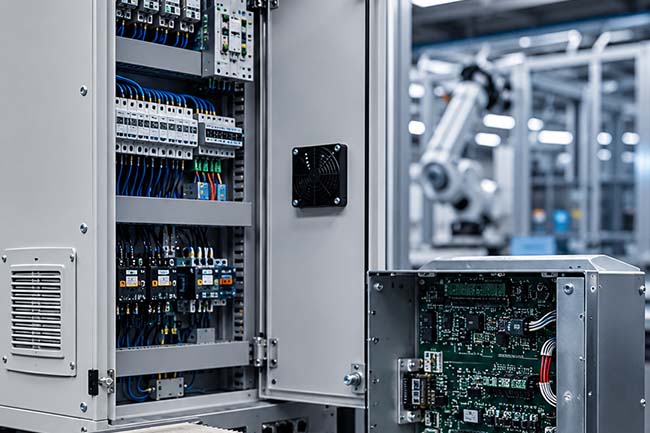
A practical sourcing strategy combines standard screws, nuts, washers, inserts, standoffs, and sheet metal fasteners with custom components where proprietary equipment requires special dimensions or functions. Selecting fastening hardware according to the actual joint helps manufacturers improve assembly consistency while simplifying purchasing and long-term maintenance.
Complete Fastening Support for Electrical and Electronic Equipment
Electrical and electronic products contain fastening points with very different functions. Control cabinets may require screws and captive hardware for removable panels, circuit assemblies can use precision standoffs and miniature screws, power equipment may require stronger bolts for structural supports, and electrical enclosures can use threaded inserts or rivet nuts where access is available from only one side.
Flybear supports one-stop sourcing of standard and custom fastening components for electrical and electronics projects, helping buyers consolidate machine screws, self-tapping screws, SEMS screws, nuts, washers, standoffs, threaded inserts, rivet nuts, captive fasteners, pins, and drawing-based parts through a coordinated supply program.
Electrical and Electronics Fastening Solutions for Enclosures
Electrical enclosures protect components from physical damage, contamination, and environmental exposure while providing access for installation and maintenance. Fasteners may be required for enclosure bodies, removable doors, internal mounting plates, hinges, brackets, covers, cable-entry components, and accessories.
Machine screws, self-tapping screws, captive screws, flange screws, nuts, washers, rivet nuts, and threaded inserts can all be used depending on the enclosure design. Sheet thickness, enclosure material, required service frequency, and available tool access should be considered before selecting the fastening method.
For covers that are opened regularly, captive fasteners can help keep screws associated with the panel after loosening. This can simplify maintenance and reduce the number of loose components handled by technicians.
Where sheet metal is too thin to provide sufficient direct thread engagement, rivet nuts, clinch nuts, or other threaded inserts can create reusable attachment points without requiring access to the rear side of the assembly.
Fasteners for Electrical Control Cabinets and Panels
Industrial control cabinets contain mounting plates, terminal blocks, power supplies, circuit protection equipment, drives, communication modules, fans, cable-management components, and operator interfaces. These assemblies may require several fastener families within a relatively small enclosure.
Machine screws and SEMS screws can be useful for mounting electrical components, while rivet nuts and self-clinching fasteners can provide durable internal threads in sheet metal structures. Studs and standoffs may be used to maintain spacing between electrical components and cabinet surfaces.
Assembly efficiency is particularly important in control-panel production. Pre-assembled fasteners such as SEMS screws can reduce separate handling of screws and washers, while standardized head styles and drive types can simplify production tooling.
For panel builders producing multiple cabinet models, reducing unnecessary variations in thread size and fastener type can also simplify inventory management and purchasing, provided the technical requirements of each connection remain satisfied.
Precision Fasteners for Electronics Assemblies
Electronic devices often require small fasteners with closely controlled dimensions. Housings, displays, sensors, communication modules, instrumentation, test equipment, and control devices may contain limited installation space and lightweight structural components.
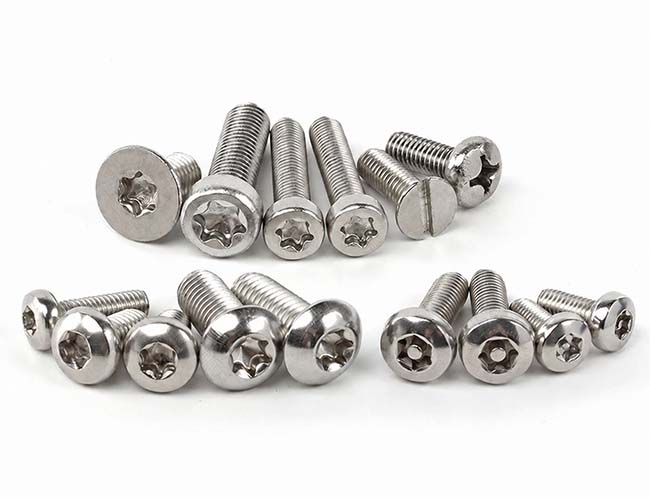
Precision machine screws, miniature screws, socket screws, countersunk screws, threaded inserts, standoffs, nuts, and washers can support these assemblies. Head diameter, head height, overall length, thread engagement, and drive geometry may be particularly important when surrounding components have limited clearance.
Fasteners used in aluminum or plastic housings should be selected according to the strength of the mating material. Excessive tightening can damage threads or deform components even when the screw itself remains well below its mechanical limit.
Where standard dimensions cannot match the housing geometry, custom electronics fasteners can be produced with special head profiles, controlled thread lengths, shoulders, reduced diameters, or other application-specific features.
Fasteners for Printed Circuit Board Mounting
Printed circuit boards and related electronics may require mechanical support within housings, cabinets, and devices. Standoffs, spacers, screws, washers, threaded inserts, and small nuts can be used to position boards while maintaining controlled separation from surrounding components.
Male-female and female-female standoffs are commonly useful where multiple boards, panels, or components must be assembled at defined distances. Depending on the equipment design, standoffs can be produced from steel, stainless steel, brass, aluminum, or other suitable materials.
Thread size, body length, across-flats dimensions, and mating hardware should be specified carefully because small dimensional differences can affect board position and enclosure fit.
Electrical requirements may also influence material selection. Conductivity, grounding strategy, isolation requirements, and compatibility with the surrounding assembly should be considered according to the equipment manufacturer’s design.
SEMS Screws for Efficient Electrical Equipment Assembly
SEMS screws combine a screw with one or more captive washers in a pre-assembled component. They can be particularly useful in electrical and electronic manufacturing where high production volumes make component handling efficiency important.
Because the washer remains attached to the screw, operators do not need to position separate washers during installation. This can simplify assembly of cabinets, control modules, electrical equipment, and other products requiring repeat screw-and-washer combinations.
SEMS configurations can use different screw head styles, washer types, materials, threads, and finishes depending on the application. The washer should be selected according to its required function, such as load distribution, retention, or another assembly requirement.
Custom SEMS screws can also be evaluated where manufacturers need a particular screw length, washer combination, head configuration, or surface finish not readily available as a standard part.
Self-Tapping and Thread-Forming Screws for Electronics Housings
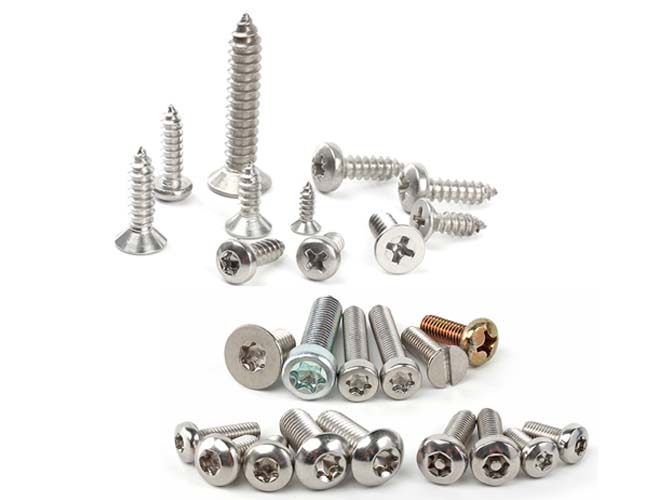
Self-tapping and thread-forming screws can reduce the need for separate nuts or pre-tapped holes in certain sheet metal and plastic assemblies. They are widely used in electronic housings, appliances, control products, brackets, covers, and similar equipment.
The correct screw design depends on the mating material, thickness, pilot hole, required holding performance, and whether the connection will be removed repeatedly. A thread geometry designed for thin metal may not perform appropriately in plastic, and a screw intended for plastic should be selected according to the material and boss geometry.
Thread-forming solutions can help simplify production by creating or forming the mating thread during installation. However, installation torque and pilot-hole dimensions should be controlled to reduce the risk of stripping, cracking, or deformation.
Manufacturers should evaluate the fastening system using the actual housing material and production process before finalizing a specification for large-volume assembly.
Threaded Inserts and Rivet Nuts for Thin Sheet Assemblies
Electrical cabinets, equipment housings, and sheet metal structures often use materials that are too thin for strong reusable tapped threads. Threaded inserts and rivet nuts can provide practical attachment points in these situations.
Rivet nuts can be installed from one side of a panel, making them useful in closed sections, cabinets, tubes, and structures where the rear side cannot be accessed easily. Different body shapes, head styles, and thread sizes can be selected according to the base material and installation requirements.
Self-clinching nuts and studs can also be incorporated into sheet metal components during manufacturing. They can create permanent threaded features that simplify later assembly of covers, brackets, modules, and accessories.
Panel thickness, hole size, material hardness, required pull-out performance, and installation process should all be considered when selecting an insert system.
Standoffs and Spacers for Electronic Components
Standoffs and spacers are widely used to establish controlled distances between circuit boards, panels, housings, displays, sensors, and other components. They can also support stacked assemblies where several layers need to remain aligned.
Common designs include hex standoffs, round spacers, threaded spacers, male-female standoffs, and fully threaded components. Material and finish can be selected according to mechanical, corrosion, conductivity, weight, and appearance requirements.
Precision is important because standoff length directly affects component position. Buyers should clearly define thread size, thread depth, body length, body diameter or across-flats dimension, material, and surface treatment.
Custom standoffs can be produced where electronics manufacturers require non-standard lengths, stepped bodies, different thread sizes at each end, or additional machined features.
Fasteners for Power Distribution and Electrical Equipment
Power distribution systems, switchgear, transformers, power supplies, industrial control equipment, charging systems, and related products may include both precision electronics and larger structural assemblies.
Fastening requirements can therefore range from small machine screws and standoffs to bolts, nuts, washers, and studs used for frames, housings, brackets, and equipment supports.
Where fasteners are associated with electrical connections, the component material, contact surface, tightening requirements, and electrical design should follow the equipment specification. Fasteners used only for mechanical enclosure assembly may have different requirements from hardware that forms part of an electrical connection.
Procurement teams should clearly distinguish between these applications when preparing an RFQ so the supplier can match material and finish requirements to the intended use.
Fastening Solutions for Sensors and Instrumentation
Industrial sensors, measurement devices, meters, monitoring systems, and instrumentation often require compact mounting solutions that maintain stable positioning. Machine screws, socket screws, threaded inserts, standoffs, precision pins, and custom fasteners can be used to secure sensor bodies, brackets, covers, and electronics modules.
Installation space may be limited around sensors, making reduced-head, countersunk, or internal-drive screws useful in certain designs. Fastener geometry should provide sufficient tool engagement without interfering with cables, connectors, or adjacent equipment.
Where sensors need accurate repeatable positioning, precision locating pins or shoulders can be used together with screws. The fastener provides clamping while the locating feature controls position.
Fasteners for Communication and Networking Equipment
Communication cabinets, network devices, server-related equipment, industrial communication modules, antenna equipment, and data infrastructure contain many sheet metal and precision electronic assemblies.
Fasteners may be needed for racks, covers, internal modules, printed circuit boards, cable brackets, cooling components, and external mounting hardware. Machine screws, cage nuts, captive screws, standoffs, washers, inserts, and threaded hardware can all support these applications.
Serviceability is often a priority because communication equipment may require module replacement or upgrades. Captive hardware and standardized drive systems can make equipment access more convenient while reducing loose components during servicing.
For high-volume equipment programs, consistent dimensions and surface finish can also support automated or semi-automated assembly processes.
Fasteners for Consumer and Commercial Electrical Products
Electrical appliances, lighting products, power accessories, charging equipment, commercial electronics, and similar products can require large quantities of cost-efficient fasteners that support rapid production.
Self-tapping screws, thread-forming screws, machine screws, SEMS screws, nuts, washers, inserts, pins, and custom small components are common options. Fastener selection should consider housing material, production volume, assembly automation, service requirements, and appearance.
For visible exterior locations, head style and finish may be important to the final product design. Internal structural fasteners may instead prioritize strength, assembly efficiency, and cost.
Where products combine plastic and metal components, different thread designs may be needed within the same assembly rather than applying one screw type to every connection.
Corrosion-Resistant Fasteners for Electrical Enclosures
Electrical equipment may operate indoors, outdoors, in humid manufacturing environments, or near water and chemical processes. The required corrosion protection therefore depends strongly on the application.
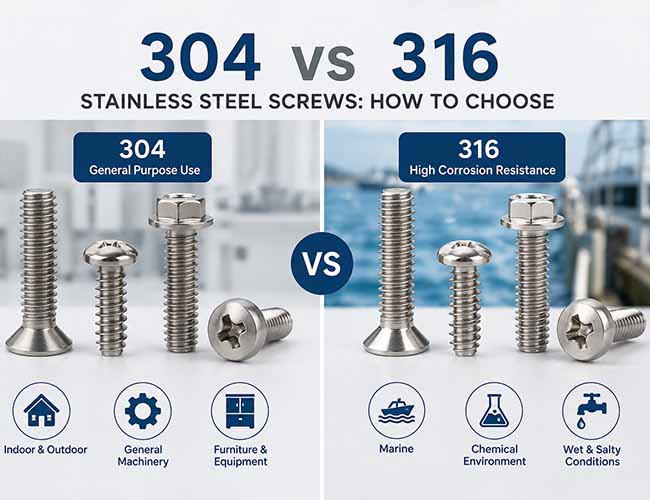
Stainless steel fasteners may be considered for outdoor or moisture-sensitive assemblies, while carbon steel fasteners can use zinc plating, zinc flake systems, nickel-based finishes, black oxide, or other surface treatments depending on the specification.
Surface treatment can influence more than corrosion resistance. Coating thickness may affect small threaded components, while surface friction can influence installation behavior. Appearance may also matter for visible screws used on finished equipment.
Buyers should define the required material and finish clearly rather than requesting a general “anti-corrosion fastener” without additional technical information.
Brass, Stainless Steel and Steel Fastener Material Options
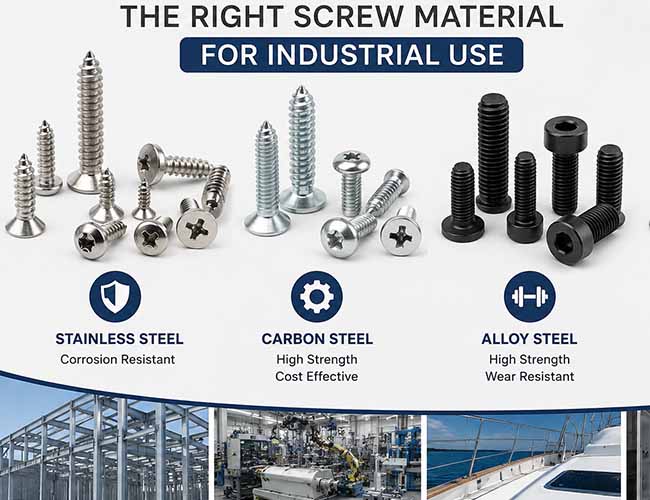
Different electrical assemblies can require different fastener materials. Carbon steel offers a practical combination of mechanical strength, manufacturing flexibility, and cost for many general equipment applications. Alloy steel can provide higher mechanical performance where required.
Stainless steel is useful where corrosion resistance is a priority, while brass may be selected in certain electrical, electronic, or decorative assemblies because of its material characteristics and machinability. Aluminum can also be considered for lightweight specialized components.
No material should be selected solely because it performs well in one category. Mechanical loading, conductivity, corrosion compatibility, weight, mating materials, thread strength, environmental conditions, and cost should all be reviewed together.
Vibration Resistance in Electrical and Electronic Equipment
Electrical equipment installed on machinery, vehicles, production lines, or outdoor structures may experience vibration and repeated mechanical loading. This can affect screws used for modules, panels, sensors, brackets, and enclosures.
Joint stability depends on correct thread engagement, preload, contact surfaces, material behavior, and appropriate locking methods. Lock nuts, prevailing-torque features, locking washers, serrated flange components, or other methods may be considered where required by the equipment design.
For electronic housings containing softer materials, excessive tightening should be avoided. The locking approach must be suitable for both the fastener and the mating component.
Connections requiring frequent maintenance should also use solutions that allow practical repeated removal and installation.
Fasteners for Automated Electronics Manufacturing
High-volume electrical and electronics manufacturing increasingly uses automated screwdriving and component-feeding equipment. Fasteners intended for these production environments should support consistent feeding, positioning, drive engagement, and installation.
Head geometry, drive recess, thread start, overall length, dimensional consistency, and surface condition can all influence automated fastening performance. Small differences that may be acceptable for manual installation can become more noticeable in high-cycle automated production.
Manufacturers planning automated assembly should define the fastener together with the installation process. Screw presentation method, tool type, tightening settings, mating material, and joint geometry should all be evaluated during production development.
Where standard fasteners do not feed or install efficiently within a proprietary product design, customized geometry can be evaluated according to the equipment requirements.
Custom Electrical and Electronics Fasteners
Electrical and electronics manufacturers often develop proprietary enclosures, modules, connectors, brackets, and internal mechanisms that require dimensions not available in standard catalogs. Custom electrical fasteners can solve these application-specific requirements.
Typical custom parts may include special machine screws, miniature screws, captive screws, SEMS screws, threaded standoffs, spacers, special studs, shoulder screws, pins, inserts, and components combining threaded and machined features.
Custom design can help reduce component count, accommodate restricted installation space, provide controlled spacing, or integrate locating and fastening functions into one part.
Technical drawings should specify material, thread, dimensions, tolerances, head or body geometry, surface finish, and inspection requirements. Critical characteristics should be identified clearly, particularly for miniature or precision components where small dimensional changes can affect assembly.
Quality Considerations for Electronic Fastener Procurement
Reliable sourcing requires clear communication of product requirements. Buyers should identify the applicable dimensional standard or drawing revision, material, thread dimensions, finish, tolerance requirements, quantity, packaging, and required inspection before production begins.
Depending on the component, inspection may include dimensional measurement, thread verification, hardness testing, coating checks, or other customer-defined requirements. Precision standoffs, shoulder parts, and miniature components may require closer control of functional dimensions.
Where electrical characteristics or specific material requirements are critical to the assembly, these requirements should be identified directly in the purchasing specification rather than inferred from the product name.
Batch identification, labeling, inspection records, or material documentation should also be communicated during quotation if required for the customer’s supply chain.
Fastener Standardization for Electrical Equipment Production
Manufacturers producing multiple electrical products can accumulate a large number of similar screws, nuts, washers, and spacers over time. Unnecessary variation increases purchasing workload, inventory requirements, tool changes, and the possibility of assembly errors.
Engineering and procurement teams can review commonly used fasteners to identify opportunities for standardization. Where product requirements allow, common thread sizes, drive types, finishes, and lengths can be shared between different equipment platforms.
Special parts should still be maintained where unique geometry, electrical function, material, or mechanical performance is necessary. The objective is not to eliminate custom fasteners but to reduce variations that do not provide functional value.
How to Prepare an RFQ for Electrical and Electronics Fasteners
A complete RFQ helps suppliers evaluate fastening requirements efficiently and reduces unnecessary quotation revisions. Standard fasteners should be identified with a complete dimensional designation, while custom and precision parts should include technical drawings wherever possible.
Recommended RFQ Information
- Fastener type and applicable dimensional standard
- Technical drawing and revision for custom components
- Diameter, thread pitch, and overall length
- Material and required grade
- Head style and drive type
- Surface treatment or finish requirement
- Panel, housing, or mating material
- Critical dimensions and tolerances
- Electrical or grounding requirements where applicable
- Required quantity and purchasing frequency
- Assembly method or automated installation requirements
- Inspection and documentation requirements
- Packaging and labeling requirements
If the fastener specification has not yet been finalized, buyers can also provide information about the complete assembly. Housing material, panel thickness, available installation space, required serviceability, vibration, environmental exposure, and production method can help determine whether a standard screw, insert, standoff, or custom component is more appropriate.
One-Stop Fastener Sourcing for Electrical and Electronics Projects
Electrical and electronics manufacturers may require many different fastening categories across enclosures, circuit assemblies, control cabinets, sensors, communication equipment, power systems, and commercial electronics. Managing separate suppliers for machine screws, self-tapping screws, SEMS screws, inserts, rivet nuts, standoffs, nuts, washers, and custom precision parts can increase procurement complexity.
A one-stop sourcing approach allows buyers to consolidate standard and drawing-based components while maintaining the individual technical requirements of each application. Frequently used products can be standardized across equipment platforms, while special fasteners can be manufactured for proprietary housings and precision assemblies.
Whether the project involves industrial control equipment, electronic modules, electrical enclosures, power systems, communication devices, instrumentation, or high-volume electronics manufacturing, reliable fastening begins with an accurate understanding of the joint. Matching material, thread design, geometry, finish, dimensional tolerance, installation method, and service conditions helps create more efficient production processes and dependable electrical and electronic equipment assemblies.