Marine Engineering Fastening Solutions for Shipbuilding and Offshore Equipment
Marine engineering fastening solutions are essential for building reliable mechanical connections across ships, offshore structures, marine propulsion systems, deck machinery, piping systems, pumps, electrical equipment, and port infrastructure. Marine equipment operates in environments where moisture, saltwater, vibration, dynamic loading, temperature changes, and difficult maintenance access can place significant demands on bolts, screws, nuts, washers, studs, pins, and specialty fastening components.
For shipbuilders, marine equipment manufacturers, offshore contractors, repair yards, distributors, and procurement teams, selecting the correct fastener involves much more than choosing the required diameter and thread. Material grade, mechanical strength, corrosion resistance, thread configuration, coating, dimensional tolerance, locking method, installation access, and maintenance requirements can all influence joint reliability.
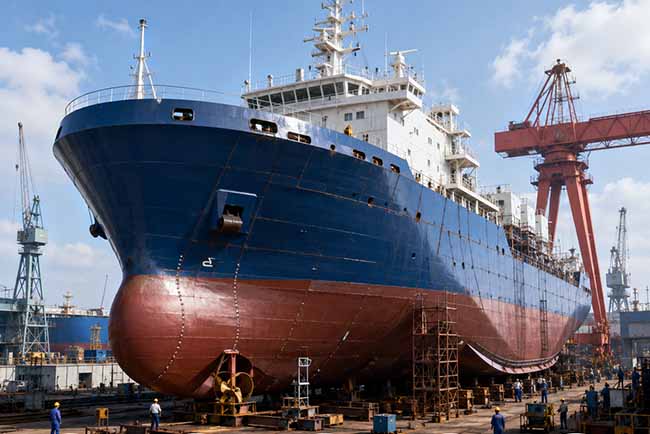
A practical marine fastener sourcing strategy combines standard industrial hardware with corrosion-resistant and custom components designed for individual equipment requirements. Accurate specifications allow buyers to source fastening products for new vessel construction, offshore projects, marine machinery production, and long-term maintenance programs through a coordinated supply process.
Complete Fastening Support for Marine and Offshore Equipment
Marine engineering includes a wide variety of applications with different fastening requirements. Hull-related structures can require high-strength bolting, deck machinery may need vibration-resistant fasteners, pumps and valves can use studs and corrosion-resistant bolts, electrical enclosures need smaller precision hardware, and removable equipment covers require serviceable fastening solutions.
Flybear supports one-stop sourcing of standard and custom fasteners for marine engineering projects, helping buyers consolidate bolts, screws, studs, nuts, washers, threaded rods, U-bolts, pins, inserts, and drawing-based components according to different shipbuilding and offshore equipment requirements.
Marine Engineering Fastening Solutions for Shipbuilding
Commercial ships, workboats, passenger vessels, offshore support vessels, and specialized marine platforms contain extensive mechanical assemblies across decks, machinery spaces, superstructures, piping systems, access equipment, and onboard systems.
Hex bolts, flange bolts, socket head cap screws, studs, nuts, washers, threaded rods, and custom fasteners can be used throughout these assemblies. The appropriate fastener depends on the structural load, connected materials, exposure level, maintenance frequency, and installation method.
Shipbuilding projects frequently combine carbon steel, stainless steel, aluminum, and other engineering materials. Fastener selection should therefore consider both mechanical performance and material compatibility, particularly where dissimilar metals are exposed to humid or salt-containing environments.
For equipment requiring repeated servicing, removable fastening systems should also support efficient disassembly without compromising the integrity of the joint during normal operation.
Corrosion-Resistant Marine Fasteners
Corrosion resistance is one of the most important considerations in marine fastening. Saltwater, salt spray, condensation, humidity, and continuously wet environments can accelerate deterioration of exposed metallic components.
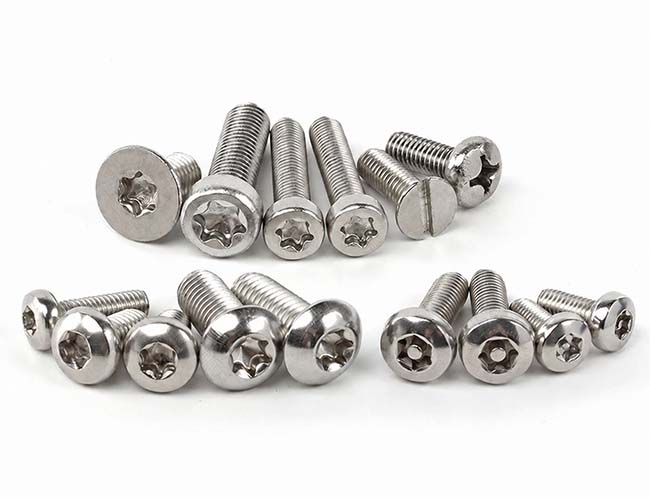
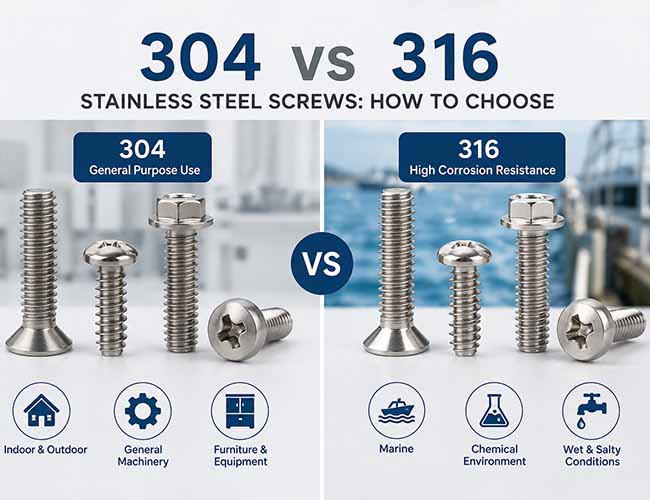
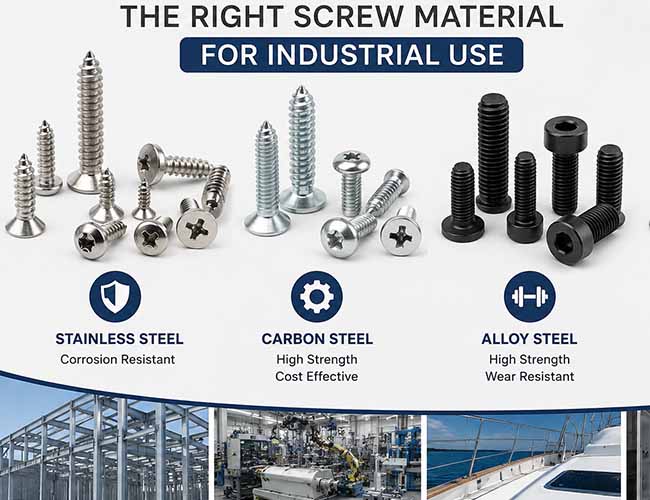
Stainless steel fasteners are widely considered for many marine applications because of their corrosion-resistant characteristics. However, different stainless steel grades provide different levels of resistance and mechanical performance. The selected material should match the actual service environment and engineering requirements rather than being chosen only by a general stainless steel description.
Carbon and alloy steel fasteners can also be used where suitable protective systems are specified. Surface treatments may include zinc-based coatings, zinc flake systems, hot-dip galvanizing, or other project-defined finishes depending on component size, thread requirements, and environmental exposure.
Coating selection should also consider installation friction, thread fit, mating materials, and maintenance. Corrosion protection should be evaluated as part of the complete joint rather than as an isolated fastener property.
Stainless Steel Fasteners for Marine Equipment
Stainless steel bolts, screws, nuts, washers, studs, and threaded components can be used in deck hardware, piping supports, electrical enclosures, pumps, access systems, instrumentation, and other corrosion-sensitive applications.
When sourcing stainless steel marine fasteners, buyers should clearly specify the material grade, dimensional standard, thread, size, and any required finish. Different grades should not be considered automatically interchangeable simply because the components have the same external dimensions.
The mating structure must also be considered. Stainless steel fasteners installed into aluminum, carbon steel, or other metals can create different corrosion and mechanical conditions depending on environmental exposure.
Thread behavior, tightening procedure, and serviceability should also be reviewed for applications where stainless steel threaded components are repeatedly installed and removed.
Fasteners for Offshore Platforms and Marine Structures
Offshore platforms and marine structures operate in particularly demanding environments. Structural equipment, modules, walkways, handrails, pipe supports, machinery, electrical systems, and access equipment may be continuously exposed to salt, humidity, wind, and temperature changes.
High-strength bolts, flange bolts, studs, heavy-duty nuts, washers, threaded rods, U-bolts, and custom structural components may be required according to the engineering design.
Different zones of an offshore installation can experience different levels of corrosion exposure. Fasteners installed inside protected modules may have different material or coating requirements from components located on open decks, external structures, or highly exposed areas.
Buyers should therefore specify the installation environment together with the required material, strength, dimensions, and surface protection. This allows fastening components to be evaluated according to their actual service conditions.
Fasteners for Marine Engines and Propulsion Systems
Marine engines, gearboxes, shaft systems, generators, couplings, and propulsion equipment generate vibration, torque, heat, and repeated mechanical loads. Fasteners used in these systems must maintain stable joints while allowing access for inspection and overhaul.
Hex bolts, socket screws, flange bolts, studs, nuts, washers, and precision pins can be used depending on the equipment design. Alloy steel fasteners may be considered where higher mechanical strength is required, while corrosion-resistant materials can be selected for exposed areas according to specification.
Proper preload and thread engagement are important around rotating machinery. Vibration resistance depends on the complete joint, including fastener strength, tightening procedure, connected materials, bearing surfaces, and any locking system specified by the equipment manufacturer.
Custom studs, shoulder bolts, or precision locating components can be manufactured where propulsion equipment requires geometry not available from standard catalog fasteners.
Fastening Solutions for Deck Machinery
Winches, cranes, windlasses, capstans, davits, mooring equipment, lifting systems, and other deck machinery operate under changing mechanical loads while being exposed to outdoor marine conditions.
Structural mounting points may use high-strength bolts, nuts, and washers, while equipment housings and service covers can use socket screws, studs, or smaller threaded fasteners. Pins and retaining components may also be used in articulated or moving assemblies.
Deck machinery fasteners should be selected with attention to dynamic loading, vibration, salt exposure, water drainage, and maintenance access. Fastener material and coating should match both the operating environment and the connected structure.
For equipment that requires regular servicing, fasteners should also support controlled disassembly without creating unnecessary maintenance complexity.
Fasteners for Marine Pumps and Fluid Systems
Ships and offshore facilities use pumps for cooling water, ballast systems, fuel handling, bilge systems, fire protection, lubrication, wastewater, and other fluid-management applications. These systems contain pump casings, valves, flanges, filters, strainers, pipe supports, and associated equipment.
Stud bolts, hex bolts, socket screws, nuts, washers, U-bolts, and threaded rods may be used throughout these systems. Fastener selection should consider pressure, vibration, temperature, process fluid, external corrosion exposure, and equipment maintenance requirements.
Where fasteners are associated with pressure-bearing joints, the material and grade should follow the approved engineering specification. Hardware used only for brackets or equipment supports may have different requirements.
For marine fluid systems, external corrosion can remain significant even when the fastener does not directly contact the transported fluid.
Fasteners for Marine Piping and Valve Assemblies
Marine piping networks contain flanged joints, valves, supports, manifolds, filters, and equipment connections throughout machinery spaces and deck systems. These assemblies may require both pressure-related bolting and general mounting hardware.
Stud bolts with nuts can be used for flange connections, while U-bolts and threaded rods may secure pipes to structural supports. Smaller bolts and screws can be used for actuator brackets, valve accessories, and instrumentation.
Material requirements should be defined according to the piping service and installation environment. Corrosion protection, operating temperature, mechanical strength, and connected materials can all affect the correct fastener selection.
Replacement bolting during maintenance should be matched to the original technical requirements rather than selected only by thread diameter and length.
Fasteners for Marine Electrical and Control Equipment
Modern vessels contain extensive electrical systems, including switchboards, control cabinets, navigation equipment, sensors, communication systems, power distribution equipment, lighting, and automation systems.
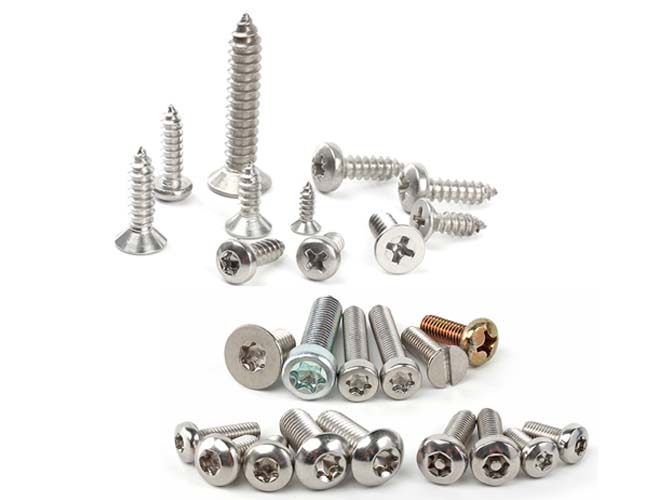
Machine screws, SEMS screws, captive screws, nuts, washers, threaded inserts, rivet nuts, and standoffs can be used for electrical enclosures, covers, panels, and internal components.
Corrosion resistance is particularly important for equipment installed on open decks or in humid machinery spaces. Stainless steel or appropriately coated fasteners may be selected according to the enclosure design and electrical requirements.
Where fasteners form part of grounding or electrical connections, material and surface finish should follow the equipment manufacturer’s electrical specification rather than general mechanical fastening requirements.
Fasteners for Ship Interiors and Access Systems
Marine fastening requirements extend into cabins, passenger areas, service spaces, access panels, handrails, ladders, doors, and storage systems. These applications often prioritize corrosion resistance, serviceability, compact dimensions, and clean appearance.
Machine screws, countersunk screws, flange screws, captive screws, rivet nuts, threaded inserts, nuts, washers, and custom hardware may be used according to the assembly design.
Captive screws can be useful for access panels that require regular opening because the fastener remains attached to the panel after loosening. Threaded inserts can create reusable fastening points in thin sheet metal or lightweight panel structures.
Visible fasteners may also require specific head styles or finishes to match interior design requirements.
Vibration-Resistant Fasteners for Marine Machinery
Marine engines, pumps, generators, compressors, propulsion systems, and deck equipment can generate continuous vibration. Ship movement and wave-induced loading can add further mechanical variation to fastened joints.
Stable fastening begins with correct preload, sufficient thread engagement, proper bearing surfaces, and a fastener selected for the expected load. Where additional resistance to loosening is required, prevailing-torque nuts, lock nuts, serrated flange components, mechanical locking washers, or other specified systems may be considered.
The locking method should match the equipment design and maintenance schedule. Connections requiring frequent servicing may need reusable locking arrangements, while other assemblies may prioritize long-term retention.
Locking hardware should be considered as part of the joint design rather than as a substitute for correct fastener installation.
Fasteners for Aluminum Marine Structures
Aluminum is widely used in lightweight vessels, superstructures, marine equipment, and specialized offshore components. Fasteners joining aluminum structures require careful consideration of both mechanical loading and material compatibility.
Thread engagement and installation torque should be controlled when fasteners are threaded directly into aluminum because the mating material may have lower thread strength than the fastener itself.
Threaded inserts or rivet nuts can provide reusable threaded attachment points in thin or softer aluminum sections. Stainless steel fasteners may be considered in some applications, but the complete material combination and corrosion environment should be evaluated.
Washers or other load-distribution features may also be used where required by the structural design.
High-Strength Fasteners for Marine Structural Assemblies
Marine structures, heavy equipment bases, lifting systems, and machinery foundations may require high-strength bolts capable of supporting substantial loads. Depending on the design, carbon or alloy steel fasteners in appropriate strength classes or grades can be specified.
Property classes such as 8.8, 10.9, or 12.9 may be used in metric applications where engineering requirements call for higher mechanical strength. The final grade must always follow the design specification.
Increasing bolt strength alone does not guarantee a stronger joint. Connected material, thread engagement, washer hardness, bearing area, preload, and tightening procedure can all determine the actual performance of the connection.
For high-strength fasteners exposed to marine conditions, corrosion protection must also be selected carefully so that environmental requirements and mechanical performance are considered together.
Custom Marine Fasteners for Specialized Equipment
Marine equipment often contains proprietary assemblies that cannot be supported efficiently with standard catalog fasteners. Custom marine fasteners can be manufactured according to customer drawings for specialized shipbuilding, offshore, propulsion, deck machinery, and repair applications.
Typical custom components may include special-length studs, double-ended studs, shoulder bolts, threaded pins, U-bolts, reduced-head screws, stepped shafts, precision pins, custom washers, special nuts, spacers, and machined threaded parts.
Custom production can help address unusual installation space, specific structural geometry, unique thread lengths, alignment requirements, or the need to combine several functions within one component.
Technical drawings should identify material, dimensions, tolerances, thread specifications, mechanical properties, surface finish, coating, and inspection requirements. Critical features should be clearly marked so that manufacturing and quality planning can focus on the functional characteristics of the part.
Quality Considerations for Marine Fastener Procurement
Reliable marine fastener sourcing begins with complete technical specifications. Buyers should define the product standard or drawing revision, material, grade, dimensions, thread, finish, quantity, and required inspection before production.
Depending on the fastener specification, inspection may include dimensional measurement, thread verification, hardness testing, tensile or proof-load testing, coating checks, material verification, or other customer-defined requirements.
Custom precision components may require additional control of shoulders, locating diameters, machined surfaces, or special thread transitions. These critical characteristics should be identified during the RFQ stage.
If material documentation, lot identification, product marking, or inspection records are required, these requirements should also be specified before production rather than requested after completion.
Marine Fasteners for Maintenance, Repair and Overhaul
Ships and offshore equipment require ongoing maintenance throughout their operating life. Dry-docking, engine overhaul, pump maintenance, valve replacement, deck machinery servicing, and structural repair can all create requirements for replacement fasteners.
Replacement components should match the technical requirements of the original assembly. Diameter and thread alone do not confirm suitability. Material, property class, geometry, finish, thread pitch, and environmental requirements should also be verified.
Older vessels may contain specialized or discontinued hardware that is difficult to source as standard stock. Technical drawings or detailed dimensional information can support evaluation of custom manufacturing for maintenance and refurbishment projects.
Maintaining controlled fastener specifications can help shipyards and marine operators prepare spare-parts packages more efficiently before scheduled maintenance periods.
How to Prepare an RFQ for Marine Engineering Fasteners
A complete RFQ helps suppliers evaluate both standard and custom marine fastener requirements efficiently. Buyers should provide detailed information about the component, service environment, and technical requirements wherever possible.
Recommended RFQ Information
- Fastener type and applicable dimensional standard
- Technical drawing and revision for custom components
- Diameter, thread type, pitch, and overall length
- Material and required grade or property class
- Mechanical-property requirements
- Surface treatment or corrosion-protection specification
- Application within the vessel or offshore equipment
- Marine, coastal, splash, or enclosed exposure conditions
- Critical dimensions and tolerances
- Required quantity and purchasing frequency
- Inspection and testing requirements
- Material documentation or traceability requirements
- Packaging, marking, and labeling requirements
If the final fastener specification has not yet been determined, buyers can also provide information about the complete joint, including connected materials, expected loading, vibration, installation space, corrosion exposure, operating temperature, and maintenance frequency. These details can help determine whether a standard component or custom fastening solution is more appropriate.
One-Stop Fastener Sourcing for Marine Engineering Projects
Shipyards, marine equipment OEMs, offshore contractors, and repair companies may require a broad range of fastening products across structural assemblies, propulsion equipment, deck machinery, pumps, piping, electrical systems, and access components. Managing separate suppliers for stainless steel hardware, high-strength bolts, studs, U-bolts, nuts, washers, pins, and custom components can increase procurement complexity.
A one-stop sourcing strategy allows buyers to consolidate multiple fastener categories while maintaining the individual material, grade, dimensional, coating, and inspection requirements of each application. Standard products can support repeat shipbuilding and maintenance needs, while drawing-based custom fasteners can address specialized equipment and replacement requirements.
Whether the project involves commercial shipbuilding, offshore platforms, marine propulsion systems, deck machinery, pump and piping equipment, port infrastructure, or vessel maintenance, reliable fastening begins with accurate specifications. Matching fastener material, strength, dimensions, thread design, corrosion protection, and installation requirements to the actual marine environment supports dependable equipment assemblies and a more efficient long-term supply strategy.