DIN 6921 Flange Bolts: Serrated vs Non-Serrated Flange Heads
DIN 6921 flange bolt selection is not simply a question of choosing the correct thread diameter and length. For industrial buyers, engineers, and sourcing teams, one of the most important decisions is whether the application needs a serrated or non-serrated flange bearing surface. The two designs may look similar from the top, but their behavior at the joint interface can be significantly different.
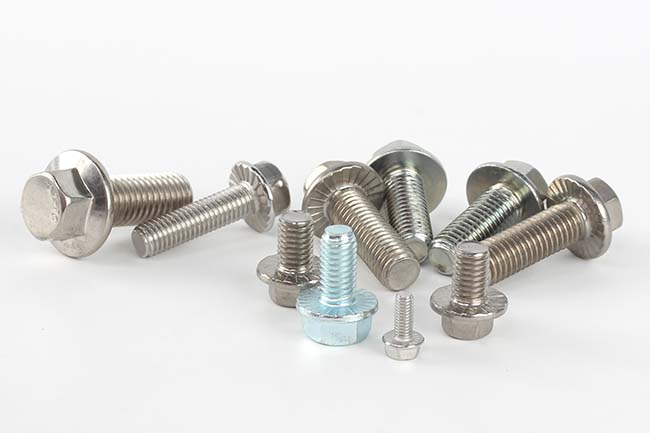
A flange bolt combines an external hex drive with an enlarged flange beneath the head. This flange creates a broader bearing surface than a conventional hex head alone and can simplify assemblies where load distribution, installation efficiency, or component count matters. Serrated versions add teeth or ribs to the underside of the flange, while non-serrated versions use a comparatively smooth bearing face.
There is also an important standards issue for procurement teams. DIN 6921:1983-06 is a withdrawn legacy standard. DIN Media identifies DIN EN 1665 as its replacement in the German standards system. Meanwhile, ISO 4162:2012 remains a current international standard for small-series hexagon bolts with flange. For this reason, an RFQ that says only “DIN 6921” should be clarified before ordering. The required geometry, thread, property class, flange design, serration details, finish, and applicable drawing should all be verified instead of assuming that different flange-bolt standards are dimensionally interchangeable.
- What is a DIN 6921 flange bolt?
- Serrated vs non-serrated flange heads
- When to select a serrated flange bolt
- When to select a non-serrated flange bolt
- Materials, property classes, and finishes
- Joint design and tightening considerations
- Quality-control points for flange bolts
- How to specify flange bolts for an RFQ
- Frequently asked questions
DIN 6921 Flange Bolt Selection Guide for Industrial Buyers
What Is a DIN 6921 Flange Bolt?
A DIN 6921 flange bolt is the market name commonly used for a metric hexagon-head bolt incorporating an integral flange beneath the head. Instead of placing the hex head directly against the joint surface, the enlarged flange increases the bearing area around the bolt hole.
This geometry can be useful in machinery, automotive assemblies, construction equipment, rail-related equipment, energy systems, fabricated structures, and general industrial manufacturing. A larger bearing area may help distribute clamping load across the mating surface, especially when compared with a standard hex head of similar nominal thread size.
The integral flange may also reduce the need for a separate flat washer in some assembly designs. However, this should never be treated as a universal rule. Whether a washer is required depends on the joint design, mating material, hole condition, required bearing area, surface finish, tightening method, and engineering specification.
Buyers should also recognize that the DIN 6921 designation is still widely used commercially even though the original DIN 6921 document has been withdrawn. If a project is controlled by a current standard, drawing, OEM specification, or approved-parts list, that requirement takes priority over a general market description.
Serrated Flange Bolt vs Non-Serrated Flange Bolt
The key difference is located on the bearing face beneath the flange. A serrated flange bolt has teeth, ribs, or similar locking features designed to engage the mating surface. A non serrated flange bolt has a smoother bearing face without those aggressive locking teeth.
| Selection Factor | Serrated Flange Bolt | Non-Serrated Flange Bolt |
|---|---|---|
| Underside of flange | Includes serrations or locking teeth | Smooth or comparatively smooth bearing surface |
| Resistance to rotation | Serrations can add mechanical resistance to rotation when properly matched to the joint | Relies more directly on preload, friction, joint design, and any separate locking method |
| Effect on mating surface | May mark, cut, or penetrate coatings and softer surfaces | Generally less aggressive toward the contact surface |
| Torque-friction behavior | Serrations can significantly affect bearing friction | Usually offers a more conventional bearing interface |
| Frequent disassembly | May be less desirable where surface preservation is important | Often easier to consider for assemblies requiring repeated service |
| Painted or decorative surfaces | Requires careful evaluation because teeth may damage the finish | Often preferred when maintaining the surface is important |
| Locking strategy | Can form part of the locking concept but should not be treated as a guaranteed anti-loosening solution | May be combined with engineered locking nuts, adhesives, washers, or other specified methods |
The presence of a flange does not automatically determine whether serrations are required. Likewise, buyers should not assume that every product sold under a DIN 6921 description has the same serration geometry. The exact underside design should be confirmed by a drawing, approved sample, specification, or supplier documentation.
When Should You Choose a Serrated Flange Bolt?
Serrated flange bolts are often considered for assemblies where resistance to unintended rotation is an important design objective. As the bolt is tightened, the teeth on the flange can engage the mating surface. Depending on the joint materials and geometry, this engagement may make rotational movement more difficult.
This design can be useful in machinery, brackets, frames, equipment housings, automotive components, and other assemblies exposed to vibration or cyclic operating conditions. However, serrations alone should not be described as guaranteeing that a bolted joint will never loosen. Joint performance depends on adequate preload, stiffness, clamp length, thread engagement, surface condition, tightening method, lubrication, temperature, external loading, and many other variables.
A serrated design also deserves special attention when the joint uses paint, powder coating, plating, or another protective surface. Teeth can penetrate or damage a coating at the contact area. That may be acceptable in one assembly and unacceptable in another. It can affect appearance, corrosion-protection strategy, electrical continuity, or maintenance requirements.
Typical Questions Before Selecting Serrations
- Is the mating surface hard enough to tolerate the serrations?
- Can the coating or paint be locally damaged by the flange teeth?
- Does the engineering specification specifically require a serrated bearing face?
- Has the tightening torque been validated for the actual bolt finish and bearing interface?
- Will the joint be disassembled frequently during service?
- Is another locking system already specified?
If these questions have not been answered, specifying “serrated” only because the application experiences vibration can be an incomplete selection approach.
When Is a Non-Serrated Flange Bolt the Better Choice?
A non-serrated hex flange screw can be preferable when the design benefits from an integral flange but does not require aggressive teeth against the mating surface. The smooth flange provides a broad contact area while reducing the risk of cutting into a painted, plated, soft, or finished component.
Non-serrated designs can also be appropriate when engineers want more predictable control of the bearing interface. Because tightening torque is strongly influenced by friction, changing from a smooth flange to a serrated flange can change the relationship between applied torque and achieved preload. A torque value developed for one interface should not automatically be transferred to another.
Serviceability is another consideration. Equipment that is inspected, adjusted, or dismantled periodically may benefit from a less aggressive bearing surface, especially when preserving the mating component is important. Depending on the design, locking performance can instead be provided by an approved lock nut, thread-locking system, prevailing-torque feature, locking washer, or another engineered solution.
For B2B sourcing, the important point is that “non-serrated” does not mean “low performance.” It simply describes a different bearing-surface configuration. The correct choice depends on the complete joint rather than on one bolt feature alone.
Material, Property Class, and Surface Finish Selection
Once the flange type has been selected, buyers still need to define the mechanical and environmental requirements. A flange-bolt RFQ should normally identify material or property class, surface treatment, thread specification, dimensions, and any testing or certificate requirements.
Carbon and alloy steels are commonly used when defined mechanical properties are required. Stainless steels may be selected where corrosion resistance is a major consideration. The applicable property class or stainless designation must be matched to the controlling standard and project specification rather than selected only from a generic catalog description.
ISO 4162:2012, for example, defines a particular small-series flange-bolt scope and identifies specific thread sizes and property classes. It should not be assumed to be dimensionally identical to a legacy DIN 6921 requirement or to the heavy-series geometry covered by DIN EN 1665.
Surface treatment is equally important. Depending on the project, buyers may encounter zinc plating, zinc-flake systems, zinc-nickel coatings, phosphate-based finishes, black finishes, or project-specific coatings. Each finish can influence corrosion protection, appearance, friction, assembly behavior, and compatibility with the mating components.
Instead of requesting only “zinc flange bolts,” an industrial RFQ should identify the exact coating specification when it matters. If a required coating thickness, passivation type, friction range, corrosion test, or appearance standard applies, it should be included in the drawing or purchase specification.
Why Joint Design Matters More Than the Bolt Name
A common sourcing mistake is to treat the bolt standard as the complete joint specification. In reality, two bolts with the same nominal thread diameter can perform differently when their material, heat treatment, coating, lubrication, flange surface, thread tolerance, or mating components change.
The flange is especially important because it forms the bearing interface where a substantial part of tightening friction occurs. A serrated flange changes that interface compared with a smooth flange. Likewise, a coated bolt may behave differently from an uncoated bolt during tightening.
For this reason, torque values should come from the validated assembly specification or engineering calculation for the actual joint. A flange bolt manufacturer can supply product information and inspection results, but the required installation torque should ultimately reflect the assembly design and operating conditions.
Engineers should also review the material beneath the flange. Thin sheet, aluminum, coated steel, cast material, structural steel, and polymer components respond differently to concentrated bearing pressure and serrations. Hole diameter, edge distance, flange diameter, joint stiffness, and access for the installation tool should all be considered.
Can a Flange Bolt Replace a Bolt and Washer?
One advantage of a flange head is that the enlarged bearing area can perform some of the functions associated with a separate washer. This can reduce part count and simplify automated or manual assembly in suitable applications.
However, a flange bolt should not automatically replace every bolt-and-washer combination. A separate washer may still be required to protect a sensitive surface, bridge an oversized or slotted hole, provide a specific hardness or geometry, support a locking system, or satisfy a customer drawing.
Before making a substitution, compare the bearing diameter, flange thickness, hole geometry, material hardness, surface condition, required clamp behavior, and installation specification. If an existing drawing calls for a washer, removing it should be treated as a design change rather than a purchasing shortcut.
Quality Control for DIN 6921 Flange Bolt Orders
For industrial purchasing, dimensional appearance alone is not enough. A flange bolt should be checked against the agreed standard, drawing, material requirement, property class, thread, and coating specification.
Relevant inspection activities may include material certificate review, key dimensional inspection, thread go/no-go inspection, hardness testing, tensile testing when required, surface-treatment verification, coating-thickness measurement, appearance inspection, and salt-spray testing when specified by the order.
Inspection scope should be defined according to the purchase requirement rather than assumed to be identical for every order. Buyers can review the quality-control process when preparing their technical and documentation requirements.
For serrated bolts, the underside of the flange deserves additional attention. Buyers may need to confirm tooth pattern, orientation, consistency, flange geometry, and whether the serrations match the approved drawing or sample. For non-serrated bolts, bearing-face condition and flange dimensions remain important inspection points.
Common Procurement Mistakes to Avoid
- Using “DIN 6921” without confirming the drawing. The original DIN document is withdrawn, while the designation remains common in the market.
- Assuming serrated and non-serrated bolts are interchangeable. The bearing interface and tightening behavior can differ.
- Ordering by diameter and length only. Property class, material, thread pitch, flange geometry, finish, and inspection requirements also matter.
- Changing coating without reviewing torque. Surface treatment can change friction and therefore influence the torque-preload relationship.
- Assuming the flange always eliminates a washer. The joint design determines whether a washer is needed.
- Using serrations on a sensitive surface without evaluation. Teeth may mark or damage paint, plating, or softer materials.
- Treating a catalog description as an engineering specification. For critical applications, use the controlling standard, drawing, or approved technical specification.
How to Specify a DIN 6921 Flange Bolt for an RFQ
A clear RFQ reduces technical questions and helps suppliers evaluate the correct product faster. At minimum, provide the standard or drawing, nominal thread size, thread pitch if relevant, overall length, material or property class, flange type, and surface treatment.
Recommended RFQ Information
| RFQ Item | Information to Provide |
|---|---|
| Standard | DIN 6921 legacy requirement, DIN EN 1665, ISO 4162, customer standard, or drawing number |
| Size | Thread diameter, pitch, and bolt length |
| Thread configuration | Full or partial thread as required by the drawing or standard |
| Flange style | Serrated or non-serrated, including drawing details if serrations are critical |
| Material / property class | Specified steel grade, property class, stainless grade, or other material requirement |
| Surface finish | Coating system and any required coating specification |
| Quantity | Required purchasing quantity |
| Inspection | Dimensional, mechanical, coating, material certificate, or other required verification |
| Application | Joint material, operating environment, vibration conditions, and other relevant design information |
For buyers sourcing several fastener families together, the broader fastener product range can be used to identify related bolts, screws, nuts, washers, threaded products, and other fastening components. The industrial bolt category is also useful when comparing flange bolts with conventional hex bolts, carriage bolts, T bolts, eye bolts, and other bolt designs.
For standard parts as well as drawing- or sample-based requirements, Flybear supports industrial fastener sourcing with specification review and order-specific inspection requirements. Custom parts should always be evaluated against the supplied drawing, material, surface-treatment, and application requirements.
Image ALT Suggestions
- ALT: DIN 6921 flange bolt with hex head and integral flange
- ALT: serrated flange bolt underside showing locking teeth
- ALT: non serrated flange bolt with smooth bearing surface
- ALT: serrated vs non-serrated hex flange screw comparison
- ALT: industrial flange bolt dimensional and thread inspection
Frequently Asked Questions About DIN 6921 Flange Bolts
Is DIN 6921 still a current DIN standard?
No. DIN Media lists DIN 6921:1983-06 as withdrawn and identifies DIN EN 1665 as a replacement. However, DIN 6921 remains a widely recognized commercial and legacy drawing designation. Buyers should therefore confirm the actual standard or drawing required by the application.
Is DIN 6921 the same as ISO 4162?
They should not be treated as automatically interchangeable. ISO 4162 defines a small-series hexagon bolt with flange, while DIN EN 1665 covers a heavy-series flange-bolt geometry. Always compare the applicable dimensions, head and flange geometry, thread, property class, and other requirements before substitution.
What is the main advantage of a serrated flange bolt?
The serrations can engage the mating surface and add resistance to rotational movement. Their actual contribution depends on surface hardness, coating, preload, joint design, and service conditions, so they should not be treated as a guaranteed anti-loosening solution.
When should I avoid serrated flange bolts?
They require careful evaluation on painted, decorative, plated, soft, or otherwise sensitive surfaces. They may also be less suitable where repeated disassembly or preservation of the contact surface is important.
Does a non-serrated flange bolt require a washer?
Not necessarily. The integral flange already provides a larger bearing area than a conventional hex head, but a washer may still be required by the joint design, drawing, hole geometry, surface-protection requirement, or locking system.
What information should I send to a flange bolt supplier?
Send the applicable standard or drawing, size, thread pitch, length, serrated or non-serrated requirement, material or property class, coating, quantity, application details, and required inspection or certificate scope. This is more reliable than requesting a generic “DIN 6921 bolt” without additional specifications.
Conclusion: Choosing the Right DIN 6921 Flange Bolt
Selecting a DIN 6921 flange bolt requires more than matching a metric thread. Serrated and non-serrated flange heads create different bearing interfaces, affect mating surfaces differently, and can influence tightening behavior. Serrations may be useful when additional resistance to rotation is part of the joint strategy, while a non-serrated flange can be preferable when surface protection, serviceability, or a smoother bearing interface is required.
Because DIN 6921 is now a legacy designation, industrial buyers should also verify whether the project actually requires legacy DIN 6921 geometry, current DIN EN 1665 requirements, ISO 4162, or a customer-specific drawing. Never assume interchangeability from the product name alone.
For a specification-driven quotation, send the standard or drawing, thread size, length, material or property class, serrated or non-serrated flange requirement, surface finish, quantity, application details, and inspection or certificate needs through the contact page. A complete RFQ makes it easier to review the correct flange-bolt configuration before production or sourcing.