Carriage Bolts Explained: DIN 603 Applications and Selection
DIN 603 carriage bolt selection starts with understanding the fastener’s distinctive round head, square neck, metric thread, and the way those features interact with the joint. For OEM buyers, engineers, machinery manufacturers, and industrial distributors, a carriage bolt is not simply a bolt with a smooth head. Its geometry is intended to help prevent the bolt from rotating while the nut is tightened, provided the square neck is correctly supported by the mating material or a suitable square hole.
DIN 603 is widely specified for round head square neck bolts used in machinery, equipment, structural brackets, guards, frames, timber-to-metal joints, and other industrial assemblies. Procurement teams should work from the current edition of the standard and the approved drawing rather than relying on legacy catalog data. The current DIN 603 edition defines cup head square neck bolts in metric sizes from M5 through M20 and product grade C, while material, mechanical properties, finish, mating hardware, and inspection requirements still need to be defined for the actual order.
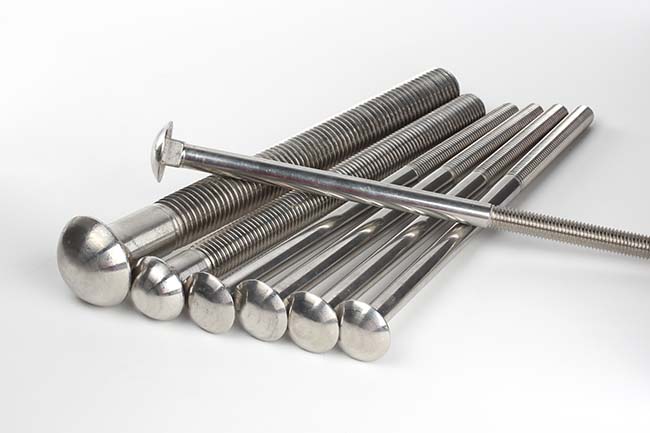
This guide explains what DIN 603 controls, how carriage bolt dimensions affect assembly, when carbon steel or a stainless carriage bolt may be appropriate, what to verify before approving a substitute, and how to prepare a specification-driven RFQ.
Table of Contents
DIN 603 Carriage Bolt Guide for Industrial Selection
What a DIN 603 Carriage Bolt Is
A DIN 603 carriage bolt is a metric fastener with a low, rounded head and a square section directly below the head. It is also described in the market as a cup head square neck bolt, coach bolt, or round head square neck bolt. The smooth head has no conventional external or internal drive, so tightening is normally performed from the nut side of the assembly.
The square neck is the key functional feature. When the neck is seated in a matching square opening, or when the joint material can securely engage the corners of the square, it resists rotation as torque is applied to the nut. This can simplify assembly when access is available from only one side for tightening and can also leave a clean, low-profile head on the exposed side.
DIN 603 should be treated as a dimensional and product specification, not as a complete application design rule. The designation alone does not tell a buyer everything about material grade, corrosion resistance, coating system, required proof or tensile properties, locking method, washer arrangement, or whether the joint is suitable for vibration, fatigue, outdoor exposure, or a safety-critical load. Those requirements belong in the drawing, purchase specification, or project standard.
How the Square Neck Bolt Design Works
A square neck bolt performs differently from a hex bolt because the head is not intended to be held by a wrench during normal installation. The joint itself must provide the reaction that prevents rotation. That makes hole design and substrate condition important.
In timber or certain softer materials, the square neck may embed sufficiently to resist turning, but the result depends on material density, hole diameter, edge distance, installation force, and whether repeated tightening is expected. In sheet metal, fabricated brackets, or machined components, engineers often use a square or otherwise anti-rotation feature that supports the neck more positively. A round clearance hole in hard metal may provide little resistance to rotation unless the joint includes another anti-rotation design.
The rounded head also changes how load is transferred into the top surface. It does not provide the same wrenching feature or bearing geometry as a conventional hex head. If the assembly requires a specific bearing area, controlled preload, repeated disassembly, or high installation torque, the designer should verify that a carriage bolt is appropriate rather than selecting it only for appearance.
Carriage Bolt Dimensions Buyers Should Verify
Carriage bolt dimensions are more than nominal thread diameter and overall length. The head diameter, head height, square-neck width, square-neck height, shank configuration, thread length, end geometry, and tolerances all affect fit and function. For DIN 603 procurement, these dimensions should be checked against the current standard edition or a controlled drawing.
| Specification Item | Why It Matters | What to Confirm on the RFQ |
|---|---|---|
| Standard and edition | Controls the intended geometry and technical delivery requirements | DIN 603 and the required edition or customer specification |
| Thread size | Must match the nut and mating thread system | Metric diameter, pitch, and thread direction if nonstandard |
| Nominal length | Determines grip, protrusion, and available thread engagement | Required length and how length is defined on the drawing |
| Head geometry | Affects seating, clearance, appearance, and bearing area | Head diameter, head height, and any special profile limits |
| Square neck | Provides anti-rotation function | Neck width, neck height, mating-hole design, and fit |
| Thread length | Affects grip length and nut engagement | Full or partial thread requirement and usable thread length |
| Material and mechanical class | Controls strength, ductility, and environmental suitability | Material designation, property class, or stainless grade |
| Finish or coating | Influences corrosion protection, appearance, and fit | Coating type, thickness requirement, color, and special restrictions |
A common purchasing mistake is to compare two offers using only “M10 x 80 DIN 603,” for example, while leaving material, property class, finish, thread length, nut, washer, and inspection scope undefined. The quotations may therefore represent different technical products even though the basic size description looks identical.
DIN 603 and Legacy ISO References
Buyers may encounter older catalogs that reference ISO 8677 in connection with cup head square neck bolts. ISO currently lists ISO 8677:1986 as withdrawn. That makes dimensional verification especially important when an existing bill of materials, distributor cross-reference, or maintenance drawing uses a legacy ISO designation.
Do not assume that two fastener standards are interchangeable merely because the product names look similar. Before approving a substitution, compare the actual head geometry, square-neck dimensions, thread size and pitch, length definition, thread length, product grade, material and mechanical requirements, coating, marking, and any customer-specific acceptance criteria. For replacement parts, it is also useful to check the mating hole and surrounding clearance on the real assembly.
Choosing Carbon Steel or a Stainless Carriage Bolt
Material selection should follow the load, environment, mating materials, expected maintenance, and project specification. DIN 603 identifies the product form, but the buyer still needs to specify the required material and mechanical performance.
| Material / Finish Direction | Typical Selection Reason | Buyer Check |
|---|---|---|
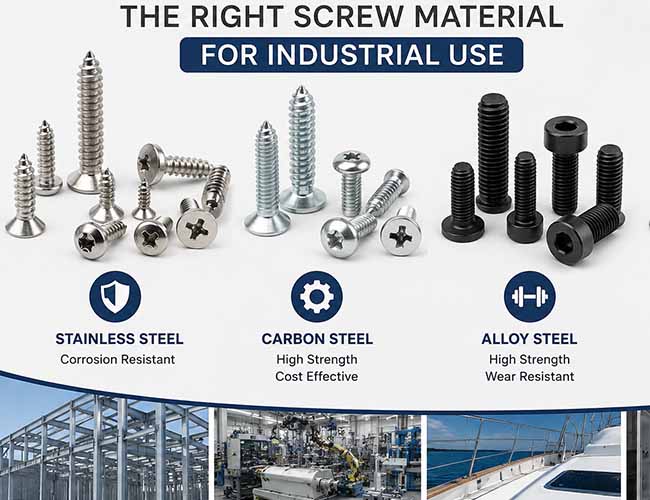
| Carbon steel, uncoated or plated | General industrial fastening where strength and cost efficiency are priorities | Property class, coating specification, hydrogen-embrittlement controls where relevant, and corrosion environment |
| Zinc-based or other protective coating | Added corrosion protection for carbon steel | Coating type, thickness, passivation, dimensional impact, appearance, and project restrictions |
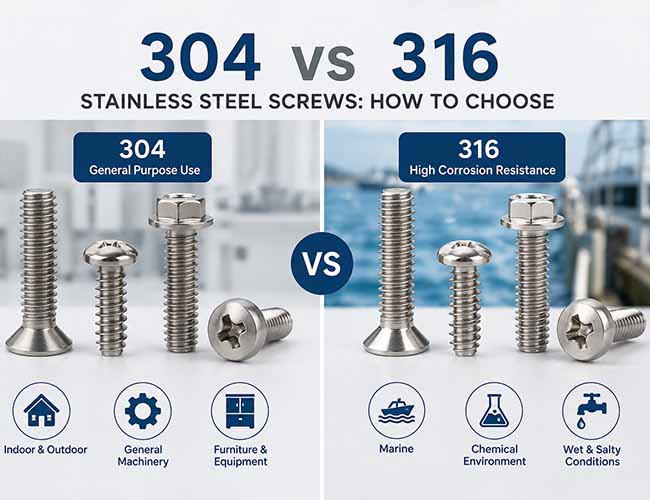
| A2 stainless steel | General corrosion resistance in many indoor, outdoor, and moderately corrosive environments | Exact stainless designation, mechanical class, galling risk, and compatibility with mating parts |
| A4 stainless steel | Higher resistance in environments where chloride exposure or more aggressive corrosion is a concern | Actual service environment, exact grade/class, surface condition, and engineering approval |
| Special material or custom finish | Application-specific chemical, temperature, weight, magnetic, or appearance requirements | Drawing, material standard, test requirements, coating process, and acceptance criteria |
A stainless carriage bolt is not automatically the best choice for every outdoor assembly. Stainless grades differ, and corrosion behavior also depends on crevices, contaminants, dissimilar-metal contact, cleaning practices, and service conditions. Likewise, a coated carbon steel bolt cannot be assigned a guaranteed corrosion life based only on the coating name. If a project has a defined corrosion target, specify the required coating system and test method rather than relying on a generic term such as “zinc plated” or “rust resistant.”
Common DIN 603 Carriage Bolt Applications
The round head square neck bolt format is useful when a smooth exposed head and nut-side tightening are desirable. Typical industrial uses include machinery guards, access panels, equipment frames, brackets, agricultural or construction equipment, rail-related fabricated assemblies, energy equipment supports, and general metal or mixed-material structures. Carriage bolts are also common in timber-to-metal and timber-to-timber connections, provided the joint is designed for the material and load.
For machinery, the square neck can reduce the need to hold the bolt head during assembly. For guards and enclosures, the rounded head can provide a lower-profile outer surface with no conventional drive recess. For fabricated frames, the fastener can work well where the receiving component includes a square punched or machined hole that captures the neck.
However, selection should be driven by joint mechanics, not by appearance alone. High cyclic loads, large shear loads, critical preload requirements, severe vibration, thin or fragile substrates, and repeated service disassembly may require additional engineering review. The joint designer should evaluate whether the square neck has enough support, whether the nut-side bearing surface needs a washer, and whether a locking feature is required.
DIN 603 Carriage Bolt Selection Checklist
A clear specification reduces sourcing errors and makes quotations easier to compare. Before sending an RFQ, define the following points:
- Standard: DIN 603, with the relevant current edition or customer-controlled revision.
- Size: metric thread diameter, pitch where necessary, and nominal bolt length.
- Thread configuration: required thread length, full or partial thread expectations, and usable engagement.
- Material: carbon steel, stainless steel, alloy, or another approved material designation.
- Mechanical requirement: property class, stainless class, hardness, tensile requirement, or drawing-defined acceptance criteria.
- Surface treatment: coating or finish specification, thickness requirement where applicable, and appearance requirements.
- Mating hardware: nut type, washer type, locking feature, and material compatibility.
- Joint geometry: round or square hole, material thickness, square-neck seating condition, and head-side clearance.
- Quantity and packaging: order quantity, labeling, lot traceability, and packing instructions.
- Inspection: dimensional checks, thread gauges, material certificates, mechanical tests, coating checks, or corrosion testing when required by the order.
If your sourcing list includes other bolt families, compare them through the bolt category or review the broader fastener product range. This helps purchasing teams consolidate standard and special items while keeping each line tied to its own technical specification.
Joint and Installation Considerations
Correct installation depends on the square neck being able to resist turning without damaging the joint. Before tightening, verify that the neck is fully seated and that the mating material can support the corners of the square. If the bolt spins while the nut is tightened, increasing torque is usually not the right solution; the hole geometry, neck engagement, or component condition should be inspected.
Washer selection also matters. A washer under the nut may be used to distribute bearing pressure, protect the surface, or support a locking arrangement, but the correct washer type depends on the joint design. For coated parts, excessive tightening or damaged tools can also disturb the protective surface. For stainless assemblies, thread galling should be considered in the installation procedure, especially where repeated assembly or high friction is expected.
Torque values should not be copied from an unrelated bolt chart. The required tightening method depends on diameter, pitch, material or property class, surface condition, lubrication, nut system, washer arrangement, and the target preload. Where preload is important, use the engineering specification or an approved tightening procedure.
Quality Control for Industrial Carriage Bolts
For B2B procurement, inspection should be linked to the purchase specification. A dimensional check can confirm overall length, thread size, head dimensions, square-neck geometry, and other drawing requirements. Thread go/no-go gauges can verify thread acceptance. Material certificate review can help confirm the specified material, while hardness or tensile testing may be required when mechanical properties are part of the order.
Surface treatment may also need inspection for appearance and coating thickness. Salt-spray testing can be included when it is explicitly required by the project or coating specification, but a test result should not be converted into an unsupported field-service-life guarantee. Quantity, labeling, packing, and export documentation may also form part of final order verification.
Flybear supports standard fasteners, special fasteners, and drawing- or sample-based custom parts for industrial sourcing. Depending on the actual order specification, the quality scope can include material and standard review, material certificate review, dimensional inspection, thread go/no-go inspection, hardness and tensile testing, coating-thickness inspection, appearance inspection, salt-spray testing when required, and packing or labeling verification. Buyers can review the quality control process when defining an inspection plan.
When to Choose a Standard Part and When to Request Customization
A standard DIN 603 carriage bolt is usually the most straightforward choice when the joint is designed around the standard geometry and available material and finish combinations meet the project requirements. Standardization simplifies drawings, replacement planning, distributor communication, and multi-supplier comparison.
Customization becomes relevant when the assembly needs a special length, nonstandard thread length, modified square neck, different head profile, special material, unusual coating, tighter dimensional controls, captive feature, special packaging, or a drawing-defined characteristic outside the standard product. In those cases, the RFQ should clearly distinguish which dimensions must follow DIN 603 and which features are intentionally modified.
Information to Send for a Custom or Drawing-Based RFQ
Provide the standard reference, nominal diameter and length, thread details, material or property class, coating, quantity, drawing or sample, application description, required certificates, and inspection scope. If the part interfaces with a square hole or a formed slot, include those mating dimensions as well. This gives the supplier enough information to evaluate manufacturability without guessing at critical requirements.
For projects combining carriage bolts with nuts, washers, screws, studs, pins, or other fasteners, one-stop sourcing can reduce the administrative burden, but each item should still retain its own controlled specification. When the requirement is ready, use the contact page to send the RFQ package.
DIN 603 Carriage Bolt FAQ
What is the main feature of a DIN 603 carriage bolt?
The defining form is a rounded cup-style head with a square neck beneath it. The square neck is intended to resist rotation when properly engaged with the mating material or hole while the nut is tightened.
What sizes does DIN 603 cover?
The current DIN 603 standard covers metric sizes from M5 through M20 in product grade C. Buyers should still verify the required nominal length, thread length, head and neck dimensions, material, mechanical properties, and finish against the current standard and project specification.
Is DIN 603 the same as ISO 8677?
Do not treat them as automatically interchangeable. ISO lists ISO 8677:1986 as withdrawn, and legacy cross-references can remain in catalogs or old drawings. For any substitution, compare the actual dimensional and technical requirements before approval.
When should I specify a stainless carriage bolt?
Specify stainless steel when the service environment, maintenance plan, hygiene requirement, or project standard calls for its corrosion or material characteristics. Choose the exact stainless grade and mechanical class rather than writing only “stainless steel.”
Can a DIN 603 carriage bolt be used in a round hole?
It may pass through a round hole, but the anti-rotation function depends on how the square neck is supported. In hard metal assemblies, a suitable square or anti-rotation feature may be necessary. The joint designer should verify hole geometry and neck engagement before release.
What should be included in a carriage bolt RFQ?
Include the standard, size, thread details, material or property class, finish, quantity, mating hardware, drawing or application information, packaging needs, certificates, and inspection requirements. This allows suppliers to quote the same technical scope and reduces later clarification.
Image ALT Suggestions
- DIN 603 carriage bolt with round head and square neck
- carriage bolt dimensions for industrial fastener selection
- stainless carriage bolt used in metal bracket assembly
- round head square neck bolt profile and mating hole
Conclusion: Specify the Joint, Not Just the Bolt Name
A DIN 603 carriage bolt can be an efficient fastening choice when the assembly benefits from a smooth round head, nut-side tightening, and a square neck that resists rotation. Reliable selection, however, depends on more than the standard number. Buyers should verify carriage bolt dimensions, thread configuration, material, mechanical requirement, finish, mating hardware, joint geometry, and inspection scope before releasing an order.
For new procurement or replacement projects, work from the current DIN 603 edition and a controlled drawing or specification. If you need a quotation, send the standard, size, property class or material, coating, quantity, drawing or application details, certificate requirements, and inspection scope so the requested DIN 603 carriage bolt can be evaluated against the actual assembly requirements.