Hex Bolt vs Hex Cap Screw: Key Differences for Industrial Buyers
Hex bolt vs hex cap screw is a common sourcing question because the two fasteners can look almost identical at first glance, yet the terms may refer to different dimensional requirements, thread configurations, bearing features, tolerances, and intended assembly methods. For OEM buyers, engineers, distributors, and sourcing teams, choosing correctly starts with the applicable standard rather than with appearance alone.
In U.S. inch fastener practice, a hex bolt and a hex cap screw can be separate standardized product types. In metric purchasing, the terminology is different again: ISO standards distinguish hexagon head bolts and hexagon head screws, while many drawings and supplier catalogs still use legacy DIN language. This creates an easy procurement trap. A buyer may request a “hex bolt” while expecting cap-screw tolerances, or may request a “hex cap screw” when the real requirement is simply a fully threaded metric hexagon head screw.
The safest approach is to define the product by standard, diameter, length, thread, material or property class, finish, and inspection requirements. The specification controls the part.
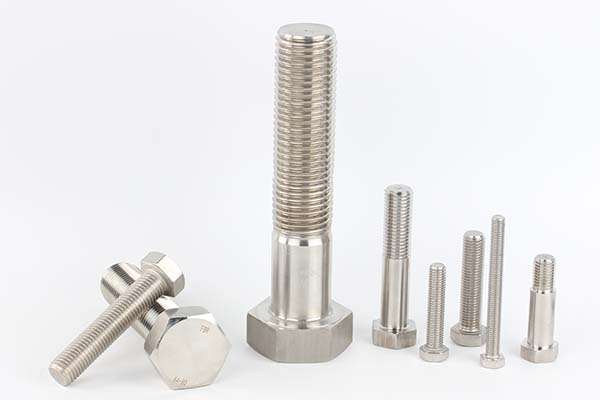
Table of Contents
- Hex Bolt vs Hex Cap Screw: Main Difference
- How Standards Define the Product
- Head, Body, Bearing Face, and Point Differences
- Thread Length and Grip Length
- Material and Strength Requirements
- Typical Industrial Applications
- Bolt Selection Guide
- Quality Control and Custom Supply
- Frequently Asked Questions
Hex Bolt vs Hex Cap Screw: What Is the Main Difference?
The main difference is not simply whether one fastener has a hexagonal head. Both do. The difference is that recognized standards can assign different dimensional requirements to the two product types. Under ASME inch-series practice, hex bolts and hex cap screws are treated separately, with their own dimensional data. This means a purchase specification should not assume that equal nominal diameter and length make the products dimensionally identical.
In typical North American industrial usage, a hex cap screw is associated with a more closely controlled finished fastener, including a defined bearing face under the head and a formed point at the threaded end. A standard hex bolt may have different body-diameter tolerances and underhead details. However, catalog terminology is not always consistent, so these market conventions should never replace the drawing or dimensional standard.
| Selection Point | Hex Bolt | Hex Cap Screw |
|---|---|---|
| Head style | External hex head | External hex head |
| Dimensional definition | Controlled by the specified bolt standard | Controlled by the specified cap-screw standard |
| Body and head tolerances | May differ from cap-screw tolerances | Often selected where closer dimensional control is expected |
| Underhead bearing feature | Depends on the applicable standard | Typically includes a defined washer face in inch-series practice |
| Point | Depends on the specified product standard | Typically includes a formed or chamfered point |
| Threading | Can be partial or full depending on standard and length | Can also be partial or full depending on standard and length |
| Typical assembly convention | Frequently used through clearance holes with a nut | Frequently used in tapped holes or controlled machinery assemblies |
The table should be read as a selection guide, not as a substitute for the governing standard. The exact head dimensions, body diameter, thread length, underhead geometry, point, and tolerances must be verified against the specified standard and size.
How Standards Define a Hex Head Bolt and Hex Cap Screw
For inch-series products, ASME B18.2.1 is an important dimensional reference because it covers multiple square and hex bolt and screw product types, including separate dimensional provisions for hex bolts and hex cap screws. This is why an RFQ that only says “1/2-inch hex bolt” can still be incomplete. The supplier needs to know which dimensional product is required.
For metric products, the terminology shifts. ISO 4014 covers hexagon head bolts, generally associated with a partially threaded configuration, while ISO 4017 covers hexagon head screws, generally associated with a fully threaded configuration. These ISO product names should not be forced into U.S. inch terminology. A metric “hexagon head screw” under ISO 4017 is not automatically equivalent to every product sold as an inch “hex cap screw.”
Legacy DIN references are also still common in machinery drawings and maintenance purchasing. When an older DIN designation appears, buyers should verify dimensions against the required current standard rather than assuming one-for-one interchangeability. Across-flats dimensions, thread length, product grade, tolerances, and other details can change between standard systems or editions.
For a broader sourcing review, buyers can compare the available industrial bolt range and then confirm the exact governing standard before quotation.
Hex Cap Screw Dimensions: What Buyers Should Check
Hex cap screw dimensions involve much more than diameter and overall length. When a part must fit an existing assembly, tool envelope, counterbore, fixture, or tapped housing, small dimensional differences can become important. A sourcing drawing or purchase specification should identify the required standard and any critical dimensions that cannot be left to normal standard tolerances.
Important dimensional features include width across flats, width across corners, head height, bearing-face diameter, underhead fillet, body diameter, straightness, thread length, transition from body to thread, point geometry, and overall length tolerance. If a washer, recessed seat, socket tool, or close-clearance hole is involved, head and body dimensions deserve particular attention.
Head and Bearing Face
Both products use an external hex drive, but the underhead bearing condition can differ. A defined washer face on a cap screw provides a controlled bearing surface under the head. This can be useful in machinery and precision assemblies where the designer wants consistent seating against a component or washer.
That does not mean a cap screw eliminates the need for a separate washer. Washer selection depends on the joint design, bearing material, hole geometry, surface protection, preload method, and applicable standard. The underhead face is a product feature, not a universal replacement for joint-design components.
Body Diameter and Fit
Body diameter is often overlooked when buyers compare two fasteners with the same nominal thread size. In clearance-hole assemblies, a wider permissible body tolerance may not matter. In a close-fit hole, locating feature, or precision machine assembly, it can matter significantly. If the unthreaded shank is intended to locate parts or carry shear through a controlled fit, the design should specify the required body condition instead of relying on a generic product name.
Point and Thread Start
The shape at the threaded end affects how easily a fastener starts into a nut or tapped hole. Cap screws are commonly supplied with a formed point that supports assembly and protects the first usable threads. For automated assembly, deep tapped holes, or frequently serviced equipment, point geometry can be more important than it appears in a catalog image.
Is a Hex Cap Screw Always Fully Threaded?
No. One of the most common purchasing errors is assuming that “cap screw” always means fully threaded. Under inch-series cap-screw practice, short lengths may be threaded for most or all of their usable length, while longer lengths can have an unthreaded body. Thread length is determined by the applicable standard, nominal diameter, and fastener length.
The same caution applies to the word “bolt.” A hex bolt is not automatically partially threaded in every standard system. If thread engagement, grip length, shear-plane location, or assembly stack-up matters, specify the required product standard and check the standard thread-length formula or table for the exact size and length.
For a joint loaded in shear, designers may prefer the shear plane to pass through an unthreaded shank rather than through the threaded section. For a tapped-hole assembly, sufficient thread engagement and a suitable runout condition may be more important. These are engineering decisions, so procurement should preserve the drawing requirement instead of changing partial thread to full thread for convenience.
Geometry Does Not Define Strength Grade
A hex head bolt can be manufactured in many materials and strength levels. Likewise, a hex cap screw can be supplied in different grades, property classes, stainless steel grades, or alloy specifications. The dimensional standard defines geometry; it does not by itself define every mechanical or chemical requirement.
For metric carbon and alloy steel fasteners, ISO 898-1 is commonly used for mechanical and physical properties when a property class is specified. Stainless steel fasteners may use a different material standard, while inch-series products may be ordered to SAE, ASTM, or other application-specific requirements. The purchase order should therefore identify both the dimensional standard and the material or mechanical specification.
Typical information to define includes:
- Dimensional standard and required edition
- Nominal diameter and overall length
- Thread series, pitch, and class or tolerance
- Material grade or property class
- Heat treatment when required by the material specification
- Surface finish, plating, coating, or passivation
- Required marking and traceability
- Mechanical and dimensional inspection requirements
Two fasteners with identical outside dimensions can have very different mechanical performance if their material and heat-treatment requirements differ. Conversely, two fasteners with the same property class can still be dimensionally different if they are made to different product standards.
Coating and Surface Finish Are Part of the Specification
Industrial bolts may be supplied plain, zinc plated, zinc flake coated, hot-dip galvanized, mechanically coated, phosphate treated, black finished, or with other project-defined surfaces. Stainless products may be ordered with cleaning or passivation requirements. The correct option depends on the application, corrosion environment, mating components, temperature, installation method, and customer specification.
Coating thickness can affect thread fit, especially where the coating is relatively thick or where tight thread tolerances are used. Friction also changes with coating and lubrication, so the same tightening torque does not necessarily produce the same preload after a finish changes. Buyers should specify the complete surface condition rather than asking only for a color or generic corrosion-resistant finish.
Salt-spray testing can be useful when a coating specification or project requirement calls for it, but a salt-spray result should not be presented as a guaranteed field service life. Real service conditions can differ substantially from accelerated laboratory exposure.
Typical Applications for Industrial Bolts and Cap Screws
Industrial bolts are used across machinery, automotive equipment, construction machinery, rail systems, energy equipment, fabrication, agricultural machinery, material handling, and general industrial assemblies. The best product type depends on how the joint is assembled and what dimensions control fit and load transfer.
A conventional hex bolt is frequently practical for through-bolted joints where the fastener passes through clearance holes and is tightened with a nut. Examples include brackets, frames, guards, equipment bases, and fabricated assemblies. In these joints, accessibility from both sides and compatibility with the nut and washer are important.
A hex cap screw is often preferred where the fastener threads directly into a tapped component, where controlled underhead seating is important, or where machinery designs use a standardized cap-screw envelope. Cap screws can also be used with nuts when the design permits, so application method is not an absolute definition.
For OEM programs that include several fastener families, a consolidated fastener product portfolio can help sourcing teams organize bolts, screws, nuts, washers, and special parts under one specification review.
Bolt Selection Guide for OEM and Procurement Teams
A practical bolt selection guide should begin with the joint, not the catalog photo. Before selecting a hex bolt or hex cap screw, review how the fastener is installed, what surfaces it bears against, whether a nut or tapped hole is used, where the shear plane lies, and which dimensions are critical to assembly.
| Application Question | What to Check |
|---|---|
| Is the joint through-bolted? | Confirm bolt length, nut engagement, washer use, and clearance-hole dimensions. |
| Does the fastener enter a tapped hole? | Confirm thread class, engagement length, point style, runout, and bottoming clearance. |
| Is an unthreaded grip required? | Verify standard thread length and the location of the thread transition. |
| Is the shank used for location or shear? | Specify the required body diameter and fit rather than assuming a generic tolerance. |
| Is wrench clearance limited? | Verify across-flats and head-height dimensions for the selected standard. |
| Is corrosion protection required? | Define coating standard, thickness, lubrication, appearance, and inspection. |
| Is strength critical? | Specify material grade or property class separately from the dimensional standard. |
| Is the part nonstandard? | Provide a controlled drawing with critical characteristics and inspection requirements. |
When a Custom Bolt Is the Better Choice
Standard dimensions are not always suitable for proprietary machinery. A custom bolt may be needed for a special grip length, reduced or increased shank diameter, special head geometry, nonstandard thread length, unusual point, drilled feature, special marking, restricted coating area, or drawing-defined tolerance.
When custom geometry is required, the RFQ should distinguish between dimensions that may follow a standard and dimensions that are controlled by the customer drawing. This prevents a supplier from assuming that a familiar product family automatically controls every feature.
Quality Control for Hex Bolts and Hex Cap Screws
Quality inspection should match the risks identified in the order. Depending on the specification, relevant checks can include material certificate review, dimensional inspection, thread go/no-go inspection, hardness testing, tensile testing, surface-treatment or coating-thickness inspection, appearance inspection, and packing or label verification. Salt-spray testing may also be included when required by the coating specification or project.
Flybear supports standard fasteners, special fasteners, and drawing- or sample-based custom parts for industrial sourcing programs. Inspection activities are defined according to the actual order rather than presented as a universal test package. Buyers can review the available quality control process when preparing an inspection plan.
For repeat OEM purchases, control the revision level. Drawing, coating, property-class, or thread changes should be reviewed before production because they can affect tooling, inspection, and assembly fit.
What to Put on an RFQ
An RFQ for a hex bolt or hex cap screw should be specific enough that different suppliers quote the same technical product. Include the standard, size, length, thread, material or property class, coating, quantity, and any drawing or application notes. If certificates, special inspection, samples, first-article records, or packing requirements are needed, state them before quotation.
A useful specification format is: product standard + nominal size + length + thread + material/property class + finish + inspection/document requirements. For custom parts, attach the drawing and identify any characteristics that require special control.
This approach reduces ambiguity around terms such as “bolt,” “full thread,” “DIN equivalent,” or “standard zinc,” while making supplier quotations easier to compare on the same technical basis.
Frequently Asked Questions
Is a hex bolt the same as a hex cap screw?
Not necessarily. In inch-series standards such as ASME B18.2.1, hex bolts and hex cap screws are separate product types with separate dimensional requirements. In everyday supplier language, “hex bolt” may also be used generically, so the standard should always be stated.
Is a hex cap screw always fully threaded?
No. Thread length depends on the applicable standard, diameter, and overall length. Some shorter cap screws may be threaded for most or all of their usable length, while longer sizes may include an unthreaded body.
Are ISO 4014 and ISO 4017 the same as inch hex bolts and cap screws?
No. ISO 4014 and ISO 4017 are metric product standards with their own dimensions and terminology. They should not be assumed to be dimensionally interchangeable with inch products or with another metric standard without verification.
Can I replace a hex bolt with a hex cap screw of the same diameter and length?
Only after checking the required standard, head dimensions, body diameter, thread length, bearing surface, point, material or property class, coating, and joint design. Equal nominal size does not prove complete interchangeability.
Does the property class tell me the bolt dimensions?
No. Property class primarily addresses mechanical requirements for the applicable material system. Product dimensions are controlled by the relevant dimensional standard or customer drawing.
Image ALT Suggestions
- Hex bolt vs hex cap screw dimensional comparison for industrial buyers
- Hex head bolt and hex cap screw underhead bearing face comparison
- Partial thread and full thread industrial hex fasteners
- Hex cap screw dimensions and inspection points for OEM sourcing
Conclusion: Specify the Standard Before Choosing the Name
Hex bolt vs hex cap screw is not a question that should be answered from appearance alone. The most reliable distinction comes from the specified dimensional standard and the actual joint requirements. In U.S. inch practice, the two can be separate standardized products. In metric sourcing, ISO terminology and legacy DIN references create another layer of naming differences.
For industrial buyers, the decision is straightforward when the RFQ is specification-driven: confirm the standard, size, thread configuration, body and head requirements, material or property class, coating, quantity, and inspection scope. If the assembly requires a special grip, point, head feature, coating condition, or tolerance, provide a drawing instead of relying on a generic catalog description.
To request a quotation, send your RFQ with the required standard, size, property class or material, coating, quantity, and drawing or application details. A complete technical inquiry makes it easier to compare supply options and select the correct fastener for production.