Power Grid & Substation Fastening Solutions for Reliable Electrical Infrastructure
Power grid and substation fastening solutions are essential for creating secure, durable, and serviceable connections across transmission structures, substations, transformers, switchgear, bus support systems, control buildings, cable structures, grounding equipment, and other electrical infrastructure. Many of these assemblies operate outdoors for long periods and may be exposed to wind, vibration, rain, humidity, temperature cycling, industrial pollution, and corrosive environments, placing demanding requirements on bolts, nuts, washers, threaded rods, screws, anchors, and custom fastening components.
For power utilities, substation equipment manufacturers, EPC contractors, steel fabricators, electrical system integrators, distributors, and procurement teams, fastener selection involves much more than choosing a diameter and length. Material grade, mechanical strength, coating, thread specification, electrical function, connected materials, installation method, corrosion exposure, dimensional tolerance, and maintenance requirements can all influence the performance of the complete assembly.
A practical sourcing strategy combines standard structural and equipment fasteners with corrosion-resistant and custom components where conventional catalog hardware cannot meet project requirements. Clearly defined fastener specifications can support efficient fabrication, site installation, maintenance, and long-term replacement programs across transmission and substation infrastructure.
Complete Fastening Support for Power Grid and Substation Projects
Power transmission and substation projects contain a wide range of fastening applications. Structural steel frames may require high-strength bolts, transformers and switchgear use mechanical enclosure and mounting hardware, bus support structures require secure equipment connections, cable systems need brackets and supporting fasteners, and outdoor equipment may require enhanced corrosion protection.
Flybear supports one-stop sourcing of standard and custom fastening components for power grid and substation projects, helping buyers consolidate structural bolts, hex bolts, studs, nuts, washers, threaded rods, U-bolts, screws, inserts, pins, and drawing-based parts according to individual equipment and construction requirements.
Power Grid and Substation Fastening Solutions for Steel Structures
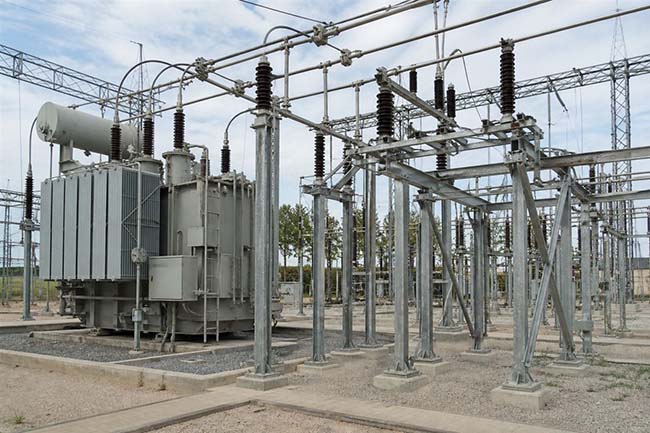
Substations rely on structural steel systems to support transformers, disconnect switches, instrument transformers, bus assemblies, insulators, lightning-protection equipment, cable structures, and other electrical components. These support frames must maintain structural stability under equipment weight, wind loads, installation loads, and environmental exposure.
Hex bolts, structural bolts, flange bolts, nuts, hardened washers, threaded rods, and anchor components can be used according to structural design requirements. Fastener grade, diameter, length, and washer configuration should follow the approved engineering specification rather than being selected only according to availability.
The complete connection should be considered when specifying structural fasteners. Plate thickness, hole dimensions, connected steel grade, bearing surfaces, bolt spacing, tightening method, and corrosion protection can all affect joint performance.
For fabricated substation structures, dimensional consistency is also important because connection points must align during site erection. Correct bolt lengths and thread projections can help simplify assembly and reduce installation problems.
High-Strength Bolts for Substation Support Structures
Large equipment supports, gantries, transformer structures, bus supports, and transmission-related steelwork can require high-strength bolted connections. Depending on the project specification, appropriate metric or inch structural bolting systems may be selected.
High-strength bolts should be matched with compatible nuts and washers. Increasing bolt strength alone does not automatically improve a structural connection if the nut, washer, connected plate, thread engagement, or installation method becomes the limiting element.
Fastener surface condition can also affect tightening behavior. Where controlled preload is required, coating, lubrication, nut compatibility, and installation procedure should be considered together.
Procurement teams should identify the complete bolting assembly during the RFQ stage, including bolt grade, nut grade, washer requirements, coating, dimensions, and any project-specific inspection or documentation requirements.
Fasteners for Power Transformers
Power transformers contain tanks, radiators, conservators, terminal enclosures, cooling systems, brackets, cable supports, control boxes, access covers, and structural mounting points. These assemblies require several different fastener families within the same piece of equipment.
Hex bolts, flange bolts, studs, machine screws, nuts, washers, threaded inserts, and custom fasteners may be used depending on the component. Larger structural connections may prioritize mechanical strength, while enclosure and accessory fasteners may prioritize corrosion resistance, serviceability, and compact installation.
Outdoor transformer equipment is commonly exposed to rain, humidity, condensation, dust, and temperature changes. Material and surface treatment should therefore be matched to the installation environment and transformer manufacturer’s specification.
Where a fastener is associated with an electrical bonding or grounding function, its material, surface condition, contact interface, and installation requirements should follow the approved electrical design rather than general mechanical fastening practices.
Fastening Solutions for Switchgear and Circuit Breaker Equipment
Substations contain circuit breakers, disconnect switches, switchgear assemblies, operating mechanisms, support frames, control boxes, and related electrical equipment. These systems require fasteners for both structural mounting and equipment assembly.
Structural connections may use hex bolts, flange bolts, nuts, washers, and studs, while control enclosures may use machine screws, SEMS screws, captive screws, threaded inserts, and rivet nuts.
Fastener selection should account for whether the joint is intended to remain permanently assembled or requires regular access during inspection and maintenance. Captive screws can be useful for access panels because the hardware remains associated with the cover when opened.
For operating mechanisms and moving components, vibration and repeated mechanical cycles should also be considered when defining locking methods and installation requirements.
Fasteners for Busbar and Bus Support Structures
Substation bus systems connect major electrical equipment and can include rigid bus conductors, flexible conductors, insulators, support brackets, clamps, and steel structures. Fasteners may be used for mechanical supports, equipment interfaces, structural frames, and certain electrical connections.
Mechanical support fasteners should provide sufficient strength and stability for the intended structural loads. Where fasteners participate directly in electrical connections, conductivity, contact resistance, material compatibility, surface treatment, and tightening requirements become additional engineering considerations.
The distinction between a mechanical structural fastener and hardware forming part of an electrical current path is important. A coating or material appropriate for a steel support bracket may not be appropriate for an electrical contact interface.
Buyers should therefore clearly identify the function of the hardware during quotation so that the required material and finish are not selected solely from general structural fastening criteria.
Grounding and Bonding Fastener Considerations
Grounding systems are fundamental parts of substations and transmission infrastructure. Equipment frames, steel structures, fences, control buildings, and electrical apparatus may incorporate grounding or bonding connections according to the approved substation design.
Fasteners associated with these connections should be specified according to the project’s electrical and grounding requirements. Material compatibility, contact surfaces, corrosion exposure, tightening, and long-term connection integrity may all be relevant.
Grounding-related hardware should not be substituted simply because another bolt or nut has the same thread size. Surface coatings and material combinations can affect the electrical and corrosion characteristics of the connection.
Procurement teams should therefore distinguish grounding hardware from ordinary mechanical fasteners and follow the project drawings, approved connection details, and applicable electrical specifications.
Hot-Dip Galvanized Fasteners for Outdoor Substations
Outdoor substations contain extensive steel structures exposed to weather throughout their operating life. Hot-dip galvanized steel components and galvanized fastening systems are commonly considered where a durable corrosion-protection strategy is required.
Galvanized bolts, nuts, washers, threaded rods, and structural components should be specified as compatible assemblies. Because galvanizing adds coating thickness, thread fit and nut compatibility must be considered when purchasing galvanized threaded components.
Fastener coating should also be coordinated with the connected structural steel. Using compatible corrosion-protection systems can simplify project specification and long-term maintenance planning.
Buyers should identify the exact required finish rather than requesting only a generic zinc coating because different zinc-based processes can have different thickness, appearance, and application characteristics.
Corrosion-Resistant Fasteners for Substation Environments
Power grid infrastructure can operate in urban, industrial, rural, coastal, desert, and high-humidity environments. Each location creates different corrosion challenges for exposed fastening hardware.
Carbon and alloy steel fasteners may use hot-dip galvanizing, zinc-based finishes, zinc flake coatings, or other specified protective systems. Stainless steel fasteners may also be considered for selected equipment applications where corrosion resistance is important.
Material compatibility should be evaluated when stainless steel, galvanized steel, aluminum, copper, and other metals are combined within the same equipment assembly. Moisture and environmental contaminants can influence interactions between dissimilar materials.
The appropriate corrosion-protection strategy should therefore consider the fastener, connected structure, electrical function, exposure environment, and maintenance requirements as a complete system.
Fasteners for Transmission Towers and Line Structures
Power grid fastening requirements extend beyond substations to transmission towers, monopoles, support structures, crossarms, brackets, communication equipment, and line accessories. These structures require reliable bolted joints suitable for long-term outdoor exposure.
Structural bolts, hex bolts, nuts, washers, threaded rods, and custom fastening components can be specified according to the transmission structure design. Fastener grade, geometry, and corrosion protection should follow the structural engineering requirements of the project.
Installation conditions should also be considered. Transmission structures may be assembled in sections before erection or bolted together at the project site, making fastener identification, packaging, and consistent dimensions important for efficient field work.
Where non-standard structural components require unusual bolt lengths or geometry, custom fasteners can be manufactured according to project drawings.
Anchor Bolts for Substation Equipment Foundations
Transformers, steel structures, equipment frames, control buildings, and other substation components may be secured to concrete foundations using anchor bolts, threaded rods, or project-specific anchoring assemblies.
Anchor fasteners can vary significantly in diameter, length, thread length, plate configuration, bend geometry, and material. Because foundation details are closely connected to equipment dimensions and structural design, many anchor components are manufactured according to drawings.
Thread projection should be coordinated with base plates, washers, nuts, leveling requirements, grout, and installation tolerances. Accurate anchor positioning is important because equipment base holes must align correctly during installation.
Custom anchor bolt RFQs should include complete drawings showing material, overall dimensions, thread requirements, tolerances, finish, and any required plates or nuts.
Fasteners for Cable Support and Cable Management Systems
Substations contain extensive power, control, communication, and protection cabling. Cable trays, ladders, brackets, supports, clamps, junction boxes, and structural frames require a variety of fastening components.
Hex bolts, machine screws, flange bolts, U-bolts, threaded rods, nuts, washers, self-drilling screws, and specialty clamps can be used depending on the support system.
Outdoor cable supports should be selected with corrosion resistance in mind, while indoor control-building systems may have different environmental requirements. Fastener finishes should be compatible with the cable tray or supporting structure.
Standardizing common hardware sizes across repeated cable-support assemblies can also simplify installation and spare-parts management.
Fastening Solutions for Control Buildings and Electrical Cabinets
Control buildings and protection systems contain relay cabinets, communication equipment, control panels, battery equipment, terminal boxes, and monitoring systems. These assemblies often use smaller fastening components than outdoor steel structures.
Machine screws, SEMS screws, captive screws, rivet nuts, threaded inserts, standoffs, nuts, and washers can be used for cabinet panels, mounting plates, doors, electrical modules, and internal supports.
SEMS screws can simplify production by combining a screw and captive washer, while rivet nuts and self-clinching components can create reusable threaded points in thin sheet metal.
Where hardware forms part of a grounding or bonding path, the material and surface requirements should be specified according to the electrical design.
Fasteners for Substation Battery and DC Systems
Substation battery systems, chargers, DC distribution equipment, racks, cabinets, and monitoring devices provide essential support for protection, control, and switching functions. Their assemblies require fasteners for structural frames, enclosures, trays, modules, and electrical equipment.
Machine screws, bolts, nuts, washers, threaded inserts, standoffs, and custom components may be used according to the equipment design. Corrosion resistance and maintenance access can be important because battery and electrical equipment may require routine inspection.
Where fasteners are associated with electrical terminals or conductive connections, the equipment manufacturer’s approved specification should define the required material, surface condition, and tightening method.
Mechanical rack and cabinet fasteners can be selected according to different criteria, including structural load, corrosion exposure, and serviceability.
Vibration-Resistant Fasteners for Grid Equipment
Transformers, switching mechanisms, cooling fans, pumps, and other substation equipment can produce vibration during operation. Wind loading and equipment switching can also introduce repeated mechanical forces into supporting structures.
Stable bolted joints depend on correct preload, thread engagement, bearing surfaces, fastener strength, connected materials, and proper installation. Additional locking features may be used where the equipment design requires greater resistance to loosening.
Lock nuts, prevailing-torque nuts, serrated flange fasteners, mechanical locking washers, or other specified solutions can be considered depending on the joint.
The selected locking system should also reflect maintenance requirements because some equipment connections need to be opened repeatedly during inspection or replacement.
Fasteners for Renewable Energy Grid Connections
Solar farms, wind farms, battery storage sites, and other renewable-energy projects commonly connect to the electrical grid through substations and transmission infrastructure. These projects expand the fastening requirements beyond the generating equipment itself.
Substation structures, transformers, switchgear, cable systems, equipment skids, control cabinets, battery systems, and transmission connections can require standard structural fasteners together with equipment-specific hardware.
For EPC contractors managing complete renewable-energy interconnection projects, consolidated fastener sourcing can reduce the number of purchasing channels required for steel structures, electrical equipment supports, cabinets, cable systems, and custom components.
Each fastening application should still retain its individual material, strength, finish, and dimensional specification rather than using one general fastener type across the complete project.
Material Selection for Power Grid Fasteners
Power grid fasteners can be manufactured from carbon steel, alloy steel, stainless steel, brass, and other materials depending on the mechanical, electrical, and environmental requirements of the application.
Carbon steel provides a practical option for many general structural and equipment assemblies, particularly when combined with suitable corrosion protection. Alloy steel can provide higher mechanical strength for more demanding structural connections.
Stainless steel may be selected for certain corrosion-sensitive applications, while other materials may be required where electrical conductivity or compatibility with surrounding equipment is important.
Material substitution should be carefully reviewed. Two fasteners with identical dimensions can behave differently because of differences in mechanical strength, corrosion resistance, conductivity, friction, and interaction with mating materials.
Custom Substation Fasteners for Specialized Equipment
Substation and power-grid equipment often contains proprietary structures and mechanical interfaces that cannot be assembled efficiently using standard catalog hardware. Custom substation fasteners can be manufactured according to technical drawings for specialized structures, electrical equipment, and replacement projects.
Typical custom components may include special-length bolts, double-ended studs, anchor bolts, U-bolts, threaded rods, shoulder bolts, stepped pins, special nuts, custom washers, spacers, and machined threaded components.
Custom manufacturing can help solve unusual equipment geometry, restricted installation space, special thread lengths, proprietary support systems, or unique mounting interfaces.
Technical drawings should identify material, grade, dimensions, tolerances, thread specifications, mechanical requirements, surface treatment, and inspection criteria. Critical dimensions should be clearly marked to support manufacturing and quality control.
Fastener Quality and Traceability for Substation Projects
Reliable power grid fastener sourcing begins with clearly defined technical requirements. Buyers should confirm the applicable dimensional standard or drawing revision, material, grade, dimensions, thread, coating, matching components, and inspection requirements before production.
Depending on the product specification, verification may include dimensional inspection, thread checking, hardness testing, tensile or proof-load testing, coating inspection, or material verification.
Custom components may require additional control of thread lengths, bends, shoulders, locating features, or other drawing dimensions. These characteristics should be identified during quotation so that suitable inspection methods can be planned.
If lot identification, material documentation, product marking, inspection reports, or other traceability requirements apply, they should be communicated before manufacturing rather than added after production.
Fasteners for Substation Maintenance and Equipment Replacement
Power grid infrastructure requires inspection, maintenance, upgrades, and equipment replacement throughout its service life. Transformer replacement, switchgear maintenance, structural repairs, cable-system modifications, and control-equipment upgrades can all create ongoing demand for replacement fasteners.
Replacement components should match the technical requirements of the original joint where the application is controlled by an engineering specification. Diameter and length alone are not enough to confirm interchangeability.
Material, strength grade, thread pitch, coating, head geometry, nut and washer compatibility, and electrical function should also be reviewed before substitution.
For older substations or imported equipment, specialized hardware may no longer be available as standard stock. Technical drawings or complete dimensional specifications can support custom production for MRO and refurbishment projects.
Fastener Standardization for Substation Construction
Large substations can require many fastener sizes across structural steel, electrical equipment, cable supports, cabinets, and auxiliary systems. Excessive variation increases procurement complexity, field identification requirements, and inventory needs.
Engineering and purchasing teams can review repeated fastener requirements to identify opportunities for standardization where technical specifications allow. Common bolt diameters, nut types, washers, thread systems, and coatings can simplify sourcing and installation.
Standardization should not override specialized electrical, structural, grounding, or equipment requirements. Custom or application-specific components should remain separate where they provide a necessary technical function.
For repeated substation designs, a controlled fastener schedule can also simplify future procurement and spare-parts planning.
How to Prepare an RFQ for Power Grid and Substation Fasteners
A detailed RFQ helps suppliers evaluate technical, manufacturing, and commercial requirements efficiently. Standard fasteners should be identified by their complete specification, while custom structural and equipment components should include technical drawings whenever possible.
Recommended RFQ Information
- Fastener type and applicable dimensional standard
- Technical drawing and revision for custom components
- Diameter, thread type, pitch, and overall length
- Material and required grade or property class
- Matching nut and washer requirements
- Surface treatment or corrosion-protection specification
- Application within the substation or transmission system
- Structural, mechanical, or electrical function
- Indoor, outdoor, industrial, or coastal exposure conditions
- Critical dimensions and tolerances
- Required quantity and purchasing frequency
- Inspection and testing requirements
- Documentation and traceability requirements
- Packaging, marking, and project labeling requirements
If the final fastener specification has not yet been determined, buyers can also provide information about the complete connection, including connected materials, equipment type, expected loading, installation access, environmental exposure, maintenance requirements, and whether the hardware has any electrical or grounding function.
One-Stop Fastener Sourcing for Power Grid and Substation Projects
Utilities, EPC contractors, substation equipment manufacturers, and steel fabricators may require many different fastening families across transmission structures, substations, transformers, switchgear, bus supports, cable systems, equipment foundations, control cabinets, and auxiliary equipment. Managing separate suppliers for structural bolts, galvanized hardware, threaded rods, anchors, U-bolts, machine screws, nuts, washers, and custom parts can increase procurement complexity.
A one-stop sourcing strategy allows buyers to consolidate standard and drawing-based fasteners while maintaining the individual material, strength, dimensional, coating, inspection, and electrical requirements of each application. Common structural and equipment hardware can support repeat construction programs, while custom components can address proprietary substation designs and replacement needs.
Whether the project involves transmission infrastructure, new substations, transformer installations, switchgear systems, renewable-energy grid connections, substation upgrades, or long-term maintenance, reliable fastening starts with accurate technical specifications. Matching fastener strength, material, thread configuration, corrosion protection, electrical function, dimensions, and installation requirements to the actual application helps support efficient construction, dependable equipment assembly, and a more organized long-term supply strategy.