Oil & Gas Fastening Solutions for Critical Energy Infrastructure
Oil and gas fastening solutions are essential for maintaining secure mechanical connections across upstream, midstream, and downstream energy infrastructure. Drilling equipment, pipelines, valves, pressure vessels, pumps, compressors, refineries, petrochemical plants, offshore platforms, and processing skids all depend on bolts, studs, nuts, washers, screws, and specialized fastening components that can operate reliably under demanding mechanical and environmental conditions.
Oil and gas equipment may be exposed to pressure, vibration, temperature changes, corrosive environments, outdoor weather, chemicals, and repeated maintenance cycles. For OEMs, EPC contractors, maintenance companies, distributors, and industrial procurement teams, selecting the correct fastener therefore requires more than matching diameter and thread size. Material grade, mechanical properties, operating temperature, corrosion exposure, thread specification, surface treatment, installation method, and documentation requirements should all be considered as part of the complete joint.
A practical sourcing strategy combines standardized industrial fasteners with application-specific and custom components. This approach helps energy companies and equipment manufacturers manage both routine hardware requirements and specialized fastening needs across complex oil and gas projects.
Complete Fastening Support for Oil and Gas Equipment and Infrastructure
Oil and gas facilities contain fastening points with very different functions and performance requirements. Pipeline flanges may use high-strength stud bolts and heavy hex nuts, drilling equipment can require rugged structural bolting, pumps and compressors need vibration-resistant connections, and refinery equipment may require materials suitable for elevated temperatures or corrosive process environments.
Flybear supports one-stop sourcing of standard and custom fastening components for oil and gas projects, helping buyers consolidate stud bolts, hex bolts, socket screws, nuts, washers, threaded rods, pins, specialty fasteners, and drawing-based parts according to individual project specifications.
Oil and Gas Fastening Solutions for Pipeline Flanges
Pipeline flange connections are among the most important bolted joints in oil and gas infrastructure. The fasteners generate the clamping force required to compress the gasket and maintain a sealed joint between mating flanges. Depending on the piping system, the connection may be exposed to internal pressure, thermal cycling, vibration, external loads, and corrosive environments.
Stud bolts with heavy hex nuts are widely used for flange assemblies because they provide practical installation and allow controlled tightening from both sides of the connection. The required stud diameter, thread, length, material grade, and nut specification should follow the applicable piping class, engineering design, and project requirements.
Fastener selection should consider the entire flange joint. Gasket type, flange material, operating pressure, temperature, bolt preload, lubrication, surface condition, and tightening method can all affect joint behavior. For this reason, fasteners should not be substituted based only on nominal dimensions.
High-Strength Bolting for Drilling and Production Equipment
Upstream oil and gas operations use drilling rigs, wellhead equipment, production skids, structural supports, rotating machinery, and other heavy-duty systems. These assemblies can experience substantial static and dynamic loads, making high-strength fastening an important engineering consideration.
Hex bolts, socket head cap screws, studs, heavy-duty nuts, and hardened washers may be used depending on equipment design. Alloy steel fasteners can provide the mechanical strength required for demanding joints, but the correct grade should always follow the equipment specification.
Higher fastener strength does not automatically make a joint more reliable. Thread engagement, preload, bearing surfaces, connected materials, tightening procedures, and fatigue conditions should also be evaluated. Fastener grade should be selected as part of the overall mechanical design rather than treated as an isolated purchasing decision.
Stud Bolts for Valves, Pressure Vessels and Process Equipment
Stud bolts are widely used in valves, pressure vessels, heat exchangers, separators, reactors, and other pressure-containing equipment. They can provide reliable clamping while allowing equipment to be disassembled during inspection or maintenance.
When specifying stud bolts, buyers should define the complete thread designation, overall length, material grade, matching nut grade, and required surface condition. Depending on the application, stud bolts may be fully threaded or manufactured with specific unthreaded sections and thread lengths.
ASTM A193 bolting materials are commonly referenced for pressure vessels, valves, flanges, and fittings in pressure and elevated-temperature service, while matching nuts may be specified to ASTM A194 where required by the project. The exact grade and specification should always be confirmed by the engineering documentation.
Custom studs can also be manufactured when standard lengths, thread configurations, or geometries do not meet the requirements of specialized process equipment.
Fasteners for Refineries and Petrochemical Facilities
Refineries and petrochemical plants contain extensive networks of piping, vessels, columns, heat exchangers, pumps, compressors, valves, and structural equipment. Fasteners used in these facilities may face high temperatures, process chemicals, vibration, outdoor exposure, and frequent maintenance requirements.
Different areas of the same plant can require different fastening materials. Carbon steel or alloy steel may be appropriate for many structural and mechanical applications, while stainless steel or other corrosion-resistant materials may be specified for selected environments.
Surface treatment should also match the service conditions. Coatings can influence corrosion resistance, installation friction, thread fit, and tightening behavior. Buyers should therefore specify the required finish, coating system, or surface condition as part of the RFQ rather than treating it as a secondary cosmetic requirement.
High-Temperature Bolting for Process Systems
High-temperature service is common in refining, petrochemical processing, steam systems, and thermal equipment. Elevated temperatures can influence fastener strength, preload retention, oxidation behavior, and interaction with flanges and gaskets.
Fastener material should therefore be selected according to the operating temperature and applicable engineering standard. Certain alloy steel and stainless steel bolting materials are commonly used where elevated-temperature performance is required.
Thermal expansion is another consideration. Bolts, nuts, flanges, and connected components may respond differently as temperatures change, affecting clamp load across the joint. The fastening system should therefore be evaluated together with the connected structure and operating cycle.
Coatings and lubricants used on high-temperature fasteners must also be compatible with service conditions and installation requirements.
Fastening Solutions for Low-Temperature Energy Applications
Oil and gas infrastructure can also include refrigerated and low-temperature process systems. LNG-related equipment, cryogenic piping, and other low-temperature installations require particular attention to fastener material toughness and service temperature.
ASTM A320 is one specification commonly referenced for bolting materials used in low-temperature service. The exact grade, matching nut material, mechanical requirements, and impact-testing requirements should follow the approved project specification.
A high-strength fastener used successfully in ambient-temperature equipment should not automatically be assumed suitable for low-temperature applications. Procurement teams should communicate minimum operating temperature and all relevant material requirements before quotation.
Corrosion-Resistant Fasteners for Oil and Gas Facilities
Corrosion is a major consideration in oil and gas facilities because fastening components may be exposed to moisture, salt, industrial atmospheres, process chemicals, and outdoor weather. Even fasteners that do not contact the process media directly may experience aggressive external conditions.
Stainless steel fasteners can be considered for selected corrosive environments, while carbon or alloy steel fasteners may use protective coatings where permitted by the engineering specification. Surface treatments can include zinc-based systems, zinc flake coatings, phosphate finishes, and other industrial corrosion-protection options.
The complete material combination should be considered when selecting corrosion-resistant fasteners. Dissimilar metals, connected structures, coating compatibility, service temperature, and installation environment can all influence long-term performance.
Offshore Oil and Gas Fastening Solutions
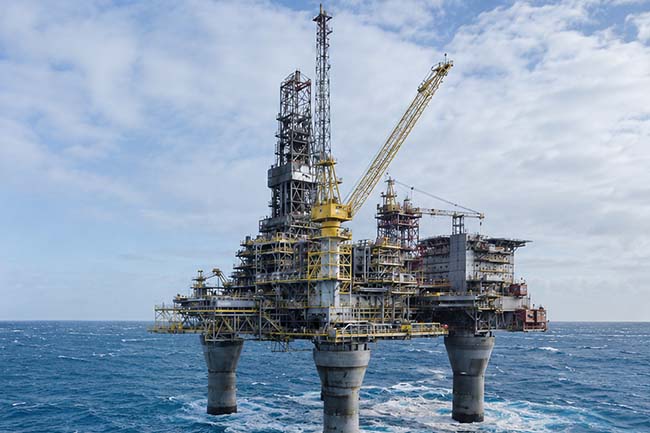
Offshore platforms and marine energy installations create especially demanding fastening environments. Salt exposure, humidity, wind, splash zones, difficult maintenance access, and continuous outdoor operation can increase corrosion risk and make component reliability particularly important.
Fasteners may be required for structural equipment, piping systems, valves, pumps, deck machinery, cable supports, access systems, and processing modules. Different installation areas can have significantly different exposure conditions, meaning that one material or coating may not be suitable for every fastening location.
Offshore fastener specifications should clearly identify material grade, dimensional requirements, coating or surface treatment, inspection criteria, and documentation requirements. These specifications should be established before manufacturing so that the appropriate production and quality processes can be planned.
Fasteners for Pumps, Compressors and Rotating Equipment
Pumps and compressors are central to oil and gas processing and transportation systems. Their fasteners may secure casings, bearing housings, motors, baseplates, covers, couplings, guards, and auxiliary components.
Rotating machinery generates vibration and cyclic loads, making stable preload and proper joint design important. Hex bolts, socket screws, studs, nuts, washers, and precision pins may be used depending on the assembly.
Where vibration-induced loosening is a concern, locking methods can be selected according to the equipment manufacturer’s design. Prevailing-torque nuts, flange locking features, mechanical locking systems, or other engineered solutions may be considered where appropriate.
Maintenance accessibility should also influence fastener selection. Equipment that requires periodic overhaul benefits from fastening systems that combine secure operation with practical disassembly and reassembly.
Fasteners for Oilfield Skids and Modular Equipment
Oilfield and processing projects frequently use modular skids containing pumps, valves, piping, instrumentation, filters, pressure equipment, electrical systems, and structural frames. A single skid can require many fastener categories and materials.
Structural frames may use high-strength bolts, piping supports may use U-bolts or threaded rods, pressure equipment may require specified stud bolts, and smaller machine screws may secure instruments, guards, panels, and control components.
For skid manufacturers and system integrators, consolidating these different product categories can simplify purchasing. Fasteners can be organized according to assembly area, material, grade, coating, standard, and size, reducing the number of separate supplier channels required for each project.
Fasteners for Tank, Terminal and Storage Facilities
Storage terminals and tank farms use fastening components throughout piping manifolds, valves, pumps, loading systems, access structures, maintenance platforms, instrumentation, and supporting equipment.
Outdoor exposure makes corrosion resistance an important requirement for many of these applications. Material and coating selection should reflect environmental conditions, maintenance frequency, and the connected structure.
Bolted structural connections may use carbon or alloy steel fasteners with suitable protective finishes, while stainless steel may be selected for certain equipment or exposed accessories according to project requirements.
Replacement fasteners used during terminal maintenance should match the original material, dimensions, grade, thread, and surface-treatment specification wherever the application is controlled by an engineering requirement.
Thread and Dimensional Requirements for Oil and Gas Fasteners
Oil and gas projects may use both metric and inch fastener systems depending on equipment origin, piping standards, project location, and customer requirements. Thread diameter alone is therefore insufficient when specifying a component.
Buyers should identify thread form, pitch, class or tolerance, length, and any special configuration required by the applicable specification. For stud bolts, the requested overall length and thread arrangement should be clearly defined.
Dimensional accuracy becomes especially important for custom equipment and non-standard parts. Shoulder diameters, unthreaded sections, thread runout, head geometry, and mating features may all affect installation and equipment performance.
Detailed drawings should be supplied whenever critical dimensions differ from standard catalog products.
Custom Oil and Gas Fasteners for Specialized Equipment
Not every oil and gas application can be served by standard hardware. Specialized valves, drilling equipment, process skids, pressure systems, offshore machinery, and maintenance projects may require custom fasteners with unique dimensions or features.
Custom oil and gas fasteners may include special-length studs, double-ended studs, heavy-duty bolts, shoulder bolts, threaded shafts, reduced-shank fasteners, special nuts, precision pins, U-bolts, and components manufactured entirely according to customer drawings.
Custom production can help solve restricted installation space, unusual flange geometry, special thread engagement, alignment requirements, or equipment-specific dimensional needs.
For accurate quotation, buyers should provide material, grade, dimensions, tolerances, thread specifications, mechanical requirements, heat treatment where applicable, coating requirements, and inspection expectations.
Fastener Quality and Traceability for Energy Projects
Oil and gas procurement often requires clearly controlled material and product specifications. Depending on the application, buyers may require dimensional inspection, thread verification, mechanical-property testing, material identification, coating inspection, or other specified checks.
Traceability requirements can also apply to pressure-related or otherwise controlled fastening components. Batch identification, product marking, material documentation, and inspection records should be defined during quotation if they are required by the project.
Requirements can vary significantly between general structural hardware, rotating equipment, piping bolting, and pressure-containing systems. For this reason, inspection and documentation requirements should follow the applicable drawing, standard, or customer specification rather than a generic assumption.
A fastener should not be considered suitable for a critical oil and gas application solely because it matches the required diameter and length. The complete specification must be verified.
Fasteners for Maintenance, Shutdown and MRO Requirements
Oil and gas facilities have ongoing requirements for maintenance, repair, and overhaul fasteners. Scheduled shutdowns may involve replacing bolting on valves, flanges, pumps, heat exchangers, pressure vessels, compressors, and other process equipment.
Replacement components should match the required thread, dimensions, material grade, mechanical properties, finish, and service conditions. Using unidentified replacement hardware can create uncertainty in controlled mechanical or pressure-bearing joints.
Older equipment may also use non-standard or difficult-to-source fastening components. Where original replacement parts are unavailable, technical drawings or detailed samples can support evaluation of custom manufacturing.
Maintaining clear fastener specifications can help MRO teams prepare procurement packages before shutdown periods and reduce delays when maintenance work begins.
How to Prepare an RFQ for Oil and Gas Fasteners
A complete RFQ allows suppliers to review material, manufacturing, inspection, and commercial requirements more efficiently. For standard products, buyers should identify the applicable specification and full fastener designation. For special parts, a technical drawing should be supplied whenever possible.
Recommended RFQ Information
- Fastener type and applicable specification
- Technical drawing and revision for custom components
- Diameter, thread type, pitch, and overall length
- Material grade and required mechanical properties
- Matching nut specification where applicable
- Heat-treatment requirements where applicable
- Surface treatment or coating specification
- Operating temperature and environmental conditions
- Critical dimensions and tolerances
- Required order quantity and purchasing frequency
- Inspection and testing requirements
- Material documentation and traceability requirements
- Product marking, packaging, and labeling requirements
When a final fastener specification has not yet been confirmed, information about the complete joint can also support technical evaluation. Connected materials, pressure, temperature, corrosion exposure, vibration, installation method, maintenance frequency, and equipment type can help determine whether a standard or custom fastening solution is more appropriate.
One-Stop Fastener Sourcing for Oil and Gas Projects
Oil and gas projects can require thousands of fastening components across pipelines, valves, pumps, compressors, drilling equipment, offshore modules, refinery systems, storage terminals, and structural assemblies. Managing numerous suppliers for standard bolts, stud bolts, heavy hex nuts, stainless hardware, coated fasteners, threaded rods, and custom parts can add significant procurement complexity.
A one-stop sourcing approach can help procurement teams consolidate multiple fastener families while preserving the individual material, grade, dimensional, coating, and inspection requirements of each component. Standard products can support routine production and MRO demand, while custom drawing-based fasteners can address specialized equipment and non-standard assemblies.
Whether the requirement involves pipeline bolting, offshore fasteners, refinery equipment, drilling machinery, pressure systems, rotating equipment, or maintenance replacement parts, reliable sourcing starts with accurate specifications. Matching fastener material, strength, thread, dimensions, corrosion protection, service temperature, and documentation to the actual application helps create a more controlled supply chain for critical oil and gas infrastructure.