Hot Dip Galvanized Threaded Rod: Coating, Thread Fit and Sourcing Points
A hot dip galvanized threaded rod combines a steel threaded fastener with a zinc coating designed to provide corrosion protection in outdoor, construction, machinery, support, and other industrial applications. For buyers, however, hot-dip galvanizing creates an important dimensional issue: zinc added to the external thread changes the effective thread size, so the rod and mating nut must be specified as a compatible system.
This is why an RFQ for “M16 galvanized threaded rod” is usually incomplete. Buyers should also define the threaded-rod standard or drawing, material or property class, thread pitch, galvanizing specification, thread-fit strategy, matching nut, finished length, quantity, application environment, inspection scope, and required documents.
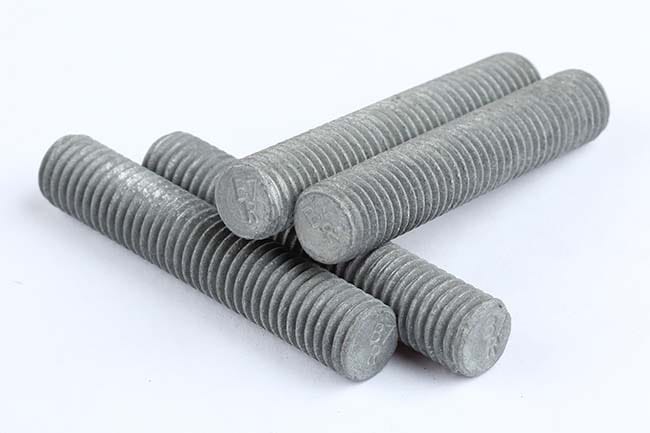
Flybear supplies standard, special, and custom industrial fasteners with different material and surface-treatment requirements. Buyers sourcing galvanized threaded components can review the threaded rod range and provide the applicable standard, size, material, coating, quantity, and application for technical review.
What Is Hot Dip Galvanized Threaded Rod?
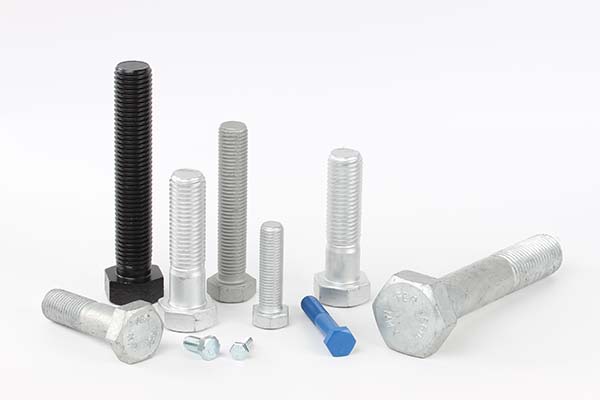
Hot-dip galvanizing applies a zinc coating to a steel fastener by immersing prepared steel in molten zinc and allowing a metallurgically bonded coating to develop on the surface. For threaded fasteners, excess zinc must also be controlled so that the finished threads can assemble correctly.
The resulting HDG threaded rod is commonly used where bare carbon or alloy steel would require additional corrosion protection. Applications can include:
- Outdoor machinery and equipment supports.
- Steel construction and fabricated structures.
- Pipe, cable tray, HVAC, and utility support systems.
- Power and infrastructure projects.
- Industrial maintenance and replacement fastening.
- Pumps, valves, and equipment assemblies where the project specification permits galvanized bolting.
Hot-dip galvanizing does not change a general-purpose threaded rod into pressure-service, structural, or high-strength bolting automatically. The base fastener still needs to meet the required material, mechanical, dimensional, and application standard.
Hot Dip Galvanized Threaded Rod Standards Buyers Should Know
Several standards may appear on an HDG fastener RFQ because the threaded rod itself and its zinc coating can be controlled separately.
| Reference | What It Controls | Buyer Consideration |
|---|---|---|
| ISO 10684:2004 | Hot-dip galvanized coatings on specified threaded steel fasteners | Current published ISO edition; check its dimensional, material, process, and performance scope before applying it |
| ASTM F2329/F2329M-15(2023) | Hot-dip zinc coating requirements for carbon and alloy steel bolts, screws, washers, nuts, and special threaded fasteners | Common fastener-specific reference for North American projects |
| ISO 965-4:2025 | Limits for undersized metric external threads before hot-dip galvanizing | Provides one standardized strategy for obtaining correct fit after the external thread is galvanized |
| ISO 965-5:2025 | Limits for oversized metric internal threads mating with hot-dip galvanized external threads | Provides another thread-fit strategy using increased internal-thread allowance |
| DIN 976-1:2016-09 | Metric stud-bolt product requirements within its scope | Can serve as the base threaded-product reference, but galvanizing requirements still need separate control |
ISO 10684:2004 remains the current published international fastener galvanizing standard as of 2026, although a second edition is under development. It primarily addresses hot-dip spun galvanized threaded fasteners and includes coarse-thread steel fasteners from M8 through M64 within its principal scope.
For a DIN976 HDG requirement, buyers should therefore separate the base-product callout from the surface-treatment requirement. “DIN 976-1 threaded rod, hot-dip galvanized to the applicable coating specification” communicates more information than simply writing “galvanized DIN 976.”
Why Thread Fit Is the Critical HDG Sourcing Issue
Zinc has measurable thickness. When zinc is added to the flanks and crests of an external thread, the finished thread becomes effectively larger. If an ordinary galvanized male thread is combined with an ordinary unmodified female thread without allowing for that coating thickness, assembly can become tight or impossible.
There are different standardized ways to create the necessary allowance. For metric ISO threads, one method starts with an external thread manufactured undersize before galvanizing so that the finished galvanized thread can mate with the specified internal thread. Another method uses an oversized internal thread to accommodate the increased size of a galvanized external thread.
The important purchasing point is not to improvise the allowance. The rod, nut, coating, and thread-tolerance strategy should follow one compatible system.
Undersized External Thread Before Galvanizing
ISO 965-4:2025 applies to specified hot-dip galvanized metric external threads that are undersized before galvanizing. Within its scope, this allows the finished external thread to mate with corresponding internal threads produced to the required tolerance position.
This approach means the pre-coating thread is intentionally different from a normal finished thread because the zinc layer is part of the final dimensional design.
Oversized Internal Thread
ISO 965-5:2025 provides requirements for oversized metric internal threads intended to mate with hot-dip galvanized external threads whose maximum size was at tolerance position h before galvanizing.
In North American practice, buyers may also encounter overtapped nuts used with hot-dip galvanized bolts or studs. The female thread is enlarged according to the applicable fastener and nut requirements so that the galvanized external thread can assemble correctly.
Do not ask a supplier simply to “make the nut looser.” State the applicable standard, coating specification, and matching nut requirement so the thread allowance can be controlled and inspected.
Matching Nuts Must Be Specified with the Galvanized Rod
A galvanized stud bolt or threaded rod is only useful when its mating nuts assemble freely and provide the required joint performance. Buying the rod and nuts independently can create compatibility problems if the two suppliers use different thread-allowance assumptions.
For a galvanized rod-and-nut assembly, confirm:
- Rod thread standard and pitch.
- Pre-galvanizing external-thread tolerance or allowance.
- Nut internal-thread strategy.
- Whether the nut itself is galvanized and when the thread is produced.
- Nut material and property class.
- Required lubrication.
- Finished Go/No-Go or functional assembly inspection.
Where possible, purchasing the mating rod and nut as one controlled specification can reduce uncertainty about finished thread compatibility.
Hot-Dip Galvanizing vs Electroplated Zinc
Hot-dip galvanizing and electroplated zinc are both zinc-based corrosion-protection methods, but they should not be treated as equivalent finishes.
| Factor | Hot-Dip Galvanizing | Electroplated Zinc |
|---|---|---|
| Coating Process | Immersion in molten zinc with metallurgically bonded zinc/iron layers | Electrochemical deposition of zinc |
| Typical Fastener Coating Build | Relatively thick and therefore important to thread allowance | Generally thinner, depending on the specified coating system |
| Thread-Fit Concern | Requires explicit accommodation for coating thickness on threaded assemblies | Thread dimensional effects still matter but are generally managed under the applicable electroplating specification |
| Selection Basis | Environment, required coating specification, dimensions, assembly, and project requirements | Environment, coating performance, dimensional limits, appearance, and project requirements |
A buyer should therefore not change a zinc coated threaded bar from electroplated zinc to hot-dip galvanizing without reviewing thread fit, mating nuts, dimensions, friction, coating specification, and application requirements.
Corrosion Protection Depends on More Than Zinc Thickness
Hot-dip galvanizing is widely selected because the zinc coating provides barrier protection and sacrificial protection to steel. In many atmospheric applications, increasing the amount of intact zinc available can increase the time before the underlying steel is exposed.
However, corrosion performance remains environment-dependent. Buyers should consider:
- Indoor or outdoor exposure.
- Marine or chloride contamination.
- Industrial pollutants.
- Humidity and wet/dry cycling.
- Soil or buried exposure where applicable.
- Contact with chemicals.
- Temperature.
- Mechanical damage during installation.
- Contact with dissimilar metals.
A coating thickness or accelerated test result should therefore not be converted directly into a guaranteed number of service years. Project-specific corrosion engineering remains necessary in severe environments.
Salt-Spray Hours Are Not a Service-Life Guarantee
Industrial buyers sometimes request a salt-spray duration as the primary corrosion specification. Salt-spray testing can be useful when a test method, specimen condition, exposure duration, and acceptance criterion are clearly defined, but it should not be treated as a direct prediction of field life.
The coating specification may instead emphasize measurable characteristics such as zinc coating thickness, mass, appearance, adhesion, and other applicable requirements. If a project additionally requires salt-spray testing, the RFQ should state:
- The required test standard.
- Exposure duration.
- Sample preparation and condition.
- Acceptance criterion.
- Number of test specimens.
- Required test report.
“Pass 1,000 hours” without identifying the test method and acceptance condition can lead different suppliers to quote different technical requirements.
How Hot-Dip Galvanizing Can Affect Tightening
Surface condition affects friction between the threaded rod, nut, washer, and bearing surfaces. Hot-dip galvanized threads can behave differently from plain, electroplated, zinc-flake, or fluoropolymer-coated fasteners during tightening.
This matters when the assembly uses a controlled preload. Torque applied to a threaded fastener is consumed partly by thread friction and partly by bearing-surface friction, so changing the coating or lubricant can change the resulting clamp load.
For preload-sensitive assemblies, buyers should confirm:
- Whether the nut is lubricated.
- Approved lubricant or surface condition.
- Installation method.
- Required torque or tension procedure.
- Whether tightening data were developed for the actual galvanized assembly.
Do not apply a torque value developed for plain steel automatically to an HDG assembly unless the engineering procedure permits it.
Material and Property Class Require Separate Review
Hot-dip galvanizing is a surface treatment, not a mechanical grade. The threaded rod must still meet the required carbon steel or alloy steel material and mechanical-property specification.
ISO 10684:2004 includes specified hot-dip galvanized steel bolts, screws, and studs up to property class 10.9 within its scope. This should not be interpreted as permission to galvanize every high-strength fastener without further process review. Material hardness, manufacturing route, cleaning, coating process, and applicable product requirements need to be considered.
ASTM F2329/F2329M also includes requirements related to the galvanizing of carbon and alloy steel fasteners and includes coating and embrittlement-related verification within its scope.
For pressure-service or low-temperature galvanized stud bolting, buyers should retain the required ASTM, ASME, EN, or project material specification rather than replacing it with a generic statement such as “high-strength galvanized steel.”
Cutting Hot Dip Galvanized Threaded Rod
Long threaded bars are often cut into shorter pieces during fabrication or installation. Cutting a previously galvanized rod exposes bare steel at the cut end and can also damage the first thread if the cut is not properly finished.
Where the project permits field or shop cutting, buyers and fabricators should determine:
- Whether the cut end requires an approved zinc-rich repair system.
- Required deburring or chamfering.
- Whether the first threads need to be restored.
- How repaired areas will be inspected.
- Whether cut lengths still need identification or traceability.
For controlled OEM or project orders, specifying finished cut lengths before galvanizing or requesting factory-finished cut pieces may simplify end protection and dimensional inspection.
Quality Control for HDG Threaded Rod
Inspection should evaluate the underlying fastener as well as the galvanized finish. Depending on the order and applicable standard, relevant checks can include:
- Material and certificate verification.
- Overall length and dimensional inspection.
- Thread pitch and dimensions.
- Finished thread-fit or gauge inspection.
- Coating-thickness measurement.
- Appearance and coverage inspection.
- Adhesion-related checks where required by the coating specification.
- Mechanical testing according to the base fastener specification.
- Packaging and protection during shipment.
Flybear’s quality control process supports dimensional and thread inspection, material verification, hardness and tensile testing, coating-thickness inspection, salt-spray testing when required, optical inspection, and final packaging review according to agreed order requirements.
Common Sourcing Mistakes
- Ordering only “hot-dip galvanized M16 rod.” Standard, pitch, material, thread tolerance, length, and matching nuts also need definition.
- Ignoring coating thickness on threads. HDG thread fit requires a controlled allowance strategy.
- Buying ordinary nuts separately. The mating nut must be compatible with the galvanized external thread.
- Confusing hot-dip galvanizing with electroplated zinc. The processes and dimensional implications are different.
- Using salt-spray duration as a service-life prediction. Accelerated testing does not directly establish years in service.
- Changing the finish without reviewing tightening. Coating and lubrication influence friction and preload.
- Cutting galvanized rods without considering exposed ends. Cut surfaces and damaged threads may require finishing or repair.
- Treating the coating specification as the material specification. Base-fastener strength and coating requirements must both be controlled.
When a Custom Galvanized Stud or Threaded Rod Is Needed
Standard rods do not cover every project. Buyers may require special lengths, fine threads, double-end studs, reduced sections, unusual material grades, drawing-controlled end features, or customer-specific galvanizing requirements.
For these projects, buyers can submit an approved drawing through Flybear’s custom fastener support. The drawing should identify geometry and critical tolerances, while the purchase specification defines material, mechanical properties, galvanizing system, thread allowance, mating components, and inspection criteria.
RFQ Checklist for Hot Dip Galvanized Threaded Rod
To obtain a technically comparable quotation from a stud bolt supplier, provide:
- Applicable threaded-rod standard or approved drawing.
- Metric or inch thread system.
- Nominal diameter and pitch or TPI.
- Required thread tolerance or class.
- Finished length and length tolerance.
- Material grade or mechanical property class.
- Hot-dip galvanizing specification.
- Required coating thickness or coating class where applicable.
- Thread-fit strategy after galvanizing.
- Matching nut specification, grade, finish, and quantity.
- Lubrication requirement where controlled.
- Order quantity.
- Application and operating environment.
- Corrosion-test method and acceptance criterion where required.
- Material certificates, dimensional reports, coating reports, mechanical test records, marking, traceability, and packaging requirements.
FAQ
Why do hot-dip galvanized threaded rods need special thread allowance?
The zinc coating adds measurable thickness to the external thread. Without a compatible allowance in the male or female thread system, the galvanized rod and nut may become difficult or impossible to assemble correctly.
What standard applies to hot dip galvanized threaded fasteners?
ISO 10684:2004 remains the current published international hot-dip galvanizing standard for specified threaded fasteners within its scope. ASTM F2329/F2329M-15(2023) is an active fastener-specific hot-dip zinc coating specification commonly used in North American purchasing.
Can DIN 976 threaded rod be hot-dip galvanized?
Suitable steel DIN 976-1 threaded products can be ordered with hot-dip galvanizing when the material, property class, thread allowance, matching nuts, and coating specification are compatible. DIN 976-1 and the galvanizing specification control different aspects of the finished product.
Do galvanized threaded rods need galvanized nuts?
The mating nut must be specified as part of a compatible assembly. Galvanized nuts are commonly used, but the internal-thread condition and coating process must be selected so the nut correctly mates with the galvanized external thread.
Does a salt-spray test tell me how many years galvanizing will last?
No. Accelerated salt-spray testing can verify a defined laboratory requirement but should not be converted directly into field service life. Actual corrosion performance depends on coating condition and the real service environment.
What should buyers provide for an HDG threaded rod quotation?
Provide the standard or drawing, thread size and pitch, length, material or property class, galvanizing specification, thread-fit requirement, matching nuts, quantity, application, and required inspection or certificate documents.
Conclusion
A hot dip galvanized threaded rod should be purchased as a coordinated threaded and coated assembly rather than simply as a steel rod with zinc added to its surface. The galvanizing process changes external-thread dimensions, making thread allowance and matching-nut selection central to reliable sourcing.
Buyers should also separate the base threaded-product standard from the galvanizing standard, define coating and inspection requirements clearly, and avoid using accelerated corrosion-test hours as a guarantee of service life. For preload-controlled joints, coating and lubrication must also be considered because they influence friction during tightening.
For standard or project-specific hot-dip galvanized threaded rods and studs, Flybear can support technical requirement review and quotation. Send your standard or drawing, size and thread, material or property class, coating requirement, matching nut specification, quantity, application, and inspection or certificate requirements through the Flybear contact page.