Hex Nut Property Class and Bolt Grade Compatibility Explained
Nut property class and bolt grade compatibility is essential when specifying metric bolted joints because a nut must have sufficient loadability for the bolt, screw, or stud with which it is assembled. A correct thread size alone does not guarantee a suitable combination. Buyers also need to consider the nut property class, bolt property class, nut style, thread pitch, material, coating, and any locking or application-specific requirements.
For carbon and alloy steel metric fasteners, ISO 898-2:2022 is the current mechanical-property standard for nuts within its scope, while ISO 898-1:2013 covers applicable bolts, screws, and studs. ISO 898-2 includes nut property classes 04, 05, 5, 6, 8, 10, and 12 and distinguishes between regular, high, and thin nut styles.
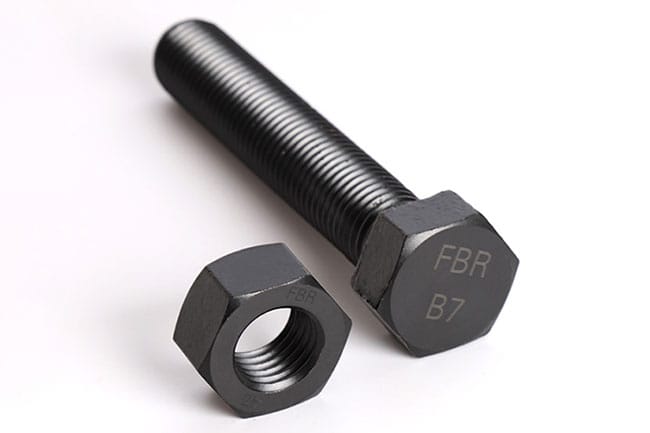
Flybear supplies standard, special, and custom industrial fastening solutions for machinery, automotive, rail, energy, construction equipment, and general OEM assembly. Buyers can review the industrial nut range and provide the required standard, thread size, nut property class, bolt property class, coating, quantity, and application for technical review.
What Does Nut Property Class Mean?
A metric nut property class identifies the mechanical loadability of a nut according to the applicable mechanical-property standard. It should not be confused with the nut’s dimensional standard, material grade, or product grade.
For regular nuts and high nuts under ISO 898-2, the property-class number corresponds to the first number of the highest bolt, screw, or stud property class with which the nut is intended to be mated. For example, a class 10 regular or high nut can be paired with an applicable externally threaded fastener up to property class 10.9.
This is different from the two-number property-class system used for carbon and alloy steel bolts. A nut marked 8 is not simply an “8.8 nut,” and its designation should not be interpreted as a bolt tensile-strength marking.
Nut Property Class and Bolt Grade Matching Table
For regular nuts and high nuts within the scope of ISO 898-2:2022, the basic bolt nut grade matching relationship is:
| Nut Property Class | Highest Mating Bolt, Screw or Stud Property Class | Typical Interpretation |
|---|---|---|
| 5 | 5.8 | Suitable for applicable externally threaded fasteners up to class 5.8 |
| 6 | 6.8 | Suitable for applicable externally threaded fasteners up to class 6.8 |
| 8 | 8.8 | Common pairing for applicable class 8.8 metric bolted joints |
| 10 | 10.9 | Used where the mating externally threaded fastener is up to class 10.9 |
| 12 | 12.9 | Used for applicable high-strength combinations up to class 12.9 |
ISO 898-2 also permits a higher property-class regular or high nut to replace a lower property-class nut from the mechanical compatibility perspective. However, this should not be interpreted as permission to ignore dimensional standards, coating, thread tolerances, material restrictions, customer specifications, or application requirements.
Prevailing-torque nuts require additional care. Their functional requirements differ from ordinary free-spinning nuts, and ISO 898-2 does not apply the same simplified higher-class substitution rule to these assemblies. Buyers should follow the applicable prevailing-torque nut specification and approved mating combination.
How Bolt Property Classes Such as 8.8 and 10.9 Work
Metric carbon and alloy steel bolts, screws, and studs commonly use two-number property classes such as 5.8, 8.8, 10.9, and 12.9 under ISO 898-1.
The first number relates to nominal tensile strength. For example, the first number 8 in class 8.8 corresponds to a nominal tensile strength of 800 MPa. The second number describes the relationship between nominal yield strength or proof-related strength and nominal tensile strength according to the applicable property-class system.
This notation is therefore fundamentally different from the one-number designation used for regular and high nuts. Buyers should avoid copying the complete bolt designation onto the nut specification. A class 8.8 bolt is normally paired with a suitable class 8 nut, not a nut designated “8.8.”
Why the Nut Must Match the Bolt Strength
A bolted joint transfers load through the engaged external and internal threads. If the nut does not provide adequate loadability for the bolt, the internal threads can become a limiting part of the assembly.
The objective of appropriate nut compatibility is not simply to make the strongest possible nut. It is to select a nut whose mechanical properties, thread engagement, geometry, and mating conditions are appropriate for the externally threaded fastener and joint design.
For example, specifying a class 10.9 bolt while purchasing an unidentified low-strength nut can create a mismatch. The bolt marking may suggest a high-strength assembly, but the joint cannot be evaluated correctly unless the nut specification is also known.
Regular, High and Thin Metric Nut Classes
Nut geometry affects loadability as well as wrench fit. ISO 898-2 distinguishes among three nut styles: regular nuts, also called style 1; high nuts, or style 2; and thin nuts, or style 0.
Regular Nuts
Regular nuts are commonly used in general industrial bolted joints. Property classes 5, 6, 8, 10, and 12 may apply according to the standard’s requirements and size range.
High Nuts
High nuts have increased nut height compared with regular nuts. Their dimensions and applications are controlled by the relevant product standard. They should still be specified with the required mechanical property class rather than selected only from height.
Thin Nuts: Classes 04 and 05
Thin nuts require special attention. ISO 898-2 uses property classes 04 and 05 for applicable thin nuts. The leading zero indicates reduced loadability compared with regular or high nuts and warns that a thin nut is not designed to prevent thread stripping as a regular or high nut would under overload conditions.
A thin nut should therefore not be substituted for a regular class 8 or class 10 nut simply because the thread diameter and wrench size fit the assembly. Thin nuts are frequently used in jam-nut arrangements or applications where reduced height serves a defined engineering purpose.
High Strength Nuts Are More Than a Hardness Number
When buyers request high strength nuts, hardness alone should not be used as the complete acceptance criterion. Nut performance under ISO 898-2 includes proof-load requirements and other mechanical and material provisions within the standard’s scope.
A hardness result can support quality verification, but it does not replace proof-load requirements or establish complete conformity by itself. Similarly, selecting a harder material does not automatically create a conforming class 10 or class 12 nut.
For critical orders, the purchase specification should identify the applicable mechanical-property standard, property class, dimensions, thread tolerance, material requirements where controlled, and the required inspection documentation.
Do Stainless Steel Nuts Use the Same Classes?
No. Corrosion-resistant stainless steel fasteners use a different property-class system. ISO 3506-2:2020 is the current mechanical-property standard for applicable stainless steel nuts and defines grades and property classes in relation to austenitic, martensitic, ferritic, and duplex stainless steels.
Buyers should therefore not specify a stainless steel nut as “class 8” simply because it replaces a carbon-steel class 8 nut. The stainless fastener system has its own material and mechanical-property designations, and the mating bolt or stud should be evaluated according to the applicable stainless steel standard.
A carbon-steel-to-stainless substitution also changes corrosion, galling, friction, and material-compatibility considerations. Equivalent dimensions do not establish equivalent mechanical or assembly performance.
Thread Size and Pitch Must Match Too
Mechanical-property compatibility does not solve a thread mismatch. The nut and bolt must use the same thread system, nominal diameter, and pitch.
An M12 coarse-pitch nut, for example, cannot be treated as interchangeable with an M12 fine-pitch nut. Buyers working with legacy machinery should verify pitch instead of relying only on nominal diameter.
ISO 898-2:2022 covers specified coarse-pitch combinations from M5 to M39 and fine-pitch combinations from M8×1 to M39×3 within its scope. Dimensional product standards and thread tolerance standards should also be stated when required by the order.
How Coatings Affect Nut Compatibility
Coating selection can influence corrosion protection, thread fit, friction, and tightening behavior. Zinc plating, zinc-flake systems, hot-dip galvanizing, black finishes, and other treatments should therefore be specified as part of the bolt-and-nut system.
Hot-dip galvanized fasteners deserve particular attention because coating thickness and thread allowances can affect mating threads. Buyers should use the required coating and thread specifications rather than combining independently selected coated bolts and nuts and assuming they will fit correctly.
For torque-controlled joints, friction is also important. Changing from one coating or lubrication condition to another can alter the relationship between applied tightening torque and resulting preload. Nut property class alone does not define torque values.
Lock Nuts and Prevailing-Torque Nut Compatibility
Lock nuts introduce functional requirements beyond basic proof load. All-metal prevailing-torque nuts and non-metallic insert nuts can be specified under applicable functional standards such as ISO 2320:2015, depending on product scope.
The prevailing-torque feature creates resistance during assembly and removal, so functional testing and mating fastener requirements need to be considered separately from ordinary free-spinning hex nut selection.
For these products, buyers should provide both the mechanical property requirement and the lock-nut standard or drawing. Do not assume that any class 10 lock nut can replace any other class 10 nut solely because the property marking matches.
Common Nut Compatibility Purchasing Mistakes
- Matching thread size but ignoring property class. An M12 nut can physically fit an M12 bolt while still being mechanically unsuitable for the intended joint.
- Ordering an “8.8 nut.” Regular metric steel nuts use a different designation system; a class 8 nut is the normal property-class concept associated with an applicable class 8.8 bolt.
- Using a class 8 nut with a class 10.9 bolt. The mating relationship should follow the applicable property-class requirements.
- Replacing a regular nut with a thin nut. Classes 04 and 05 indicate reduced loadability.
- Assuming stainless steel uses carbon-steel classes. Stainless steel nuts follow the applicable ISO 3506 designation system.
- Ignoring coating and thread fit. Surface treatment can change mating conditions and tightening behavior.
- Treating lock nuts like ordinary nuts. Prevailing-torque products require additional functional verification.
- Specifying hardness alone. Hardness testing does not replace the complete mechanical-property specification.
Quality Control for Metric Nut Classes
Inspection should match the applicable standard and purchasing risk. Relevant checks can include material and certificate review, dimensional inspection, internal thread Go/No-Go gauging, hardness testing, proof-load or other specified mechanical testing, coating-thickness inspection, surface evaluation, marking, and packaging verification.
Flybear’s quality control process supports material verification, dimensional and thread inspection, hardness and mechanical testing, coating inspection, salt-spray testing when required, and shipment checks according to agreed order requirements.
For non-standard nut dimensions, special threads, unusual materials, or drawing-controlled designs, buyers can also submit requirements through Flybear’s custom fastener support. Custom geometry should be evaluated independently rather than assumed to retain the loadability of a standard nut.
RFQ Checklist for Nut Property Class and Bolt Grade
To obtain a technically comparable quotation from an industrial nut supplier, provide:
- Applicable nut standard or controlled drawing.
- Nominal thread diameter and pitch.
- Nut type and style, such as regular hex nut, high nut, thin nut, flange nut, or lock nut.
- Required nut property class.
- Mating bolt, screw, or stud property class.
- Base material or stainless steel grade where applicable.
- Surface finish, coating, lubrication, or corrosion requirement.
- Order quantity and repeat demand where relevant.
- Application and operating environment.
- Critical dimensional or functional requirements.
- Required material certificates, inspection reports, mechanical test documents, coating reports, traceability, and packaging requirements.
FAQ
What nut property class should be used with an 8.8 bolt?
For a regular or high carbon/alloy steel nut within the scope of ISO 898-2, property class 8 is the corresponding class for an applicable bolt up to property class 8.8. The complete thread, nut style, coating, and application still need to be verified.
What nut class matches a 10.9 bolt?
A regular or high nut of property class 10 is the corresponding ISO 898-2 class for an applicable mating bolt, screw, or stud up to property class 10.9.
Can a class 10 nut be used with an 8.8 bolt?
ISO 898-2 permits a higher property-class regular or high nut to replace a lower property-class nut from the mechanical matching perspective, except for prevailing-torque nuts. Other dimensional, coating, material, and project requirements must still be satisfied.
What do nut classes 04 and 05 mean?
They identify applicable thin nuts with reduced loadability. The leading zero warns that these nuts are not designed to provide the same resistance to thread stripping under overload as regular or high nuts.
Do stainless steel nuts use classes 8, 10, and 12?
Stainless steel fasteners use a different designation system under standards such as ISO 3506-2. Buyers should specify the required stainless grade and property class rather than applying carbon-steel nut markings directly.
What should I provide when requesting high strength nuts?
Provide the nut standard or drawing, thread size and pitch, nut style, property class, mating bolt property class, material, coating, quantity, application, and required inspection or certificate documents.
Conclusion
Correct nut property class and bolt grade selection ensures that the internally and externally threaded components are specified as a compatible fastening system. For regular and high carbon or alloy steel nuts under ISO 898-2:2022, classes 5, 6, 8, 10, and 12 correspond to applicable mating fasteners up to property classes 5.8, 6.8, 8.8, 10.9, and 12.9 respectively.
That matching table is only part of the specification. Nut style, thread and pitch, dimensional standard, material, coating, locking function, operating environment, and inspection scope should also be defined. Thin nuts, prevailing-torque nuts, stainless steel nuts, and custom designs require additional consideration rather than automatic grade substitution.
For standard or project-specific industrial nuts, Flybear can support technical requirement review and quotation. Send your standard or drawing, size and thread, nut property class and mating bolt class, material, finish or coating, quantity, application, and inspection or certificate requirements through the Flybear contact page.