DIN 934 vs ISO 4032 Hex Nuts: Legacy DIN and Current ISO Differences
DIN 934 vs ISO 4032 is an important comparison for engineers and industrial buyers working with metric hex nuts on legacy drawings. DIN 934 is a withdrawn German standard that is still widely referenced in older machinery, equipment, and purchasing specifications, while ISO 4032:2023 is the current international standard for hexagon regular nuts, style 1, with metric coarse pitch threads within its specified scope.
The replacement question is more complex than changing “DIN 934” to “ISO 4032” on a purchase order. The historical DIN 934 scope included both metric coarse and fine pitch threads, while current ISO standards separate these applications: ISO 4032 covers coarse pitch regular hex nuts, and ISO 8673 covers fine pitch regular hex nuts. Buyers should also verify dimensions, product grade, thread, material, mechanical property class, finish, and mating fastener requirements before approving a substitution.
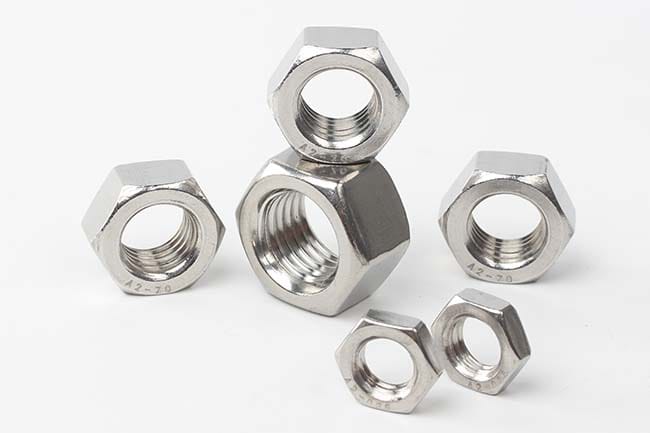
Flybear supplies standard, special, and custom industrial fasteners for OEM, maintenance, distributor, and project requirements. Buyers reviewing legacy DIN nut specifications can explore the hex nut range and provide the original standard or drawing, thread size, material or property class, coating, quantity, and inspection requirements for technical review.
What Are DIN 934 and ISO 4032?
DIN 934 was a German dimensional standard for hexagon nuts with metric threads. DIN Media lists DIN 934:1987-10 as withdrawn. Because DIN 934 was used for many years, the designation remains common on historical drawings, spare-parts lists, maintenance records, and supplier catalogs.
ISO 4032:2023 is the current ISO product standard for hexagon regular nuts, style 1. Its main scope covers steel and stainless steel nuts with metric coarse pitch threads from M5 to M39 and product grades A and B. The current German adoption is DIN EN ISO 4032:2023-12.
This means DIN 934 should be treated as a legacy specification rather than presented as the current dimensional standard for new designs. However, an existing DIN 934 drawing should not automatically be altered without reviewing what the original design requires.
DIN 934 vs ISO 4032: Current Standard Status
| Standard | Current Status | Main Buyer Consideration |
|---|---|---|
| DIN 934:1987-10 | Withdrawn | Legacy German specification still found on existing drawings and purchasing records |
| ISO 4032:2023 | Current | Current international standard for hexagon regular nuts, style 1, with coarse pitch thread within its scope |
| DIN EN ISO 4032:2023-12 | Current | Current German adoption of ISO 4032:2023 |
| ISO 8673:2023 | Current | Current ISO reference for hexagon regular nuts, style 1, with metric fine pitch thread within its scope |
The distinction between coarse and fine pitch is particularly important. A legacy DIN 934 callout can refer to a nut configuration that should not automatically be converted to ISO 4032 if the original thread is fine pitch.
DIN 934 vs ISO 4032: The Main Scope Difference
One of the most useful differences for buyers to understand is how thread coverage is organized. DIN 934 historically covered hexagon nuts with metric coarse and fine pitch threads. ISO 4032:2023 specifically addresses regular style 1 nuts with coarse pitch threads in its principal dimensional range.
For current fine pitch regular hex nuts, ISO 8673:2023 is the relevant ISO product standard. It covers steel and stainless steel regular nuts with metric fine pitch thread from 8 mm to 39 mm within its principal scope and uses product grades A and B.
Therefore, a purchasing team reviewing an old specification should first identify the actual thread:
- If the legacy DIN 934 nut uses a metric coarse pitch thread, ISO 4032 may be the current standard to evaluate.
- If the legacy DIN 934 nut uses a metric fine pitch thread, ISO 8673 may be the more relevant current standard to evaluate.
- If the nut has dimensions, tolerances, materials, or features controlled by a customer drawing, the drawing may remain the primary purchasing requirement.
Are DIN 934 and ISO 4032 Hex Nuts Interchangeable?
DIN 934 and ISO 4032 nuts should not be declared universally interchangeable. Their general product form is similar, but replacement approval should be based on the actual size and application rather than the standard names alone.
Before approving a DIN 934 replacement, compare:
- Nominal thread diameter.
- Coarse or fine thread pitch.
- Internal thread tolerance.
- Nut height.
- Width across flats.
- Width across corners.
- Chamfer and bearing geometry.
- Product grade.
- Material and mechanical property class.
- Surface coating or finish.
- Mating bolt, screw, or stud specification.
- Assembly clearance and wrench access.
Dimensional changes between legacy and current standards can matter in equipment with restricted wrench clearance, recessed nut locations, captive features, or tightly controlled joint stacks. For maintenance replacement, checking only the thread diameter is not sufficient.
What Does “Style 1” Mean for an ISO 4032 Hex Nut?
ISO 4032 describes a regular hex nut identified as style 1. Nut style is related to the dimensional proportions of the nut, including its height relative to the nominal thread diameter. It helps distinguish regular nuts from other forms such as high nuts or thin nuts.
This is important because “hex nut” is a broad commercial term. A thin jam nut, high nut, prevailing-torque lock nut, flange nut, or structural nut may have a hexagonal outside shape but is not automatically an ISO 4032 style 1 nut.
Buyers should select the product standard according to the actual nut type rather than applying ISO 4032 to every six-sided nut.
Product Grade A and B: Dimensional Quality, Not Strength Class
ISO 4032 specifies product grades A and B within its scope. Product grade is a dimensional tolerance concept. It should not be confused with a mechanical property class such as class 8, 10, or 12.
This distinction is important in RFQs because terms such as “grade,” “class,” and “product grade” can be used inconsistently in commercial discussions.
A controlled specification should distinguish:
- Product grade for dimensional tolerances and product geometry.
- Property class for specified mechanical properties of applicable steel nuts.
- Material grade for the actual material or alloy designation.
- Coating specification for the required surface treatment.
Writing only “ISO 4032 grade 8,” for example, can create ambiguity unless the intended property-class requirement is clear.
Material and Mechanical Property Requirements
ISO 4032 is a product standard and should not be used as the complete mechanical-property specification for every nut. Material and mechanical requirements need to be defined separately where they are important to the joint.
Carbon and Alloy Steel Hex Nuts
ISO 898-2:2022 is the current ISO standard covering mechanical and physical properties of applicable carbon and alloy steel nuts with specified property classes. Within its scope, it includes property classes such as 04, 05, 5, 6, 8, 10, and 12.
The appropriate nut property class should be selected in relation to the mating bolt or stud and the engineered joint requirement. A buyer should not assume that every steel ISO 4032 nut has the same strength simply because its external dimensions are the same.
Stainless Steel Hex Nuts
For corrosion-resistant stainless steel nuts, ISO 3506-2:2020 remains the current ISO mechanical-property reference and covers specified stainless steel grades and property classes within its scope.
Terms such as “304 stainless” or “316 stainless” can communicate general alloy families in the market, but controlled projects should define the required stainless grade, property class, documentation, and corrosion requirements where applicable.
Stainless steel is also not universally corrosion-proof. Chlorides, chemicals, temperature, crevice conditions, and contact with dissimilar materials can influence actual performance.
Coarse Pitch vs Fine Pitch Hex Nuts
Coarse pitch metric threads are widely used for general industrial fastening. Fine pitch threads use a smaller pitch for a given nominal diameter and may appear in automotive, machinery, adjustment, or legacy equipment applications.
The important purchasing point is that nominal diameter alone does not establish compatibility. An M12 coarse-thread nut and an M12 fine-thread nut will not correctly mate simply because both are described as M12.
When sourcing a DIN 934 replacement, the RFQ should therefore include the full thread designation where there is any possibility of ambiguity. For legacy spare parts, physically verifying thread pitch can prevent costly cross-threading or incorrect shipments.
Coatings and Finishes for Metric Hex Nuts
Metric hex nuts can be supplied with different surface conditions depending on the base material and operating environment. Steel nuts may use zinc-based plating, zinc-flake systems, black finishes, hot-dip galvanizing where appropriate, or other project-specific coatings. Stainless steel nuts may use a specified surface condition or treatment according to the purchasing requirement.
The coating should be considered together with the mating bolt or stud. Relevant issues include:
- Corrosion exposure.
- Coating thickness.
- Internal thread fit.
- Assembly friction.
- Compatibility with the mating fastener coating.
- Temperature and chemical exposure.
- Customer-specific environmental requirements.
Coating terminology should be precise. A request for “zinc plated” or “black” may not define coating thickness, process, corrosion test, lubrication, or final thread acceptance. Critical projects should state the applicable coating specification and acceptance criteria.
DIN 934 Replacement Scenarios
Legacy Machinery Drawing
If an existing machine drawing calls for DIN 934, procurement should first determine whether the drawing must remain unchanged or whether engineering has approved migration to a current ISO standard. The nut size, thread pitch, dimensions, material, strength, coating, and assembly clearance should be reviewed before changing the specification.
New OEM Design
For a new design using regular metric coarse-pitch hex nuts, ISO 4032:2023 provides a current international reference. Using a current standard can reduce ambiguity and avoid introducing a withdrawn DIN designation into new product documentation.
Fine-Pitch Legacy Nut
If the old DIN 934 nut has a fine metric pitch, ISO 4032 should not automatically be selected. ISO 8673:2023 is the current ISO product standard to evaluate for regular fine-pitch hex nuts within its scope.
Special Nut Dimensions
Older machines sometimes use parts described informally as DIN 934 even when the actual production drawing contains modified thickness, flats, chamfers, or other features. In this case, the drawing dimensions may take precedence over a catalog-standard replacement.
For non-standard geometry, buyers can provide a controlled drawing through Flybear’s custom fastener support.
Buyer Selection Table for DIN 934 vs ISO 4032
| Purchasing Situation | Recommended Approach |
|---|---|
| New coarse-pitch regular hex nut design | Evaluate ISO 4032:2023 and specify material/property class separately |
| Legacy drawing specifies DIN 934 coarse pitch | Compare dimensions and functional requirements before approving ISO 4032 replacement |
| Legacy drawing specifies DIN 934 fine pitch | Evaluate the applicable current fine-pitch standard such as ISO 8673 |
| Nut strength is critical | Specify the applicable mechanical-property standard and required property class |
| Stainless steel application | Specify stainless grade/property requirement and environmental conditions |
| Restricted wrench or assembly clearance | Verify nut height, width across flats, and surrounding geometry before substitution |
| Drawing-controlled special nut | Quote from the latest approved drawing rather than forcing the part into a standard designation |
Quality Control for ISO 4032 Hex Nuts
Quality requirements should be defined according to the application and purchase specification. Relevant inspection can include nut dimensions, internal thread Go/No-Go gauging, material verification, hardness or proof-load-related testing where specified, coating thickness, appearance, marking, and packaging checks.
For a legacy conversion, dimensional inspection is particularly useful because the buyer may need to confirm that the proposed replacement fits existing wrenching spaces, recesses, fixtures, or automated assembly equipment.
Flybear’s quality control process supports dimensional and thread inspection, material verification, hardness and mechanical testing, coating-thickness inspection, salt-spray testing when required, optical inspection, and final packaging review according to agreed project requirements.
Common Purchasing Mistakes
- Assuming DIN 934 is still a current standard. DIN 934:1987-10 is withdrawn.
- Replacing every DIN 934 nut with ISO 4032. Fine-pitch legacy nuts require a different current-standard review.
- Checking nominal diameter but not pitch. Coarse and fine metric threads of the same nominal diameter are not interchangeable.
- Confusing product grade with property class. Dimensional tolerance and mechanical performance are separate requirements.
- Assuming the dimensional standard defines material. Material and mechanical properties should be stated separately.
- Ignoring nut dimensions in a legacy assembly. Wrench clearance, captive features, and surrounding geometry may make dimensional differences important.
- Specifying coating only by appearance. Finish requirements should address the actual coating system and acceptance criteria.
- Changing standards without engineering approval. Controlled drawings and customer specifications may require formal revision before substitution.
RFQ Checklist for DIN 934 vs ISO 4032 Hex Nuts
To obtain a technically comparable quotation from an industrial nut supplier, provide:
- Applicable standard and edition or the latest controlled drawing.
- Nominal metric thread size.
- Coarse or fine pitch and complete thread designation.
- Required internal thread tolerance where controlled.
- Material and grade.
- Required property class or mechanical specification.
- Surface finish, coating, lubrication, or corrosion requirement.
- Order quantity and expected repeat volume.
- Mating bolt or stud specification where relevant.
- Application and operating environment.
- Critical nut dimensions or assembly-clearance requirements.
- Required dimensional reports, material certificates, mechanical test documents, coating reports, or other inspection records.
- Marking, traceability, labeling, and packaging requirements.
FAQ
Is DIN 934 still current?
No. DIN 934:1987-10 is withdrawn. It remains common on legacy drawings and in commercial fastener terminology, but new specifications should evaluate the appropriate current standard.
What is the current ISO 4032 standard?
ISO 4032:2023 is the current international standard for hexagon regular nuts, style 1, in steel and stainless steel with metric coarse pitch threads within its specified scope. DIN EN ISO 4032:2023-12 is the current German adoption.
Can DIN 934 nuts be replaced directly by ISO 4032 nuts?
Not universally. Buyers should compare thread pitch, dimensions, product grade, material, mechanical requirements, finish, and assembly conditions. Fine-pitch DIN 934 applications also require review against the applicable current fine-pitch nut standard.
What is the current ISO standard for fine-pitch regular hex nuts?
ISO 8673:2023 covers hexagon regular nuts, style 1, with metric fine pitch thread within its specified scope.
Does ISO 4032 define nut strength?
ISO 4032 is the product standard. Mechanical-property requirements should be specified using the applicable material and property standard, such as ISO 898-2 for applicable carbon and alloy steel nuts or ISO 3506-2 for applicable corrosion-resistant stainless steel nuts.
What information should buyers send for a hex nut quotation?
Provide the standard or drawing, thread size and pitch, material or property class, finish or coating, quantity, mating fastener information where relevant, application, critical dimensions, and required inspection or certificate documents.
Conclusion
The most important issue in DIN 934 vs ISO 4032 sourcing is understanding the difference between a legacy DIN designation and the current ISO standard structure. DIN 934:1987-10 is withdrawn, while ISO 4032:2023 is the current reference for regular coarse-pitch hex nuts within its scope. For regular fine-pitch nuts, ISO 8673:2023 should be evaluated instead.
A DIN 934 replacement should therefore be approved only after checking thread pitch, nut geometry, material, mechanical property class, coating, mating fastener, and assembly conditions. This is particularly important for maintenance and OEM projects where older drawings remain in active use.
For standard or drawing-based metric hex nuts, Flybear can support technical requirement review and quotation. Send your standard or drawing, thread size and pitch, material or property class, finish or coating, quantity, application, and inspection or certificate requirements through the Flybear contact page.