Nylon Insert vs All Metal Lock Nut: Which Should You Use?
The nylon insert vs all metal lock nut decision affects temperature capability, installation torque, repeated assembly, chemical compatibility, thread wear, and long-term locking performance. Both designs are prevailing torque nuts, meaning they create resistance to rotation even before the nut’s bearing face fully clamps the joint, but they generate that resistance in different ways.
A nylon insert lock nut uses a non-metallic locking element that interferes with the mating bolt thread. An all-metal lock nut creates prevailing torque through controlled deformation or another metallic locking feature without relying on a polymer insert. Neither type is universally better: the correct choice depends on operating temperature, vibration, bolt material, environment, service requirements, coating, applicable standard, and assembly process.
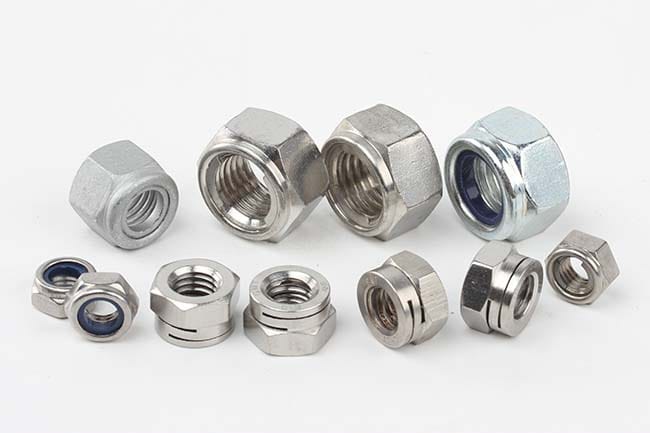
Flybear supplies standard, special, and custom industrial fastening solutions for machinery, automotive, rail, energy, construction equipment, and general OEM applications. Buyers comparing lock nut designs can review the industrial lock nut range and provide the required standard, thread, material or property class, finish, quantity, and application for technical review.
Nylon Insert vs All Metal Lock Nut: Quick Comparison
| Selection Factor | Nylon Insert Lock Nut | All-Metal Lock Nut |
|---|---|---|
| Locking Method | Non-metallic insert creates interference with the mating thread | Metallic locking feature or controlled thread deformation creates prevailing torque |
| Polymer Element | Yes | No |
| Elevated Temperature | Limited by insert material and applicable specification | Generally preferred where polymer temperature limits are unsuitable |
| Chemical Exposure | Insert compatibility must be checked | No polymer insert, but nut material and coating still require compatibility review |
| Thread Interaction | Insert deforms around the mating thread | Metal locking feature contacts or deforms against the mating thread |
| Repeated Installation | Prevailing torque can change with reuse | Prevailing torque and mating-thread condition can also change with reuse |
| Typical Buyer Priority | General-purpose prevailing torque with a non-metallic locking element | Higher-temperature or polymer-free locking requirements |
What Is a Nylon Insert Lock Nut?
A nylon insert lock nut contains a non-metallic ring positioned in the locking section of the nut. As the bolt enters the insert, the bolt thread displaces the insert material. The resulting interference creates frictional resistance to rotation and produces prevailing torque.
This type is often called a nyloc nut in commercial discussions. However, a purchasing specification should identify the actual standard, thread, nut style, material, property class, and insert requirement rather than relying only on the market term.
In a typical design, the metallic nut threads engage the bolt before the locking section reaches the bolt thread. The insert then provides the prevailing-torque feature rather than carrying the entire joint load by itself.
Nylon insert nuts are widely considered for:
- General machinery.
- Automotive and transportation assemblies.
- Electrical equipment.
- Guards, brackets, and covers.
- Construction equipment.
- OEM assemblies exposed to vibration or repeated movement.
What Is an All-Metal Lock Nut?
An all-metal lock nut produces prevailing torque without a nylon or other polymer locking element. Depending on the product design, the locking action may come from intentionally deformed threads, a deformed upper section, slots, or another controlled metallic feature.
The phrase metal insert lock nut is sometimes used in the market, but buyers should verify the actual construction. Not every all-metal prevailing torque nut contains a separate metal insert. In many designs, the nut body or thread itself is formed to create the locking interference.
Because the locking mechanism is metallic, these nuts are frequently evaluated where elevated temperature or chemical exposure makes a polymer locking element unsuitable. However, the actual acceptable environment still depends on nut material, coating, mating fastener, applicable standard, and service conditions.
Both Designs Are Prevailing Torque Nuts
A prevailing torque nut differs from an ordinary free-spinning hex nut because rotational resistance exists before full clamp load is developed. The locking feature maintains this resistance during installation and, according to the applicable design and performance specification, during removal.
This distinction matters when developing an assembly torque. Part of the applied torque is consumed by the prevailing-torque feature rather than generating clamp load. A tightening specification developed for a standard free-spinning nut should therefore not automatically be transferred to a prevailing torque nut.
ISO 2320:2015 specifies functional properties and test methods for prevailing torque steel nuts within its scope and covers both all-metal and non-metallic insert designs. It also notes that prevailing torque values established under laboratory conditions can differ from values in practical applications.
Current ISO Standards for Nylon Insert and All-Metal Lock Nuts
Current product standards distinguish between locking mechanism, nut height, and thread pitch. Buyers should use the standard that actually matches the required configuration.
| Lock Nut Type | Current ISO Reference | General Scope |
|---|---|---|
| Regular nut with non-metallic insert | ISO 7040:2025 | Steel and stainless steel, metric coarse pitch M3–M39, product grades A and B |
| High nut with non-metallic insert | ISO 7041:2025 | Steel and stainless steel, metric coarse pitch M5–M39, product grades A and B |
| Regular all-metal nut | ISO 7719:2025 | Steel and stainless steel, metric coarse pitch M5–M39, product grades A and B |
| High all-metal nut | ISO 7042:2025 | Steel and stainless steel, metric coarse pitch M5–M39, product grades A and B |
Legacy DIN designations are also common on existing equipment and purchasing records. Buyers should not replace an older DIN lock nut with a current ISO product solely because both are described as self-locking hex nuts. Dimensions, thread, nut height, locking mechanism, material, mechanical properties, and functional requirements should be verified before substitution.
Temperature Is a Major Selection Difference
Temperature is one of the clearest reasons engineers compare nylon insert and all-metal lock nuts. A polymer locking element has material-dependent temperature limits, while an all-metal design avoids that polymer component.
For prevailing torque steel nuts conforming to ISO 2320:2015, the standard notes application ranges of -50 °C to +150 °C for all-metal types and -50 °C to +120 °C for non-metallic insert types. It also warns that temperature can influence prevailing-torque and torque/clamp-force properties. These values should therefore not be generalized to every lock nut, insert material, coating, or customer-specific product.
For applications involving engines, exhaust-adjacent equipment, heating systems, industrial ovens, high-temperature machinery, or thermal cycling, buyers should provide the expected operating and peak temperatures during the RFQ.
Chemical and Environmental Compatibility
The polymer insert in a nylon insert lock nut must be compatible with the actual environment. Oils, fuels, cleaning agents, process chemicals, elevated temperature, and other exposures can affect polymer behavior depending on the insert material and exposure conditions.
An all-metal design removes this particular polymer compatibility issue, but it is not automatically resistant to every environment. The steel or stainless steel grade, coating, corrosion exposure, and mating fastener still determine suitability.
For outdoor, marine, chemical-processing, food equipment, or high-humidity projects, buyers should specify the actual environment rather than requesting a generic “corrosion-resistant lock nut.”
Which Type Is Better for Vibration?
Both designs are intended to provide prevailing torque, and both may be used in assemblies exposed to vibration when the product and joint are correctly specified. It is therefore inaccurate to state that one mechanism universally provides better vibration resistance than the other.
Actual loosening behavior depends on:
- Initial clamp load.
- Joint stiffness.
- Transverse movement.
- External dynamic loads.
- Mating thread condition.
- Lubrication and coating.
- Installation torque.
- Temperature.
- Number of installation and removal cycles.
For safety-critical or strongly vibration-loaded joints, buyers should define the functional test or customer requirement rather than approving a lock nut based only on its general product family.
Repeated Assembly and Reuse
Prevailing torque can change when a lock nut is repeatedly installed and removed. With a nylon insert design, repeated engagement can alter the non-metallic locking element. With an all-metal design, repeated metal-to-metal interaction can change the locking feature or mating thread condition.
Neither design should therefore be described as indefinitely reusable. If maintenance requires repeated disassembly, the specification should define acceptable reuse criteria or minimum prevailing torque after the required assembly cycles.
For field service, buyers should also decide whether maintenance personnel are expected to replace the nut after removal. That decision should be documented rather than left to individual technicians.
All-Metal Lock Nuts and Thread Wear
Because an all-metal prevailing torque feature interacts directly with the bolt thread, mating-thread material, hardness, surface condition, and coating deserve particular attention. Excessive interference or an unsuitable material combination can increase installation torque or thread wear.
Stainless steel combinations also require attention to friction and galling. Appropriate material selection, finish, lubrication where permitted, and installation procedures should be considered for the complete assembly.
A higher prevailing torque is not automatically evidence of a better lock nut. The required torque range should match the standard or approved project specification without creating unnecessary assembly difficulty.
Material and Property Class Selection
The locking mechanism does not replace the normal mechanical-property specification. A carbon or alloy steel lock nut should have the appropriate property class for its mating bolt, screw, or stud. Stainless steel lock nuts should use the applicable stainless grade and property-class system.
For applicable carbon and alloy steel nuts, ISO 898-2 provides mechanical-property requirements. For corrosion-resistant stainless steel nuts, ISO 3506-2 provides the relevant mechanical-property framework within its scope.
Buyers should therefore specify both:
- The lock nut product standard or drawing.
- The required material and mechanical-property class.
Requesting only “M12 all-metal lock nut” leaves important questions about geometry, strength, coating, and functional performance unresolved.
Coatings and Finishes for Lock Nuts
Steel locking nuts may be supplied with zinc-based plating, zinc-flake systems, black finishes, or other project-specific coatings. Stainless steel nuts may use a natural or specified treated surface.
Coating can affect corrosion resistance, thread fit, friction, and prevailing torque. This is especially relevant because a prevailing torque nut already creates deliberate thread interference.
If the coating or lubrication changes, the assembly torque and prevailing torque behavior may also change. Buyers should therefore avoid changing surface treatment independently when an approved tightening process or functional torque requirement already exists.
Nylon Insert vs All Metal Lock Nut Selection Guide
| Application Requirement | Type to Evaluate First | Reason |
|---|---|---|
| General industrial vibration control | Nylon Insert or All-Metal | Either may be suitable when the joint and required functional performance are verified |
| Elevated operating temperature | All-Metal | Eliminates the non-metallic locking insert, subject to the applicable nut specification |
| Chemical exposure incompatible with polymer | All-Metal | Avoids a polymer locking element, while metal and coating compatibility still require review |
| Lower-temperature general machinery | Nylon Insert | Common prevailing-torque solution where the insert material suits the environment |
| Frequent maintenance disassembly | Application Review | Prevailing torque changes with reuse for both designs |
| Stainless steel assembly | Either with Material Review | Corrosion, friction, galling, insert compatibility, and applicable property requirements must be considered |
| Existing approved legacy joint | Match Approved Specification | Changing locking mechanism can alter torque and functional behavior |
Quality Control for Prevailing Torque Nuts
Inspection of a locking nut should include more than dimensional measurement. Depending on the order, relevant checks can include internal thread gauging, nut dimensions, material verification, hardness or mechanical testing, coating thickness, insert condition, locking-feature geometry, and functional prevailing-torque testing.
Prevailing torque is particularly important because the locking mechanism is a functional characteristic. A nut may look dimensionally acceptable but still fail the required locking-torque performance.
Flybear’s quality control process supports dimensional and thread inspection, material verification, hardness and mechanical testing, torque testing, coating inspection, salt-spray testing when required, and final packaging review according to agreed project requirements.
Common Lock Nut Purchasing Mistakes
- Specifying only “lock nut.” Identify whether a nylon insert, all-metal, flange locking, or another design is required.
- Assuming all-metal always provides better vibration resistance. Joint behavior depends on preload, movement, torque, materials, and the complete fastening system.
- Ignoring temperature. Polymer locking elements have application-dependent temperature limitations.
- Assuming every all-metal nut contains a metal insert. Many designs create locking action through deformation of the nut itself.
- Reusing lock nuts indefinitely. Prevailing torque can change with repeated installation and removal.
- Using ordinary tightening torque without review. Prevailing torque consumes part of the applied installation torque.
- Ignoring the mating bolt. Thread, property class, surface finish, hardness, and lubrication can affect the locking system.
- Changing coating without assembly validation. Coating and lubrication can influence friction and prevailing torque.
When a Custom Lock Nut Is Required
Some OEM applications require special locking geometry, unusual nut height, fine pitch thread, flange dimensions, non-standard material, customer-specific coating, or a drawing-controlled prevailing-torque feature.
For these projects, buyers can submit drawings or samples through Flybear’s custom fastener support. The drawing should define the geometry and thread, while the RFQ should also state material, mechanical properties, coating, mating fastener, functional torque requirements, and inspection criteria.
RFQ Checklist for Nylon Insert and All-Metal Lock Nuts
To obtain a technically comparable quotation from an industrial nut supplier, provide:
- Applicable standard and edition or controlled drawing.
- Required locking type: non-metallic insert, all-metal, or another design.
- Metric or inch thread designation and pitch.
- Nut style and required dimensions.
- Material and property class or stainless steel grade.
- Mating bolt, screw, or stud specification.
- Surface finish, coating, and lubrication requirement.
- Order quantity and expected repeat demand.
- Operating and peak temperature where relevant.
- Chemical, moisture, salt, or other environmental exposure.
- Expected vibration and dynamic loading conditions.
- Whether repeated removal and reuse are expected.
- Required prevailing-torque or functional test criteria.
- Inspection reports, material certificates, coating reports, traceability, and packaging requirements.
FAQ
What is the main difference between a nylon insert and an all-metal lock nut?
A nylon insert lock nut generates prevailing torque through interference between a non-metallic insert and the mating thread. An all-metal lock nut uses a metallic locking feature or controlled deformation and does not rely on a polymer insert.
Which lock nut is better for high temperature?
All-metal lock nuts are generally the first type to evaluate when temperatures exceed the limits of the intended polymer insert. The final selection should follow the applicable standard, nut material, coating, and actual operating temperature.
Can nylon insert lock nuts be reused?
Prevailing torque can change after repeated installation and removal. Reuse should therefore follow the applicable standard, customer specification, or validated maintenance procedure rather than assuming unlimited reuse.
Are all-metal lock nuts reusable?
They can also experience changes in prevailing torque and thread condition after repeated cycles. Required reuse performance should be defined and tested when repeated service is part of the application.
What is a prevailing torque nut?
A prevailing torque nut creates rotational resistance through a locking feature before the nut is fully seated and clamping the joint. Both nylon insert and all-metal lock nuts can use this principle.
What should buyers provide for a lock nut quotation?
Provide the standard or drawing, locking type, thread and pitch, material or property class, mating fastener, finish, quantity, operating environment, temperature, functional torque requirements, and required inspection or certificate documents.
Conclusion
The nylon insert vs all metal lock nut choice should be based on the complete operating and assembly environment. Nylon insert nuts provide a practical non-metallic prevailing-torque solution for many general industrial joints, while all-metal designs are particularly useful where temperature or chemical conditions make a polymer locking element unsuitable.
Neither locking method should be selected from vibration claims alone. Mating bolt properties, temperature, coating, friction, repeated assembly, prevailing torque, joint preload, and applicable standards all influence the final result. For OEM purchasing, defining these requirements during the RFQ stage is more reliable than specifying only a generic “self-locking nut.”
For standard or project-specific prevailing torque nuts, Flybear can support technical requirement review and quotation. Send your standard or drawing, thread size and pitch, locking type, material or property class, finish or coating, quantity, application, temperature, and inspection or certificate requirements through the Flybear contact page.