Steel Construction Fastening Solutions for Structural Steel Assemblies
Steel construction fastening solutions are essential for creating secure, durable, and serviceable connections across structural steel frames, industrial buildings, warehouses, bridges, platforms, towers, equipment supports, modular structures, and other fabricated steel assemblies. Bolts, nuts, washers, threaded rods, anchors, screws, and custom fastening components must work together with beams, columns, plates, brackets, and other structural members to maintain reliable joints under static loads, vibration, wind, temperature changes, and long-term outdoor exposure.
For steel fabricators, construction contractors, EPC companies, building-system manufacturers, distributors, and procurement teams, selecting the correct fastener involves much more than choosing diameter and length. Fastener grade, thread configuration, coating, washer type, bolt geometry, installation method, corrosion environment, connected steel thickness, and project specifications can all influence joint performance.
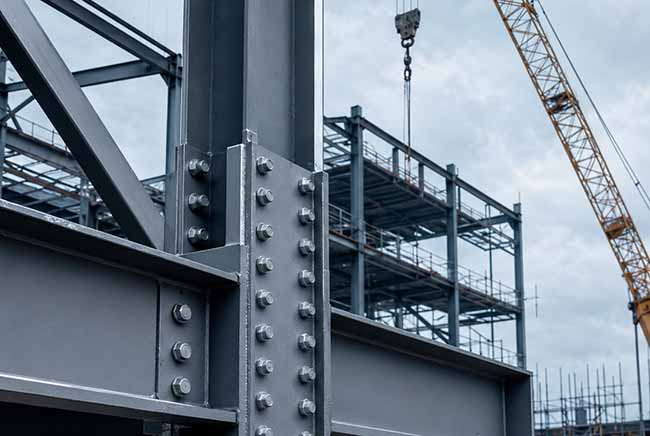
A practical sourcing strategy combines standard structural fasteners with application-specific and custom components where standard catalog products cannot meet the geometry, dimensions, finish, or assembly requirements of a steel construction project.
Complete Fastening Support for Structural Steel Construction
Steel structures contain many different fastening locations, from major beam-to-column connections to secondary brackets, purlins, access platforms, handrails, equipment frames, roof systems, and façade supports. Each joint has different mechanical and installation requirements.
Flybear supports one-stop sourcing of standard and custom fastening components for steel construction projects, helping buyers consolidate structural bolts, hex bolts, nuts, washers, threaded rods, anchor components, self-drilling screws, studs, and drawing-based fasteners according to project requirements.
Steel Construction Fastening Solutions for Structural Frames
Structural frames form the main load-bearing system of industrial buildings, warehouses, commercial structures, workshops, and other steel construction projects. Beam-to-column connections, bracing systems, splice joints, and base assemblies require fasteners selected according to structural design and applicable engineering specifications.
High-strength bolts, heavy-duty nuts, hardened washers, and other structural fastening components can be used where joints must transfer significant loads. Bolt grade should be specified according to the design requirement rather than chosen only on the basis of availability.
Fastener dimensions must also match the connected plates and structural members. Bolt length should provide sufficient thread engagement while avoiding unnecessary projection that could interfere with adjacent components or installation access.
Where joints are installed on site, tool access and assembly sequence should be considered during design. Head style, nut orientation, washer configuration, and available clearance can all affect installation efficiency.
High-Strength Bolts for Steel Structures
High-strength bolts are widely used in structural steel assemblies where secure clamping and mechanical performance are required. Depending on the project and applicable standard, metric property classes such as 8.8, 10.9, or other specified grades may be used.
The correct bolt should be matched with compatible nuts and washers. A high-strength bolt should not be treated as an isolated component because nut strength, washer hardness, thread engagement, and bearing surfaces all influence the complete connection.
Installation procedures are equally important. Tightening methods should follow the project specification and structural design requirements. A bolt with the correct grade can still perform poorly if the joint is assembled incorrectly or if inappropriate surface conditions alter the intended tightening behavior.
Procurement teams should therefore define fastener grade, dimensions, thread, finish, matching nut requirements, washer configuration, and any installation-related specifications clearly during quotation.
Fasteners for Steel Beams, Columns and Bracing Systems
Steel beams, columns, braces, and connection plates are commonly assembled with bolted joints that must fit accurately during fabrication and site erection. Hex bolts and structural bolting systems can support these connections according to the design.
Connection geometry should account for bolt-hole size, plate thickness, edge distance, spacing, and available tool access. Fastener dimensions should be coordinated with fabricated steelwork to reduce fit-up problems during assembly.
Bracing connections can also experience changing forces caused by wind, equipment loads, or building movement. The specified fastener should therefore follow the structural engineer’s load calculations and connection design.
Where special plate thicknesses or connection geometries require non-standard lengths, custom bolts or threaded components can be produced according to project drawings.
Fasteners for Steel Building Roof and Wall Systems
Steel buildings include roofing sheets, wall panels, purlins, girts, insulation systems, trims, and secondary structural components. These applications often use different fastening products from the primary structural frame.
Self-drilling screws, self-tapping screws, bolts, nuts, washers, and specialized roofing fasteners may be used depending on the panel material and support structure. Fastener point geometry, thread design, head style, washer configuration, and corrosion resistance can all influence installation and long-term performance.
For thin steel sheet, self-drilling screws can simplify assembly by drilling and fastening in a single operation where the system design permits. The screw should be selected according to the total drilling thickness, supporting steel thickness, and required thread engagement.
Roofing and exterior wall fasteners should also be selected with weather exposure in mind. Materials and coatings should match the environmental conditions and project specification.
Fastening Solutions for Steel Platforms and Walkways
Industrial steel construction often includes platforms, stairs, walkways, ladders, handrails, grating supports, and maintenance access structures. These assemblies may require both structural and removable fastening systems.
Hex bolts, carriage bolts, U-bolts, threaded rods, nuts, washers, and custom brackets can be used according to the structural design. Fasteners for outdoor platforms may require enhanced corrosion resistance because they are exposed to rain, humidity, industrial contaminants, and changing temperatures.
Maintenance access should also be considered. Where platform components are intended to be removed or adjusted, bolted connections can provide greater serviceability than permanent joining methods.
Fastener head style and installation direction can influence safety and usability in pedestrian areas, particularly where protruding hardware could interfere with access.
Anchor Bolts and Threaded Rods for Steel Construction
Steel columns, machinery frames, structural bases, and fabricated modules may require anchor bolts, threaded rods, or stud assemblies to connect steel structures to concrete foundations or supporting frames.
Anchor-related components can vary widely in diameter, length, bend geometry, thread length, plate configuration, and material. Because foundation designs are project-specific, custom threaded rods and anchor components are often produced according to engineering drawings.
Thread length and projection should be coordinated with the base plate, leveling components, washers, nuts, grout space, and installation tolerances. Insufficient thread can complicate installation, while excessive projection may interfere with equipment or finishing work.
For custom anchor components, buyers should provide complete drawings showing material, dimensions, tolerances, thread specifications, and surface-treatment requirements.
Fasteners for Pre-Engineered Steel Buildings
Pre-engineered buildings use standardized structural components designed for efficient fabrication and site assembly. Main frames, secondary members, roof systems, wall systems, braces, and accessories can require large quantities of bolts, screws, nuts, and washers.
Fastener consistency is important in these projects because large quantities are installed across repeated connection types. Standardizing fastener sizes where engineering requirements permit can simplify packing, site identification, installation tooling, and inventory management.
Fastener packages can also be organized according to building section or installation stage to help site teams locate the correct hardware more efficiently.
Where proprietary building systems require unusual bolt lengths, washers, clips, or threaded parts, drawing-based custom fasteners can be integrated into the same sourcing program.
Fastening Solutions for Steel Bridges and Infrastructure
Bridge structures, pedestrian bridges, utility structures, gantries, and other steel infrastructure can contain demanding bolted connections exposed to weather, vibration, traffic-related loading, and long service periods.
Fasteners should be selected according to the applicable structural specification and project requirements. High-strength bolts, nuts, and washers may be used for primary structural connections, while smaller fasteners can support railings, inspection platforms, signage, and auxiliary systems.
Corrosion protection is particularly important because exposed fasteners may operate outdoors for many years. The appropriate coating or material should be specified according to the environmental category and compatibility with the surrounding steel structure.
Maintenance requirements should also be considered where fasteners may need periodic inspection, replacement, or retightening according to the infrastructure maintenance plan.
Corrosion-Resistant Fasteners for Outdoor Steel Structures
Outdoor steel construction is continuously exposed to rain, humidity, condensation, industrial atmospheres, and in some locations coastal air. Corrosion protection is therefore an important part of fastener selection.
Carbon and alloy steel fasteners may use zinc-based coatings, zinc flake systems, hot-dip galvanized finishes, or other protective treatments according to project requirements. Stainless steel fasteners may also be considered for selected applications where corrosion resistance is a priority.
Surface treatment should be compatible with the complete structural system. Fastener coating, connected steel finish, thread dimensions, installation method, and required friction characteristics should all be considered.
For high-strength fasteners, the selected coating and manufacturing process should also be appropriate for the material and application requirements. Buyers should define the required surface treatment before production.
Hot-Dip Galvanized Fasteners for Steel Construction
Hot-dip galvanized fasteners are commonly considered for outdoor steel structures, utility equipment, platforms, towers, and other applications requiring durable corrosion protection. The zinc coating provides a protective layer over the steel fastener.
Because galvanizing increases surface thickness, thread dimensions and nut compatibility must be considered carefully. Galvanized bolts should be matched with nuts and components suitable for the specified coating system.
The finish should also be coordinated with the surrounding galvanized steel structure where a consistent corrosion-protection strategy is required.
Buyers should clearly specify whether hot-dip galvanizing or another finish is required, rather than requesting a generic zinc coating that could refer to several different processes.
Fasteners for Modular and Prefabricated Steel Structures
Modular construction and prefabricated steel systems rely heavily on repeatable bolted connections because modules are manufactured off-site and assembled later at the project location. Fastener accuracy and packaging can directly affect assembly efficiency.
Structural bolts, flange bolts, threaded rods, nuts, washers, screws, and custom joining components may be required across module frames, wall systems, roof structures, service supports, and connection interfaces.
Standardizing common fastener sizes across modules can simplify production and installation. At the same time, special joints may require custom components with specific lengths, shoulders, or attachment features.
For international projects, packing and labeling requirements should be defined clearly so that fastener kits can be identified according to module, connection type, or installation sequence.
Fasteners for Steel Equipment Frames and Supports
Industrial steel construction frequently includes equipment bases, pipe racks, machinery supports, conveyor frames, utility structures, and production equipment platforms. These structures may require both high-strength structural fasteners and smaller general-purpose hardware.
Hex bolts, flange bolts, U-bolts, threaded rods, anchor components, nuts, and washers can be selected according to the structural design. Equipment supports may also require custom fasteners where vibration, unusual geometry, or installation access creates special requirements.
For machinery and equipment foundations, fasteners should be coordinated with mounting-hole patterns and alignment requirements. Precision in anchor location and thread projection can help simplify equipment installation.
Stainless Steel Fasteners for Specialized Steel Construction
Stainless steel bolts, screws, nuts, and washers can be used in selected construction environments where corrosion resistance, appearance, or low maintenance is important. Applications may include architectural steelwork, coastal structures, handrails, exterior equipment, and specialized industrial installations.
The exact stainless steel grade should be defined according to the operating environment and project requirements. Stainless steel should not automatically replace a specified high-strength carbon or alloy steel structural bolt simply because it provides better corrosion resistance.
Mechanical strength, thread behavior, mating materials, joint design, and corrosion compatibility should all be reviewed before approving a material substitution.
Fastener Selection for Fabrication and Site Installation
A fastener must work not only in the completed structure but also during fabrication and erection. Fabricators and site contractors should consider installation access, hole alignment, bolt insertion direction, tightening tools, and assembly sequence.
Where connections are difficult to access, head geometry or nut orientation may influence installation efficiency. Standardized drive and wrench sizes can reduce tool changes on site.
Fasteners should also be supplied in a condition suitable for the intended installation procedure. Coating, lubrication, and surface condition can influence tightening behavior, particularly where preload is controlled.
Coordination between structural designers, fabricators, installers, and procurement teams can reduce assembly problems caused by unclear fastener specifications.
Custom Steel Construction Fasteners
Steel construction projects often include non-standard joints that cannot be served efficiently using conventional catalog hardware. Custom steel construction fasteners can be manufactured according to technical drawings for special connection geometry, structural supports, equipment bases, modular systems, or replacement requirements.
Typical custom components may include special-length bolts, double-ended studs, threaded rods, anchor bolts, U-bolts, shoulder bolts, special nuts, custom washers, bent threaded components, and machined threaded parts.
Custom fasteners can help address unusual plate thicknesses, restricted installation space, proprietary connection systems, or specific thread-length requirements.
Technical drawings should define material, grade, dimensions, tolerances, thread configuration, heat treatment where applicable, surface finish, and inspection requirements. Critical dimensions should be identified clearly to support manufacturing and quality control.
Quality Considerations for Steel Construction Fasteners
Reliable structural fastener sourcing begins with complete technical specifications. Buyers should define the applicable standard or drawing revision, material, property class or grade, dimensions, thread, surface treatment, matching components, and required inspection before production begins.
Depending on the specification, verification may include dimensional inspection, thread checks, hardness testing, tensile or proof-load testing, coating inspection, material verification, or other customer-defined requirements.
For custom fasteners, critical dimensions such as overall length, thread length, bend geometry, shoulder diameter, or special machined features should be clearly marked on the drawing.
If material documentation, lot identification, product marking, or inspection records are required, these requirements should be communicated during quotation.
Fasteners for Steel Structure Maintenance and Replacement
Steel structures require inspection and maintenance throughout their service life. Outdoor structures, industrial facilities, bridges, platforms, and equipment frames may create ongoing demand for replacement bolts, nuts, washers, threaded rods, and specialty fasteners.
Replacement fasteners should match the original technical requirements where the joint is structurally controlled. Diameter and length alone are not enough to confirm interchangeability.
Material, grade, thread pitch, dimensions, coating, nut compatibility, and washer requirements should all be verified before replacement. Where original hardware is non-standard, engineering drawings can support custom manufacturing.
Maintaining accurate fastener specifications can also make long-term maintenance procurement more efficient.
Fastener Standardization for Steel Fabrication Projects
Large steel construction projects may contain hundreds of fastener sizes and configurations. Unnecessary variation can increase purchasing complexity, fabrication errors, packaging requirements, and site installation difficulties.
Engineering and procurement teams can review connection designs to identify opportunities for standardizing commonly used bolt diameters, lengths, nut types, washers, and coatings where structural requirements allow.
Standardization can simplify procurement and installation while custom components remain available for special connections that genuinely require non-standard geometry.
For repeat steel building systems or modular structures, a controlled fastener library can also simplify future project planning and spare-parts management.
How to Prepare an RFQ for Steel Construction Fasteners
A detailed RFQ helps suppliers evaluate structural fastening requirements accurately and reduces unnecessary quotation revisions. Buyers should identify the full fastener specification and provide drawings for non-standard components whenever possible.
Recommended RFQ Information
- Fastener type and applicable dimensional standard
- Technical drawing and revision for custom parts
- Diameter, thread pitch, and overall length
- Material and required grade or property class
- Matching nut and washer requirements
- Heat-treatment requirements where applicable
- Surface treatment or corrosion-protection specification
- Application within the steel structure
- Indoor, outdoor, industrial, or coastal exposure conditions
- Critical dimensions and tolerances
- Required quantity and purchasing frequency
- Inspection and documentation requirements
- Product marking, packaging, and labeling requirements
If the final fastener specification has not yet been confirmed, buyers can also provide information about the complete connection, including connected steel thicknesses, expected loading, installation access, corrosion environment, fabrication method, and maintenance requirements. These details help determine whether a standard product or custom fastening solution is more appropriate.
One-Stop Fastener Sourcing for Steel Construction Projects
Steel fabricators, contractors, modular building manufacturers, and industrial construction companies may require many different fastening categories across structural frames, roofs, walls, platforms, equipment supports, bridges, and auxiliary structures. Managing separate suppliers for structural bolts, nuts, washers, threaded rods, anchors, screws, U-bolts, and custom parts can increase procurement complexity.
A one-stop sourcing approach allows buyers to consolidate multiple fastener families while maintaining the individual grade, dimension, coating, and inspection requirements of each application. Standard products can support recurring fabrication and construction demand, while drawing-based custom components can address proprietary connection designs and project-specific requirements.
Whether the project involves industrial steel buildings, warehouses, bridges, modular structures, platforms, equipment frames, or infrastructure, reliable fastening begins with accurate technical specifications. Matching fastener strength, dimensions, thread design, corrosion protection, installation method, and structural requirements to the actual connection helps support efficient fabrication, smoother site assembly, and dependable long-term steel construction performance.