Threaded Rod vs Stud Bolt: What Industrial Buyers Should Specify
Threaded rod vs stud bolt selection can affect material control, thread specification, length measurement, end preparation, mechanical properties, coating, inspection, and suitability for the final assembly. Although both products are headless externally threaded fasteners and can sometimes look almost identical, industrial buyers should not assume that a cut length of all-thread rod is automatically equivalent to a stud bolt specified for piping, valves, pressure equipment, or another controlled application.
A threaded rod is generally a long externally threaded bar supplied in standard or project-specific lengths and often cut to the required size during fabrication or maintenance. A stud bolt is typically specified as a headless fastening component for a defined joint, frequently used with nuts at both ends. Studs can be fully threaded or have different threaded configurations depending on the product standard and application.
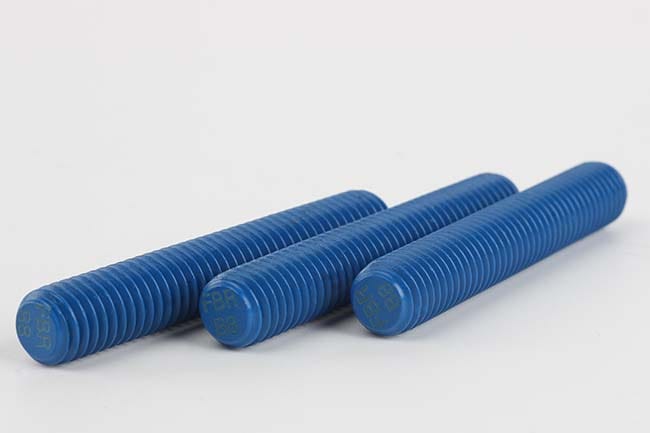
Flybear supplies standard, special, and custom industrial fasteners for OEM, EPC, maintenance, and distributor requirements. Buyers comparing these products can review the threaded rods and studs range and provide the applicable standard or drawing, thread, material or grade, finish, quantity, and application for technical review.
Threaded Rod vs Stud Bolt: Quick Comparison
| Specification Factor | Threaded Rod | Stud Bolt |
|---|---|---|
| General Form | Long threaded bar, commonly threaded continuously over its length | Headless fastening component supplied to a defined length and stud configuration |
| Typical Supply | Stock or project lengths that can be cut to size | Finished lengths prepared for a specific bolted joint |
| Common Applications | Machinery, supports, construction, hangers, fabrication and maintenance | Flanges, valves, pressure equipment, pumps, machinery and engineered joints |
| End Preparation | May be cut, chamfered or finished according to the order | End condition and chamfers are commonly controlled by the product specification or drawing |
| Material Control | Can range from general-purpose carbon steel to stainless and alloy steel | Often ordered to application-specific bolting material standards and grades |
| Inspection | Dimensions, thread, material and coating according to the purchase requirement | May require additional grade, mechanical-property, marking and documentation controls |
The distinction is therefore not determined only by whether the fastener is fully threaded. Some stud bolts are continuously threaded, so geometry alone may not reveal the purchasing specification behind the part.
What Is a Threaded Rod?
A threaded rod, also called a threaded bar or all thread rod, is an externally threaded bar generally supplied without a head. Continuous-thread versions provide thread engagement along most or all of the usable length, allowing nuts or other internally threaded components to be positioned at different locations.
Threaded rods are commonly used for:
- Equipment supports and mounting systems.
- Pipe and cable supports.
- Construction and fabricated steel assemblies.
- Machinery anchoring and adjustment.
- Electrical and mechanical installations.
- Maintenance and repair work.
- Custom cut-to-length fastening applications.
The flexibility of threaded bar is useful, but it also creates a sourcing risk. A general-purpose threaded rod should not automatically be used in an engineered joint that requires a particular bolting material grade, heat treatment, test documentation, or traceability.
What Is a Stud Bolt?
A stud bolt is a headless externally threaded fastener designed for use with nuts or threaded components. In piping and pressure-equipment applications, the term commonly refers to a stud used with a nut at each end to clamp two flange faces together.
However, the broader stud family includes several geometries. ASME B18.31.2, for example, distinguishes continuous-thread studs, flange bolting studs and double-end studs in its inch-series scope.
Continuous-Thread Stud
A continuous-thread stud is threaded over its complete length. Visually, this design may resemble a piece of all-thread rod, which is why purchasing specifications must identify the required standard, material and finished length instead of relying on appearance.
Double-End Stud
A double-end stud normally has threaded sections at both ends with an unthreaded shank between them. Depending on the application, the two threaded ends may have identical or different engagement lengths.
One end can also be designed for installation into a tapped component while the opposite end accepts a nut. These configurations are common in machinery, engines, housings, pumps and other equipment where repeated disassembly should not repeatedly wear the female thread in the main component.
Why a Fully Threaded Rod Is Not Automatically a Stud Bolt
This is one of the most important sourcing points in the threaded rod vs stud bolt comparison. Two components may share the same diameter, thread pitch and overall appearance but still have different technical requirements.
A specified stud bolt can include controlled requirements for:
- Bolting material grade.
- Heat-treatment condition.
- Tensile and yield properties.
- Hardness.
- Impact testing where required.
- Thread form and tolerance.
- Finished length and end preparation.
- Product marking.
- Lot traceability.
- Material and mechanical test documentation.
A commercially available all-thread rod may or may not satisfy those same requirements. Substitution should therefore be based on documented conformity rather than visual similarity.
Standards Depend on the Application
There is no single universal threaded rod or stud bolt standard for every industrial application. Dimensional standards, thread standards and bolting-material standards often control different aspects of the finished fastener.
For inch-series stud geometry, ASME B18.31.2 covers continuous-thread studs, double-end studs and flange bolting studs within its scope. Material requirements for pressure-service stud bolting may be controlled separately.
ASTM A193/A193M-26 currently covers specified alloy-steel and stainless-steel bolting materials and components for pressure vessels, valves, flanges and fittings for high-temperature or high-pressure service and other special-purpose applications. ASTM A320/A320M-26 covers specified alloy-steel and stainless-steel bolting for low-temperature service.
These examples illustrate why a buyer should not write only “stud bolt” on an RFQ. The product geometry and the required material performance may come from different standards.
Material and Grade Selection
Threaded rods and studs are available in carbon steel, alloy steel, stainless steel and other project-specific materials. The correct choice depends on required mechanical performance, temperature, corrosion environment, joint design and applicable code or customer specification.
Carbon Steel
Carbon steel threaded rods are commonly used for general machinery, supports, fabricated structures and construction-related fastening where the specified mechanical properties and corrosion protection are suitable.
Buyers should identify the required strength or material specification rather than assuming that all carbon steel threaded bars have identical mechanical properties.
Alloy Steel
Alloy steel is widely used for higher-strength and pressure-service stud bolting. ASTM A193 Grade B7 is a familiar example in industrial flange and pressure-equipment sourcing, but it should be ordered as part of the applicable technical specification rather than treated as a generic synonym for every high-strength stud bolt.
Low-temperature applications may require a different grade and test condition, such as grades covered by ASTM A320/A320M. Service temperature, impact requirements and project specifications should be provided during quotation.
Stainless Steel
Stainless threaded rods and studs may be selected where corrosion resistance is important. Austenitic and duplex stainless materials can be used for different industrial environments, but suitability depends on the exact alloy, mechanical requirements, temperature, chlorides, chemicals and mating materials.
A request for “stainless stud bolt” is therefore incomplete when grade or service conditions matter.
Thread Type and Pitch Must Be Specified
Buyers should specify metric or inch threads together with diameter, pitch or threads per inch, and any required tolerance or class. Coarse and fine threads of the same nominal diameter are not interchangeable.
This is particularly important for piping maintenance. An existing flange may use a thread series defined by the project or applicable flange specification, while a general threaded rod stocked for machinery work may use a different thread.
If the order is based on a drawing, keep the drawing’s complete thread callout. If replacement parts are being reverse engineered, thread identification should be verified before an RFQ is issued.
Length Specification Can Create Purchasing Errors
Length is another area where threaded rods and stud bolts can be confused. Threaded rod is frequently supplied in long stock lengths and then cut to the required overall dimension. A finished stud bolt, by contrast, may be ordered to a project-specific length with controlled end preparation.
Do not assume that every supplier measures every stud configuration from the same reference points. When the applicable standard or customer drawing controls the length convention, use that definition.
For quotation, buyers should clarify:
- Finished overall length.
- Whether chamfered ends are included in the drawing dimension.
- Required thread length for double-end studs.
- Unthreaded shank length where applicable.
- Cut-length tolerance.
- Required exposed thread after assembly where relevant.
End Preparation and Chamfers
End preparation affects nut starting, assembly speed and thread protection. Cut threaded rod can require deburring or chamfering after cutting so that nuts can engage without damage.
Finished stud bolts are commonly supplied with controlled ends suitable for assembly. If the project requires specific chamfer geometry, point style or end identification, these details should be included in the drawing or product standard.
Maintenance teams cutting all thread rod on site should also consider whether the resulting cut end and thread condition meet the acceptance requirements of the final application.
Coatings and Finishes
Threaded rod and stud bolt finishes can include plain or black surfaces, zinc-based coatings, hot-dip galvanizing, zinc-flake systems, PTFE-based coatings and other project-specific treatments.
The coating should be selected according to corrosion exposure, temperature, thread fit, assembly friction and customer specifications. Coated stud bolting in flange applications also requires attention to the mating nut and tightening procedure because surface condition can influence friction and therefore the relationship between torque and bolt tension.
Buyers should avoid requesting only a coating color. A controlled specification should identify the coating system, thickness or applicable class, lubrication requirement and corrosion test criteria when these characteristics are required.
Threaded Rod vs Stud Bolt by Application
| Application | Product to Evaluate First | Reason |
|---|---|---|
| General machinery support | Threaded Rod | Flexible cut lengths and continuous thread positioning can simplify fabrication |
| Pipe flange joint | Specified Stud Bolt | Material, dimensions and bolting requirements are commonly controlled by pressure-service specifications |
| Valve or pressure equipment | Stud Bolt / Engineered Stud | Service temperature, material grade and documentation can be critical |
| Adjustable support system | Threaded Rod | Continuous threads allow adjustment over a relatively long distance |
| Tapped machinery housing | Double-End Stud | One end can remain engaged in the housing while the opposite end accepts a nut |
| General fabrication and maintenance | Threaded Rod | Stock lengths can be cut for multiple non-critical applications when the specification permits |
| Low-temperature pressure service | Application-Specified Stud Bolting | Material and impact requirements should follow the applicable low-temperature specification |
Quality Control for Threaded Rods and Stud Bolts
Inspection should match the required standard, grade and application. Relevant checks can include overall dimensions, thread diameter and pitch, Go/No-Go thread gauging, straightness where controlled, material composition, hardness, tensile properties, coating thickness and visual condition.
For pressure-service stud bolts, marking, heat or lot traceability, material certificates and mechanical test reports may also be required by the purchase specification. These documentation requirements should be agreed before the order rather than requested after production.
Flybear’s quality control process supports dimensional and thread inspection, material verification, hardness and tensile testing, coating-thickness inspection, salt-spray testing when required, and project-specific documentation review according to agreed requirements.
Common Purchasing Mistakes
- Assuming all thread rod and fully threaded stud bolts are equivalent. Material, mechanical properties, end preparation and documentation may differ.
- Ordering only by diameter and length. Thread pitch, material grade, coating and standard also matter.
- Using general threaded rod for pressure-service bolting without verification. The application may require a specific bolting material standard and grade.
- Ignoring length conventions. Stud configuration and applicable drawings can define length differently.
- Specifying “stainless” without a grade. Different stainless alloys have different mechanical and corrosion characteristics.
- Changing coatings without reviewing tightening conditions. Surface finish and lubrication can affect assembly friction.
- Ignoring matching nuts. Nut material, grade, thread and coating should be compatible with the selected stud.
- Leaving inspection documents out of the RFQ. Traceability and test reports can affect production and quotation requirements.
When Custom Studs Are Required
Standard threaded bar or stud bolts do not cover every equipment design. Projects can require unequal thread lengths, an unthreaded center section, special tap ends, fine threads, different threads at each end, unusual materials, controlled coatings or drawing-specific chamfers.
For these applications, buyers can submit the latest drawing or sample through Flybear’s custom fastener support. A drawing-based stud should be evaluated according to its specified geometry and mechanical requirements rather than assumed to match a standard all-thread product.
RFQ Checklist for Threaded Rod vs Stud Bolt Orders
A complete RFQ should include:
- Applicable standard or latest controlled drawing.
- Product type: threaded rod, continuous-thread stud bolt or double-end stud.
- Metric or inch thread designation.
- Nominal diameter and pitch or TPI.
- Finished length and length tolerance.
- Thread length at each end when applicable.
- Material specification and grade or property class.
- Required heat treatment where applicable.
- Surface finish, coating and lubrication requirements.
- Matching nut requirements where relevant.
- Order quantity and expected repeat demand.
- Application, including pressure, temperature or environmental conditions where relevant.
- Critical dimensional tolerances.
- Required material certificates, mechanical test reports, inspection records, traceability, marking and packaging requirements.
FAQ
Is a stud bolt the same as threaded rod?
No. Some continuously threaded stud bolts can look similar to threaded rod, but a stud bolt may have specific dimensional, material, mechanical, marking and documentation requirements for its intended joint. Equivalence should be verified from the complete specification.
What is all thread rod?
All thread rod is a common term for threaded bar with external threads extending continuously along most or all of its usable length. It is widely used for supports, fabrication, machinery and general fastening.
Why are stud bolts commonly used on flanges?
A headless stud with nuts at both ends provides a practical clamping arrangement for many flange joints. The exact stud dimensions, material grade and matching nuts should follow the applicable flange, bolting and project specifications.
Can threaded rod be cut to make a stud bolt?
Only when the resulting component satisfies every applicable requirement for the intended stud, including material, mechanical properties, thread, dimensions, end preparation, marking, traceability and documentation. Cutting a visually similar rod does not by itself establish compliance.
Which material standard is used for pressure-service stud bolts?
ASTM A193/A193M is widely used for specified alloy-steel and stainless-steel bolting in high-temperature or high-pressure pressure-equipment applications, while ASTM A320/A320M covers specified low-temperature bolting. The project specification determines the required standard and grade.
What should buyers provide for a stud bolt quotation?
Provide the standard or drawing, stud type, diameter and thread, finished length, material and grade, coating, nuts if required, quantity, application conditions, and required inspection, test and certificate documents.
Conclusion
The threaded rod vs stud bolt decision should be based on the purchasing specification and application rather than appearance. Threaded rod offers flexible continuous-thread fastening for machinery, supports, fabrication and maintenance, while stud bolts and double-end studs are commonly supplied as defined fastening components for flanges, pressure equipment and engineered machinery joints.
Industrial buyers should confirm thread, finished geometry, material grade, heat treatment, coating, mating nuts, service temperature, mechanical requirements and documentation before approving a substitute. A fully threaded component that looks like all thread rod may still need to satisfy a much more controlled stud-bolting specification.
For standard or project-specific threaded rods and studs, Flybear can support technical requirement review and quotation. Send your standard or drawing, size and thread, material or grade, finish or coating, quantity, application, and inspection or certificate requirements through the Flybear contact page.