SEMS Screws Explained: Why Use Pre-Assembled Screw and Washer Sets?
SEMS screws are pre-assembled fasteners that combine a screw or bolt with one or more captive washers into a single ready-to-install component. Instead of operators picking up a screw and separate washer for every fastening point, the washer remains retained on the fastener during handling, installation, removal, and reassembly. For OEM production, this design can simplify assembly, reduce loose-part handling, and help ensure that the specified washer is present at the joint.
A typical SEMS fastener is produced by placing the washer over the screw blank before the final thread is rolled. After thread rolling, the thread major diameter is larger than the washer opening, preventing the washer from sliding off the threaded end. Depending on the design, the captive washer can normally rotate while remaining permanently retained on the screw.
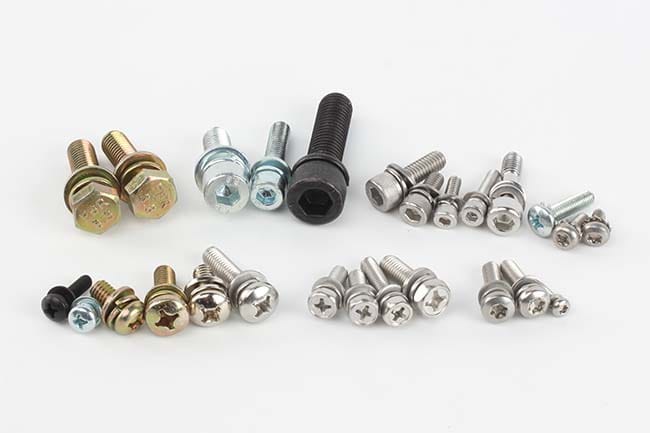
Flybear supplies standard, special, and custom industrial fastening solutions for machinery, electronics, electrical cabinets, sheet-metal products, automotive assemblies, and other OEM applications. Buyers can review the SEMS screw range and provide the required screw, washer combination, material, coating, quantity, and assembly conditions for technical review.
What Are SEMS Screws?
The term SEMS refers generally to screw and captive washer assemblies rather than to one specific screw head, thread, washer, material, or strength grade. A SEMS fastener may use a machine screw, tapping screw, bolt, or another suitable threaded fastener together with one or more washers.
ASME B18.13 covers general and dimensional data for inch-series screw and captive washer assemblies known as SEMS, while ASME B18.13.1M covers metric-series SEMS assemblies. These standards are useful references when the required product falls within their scope, but buyers should still define material, mechanical properties, finish, washer configuration, and application-specific requirements separately.
A SEMS assembly can contain a single washer or multiple washers. The appropriate combination depends on what the joint needs the washer to do.
Why Use a Pre-Assembled Screw and Washer?
The primary reason for using a pre assembled screw washer is assembly simplification. A conventional joint requiring a screw and washer means two separate components must be purchased, stored, kitted, handled, positioned, and installed. If both a flat washer and another washer are required, the operator may be handling three separate pieces for one fastening point.
Combining those components into one SEMS fastener can reduce the number of loose parts presented to an assembly station. This can be useful in repetitive manual production and automated fastening systems.
Potential advantages include:
- Less handling of separate washers during assembly.
- Reduced opportunity for a specified washer to be omitted.
- Fewer loose components in production bins and assembly areas.
- Simplified kitting and bill-of-material handling.
- Faster screw positioning in repetitive assembly operations.
- Easier removal and reinstallation where the washer needs to remain with the screw.
- Reduced risk of loose washers dropping into enclosed equipment.
These benefits are application-dependent. A SEMS screw does not automatically improve the mechanical performance of every joint. The washer type, screw specification, installation torque, mating surface, and loading conditions must still be selected correctly.
How Does a Captive Washer Screw Work?
A captive washer screw differs from simply placing a loose washer over a finished screw. In a common SEMS production method, the washer is installed on the unthreaded screw blank before thread rolling. The final rolled thread then has a larger outside diameter than the washer bore, retaining the washer between the screw head and the threaded section.
The washer cannot normally fall off over the threaded end, but it is not necessarily rigidly fixed to the screw. This allows the washer to perform its intended bearing or spring function while remaining captive.
The relationship between the screw blank diameter, final thread diameter, washer inside diameter, washer thickness, and underhead geometry must be controlled. A SEMS washer may therefore differ dimensionally from an ordinary washer intended to be installed over an already finished thread.
Common SEMS Screw and Washer Combinations
| SEMS Configuration | Typical Function | Selection Consideration |
|---|---|---|
| Screw + Flat Washer | Provides a larger bearing area beneath the screw head | Check washer OD, thickness, mating surface, and required bearing area |
| Screw + Spring Washer | Provides spring action where specified by the joint design | Do not assume a spring washer alone guarantees vibration resistance |
| Screw + Flat Washer + Spring Washer | Combines bearing-area and spring-washer functions | Confirm washer order, available underhead space, and assembly requirement |
| Screw + Tooth Washer | Can provide localized surface engagement where the design requires it | Surface hardness, coating, electrical requirements, and mating material matter |
| Screw + Conical Washer | Used where a specified spring or bearing characteristic is required | Washer geometry and installed condition should follow the drawing or standard |
| Custom Multi-Washer Assembly | Combines project-specific washer functions into one captive assembly | Requires drawing control and functional verification |
Flat Washer SEMS Screws
A flat washer increases the bearing area between the screw head and mating surface. This can help distribute contact pressure and can protect certain mating surfaces from direct interaction with the screw head.
The washer outside diameter should be selected according to available space and the required bearing surface. A larger washer is not automatically better because electrical cabinets, brackets, recessed features, and compact assemblies may have limited radial clearance.
For slotted holes or oversized clearance holes, engineers should also confirm that the washer provides sufficient coverage under the actual installation position.
Spring Washer and Double-Washer SEMS Fasteners
A combination screw may include a spring washer alone or a spring washer together with a flat washer. This configuration is common where the original joint design already specifies separate washers and the manufacturer wants to convert those parts into a captive assembly.
The presence of a spring washer should not be interpreted as a universal guarantee against loosening. Vibration resistance depends on preload, joint stiffness, external loading, washer geometry, surface conditions, installation method, and the complete locking strategy.
If loosening is a critical failure mode, the engineering team should evaluate the entire joint and compare appropriate locking methods rather than relying only on the name of the washer.
SEMS Screws for Electrical and Electronic Assemblies
Electrical cabinets, control units, electronics housings, communication equipment, power equipment, and similar assemblies can benefit from SEMS fasteners because they often contain many repeated screw-and-washer locations.
A captive washer can reduce the number of small loose components handled near sensitive equipment. This is particularly relevant where a dropped washer could become trapped inside an enclosure or require additional retrieval and inspection before the product moves to the next production stage.
For electrical applications, washer selection may also involve grounding or bonding requirements. These functions should be specified separately and verified with the complete joint, including surface coating, paint, washer geometry, contact area, and electrical acceptance criteria. A toothed washer should not automatically be assumed to provide adequate electrical bonding in every coated assembly.
SEMS Fasteners in Machinery and Automotive Assemblies
Machinery manufacturers may use SEMS screws for covers, brackets, control components, guards, electrical modules, sheet-metal parts, and service-access panels. Keeping the washer captive can make repeated removal and reinstallation easier because maintenance personnel do not need to separately retain the washer.
Automotive and transportation-related assemblies can also use captive washer fasteners where high-volume production, controlled part presentation, and consistent assembly sequence are important. The exact material, coating, mechanical properties, and validation requirements depend on the customer specification and service environment.
For moving machinery or vibration-sensitive equipment, engineers should still evaluate clamp load, fatigue, loosening risk, temperature, corrosion, and service conditions independently from the decision to use a captive washer.
SEMS Screws vs Separate Screws and Washers
| Factor | SEMS Screw | Separate Screw and Washer |
|---|---|---|
| Number of Loose Parts | One pre-assembled unit | Two or more separate components |
| Assembly Handling | Washer is already positioned on the fastener | Washer must normally be handled separately |
| Washer Retention | Captive on the screw | Can separate during handling or removal |
| Configuration Flexibility | Washer combination is predetermined | Washer can be changed independently at assembly |
| Replacement | Assembly is generally replaced as one specified component | Screw and washer can be replaced independently |
| Purchasing Control | One assembly part number may cover the combination | Separate part numbers and stock positions may be required |
The choice should be based on total assembly needs rather than piece price alone. A separate washer arrangement may offer greater flexibility for low-volume maintenance or changing specifications, while SEMS screws can be attractive where the same combination is repeatedly installed in production.
Material Selection for SEMS Screws
The screw and washer materials should be compatible with the mechanical, corrosion, temperature, and assembly requirements. Common configurations can use carbon or alloy steel, stainless steel, or other materials specified by the application.
For steel screws, buyers should define any required property class or mechanical standard separately from the SEMS designation. For stainless steel, the required grade or property class should also be stated where controlled. Simply requesting “stainless SEMS screws” may leave important material and mechanical requirements unresolved.
Washer material and condition also matter. A spring or toothed washer can have different hardness and functional requirements from a plain washer. The supplier should therefore receive the complete assembly specification rather than only the base screw description.
Coatings and Surface Finishes
SEMS screws may use zinc-based coatings, zinc-flake systems, black finishes, passivation for suitable stainless materials, or other project-specific treatments. Finish selection depends on corrosion exposure, appearance, friction requirements, material compatibility, electrical function, and customer specifications.
Because the product contains multiple captive components, the required finished condition should be considered during coating selection. Buyers should confirm whether the screw and washer require the same finish and whether free washer movement, electrical contact, thread fit, or coating buildup is a critical characteristic.
If salt-spray testing or another corrosion test is required, specify the test standard, duration, acceptance criterion, and whether the requirement applies to the complete assembled fastener.
How to Select the Right SEMS Fastener
Start with the actual joint rather than selecting a captive washer screw only because it reduces part count. Define what the washer must accomplish, then select the screw and washer configuration accordingly.
Key selection questions include:
- Is the joint threaded into a nut, tapped hole, insert, or another component?
- What screw thread and length are required?
- Which head and drive fit the available installation space?
- Does the washer need to distribute bearing pressure, provide spring action, support electrical contact, or serve another defined purpose?
- How much space is available for washer outside diameter and total underhead stack height?
- What screw and washer materials are required?
- What coating or corrosion protection is specified?
- Will the screw be installed manually or automatically?
- Will the joint be repeatedly removed during service?
- What inspection and documentation are required?
Quality Control for SEMS Screws
Inspection of a SEMS fastener should cover both the screw and captive washer assembly. Depending on the drawing and project risk, relevant checks can include overall length, head dimensions, thread dimensions, washer outside diameter and thickness, washer retention, washer movement, material verification, hardness, mechanical testing, coating thickness, and surface appearance.
Thread Go/No-Go inspection can help confirm assembly fit, while torque-related testing may be required for project-specific fastening performance. Washer presence and correct washer combination are also important characteristics for automated or high-volume assembly.
Flybear’s quality control process supports dimensional and thread inspection, material verification, hardness and tensile testing, torque testing, coating-thickness inspection, salt-spray testing when required, optical inspection, and final quantity and packaging checks according to agreed project requirements.
Common SEMS Screw Purchasing Mistakes
- Ordering only by the term “SEMS screw.” Specify the screw type, thread, head, drive, washer configuration, material, and finish.
- Assuming every captive washer serves the same purpose. Flat, spring, toothed, conical, and special washers perform different functions.
- Ignoring washer outside diameter. The captive washer must fit within the available assembly space.
- Assuming a spring washer guarantees locking. Loosening behavior depends on the complete bolted joint.
- Forgetting coating compatibility. Surface treatment can affect thread fit, washer movement, friction, corrosion, and electrical contact.
- Replacing a loose washer arrangement without engineering review. The SEMS washer geometry may differ from the original separate washer.
- Ignoring automated assembly requirements. Head drive, washer orientation, feeding behavior, and dimensional consistency may be important to production equipment.
- Adding inspection requirements after quotation. Required tests, certificates, sampling, and reports should be defined during the RFQ stage.
When Custom SEMS Screws Are Needed
Standard SEMS configurations do not cover every OEM assembly. A project may require a special head, reduced height, unusual washer outside diameter, multiple washer stack, non-standard thread length, special material, controlled coating, captive sealing component, or customer-specific geometry.
For these requirements, buyers can provide a controlled drawing or sample for custom fastener review. The specification should clearly identify which components must remain captive, dimensional tolerances, material requirements, coating, assembly function, and inspection criteria.
A custom SEMS fastener should be evaluated as a complete assembly. Changing the washer geometry, material, or stack height can affect seating, clearance, installation, and the intended joint function.
RFQ Checklist for SEMS Screws
To help an industrial screw supplier prepare an accurate quotation, provide:
- Applicable standard or controlled drawing.
- Metric or inch thread designation.
- Screw diameter, pitch or TPI, length, and thread length.
- Head style and drive type.
- Washer type and number of captive washers.
- Washer outside diameter, thickness, or applicable washer standard where required.
- Screw and washer materials.
- Property class, hardness, or mechanical requirements where applicable.
- Surface finish, coating, lubrication, or corrosion-test requirement.
- Order quantity and expected repeat volume.
- Application and mating-component information.
- Critical dimensions and functional requirements.
- Inspection, testing, certificate, traceability, and packaging requirements.
FAQ
What is a SEMS screw?
A SEMS screw is a screw or bolt supplied with one or more captive washers already assembled onto it. The washer remains retained on the fastener so the combination can be handled and installed as one component.
How does the washer stay on a SEMS screw?
In a common manufacturing method, the washer is installed on the screw blank before thread rolling. After the thread is rolled, its major diameter retains the washer and prevents it from passing over the threaded end.
Can a SEMS screw have two washers?
Yes. Depending on the specification, a SEMS fastener can contain one washer or multiple captive washers, such as a flat washer and spring washer combination.
Are SEMS screws better than separate screws and washers?
They can be advantageous in repetitive assembly because they reduce loose-part handling and keep the specified washer with the screw. However, suitability depends on cost, production process, maintenance needs, joint design, and washer function.
Are metric SEMS screws standardized?
ASME B18.13.1M covers general and dimensional requirements for metric-series screw and washer assemblies within its scope. Other standards or customer drawings may also apply depending on the screw and washer configuration.
What information is needed for a SEMS fastener quotation?
Provide the standard or drawing, thread and length, head and drive, washer configuration, screw and washer materials, property requirements, coating, quantity, application, critical dimensions, and required inspection or certificate documents.
Conclusion
SEMS screws combine a screw or bolt with one or more captive washers to create a single assembly-ready fastener. Their main value is operational: the washer remains with the screw, reducing loose-part handling and helping prevent washer omission during repetitive production or maintenance.
Correct selection still requires engineering attention. Buyers should define the thread, head and drive, washer type, material, mechanical properties, coating, joint function, installation method, inspection scope, and documentation rather than treating “SEMS” as a complete specification.
For standard or project-specific SEMS fasteners, Flybear can support technical requirement review and quotation. Send your standard or drawing, screw size and thread, washer combination, materials, finish or coating, quantity, application, and inspection requirements through the Flybear contact page.