DIN 985 vs DIN 982 Lock Nuts: Legacy Types, Height and Current ISO References
DIN 985 vs DIN 982 is a common comparison for buyers sourcing nylon insert lock nuts from legacy European drawings. Both DIN standards describe prevailing torque hexagon nuts with a non-metallic insert, but they represent different legacy nut heights and both standards have been withdrawn. Current purchasing decisions should therefore consider the original drawing, nut height, thread pitch, mechanical requirements, and the appropriate current ISO reference rather than treating DIN 985 and DIN 982 as active specifications.
DIN 985:1987-05 covered the lower or thin legacy form, while DIN 982:1987-05 covered the higher legacy form. DIN Media identifies DIN 985 as replaced by DIN EN ISO 10511 and identifies DIN 982 as replaced historically by DIN EN ISO 7040 and DIN EN ISO 10512. The corresponding ISO product standards have since been updated, including ISO 10511:2025, ISO 7040:2025, and ISO 10512:2025.
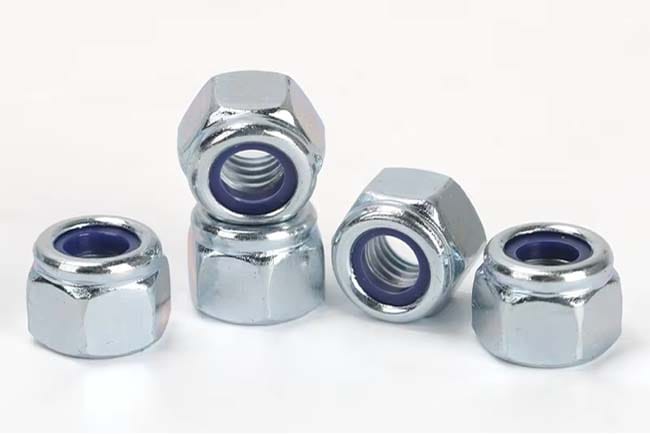
Flybear supplies standard, special, and custom industrial fastening solutions for machinery, automotive, rail, energy, construction equipment, and general OEM assemblies. Buyers working with legacy DIN drawings can review the industrial lock nut range and provide the original standard or drawing, size and thread, material or property requirement, finish, quantity, and inspection needs for technical review.
DIN 985 vs DIN 982: What Is the Basic Difference?
The main legacy distinction between DIN 985 and DIN 982 is nut height. DIN 985 was titled as a prevailing torque hexagon thin nut with non-metallic insert, while DIN 982 described a higher form of prevailing torque hexagon nut with non-metallic insert.
Both designs use an insert in the locking portion of the nut. As the mating bolt or stud engages the insert, interference creates prevailing torque before the nut is fully seated. This rotational resistance is intended to help resist unintended loosening, but it does not replace proper preload, joint design, or application-specific locking verification.
| Legacy Standard | Legacy Description | Status | Current Reference to Evaluate |
|---|---|---|---|
| DIN 985:1987-05 | Prevailing torque hexagon thin nut with non-metallic insert | Withdrawn | ISO 10511:2025 for current thin non-metallic insert nuts within its scope |
| DIN 982:1987-05 | Prevailing torque hexagon nut with non-metallic insert, higher legacy form | Withdrawn | Historical DIN replacement path includes ISO 7040 and ISO 10512; current editions are ISO 7040:2025 and ISO 10512:2025 |
A key sourcing point is that the old words “low” and “high” should not be mechanically translated into the current ISO style numbers. The ISO system now separately defines thin, regular, and high prevailing torque nuts. Buyers should use the actual replacement path, dimensions, thread, and engineering requirement rather than matching standards by descriptive wording alone.
DIN 985 Is a Legacy Thin Nyloc Nut Standard
DIN 985 is widely recognized in the market as a thin nyloc nut or low-profile nylon insert lock nut. Technically, however, the DIN title refers to a non-metallic insert rather than requiring every product to use one particular polymer. Buyers should avoid assuming insert composition if material or temperature resistance is important.
DIN Media lists DIN 985:1987-05 as withdrawn and identifies DIN EN ISO 10511 as its replacement. The current international version, ISO 10511:2025, specifies prevailing torque hexagon thin nuts with non-metallic insert in steel and stainless steel with metric coarse pitch thread M3 to M39 and product grades A and B within its scope.
ISO 10511 also makes an important mechanical distinction: thin nuts have reduced loadability compared with regular and high nuts. Their lower height means they should not automatically replace a regular-height nut simply because the thread fits.
For a legacy DIN 985 application, check the original nut height, width across flats, thread pitch, property requirements, and available assembly space before changing the purchasing standard.
DIN 982 Is the Legacy Higher Type, but the ISO Mapping Needs Care
DIN 982 is often marketed as a high type nyloc nut because it is taller than the DIN 985 legacy form. This description is useful commercially, but it can create confusion when engineers migrate old drawings to modern ISO standards.
DIN Media lists DIN 982:1987-05 as withdrawn and identifies DIN EN ISO 7040 and DIN EN ISO 10512 in its historical replacement path. Current ISO 7040:2025 specifies prevailing torque hexagon regular nuts with non-metallic insert and metric coarse pitch threads. ISO 10512:2025 specifies regular nuts with non-metallic insert and metric fine pitch threads.
ISO 7041:2025 also exists as a current standard for high prevailing torque hexagon nuts with non-metallic insert. However, buyers should not conclude that DIN 982 automatically becomes ISO 7041 simply because both are described using the word “high.” DIN Media’s recorded replacement path for DIN 982 is different, so dimensional and functional verification remains essential.
Current ISO References Buyers Should Know
| Current Standard | Current Product Description | Thread Scope | Why It Matters |
|---|---|---|---|
| ISO 10511:2025 | Thin prevailing torque hexagon nuts with non-metallic insert | Metric coarse pitch M3–M39 | Main current reference to evaluate for legacy DIN 985 thin-nut applications |
| ISO 7040:2025 | Regular prevailing torque hexagon nuts with non-metallic insert | Metric coarse pitch M3–M39 | Part of the historical replacement path associated with DIN 982 |
| ISO 10512:2025 | Regular prevailing torque hexagon nuts with non-metallic insert, fine pitch | Metric fine pitch, 8 mm–39 mm nominal diameter range | Relevant to current fine-pitch regular lock nut requirements |
| ISO 7041:2025 | High prevailing torque hexagon nuts with non-metallic insert | Metric coarse pitch M5–M39 | Current ISO high-nut product family; not an automatic DIN 982 replacement |
This current structure is more precise than simply asking for a “DIN nyloc nut.” New designs should specify the intended nut type and applicable current standard. Legacy designs should first establish what the old drawing requires before changing the standard designation.
Coarse and Fine Threads Need Separate Review
Thread pitch is another important difference when converting old DIN specifications. Legacy DIN purchasing records may include both coarse and fine metric thread applications, while current ISO product standards separate these configurations more clearly.
ISO 10511:2025 covers current thin non-metallic insert nuts with coarse pitch thread. ISO 7040:2025 also covers coarse pitch, while ISO 10512:2025 provides the current regular-nut reference for fine pitch thread within its scope.
If an old DIN 985 or DIN 982 order calls for M12, for example, buyers should not assume the pitch from nominal diameter alone. A legacy fine-pitch nut and a coarse-pitch nut will not correctly mate even though both use the same nominal M12 diameter.
Provide the complete thread designation in the RFQ whenever a fine pitch, legacy drawing, or replacement component is involved.
Are DIN 985 and DIN 982 Interchangeable?
No. DIN 985 and DIN 982 should not be treated as interchangeable simply because both use a non-metallic locking insert. Nut height changes thread engagement, loadability, available wrench space, assembly stack height, and potentially the behavior of the joint.
Likewise, a current ISO product should not automatically replace a legacy DIN part without checking the affected dimensions and functional requirements.
Before approving a substitution, verify:
- Nominal thread diameter and pitch.
- Nut overall height.
- Metallic load-bearing nut height.
- Width across flats and available wrench clearance.
- Product grade and dimensional tolerances.
- Material and required mechanical properties.
- Insert material where temperature or chemical compatibility matters.
- Surface finish or coating.
- Prevailing torque requirements.
- Mating bolt or stud specification.
- Available exposed thread after assembly.
Nut Height Affects More Than Assembly Clearance
The height difference between a thin and regular or high nut is not merely cosmetic. The metallic portion of the nut provides internal thread engagement with the bolt, and reducing nut height changes the amount of material available to carry thread loads.
ISO 898-2:2022 distinguishes thin nuts as style 0, regular nuts as style 1, and high nuts as style 2 for carbon and alloy steel nuts within its scope. Thin nuts use property classes 04 and 05 and have reduced loadability compared with regular or high nuts.
This is why a thin DIN 985-type replacement should not be selected only because reduced height is convenient. If the original joint requires the loadability of a regular nut, changing to a thin lock nut requires engineering review.
Material and Mechanical Property Requirements
The nylon insert lock nut standard or dimensional product designation does not by itself define every material and strength requirement. Buyers should specify the required mechanical properties separately where they are controlled by the project.
Carbon and Alloy Steel
ISO 898-2:2022 is the current mechanical-property standard for applicable carbon and alloy steel nuts with specified property classes. It covers thin, regular, and high nut styles within its scope.
The selected property class should be compatible with the mating bolt, screw, or stud. Do not copy a bolt designation such as 8.8 or 10.9 directly onto a nut specification; metric nut property classes use their own designation system.
Stainless Steel
ISO 3506-2:2020 remains the current ISO mechanical-property reference for corrosion-resistant stainless steel nuts within its scope. The exact stainless grade and property class should be specified when required.
Stainless steel should not be selected solely from a generic request for corrosion resistance. Chlorides, chemicals, temperature, moisture, crevices, and contact with dissimilar metals can all affect suitability.
Insert Material and Temperature
Although “nylon lock nut” and “nyloc nut” are common market terms, current ISO product standards use the broader description “non-metallic insert.” If insert composition affects temperature, chemicals, or customer compliance, buyers should identify the required material or approved performance condition.
ISO 2320:2015 provides functional requirements for prevailing torque steel nuts within its scope and remains current after confirmation in 2025. It notes that non-metallic insert nuts conforming to its requirements are used in applications from -50 °C to +120 °C, while practical prevailing torque can vary from laboratory values.
For temperatures outside the applicable product or insert range, or for prolonged chemical exposure, buyers should confirm suitability rather than relying on a universal nylon temperature statement.
Coatings and Finishes for Metric Lock Nuts
Steel metric lock nuts can use zinc-based plating, zinc-flake coatings, black finishes, or other project-specific surface treatments. Stainless steel nuts may use a natural or specified treated surface.
The finish should be considered together with the mating fastener because coating and lubrication can influence corrosion behavior, thread fit, friction, and prevailing torque.
If corrosion testing is required, specify the coating system, applicable test method, duration, and acceptance criteria. Avoid vague requirements such as “rust resistant” or a color-only description.
DIN 985 vs DIN 982 Buyer Selection Table
| Purchasing Situation | Recommended Approach |
|---|---|
| Legacy drawing specifies DIN 985 coarse pitch | Evaluate ISO 10511:2025, but verify dimensions, loadability, material, and assembly fit before substitution |
| Legacy DIN 985 application uses fine pitch | Do not automatically convert to ISO 10511; verify the original thread and determine the appropriate current specification or drawing requirement |
| Legacy drawing specifies DIN 982 coarse pitch | Evaluate ISO 7040:2025 based on the historical replacement path and verify all relevant dimensions |
| Legacy DIN 982 application uses fine pitch | Evaluate ISO 10512:2025 within its applicable scope and verify geometry and functional requirements |
| New design requires a thin non-metallic insert nut | Evaluate ISO 10511:2025 |
| New design requires a regular coarse-pitch lock nut | Evaluate ISO 7040:2025 |
| New design specifically requires a current ISO high nut | Evaluate ISO 7041:2025 rather than assuming a legacy DIN 982 designation |
Quality Control for Nylon Insert Lock Nuts
Inspection should cover both the metallic nut and the locking feature. Depending on the RFQ, useful checks can include overall dimensions, internal thread Go/No-Go gauging, insert position and condition, material verification, hardness testing, coating thickness, surface inspection, and functional torque testing.
Prevailing torque is particularly important because a lock nut can pass ordinary thread and dimensional checks while still failing its required locking function.
Flybear’s quality control process supports dimensional and thread inspection, material verification, hardness testing, torque testing, coating-thickness inspection, salt-spray testing when required, optical inspection, and final packaging checks according to agreed project requirements.
Common DIN 985 and DIN 982 Purchasing Mistakes
- Treating DIN 985 and DIN 982 as current standards. Both 1987 editions are withdrawn.
- Assuming DIN 985 and DIN 982 differ only in appearance. Nut height can affect engagement and loadability.
- Replacing DIN 982 automatically with ISO 7041. Similar “high” terminology does not establish a direct replacement relationship.
- Ignoring thread pitch on a legacy drawing. Current ISO coarse- and fine-pitch products are separated into different standards.
- Using a thin nut where a regular nut is required. Thin nuts have reduced loadability.
- Calling out “nylon” without confirming insert requirements. Current standards use the broader non-metallic insert terminology.
- Specifying only the nut standard. Material, property class, coating, and functional requirements may need separate callouts.
- Changing a legacy specification without dimensional verification. Width across flats, height, thread, and surrounding clearance can affect replacement approval.
When a Custom Lock Nut Is Required
Legacy equipment can contain lock nuts with modified height, unusual thread pitch, special insert material, non-standard flats, custom coating, or customer-specific prevailing torque requirements. In these cases, forcing the part into a current catalog standard may not reproduce the original assembly.
Buyers can submit the approved drawing or physical sample through Flybear’s custom fastener support. Drawing-based requirements should clearly define thread, nut geometry, material, mechanical properties, insert requirements, finish, and inspection criteria.
RFQ Checklist for DIN 985 vs DIN 982 Lock Nuts
For a technically comparable quotation, provide:
- Legacy DIN standard, current ISO standard, or latest controlled drawing.
- Nominal thread diameter and pitch.
- Required nut height or nut type.
- Material and property class or stainless steel grade.
- Non-metallic insert requirement where controlled.
- Surface finish, coating, lubrication, or corrosion requirement.
- Mating bolt, screw, or stud specification.
- Order quantity and expected repeat demand.
- Application and operating environment.
- Operating temperature and chemical exposure where relevant.
- Required prevailing torque or functional testing.
- Critical dimensions and assembly-clearance restrictions.
- Material certificates, inspection reports, coating reports, traceability, marking, and packaging requirements.
FAQ
Are DIN 985 and DIN 982 still current?
No. DIN 985:1987-05 and DIN 982:1987-05 are both withdrawn legacy standards. They remain common on historical drawings and in commercial fastener terminology.
What is the current replacement for DIN 985?
DIN Media identifies DIN EN ISO 10511 as the replacement path for DIN 985. The current international edition is ISO 10511:2025 for prevailing torque hexagon thin nuts with non-metallic insert and coarse pitch threads within its scope.
What is the current replacement for DIN 982?
DIN Media identifies DIN EN ISO 7040 and DIN EN ISO 10512 in the historical replacement path for DIN 982. Their current international editions are ISO 7040:2025 for regular coarse-pitch nuts and ISO 10512:2025 for regular fine-pitch nuts within their respective scopes.
Is DIN 982 the same as ISO 7041?
No automatic equivalence should be assumed. ISO 7041:2025 is the current ISO standard for high prevailing torque hexagon nuts with non-metallic insert, but DIN Media does not list it as the direct historical replacement for DIN 982. Verify dimensions and application requirements before substitution.
Why is a DIN 985 type nut thinner?
The DIN 985 legacy design uses a lower nut form. Current ISO 10511 defines thin prevailing torque nuts, and thin nut designs have reduced loadability compared with regular or high nuts.
What should buyers provide for a metric lock nut quotation?
Provide the standard or drawing, thread diameter and pitch, required nut height, material or property class, insert requirement, finish or coating, quantity, mating fastener, application, temperature, and required inspection or certificate documents.
Conclusion
The key issue in DIN 985 vs DIN 982 sourcing is that both are legacy standards and their historical low/high terminology does not translate directly into today’s ISO nut-style system. DIN 985 is the legacy thin form, with ISO 10511:2025 as the current thin-nut reference to evaluate. DIN 982 is the higher legacy form, while its historical replacement path leads to ISO 7040 for regular coarse-pitch nuts and ISO 10512 for regular fine-pitch nuts.
For replacement projects, buyers should verify thread pitch, height, width across flats, loadability, material, mechanical properties, insert requirements, coating, prevailing torque, and assembly clearance before approving any standard change. For new designs, using the appropriate current ISO product standard creates a clearer purchasing specification.
For standard or project-specific metric lock nuts, Flybear can support technical requirement review and quotation. Send your standard or drawing, size and thread, material or property class, finish or coating, quantity, application, and inspection or certificate requirements through the Flybear contact page.