A2-70 vs A4-70 Stainless Steel Bolts: Which One for Corrosive Service?
A2-70 vs A4-70 bolts is a common material-selection question for OEM buyers, engineers, machinery manufacturers, and industrial sourcing teams that need stainless steel fasteners for corrosive environments. Both designations are widely used for austenitic stainless steel bolts, screws, and studs, and both use property class 70, but their corrosion behavior and material families are different. In general industrial sourcing, A2 is commonly associated with 304-type stainless steel, while A4 is commonly associated with 316-type stainless steel and is often selected when chloride exposure or a more aggressive environment requires improved corrosion resistance.
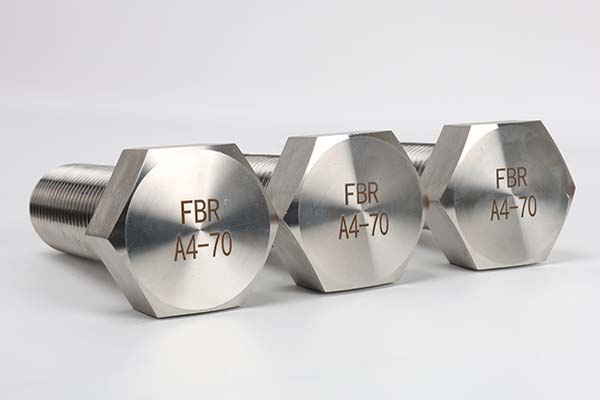
That simple comparison is useful, but it should not become an automatic substitution rule. A2 and A4 are fastener grade designations, while terms such as 304 and 316 refer to stainless steel material families used in other material designation systems. The correct bolt should be selected from the required standard, exact material specification, dimensions, thread, mechanical property class, application environment, mating components, and inspection requirements.
This guide explains how A2-70 and A4-70 differ, when each is commonly selected, what property class 70 means, and what industrial buyers should include in an RFQ for corrosion resistant bolts.
Table of Contents
- A2-70 vs A4-70 bolts: key differences
- What A2-70 means
- What A4-70 means
- 304 vs 316 stainless bolts
- How to select bolts for corrosive service
- What property class 70 means
- Surface condition and corrosion performance
- Thread galling and assembly considerations
- Standards and dimensional compatibility
- Quality control for stainless steel bolts
- Industrial sourcing checklist
- Frequently asked questions
A2-70 vs A4-70 Bolts: The Key Difference
The most important difference between A2-70 and A4-70 is the stainless steel grade group. Both are austenitic stainless fastener grades, but A4 is generally selected where greater resistance to localized corrosion is required, particularly where chloride exposure is a concern.
The number 70 does not describe corrosion resistance. It identifies the mechanical property class of the fastener. Therefore, choosing between A2-70 and A4-70 is primarily a material and environmental decision, while the property class determines the required mechanical performance under the applicable fastener standard.
| Selection Factor | A2-70 | A4-70 |
|---|---|---|
| Stainless steel group | Austenitic A2 | Austenitic A4 |
| Common commercial comparison | Often described as 304-type stainless | Often described as 316-type stainless |
| Property class | 70 | 70 |
| General corrosion resistance | Suitable for many normal industrial and atmospheric environments | Typically selected for more demanding corrosive environments |
| Chloride exposure | Requires careful evaluation | Generally preferred when chloride exposure is more significant |
| Typical sourcing focus | General stainless machinery and equipment fastening | Coastal, marine-influenced, chemical-processing, washdown, or other aggressive environments |
| Can the grades be substituted automatically? | No. Verify the drawing, standard, material specification, dimensions, mechanical requirements, and application before substitution. | |
What Does A2-70 Mean?
A2-70 is a stainless steel fastener designation used for bolts, screws, and studs manufactured from an A2 austenitic stainless steel grade and supplied to property class 70 requirements under the applicable fastener standard.
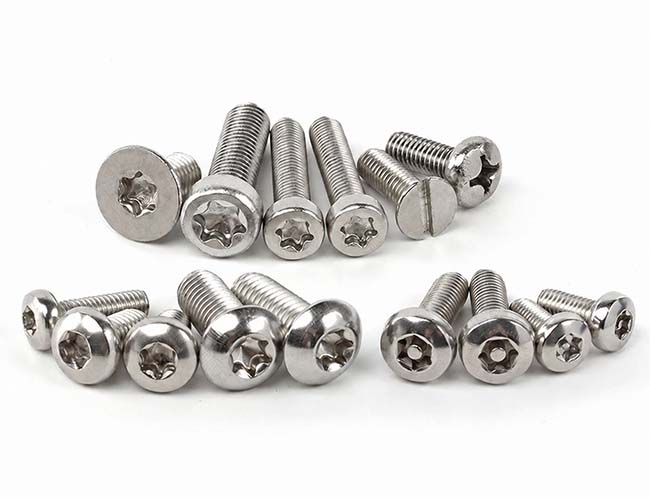
A2 stainless is widely used for general industrial equipment because it combines corrosion resistance with practical mechanical performance and availability across many standard fastener types. Common products can include hex bolts, hex cap screws, flange bolts, carriage bolts, socket screws, threaded products, and drawing-based special parts.
A2-70 is frequently considered for machinery, enclosures, equipment frames, general outdoor assemblies, transport equipment, and industrial installations where the environment is not highly aggressive. However, stainless steel should never be described as completely corrosion-proof. Exposure to chlorides, chemicals, standing moisture, crevices, elevated temperatures, contamination, and poor surface condition can change actual corrosion behavior.
Buyers looking for standard or custom configurations can review the available industrial bolt range before defining the final material, dimensions, thread, and quantity for quotation.
What Does A4-70 Mean?
A4-70 fasteners use an A4 austenitic stainless steel grade combined with property class 70. Compared with the A2 family, A4 stainless compositions are commonly selected when the application requires improved resistance to localized corrosion in more aggressive environments.
This is why A4 is frequently associated with coastal installations, marine-influenced atmospheres, industrial washdown, chemical-processing equipment, outdoor infrastructure exposed to de-icing salts, and machinery operating where chloride contamination may occur.
However, specifying A4-70 does not guarantee unlimited corrosion resistance. Chloride concentration, temperature, oxygen availability, surface deposits, crevice geometry, cleaning methods, and exposure duration can all influence stainless steel performance. Severe chemical or marine environments may require a different stainless grade, duplex stainless steel, nickel alloy, or another engineered material solution.
For that reason, buyers should describe the actual environment instead of simply requesting the “best stainless steel bolt.” A supplier can review a specification more effectively when the RFQ includes the process environment, location, exposure type, required standard, and mating materials.
304 vs 316 Stainless Bolts: Is A2 the Same as 304 and A4 the Same as 316?
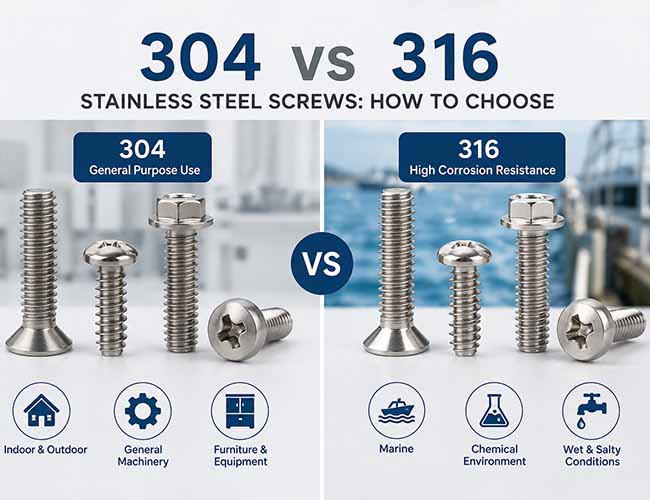
304 vs 316 stainless bolts is closely related to the A2 versus A4 comparison, but the terminology should be used carefully. In commercial discussions, A2 is commonly described as being similar to the 304 stainless family, while A4 is commonly compared with the 316 stainless family. This shorthand is useful for general material communication, but the designations should not automatically be treated as exact one-to-one equivalents.
Fastener specifications define stainless steel grades and property classes according to their own requirements. A purchase order should therefore use the designation required by the drawing or applicable standard. If the project requires A4-70, writing only “316 stainless” can leave uncertainty about the mechanical property class, fastener testing, marking, and other requirements.
The reverse is also true. If an engineering drawing specifies a particular stainless material number or national grade, a supplier should not automatically replace it with A2 or A4 based only on a general material comparison.
For international sourcing, the safest approach is to include both the required fastener standard and the required material designation whenever these details are available.
How to Choose Stainless Bolt Grades for Corrosive Service
Choosing between stainless bolt grades requires more than identifying whether the assembly will be installed indoors or outdoors. The corrosion environment around the fastener is determined by multiple interacting conditions.
For a relatively clean indoor machine, A2-70 may provide the performance required by the engineering specification. For equipment near a coastline, exposed to road salts, or repeatedly cleaned using chloride-containing solutions, A4-70 may be the more appropriate starting point for engineering review.
| Application Environment | Typical Selection Direction | Important Review Point |
|---|---|---|
| Clean indoor machinery | A2-70 is commonly considered | Check mechanical load and mating materials |
| General outdoor equipment | A2-70 or A4-70 depending on exposure | Evaluate moisture, pollution, salts, and maintenance |
| Coastal atmosphere | A4-70 is commonly preferred | Evaluate actual chloride exposure and crevice conditions |
| Road or rail equipment exposed to de-icing salts | A4-70 may be preferred | Consider deposits, cleaning cycles, and joint geometry |
| Industrial washdown | Often A4-70, subject to process chemistry | Check cleaning chemicals and temperature |
| Chemical-processing environment | Application-specific material review required | Do not select only from A2 versus A4 without chemical data |
| Continuous aggressive immersion | Engineering review required | A4 may not be sufficient for every environment |
No general table can guarantee service life because two facilities with the same broad industry description may have very different corrosion conditions. Buyers should therefore treat the table as a selection starting point rather than an acceptance specification.
Why A4 Is Often Selected for Corrosion Resistant Bolts
Corrosion resistant bolts must withstand the actual environment around the joint rather than only meet a generic stainless steel description. A4 is often selected instead of A2 when engineers are concerned about localized corrosion associated with more aggressive exposure.
This can be particularly important around threads, washers, overlapping surfaces, recessed holes, and other areas where moisture or contaminants may remain trapped. A fastener can perform differently on an open surface than it does inside a tight crevice.
Material selection should also consider galvanic interaction. A stainless steel bolt installed into a different metal can create a mixed-metal joint whose behavior depends on the materials, surface area relationship, electrolyte, and exposure conditions. Choosing A4 instead of A2 does not eliminate the need to evaluate the complete joint.
Industrial buyers can review the broader fastener product range when sourcing bolts together with matching nuts, washers, screws, or special fasteners for an assembly.
What Does Property Class 70 Mean?
The “70” in A2-70 and A4-70 describes a mechanical property class. It does not mean that A4-70 is stronger than A2-70 simply because A4 offers a different corrosion-resistance profile. When both fasteners are ordered to property class 70, their mechanical acceptance requirements are governed by the relevant fastener standard and product conditions.
This distinction is important because buyers sometimes focus only on stainless chemistry. A bolt must satisfy both the material grade requirement and the mechanical property requirement. A part manufactured from a suitable stainless raw material does not automatically become an A2-70 or A4-70 fastener without meeting the applicable finished-fastener requirements.
The applicable ISO 3506 standard should therefore be reviewed together with the dimensional product standard. For example, the material and mechanical standard does not replace the dimensional requirements for a specific hex bolt, flange bolt, socket screw, or other fastener design.
Current ISO Standard for A2-70 and A4-70 Bolts
For corrosion-resistant stainless steel bolts, screws, and studs with specified grades and property classes, ISO 3506-1 is a key technical reference. The standard defines mechanical and physical requirements for applicable stainless steel fasteners and should be used together with the relevant product dimensional standard.
ISO 3506-6 provides additional guidance for selecting stainless steels and nickel alloys used for fasteners. This is particularly relevant when material selection involves corrosion behavior rather than mechanical strength alone.
A sourcing specification should identify the required standard edition instead of simply stating “ISO stainless bolt.” It should also define the product standard, nominal diameter, thread pitch, length, grade, property class, finish, and inspection documentation.
Surface Condition Matters for Stainless Steel Fasteners
Stainless steel receives much of its corrosion resistance from its naturally protective surface condition. Manufacturing, handling, cleaning, and storage can therefore influence the finished fastener.
For critical corrosion-sensitive applications, buyers may need to control surface cleanliness, passivation requirements, appearance, contamination, or additional processing. These requirements should be stated clearly in the purchase specification rather than assumed.
Stainless steel bolts are often supplied without the protective coatings commonly used on carbon-steel fasteners, but special finishes or lubricants may still be requested for assembly, appearance, friction control, or application-specific reasons. Any surface process should be evaluated for compatibility with the specified material and joint requirements.
A salt-spray test can be useful when required by a particular coating or project specification, but it should not be presented as a universal predictor of stainless steel service life in every real operating environment.
Thread Galling Is an Important Stainless Steel Assembly Issue
Austenitic stainless steel bolt and nut combinations can be susceptible to thread galling during tightening. Galling is an assembly issue in which mating thread surfaces can experience severe friction and adhesion, making installation difficult and potentially damaging the threads.
Risk can be influenced by thread condition, installation speed, preload, surface finish, lubrication, material pairing, and manufacturing quality. This means bolt selection should include an assembly review, particularly for repeated production or critical equipment.
Buyers should specify mating nut requirements and any approved lubrication or installation condition. A torque value taken from a carbon-steel fastener chart should not automatically be applied to a stainless assembly because friction conditions can be different.
Dimensions Must Be Checked Separately from Material Grade
A2-70 and A4-70 identify material grade and property class, not the complete physical dimensions of a bolt. The same stainless grade can be manufactured into multiple product standards and geometries.
An RFQ for stainless bolts should therefore identify information such as:
- Product standard or drawing
- Nominal diameter
- Overall length
- Thread pitch
- Full or partial thread requirement
- Head style
- Material grade
- Property class
- Surface condition or coating
- Mating nut and washer requirements
- Inspection and documentation requirements
If a buyer is replacing an existing bolt, dimensional verification is still important. Two fasteners with the same nominal diameter can differ in thread length, head geometry, tolerances, or other features depending on the standard.
Quality Control for A2-70 and A4-70 Stainless Steel Bolts
Quality control for stainless fasteners should verify that the finished product matches the purchase specification. Material identification is important because A2 and A4 fasteners can look nearly identical after manufacturing.
Flybear supports standard fasteners, special fasteners, and drawing- or sample-based custom parts for industrial sourcing. Depending on the actual order specification, inspection activities can include material certificate review, dimensional inspection, thread go/no-go inspection, hardness and tensile testing, surface-treatment or coating-thickness inspection, appearance inspection, salt-spray testing when required, and quantity, label, and packing verification.
The exact inspection scope should be agreed before production. Not every test is necessary or applicable for every bolt, and project-specific acceptance criteria should take priority over a generic inspection checklist.
Buyers preparing an inspection plan can review available quality control capabilities and state the required testing and documentation in the RFQ.
Material Traceability
For projects where stainless grade is critical, documentation and material traceability can help distinguish A2 from A4 and confirm that the supplied fasteners correspond to the ordered material condition. The buyer should state whether material certificates, chemical composition records, mechanical test results, inspection reports, or other documentation are required.
These requirements are especially useful when multiple stainless grades or property classes are being purchased for the same machine, project, or distribution program.
A2-70 vs A4-70 for Common Industrial Applications
There is no single industry rule that makes A2 suitable for one industry and A4 mandatory for another. The actual environment remains the most important consideration.
In machinery manufacturing, A2-70 may be suitable for many indoor or moderately exposed assemblies, while A4-70 may be selected for equipment installed outdoors, near coastal areas, or in aggressive washdown conditions.
For automotive and transport equipment, exposure to rain, road spray, de-icing salts, and repeated temperature cycles should be considered. A4 may offer an advantage where chloride contamination is expected, but the complete joint design and mating materials still require review.
Construction equipment can experience mud, water, salts, cleaning agents, and damaged surfaces. The engineering specification should therefore consider both corrosion and required mechanical loading.
Rail transit, energy equipment, and other infrastructure projects frequently have detailed material and documentation requirements. In these projects, buyers should follow the approved specification instead of making substitutions based only on a general comparison between A2 and A4.
Sourcing Checklist for A2-70 and A4-70 Bolts
For efficient B2B sourcing, provide enough information for the supplier to quote the same technical requirement that the engineering team expects to receive.
- Standard: identify the required ISO, DIN, EN, ASTM, ASME, drawing, or other product specification.
- Material: specify A2, A4, or another required stainless grade.
- Property class: state 70 or the class defined by the project.
- Size: provide diameter, length, and thread pitch.
- Thread condition: define full thread, partial thread, thread class, and any special requirements.
- Application: explain whether the fastener is used in machinery, transport, construction equipment, energy equipment, or another assembly.
- Environment: describe indoor, outdoor, coastal, chloride, washdown, chemical, or other exposure.
- Surface requirement: identify passivation, lubricant, coating, or special finish if required.
- Quantity: provide the required order quantity or annual sourcing demand where relevant.
- Inspection: identify material, mechanical, dimensional, thread, coating, or other required tests.
- Documentation: state certificate, inspection report, labeling, and packing requirements.
- Custom parts: attach a drawing or sample information when the fastener is not a standard catalog product.
A detailed RFQ reduces assumptions and makes quotations from different suppliers easier to compare on the same technical basis.
Frequently Asked Questions About A2-70 vs A4-70 Bolts
Is A4-70 always better than A2-70?
No. A4-70 may provide advantages in more aggressive corrosive environments, but it is not automatically the correct choice for every assembly. Cost, service environment, mechanical requirements, availability, mating materials, and project specifications should all be considered.
Is A2-70 the same as a 304 stainless bolt?
A2 is commonly associated with 304-type austenitic stainless steel in commercial discussions, but buyers should not treat the terms as universally identical. Use the material designation required by the applicable fastener standard or engineering drawing.
Is A4-70 the same as a 316 stainless bolt?
A4 is commonly associated with 316-type stainless steel because both are used where improved corrosion resistance is required compared with general-purpose austenitic stainless steel. However, exact grade equivalence should be confirmed from the required material and fastener standards.
Should I use A4-70 near the sea?
A4-70 is commonly considered for coastal and chloride-exposed environments, but actual suitability depends on exposure severity, temperature, deposits, crevices, maintenance, and the required design life. Severe marine service may require additional engineering review.
Does property class 70 mean A2-70 and A4-70 have the same corrosion resistance?
No. Property class 70 relates to mechanical requirements. Corrosion behavior is influenced primarily by the stainless material family and the actual environment.
Can A2-70 be replaced with A4-70 without approval?
Not automatically. Even when dimensions appear identical, material substitutions should be checked against the drawing, applicable standard, mating components, customer specification, and approval procedure.
Can Flybear supply custom stainless steel bolts?
Standard and special fasteners can be reviewed according to the actual inquiry. For drawing-based parts, buyers should provide the drawing, stainless material requirement, dimensions, thread specification, quantity, surface requirement, inspection scope, and application information.
Image ALT Suggestions
- A2-70 vs A4-70 bolts stainless steel comparison
- A2-70 stainless steel hex bolts for industrial machinery
- A4-70 corrosion resistant bolts for coastal applications
- 304 vs 316 stainless bolts material selection guide
- Stainless bolt grades and thread inspection
Conclusion: How to Choose Between A2-70 and A4-70
A2-70 vs A4-70 bolts should be selected according to the complete application rather than from a simple assumption that one stainless grade is universally better. A2-70 is widely used for general industrial stainless fastening, while A4-70 is commonly preferred when the environment presents greater corrosion challenges, particularly where chloride exposure is an important design consideration.
At the same time, material grade is only one part of a correct fastener specification. Buyers should verify the required product standard, property class, dimensions, thread, surface condition, mating parts, application environment, inspection scope, and documentation before releasing an order.
For a sourcing review or quotation, send your fastener specifications including the standard, size, A2 or A4 material requirement, property class, surface requirement, quantity, and drawing or application details. A complete specification allows the supplier to review standard products or custom manufacturing requirements without relying on unnecessary assumptions.