Grade 8.8 vs 10.9 vs 12.9 Bolts: Strength Class Selection Guide
8.8 vs 10.9 vs 12.9 bolts represent three commonly specified metric bolt property classes for machinery, automotive equipment, construction machinery, rail systems, energy equipment, and general industrial assemblies. The numbers indicate mechanical property classes rather than a specific steel grade, coating, dimensional standard, or bolt design. For OEM buyers and engineers, choosing the highest number is not automatically the best decision. The correct property class must match the joint design, required preload, bolt geometry, mating components, surface treatment, service environment, and applicable product standard.
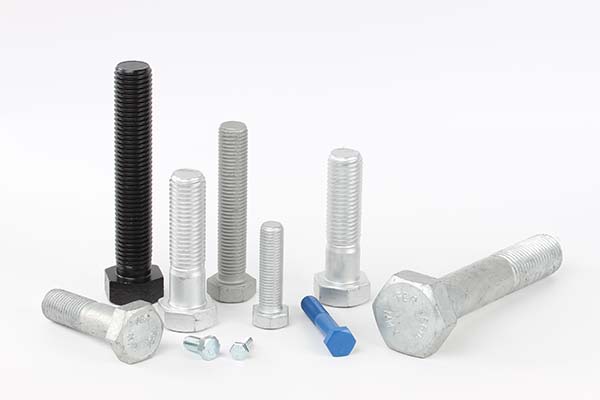
ISO 898-1 is the key reference for mechanical and physical properties of carbon-steel and alloy-steel bolts, screws, and studs with specified metric property classes. However, ISO 898-1 does not define every dimension, coating, corrosion requirement, or tightening condition. A complete fastener specification normally combines the property class with a dimensional standard such as ISO or DIN, thread requirements, material or heat-treatment requirements where applicable, surface finish, inspection scope, and application-specific requirements.
Table of Contents
- What Does a Metric Bolt Property Class Mean?
- 8.8 vs 10.9 vs 12.9 Bolts Comparison
- When to Select Grade 8.8 Bolts
- When to Select Grade 10.9 Bolts
- When to Select Grade 12.9 Bolts
- Material and Heat Treatment
- Nut and Washer Compatibility
- Coatings and Hydrogen Embrittlement
- Quality Inspection
- Bolt Selection Guide
- Frequently Asked Questions
What Does a Metric Bolt Property Class Mean?
A bolt property class is a mechanical property designation used for metric steel fasteners. Classes such as 8.8, 10.9, and 12.9 provide engineers with a standardized way to identify the required strength level of a bolt, screw, or stud.
The first number in the designation relates to the nominal tensile-strength basis, while the second number represents the nominal relationship between yield strength and tensile strength. This creates a useful engineering shorthand for comparing strength classes.
| Property Class | Nominal Tensile-Strength Basis | Nominal Yield Ratio Basis | General Strength Level |
|---|---|---|---|
| 8.8 | 800 MPa basis | 0.8 | High strength |
| 10.9 | 1,000 MPa basis | 0.9 | Higher strength |
| 12.9 | 1,200 MPa basis | 0.9 | Very high strength |
These figures explain the property-class designation system. They should not be copied directly as finished-product acceptance limits. The exact tensile strength, proof load, hardness, elongation, reduction of area, and other requirements must be checked in the applicable edition of ISO 898-1 for the specific product and size.
It is also important not to confuse property class with material grade. A drawing that states “10.9” defines a mechanical property class, but it does not automatically specify one exact steel chemistry. Material selection, manufacturing route, and heat treatment must produce a finished fastener that satisfies the applicable standard and customer requirements.
8.8 vs 10.9 vs 12.9 Bolts: Key Differences
The main difference in the 8.8 vs 10.9 vs 12.9 bolts comparison is the required mechanical strength level. As the property class increases, the bolt can generally support higher tensile loading within a correctly designed joint. At the same time, higher strength can bring additional considerations involving heat treatment, ductility, coating processes, hydrogen embrittlement risk, tightening control, and inspection.
| Selection Factor | Class 8.8 | Class 10.9 | Class 12.9 |
|---|---|---|---|
| Relative strength | High | Higher | Very high |
| Typical industrial use | General machinery and structural equipment | Higher-loaded machinery, automotive, rail, and equipment joints | Highly loaded compact joints and applications specifically designed for 12.9 |
| Preload capability | Suitable when joint design is based on 8.8 properties | Allows higher design preload where the assembly supports it | Allows very high preload where specifically engineered |
| Heat-treatment control | Important | More critical | Highly critical |
| Coating-process sensitivity | Must be controlled | Requires careful process review | Requires especially careful process and hydrogen-embrittlement review |
| Best purchasing method | Specify property class together with standard, size, thread, coating, quantity, inspection, and application requirements | ||
A stronger bolt is therefore not automatically a better bolt. Increasing bolt strength without reviewing the nut, washer, tapped hole, flange, clamped material, tightening procedure, and fatigue behavior can simply transfer the failure risk to another part of the joint.
When Should You Select Grade 8.8 Bolts?
Class 8.8 is one of the most widely used metric bolt grades for industrial machinery and equipment. It provides a substantial strength level while remaining suitable for a broad range of standard bolted-joint designs.
Typical applications can include machinery frames, industrial equipment, agricultural machinery, construction equipment, brackets, power-transmission assemblies, production equipment, and other joints where the design specification calls for class 8.8.
For procurement teams, class 8.8 can also provide a practical balance between strength, manufacturing options, coating choices, and cost. However, these commercial factors depend on the exact product and order and should not replace engineering selection.
Do not assume that every hex bolt marked 8.8 has the same dimensions. A property class describes mechanical requirements, while standards such as ISO 4014, ISO 4017, DIN specifications, or customer drawings define dimensional features. Head dimensions, thread length, tolerances, and other geometry must therefore be checked separately.
When Should You Select Grade 10.9 Bolts?
Class 10.9 high strength bolts are commonly specified when an assembly requires higher bolt strength or greater preload than an equivalent class 8.8 design can provide. They are frequently encountered in automotive equipment, construction machinery, rail systems, heavy machinery, power equipment, and other highly loaded assemblies.
A 10.9 bolt can help designers achieve higher clamp load without necessarily increasing nominal bolt diameter, but that advantage only applies when the entire joint is designed accordingly. Threads in tapped components must have adequate engagement and material strength. Nuts must have an appropriate property class. Washers and bearing surfaces must also be suitable for the contact pressure generated during tightening.
Changing an existing joint from 8.8 to 10.9 without engineering review can create unintended consequences. If the same torque value is used after changing the bolt grade, the expected benefit may not be achieved. If torque is increased without considering the clamped parts, threads, nut, or washer, other components may become the limiting element.
The correct approach is to treat class 10.9 as part of a complete joint specification rather than as a simple strength upgrade.
When Should You Select Grade 12.9 Bolts?
Class 12.9 represents a very high mechanical strength level and is often associated with highly loaded industrial fastening applications. Socket head cap screws and other high-strength fasteners are frequently encountered in this property class, although availability and permitted property classes depend on the applicable product standard and fastener geometry.
Class 12.9 may be appropriate when designers need high clamp force in a limited installation space or when the equipment specification specifically requires this strength level. Examples can include tooling, machine assemblies, hydraulic equipment, dies, fixtures, automation systems, and specialized mechanical equipment.
However, choosing 12.9 simply because it is stronger can be a mistake. Very high-strength fasteners require careful consideration of tightening accuracy, stress concentration, fatigue loading, thread engagement, surface condition, coating processes, and environmental exposure.
Higher hardness and strength also make coating-process control particularly important. If an electroplated finish is specified, hydrogen-embrittlement risk must be considered using the applicable coating standard and project requirements. A coating should never be selected only by color or corrosion appearance.
Material and Heat Treatment Behind Bolt Strength Classes
The strength of a metric bolt is produced by the combination of steel selection, manufacturing process, heat treatment, geometry, and final inspection. Property class should therefore not be interpreted as a direct substitute for a material grade.
Depending on property class, diameter, product standard, and technical requirements, suitable carbon or alloy steels and appropriate heat-treatment routes may be used to achieve the required mechanical properties. Quenching and tempering is particularly important for many higher-strength fastener applications, but the exact requirements should always be verified from the applicable specification.
Heat-treatment control influences tensile properties, hardness, ductility, and consistency. Improper treatment can create excessive hardness, insufficient strength, decarburization, dimensional changes, or inconsistent results between production lots.
For custom and standard industrial fasteners, Flybear supports standard fastener sourcing as well as special and drawing-based fasteners with material and specification review. Buyers can view the broader industrial fastener product range when an assembly requires bolts, nuts, washers, threaded components, or custom parts from one sourcing channel.
Nut and Washer Compatibility Matters
Bolt strength cannot be considered independently from the mating nut. ISO metric nuts use their own property-class system, and the nut must be capable of supporting the required bolt load without thread stripping or other unacceptable failure.
For a class 8.8, 10.9, or 12.9 bolt assembly, buyers should verify the nut property class required by the design and current applicable standard instead of assuming that any metric hex nut with the same thread will be suitable.
Washers also deserve attention. A soft washer installed beneath a high-strength bolt or nut may experience excessive bearing deformation. Depending on the application, a hardened washer or another washer type may be specified to provide suitable support and distribute bearing pressure.
When sourcing complete bolt assemblies, it is therefore useful to specify:
- Bolt standard and property class
- Nominal diameter and length
- Coarse or fine thread and pitch
- Nut standard and property class
- Washer standard and hardness class where required
- Surface treatment for all components
- Lubrication condition
- Required marking and documentation
The Flybear Industrial bolt range covers multiple industrial bolt types and provides a useful product hub when preparing a multi-item RFQ.
Coatings, Friction, and Hydrogen Embrittlement
Surface treatment is an important part of any bolt strength comparison. Zinc plating, zinc alloy systems, phosphate coatings, black finishes, hot-dip galvanizing, and other treatments can be used for different corrosion, appearance, assembly, or environmental requirements, but the selected process must be compatible with the bolt property class and dimensional requirements.
Electroplating deserves particular attention with high-strength steel fasteners. Current ISO 4042 requirements cover electroplated coating systems for fasteners and include measures intended to reduce hydrogen-embrittlement risk. The risk assessment becomes increasingly important as fastener strength and hardness increase.
Coating also changes friction. Torque applied to a dry plain bolt cannot automatically be used for a lubricated or coated bolt and expected to generate the same clamp load. Where tightening performance is critical, the assembly condition and torque/clamp-force behavior should be defined and validated. ISO 16047 provides a standardized method for torque/clamp-force testing.
Buyers should therefore provide the exact coating system or performance requirement rather than simply asking for “zinc,” “black,” or “corrosion resistant.” Coating thickness, thread fit, lubricant, color, corrosion test requirements, and environmental restrictions may all need to be defined.
Thread Tolerances and Dimensional Standards
Property class does not define thread tolerance. ISO general-purpose metric thread tolerances are governed by the ISO 965 series, and ISO 965-1 was updated in 2026. The appropriate thread tolerance must be considered together with the applicable product standard and coating condition.
This is important for coated fasteners because the surface treatment occupies dimensional space. A supplier must control the thread before and after coating according to the specified system. Thread go/no-go inspection is therefore a useful part of quality control for industrial metric bolts.
Likewise, class 8.8, 10.9, and 12.9 markings do not tell a buyer whether a bolt follows ISO 4014, ISO 4017, another ISO/DIN specification, or a customer drawing. Dimensions should always be verified independently from mechanical property class.
Quality Inspection for High-Strength Metric Bolts
Quality inspection becomes increasingly important as joint loading and property class increase. A high-strength marking on the bolt head is not sufficient by itself to establish compliance.
Depending on the product and purchase specification, inspection can include material certificate review, dimensional measurement, thread go/no-go inspection, hardness testing, tensile testing, surface-treatment inspection, coating-thickness measurement, appearance inspection, and packaging verification.
Flybear Industrial applies inspection according to the actual order specification rather than assuming that every fastener requires the same testing package. Buyers can review available quality control capabilities when preparing inspection requirements for standard or custom bolt orders.
What Should Buyers Request on the RFQ?
For critical fasteners, clearly define the certificate and testing requirements before production. If a material certificate, tensile report, hardness report, coating-thickness record, salt-spray test, dimensional report, or additional inspection is required, include it in the inquiry.
This allows suppliers to quote against the same acceptance criteria and prevents documentation requirements from appearing only after production has been completed.
How to Choose Between 8.8, 10.9, and 12.9 Bolts
A practical bolt selection guide should begin with the joint rather than the bolt catalog. Consider the following factors before choosing a property class:
- Design load: Determine the required clamp load, tensile load, shear loading, and any combined loading conditions.
- Existing engineering specification: If the drawing or equipment standard specifies a property class, do not change it without engineering approval.
- Bolt diameter and geometry: Confirm whether the required product standard supports the selected property class and size.
- Thread engagement: Check the strength and engagement length of the internal thread or mating nut.
- Nut and washer compatibility: Select mating components suitable for the bolt property class and joint design.
- Fatigue and vibration: Consider whether cyclic loading or vibration affects preload and joint life.
- Surface treatment: Confirm coating compatibility, dimensional allowances, friction, and hydrogen-embrittlement requirements.
- Installation method: Determine whether torque, torque-angle, tensioning, or another controlled method is required.
- Service environment: Consider corrosion, temperature, chemicals, moisture, and other environmental factors separately from bolt strength.
- Inspection requirements: Define mechanical testing, dimensions, threads, coating, marking, and certificate requirements before ordering.
Why Higher Strength Is Not Always Better
It is tempting to replace an 8.8 bolt with a 10.9 or 12.9 bolt as a general “upgrade.” In a properly engineered bolted joint, however, every component is selected as part of a system.
A stronger bolt may require a stronger nut, harder washer, different tightening torque, improved installation control, or a different coating process. It may also change how loads are distributed between the fastener and clamped components.
If the original problem is joint slip, vibration, inadequate thread engagement, poor friction control, an unsuitable washer, or incorrect tightening, increasing bolt strength alone may not solve it.
OEM buyers should therefore treat a property-class change as an engineering change rather than a purchasing substitution.
Custom and Multi-Standard Bolt Sourcing
Industrial sourcing frequently involves more than one bolt type. An equipment manufacturer may need standard hex bolts, flange bolts, carriage bolts, eye bolts, T bolts, studs, nuts, washers, and drawing-based special fasteners within the same project.
For standard products, the RFQ should identify the exact standard, property class, dimensions, coating, and quantity. For custom fasteners, provide a drawing or sample together with material, mechanical properties, thread specification, critical tolerances, surface treatment, and inspection requirements.
One-stop sourcing is particularly useful when the buyer needs several standards or product families and wants consistent documentation, labeling, packing, and export coordination. However, each fastener should still be reviewed against its own technical specification.
Frequently Asked Questions About 8.8 vs 10.9 vs 12.9 Bolts
Is a 10.9 bolt stronger than an 8.8 bolt?
Yes, property class 10.9 represents a higher mechanical strength level than 8.8. However, replacing an 8.8 bolt with a 10.9 bolt should only be done after checking the complete joint design, nut, washer, thread engagement, tightening method, and equipment specification.
Is a 12.9 bolt always better than a 10.9 bolt?
No. Class 12.9 provides a higher strength level, but higher strength is not automatically better for every application. Joint geometry, fatigue, coating processes, environmental conditions, mating components, and installation control all affect selection.
Does property class 8.8 mean the bolt is made from one specific steel?
No. Property class identifies mechanical-property requirements rather than one universal steel grade. The applicable standard, material condition, manufacturing route, and heat treatment determine how the required properties are achieved.
Can I use the same tightening torque for 8.8, 10.9, and 12.9 bolts?
Do not assume so. Tightening torque depends on required preload, bolt size, thread pitch, surface condition, coating, lubricant, friction, and joint design. Use an approved tightening specification for the actual assembly.
Can 12.9 bolts be zinc plated?
Electroplated coatings on high-strength fasteners require careful control because hydrogen embrittlement is a relevant risk. The coating process should follow the applicable fastener coating standard and project requirements. Do not specify a plating process solely by appearance.
What information should I send when requesting high-strength bolts?
Provide the bolt standard, diameter, length, thread pitch, property class, coating, quantity, nut and washer requirements, application conditions, drawing if applicable, and required inspection or certificate documents.
Image ALT Suggestions
- Grade 8.8 vs 10.9 vs 12.9 bolts strength class comparison
- Metric bolt property class markings 8.8 10.9 and 12.9
- High strength metric hex bolts for industrial machinery
- 8.8 10.9 12.9 bolt selection guide for OEM buyers
- Metric high strength bolt dimensional and thread inspection
Conclusion: Selecting the Right Metric Bolt Property Class
8.8 vs 10.9 vs 12.9 bolts should be compared as different mechanical property classes within a complete bolted-joint design. Class 8.8 provides a widely used high-strength option for general industrial equipment. Class 10.9 supports higher-load applications when the joint is designed for the increased strength and preload. Class 12.9 provides a very high strength level for applications that specifically require it, but demands careful attention to mating components, installation control, coating processes, and service conditions.
The property class is only one part of the purchasing specification. Buyers should also confirm the dimensional standard, size, thread tolerance, nut and washer compatibility, coating, heat-treatment requirements where applicable, testing scope, marking, certificates, and application conditions.
For an accurate industrial fastener quotation, send your RFQ details including the required standard, size, property class or material, coating, quantity, drawing or application information, and certificate requirements. A specification-driven inquiry makes it easier to compare suitable standard products or evaluate a custom fastener solution.