Monel Fasteners: Common Grades, Features, and Applications
Monel fasteners are nickel-copper alloy fastening components designed for demanding environments where corrosion resistance, mechanical reliability, and long service life are important. They are commonly used in marine equipment, chemical processing systems, pumps, valves, heat exchangers, offshore installations, and other industrial assemblies exposed to seawater, salts, alkaline solutions, or selected reducing chemicals.
Compared with ordinary carbon steel fasteners, Monel bolts, nuts, studs, and washers provide much better resistance to many corrosive media. They can also offer useful strength and toughness across a broad operating range. However, Monel is a family of alloys rather than a single material. Monel 400, Monel K-500, and Monel R-405 have different mechanical properties and manufacturing characteristics, so buyers should specify the correct grade for each application.
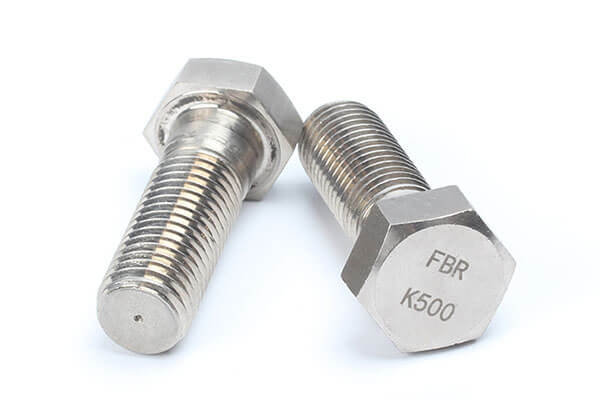
What Are Monel Fasteners?
Monel fasteners are manufactured from nickel-copper alloys containing nickel as the main element and copper as the principal secondary element. Depending on the grade, smaller additions of iron, manganese, aluminum, titanium, sulfur, and other elements may be used to control strength, hardness, machinability, and corrosion performance.
Common product forms include hex bolts, heavy hex bolts, socket head cap screws, machine screws, threaded rods, double-end studs, fully threaded studs, hex nuts, lock nuts, flat washers, and custom-machined components. Monel fasteners can be produced with metric or inch threads and may follow recognized dimensional standards or customer drawings.
They are often selected where standard stainless steel may not provide adequate performance, particularly in rapidly moving seawater, salt solutions, certain alkaline environments, and selected chemical processing conditions. Nevertheless, the complete operating environment must always be reviewed because no Monel grade is resistant to every acid, oxidizing chemical, temperature, or flow condition.
Common Grades of Monel Fasteners
Monel 400 Fasteners
Monel 400, identified as UNS N04400, is the most widely used grade in the Monel alloy family. It is a solid-solution nickel-copper alloy that can be strengthened primarily through cold working rather than precipitation hardening. It combines good strength and toughness with resistance to many corrosive industrial environments.
Monel 400 fasteners are particularly well known for their performance in marine and seawater-related applications. Bolts, nuts, studs, and washers made from this grade can be used in pumps, valves, seawater piping, marine fixtures, heat exchangers, tanks, and chemical processing equipment.
The grade also provides useful resistance in many salt, alkaline, and reducing environments. Its toughness makes it suitable for equipment exposed to changing temperatures or mechanical vibration. However, performance can vary significantly according to chemical concentration, aeration, flow velocity, temperature, deposits, and crevice conditions.
Monel 400 bolts are a practical option when corrosion resistance is more important than achieving the highest possible tensile strength. They are also suitable for custom parts requiring forming, machining, or welding, provided that the manufacturing process and final specifications are properly controlled.
Monel K-500 Fasteners
Monel K-500, designated as UNS N05500, combines the corrosion resistance associated with Monel 400 with substantially higher strength and hardness. The increased mechanical properties are achieved through additions of aluminum and titanium followed by a controlled age-hardening treatment.
Because of its higher strength, Monel K-500 is frequently selected for heavily loaded bolts, studs, screws, shafts, springs, valve components, and marine hardware. It is useful in applications where Monel 400 offers suitable corrosion resistance but does not provide the required mechanical capacity.
Typical uses include marine pump components, offshore equipment, oil and gas tools, valve assemblies, propeller-related equipment, chemical processing machinery, and high-strength fastening systems. K-500 fasteners may also be considered where resistance to wear, deformation, or repeated loading is important.
Heat treatment condition is a critical purchasing factor for Monel K-500 fasteners. The mechanical properties of annealed and age-hardened material are different, so the required condition should be clearly stated in the purchase specification. Designers should also assess the possibility of stress-corrosion cracking in the actual environment, especially when high hardness and sustained tensile stress are present.
Monel R-405 Fasteners
Monel R-405, identified as UNS N04405, is the free-machining version of Monel 400. It contains controlled sulfur additions that improve chip breaking and machining performance. Its general corrosion resistance and physical properties are similar to those of Monel 400, although its mechanical property range and manufacturing behavior are not identical.
R-405 is primarily supplied as bar or rod for automatic screw-machine production. It can be a suitable material for precision-machined nuts, screws, fittings, instrument parts, valve components, and other products requiring efficient machining and consistent dimensional control.
This grade should not automatically replace Monel 400 in every application. It is mainly intended for machined components rather than parts requiring extensive forming or complex fabrication. Buyers should evaluate the final component design, loading conditions, manufacturing process, and assembly method before specifying R-405.
Key Characteristics of Monel Fasteners
One of the main advantages of nickel-copper alloy fasteners is their resistance to many forms of general corrosion. Monel fasteners are especially relevant to marine environments, where carbon steel may rust quickly and some stainless steel grades may experience localized attack under unfavorable conditions.
Monel alloys also provide useful mechanical toughness. This is important for pumps, valves, pressure equipment, offshore structures, and rotating machinery where fasteners may experience vibration, temperature changes, and repeated maintenance cycles.
Monel 400 offers a balanced combination of corrosion resistance, toughness, and fabricability. Monel K-500 provides higher strength and hardness for more heavily loaded assemblies. Monel R-405 improves machinability for precision components produced from bar stock. Selecting the grade according to the actual performance requirement helps prevent unnecessary cost and reduces the risk of using an unsuitable material.
Galling should be considered when assembling Monel nuts and bolts. Nickel-containing alloys can develop high friction between mating threads, particularly when surfaces are dry or tightening is uncontrolled. Appropriate thread finish, clean components, controlled tightening procedures, and an application-compatible lubricant can help produce more consistent preload.
Common Forms and Custom Manufacturing Options
Monel fasteners can be supplied in standard configurations or manufactured to customer drawings. Standard products may include hex bolts, cap screws, studs, threaded rods, nuts, and washers. Custom products may require special heads, reduced shanks, fine threads, left-hand threads, drilled holes, locking details, non-standard lengths, or application-specific tolerances.
Manufacturing nickel-copper alloy fasteners requires attention to tool wear, heat generation, work hardening, thread condition, and surface integrity. The manufacturer should select suitable machining parameters and inspection methods according to the material grade and part geometry.
Thread production may involve cutting, grinding, or rolling, depending on the diameter, alloy condition, order quantity, and engineering requirements. The final purchase specification should state the thread standard, tolerance class, dimensions, material condition, mechanical requirements, surface condition, marking, and documentation expectations.
Industrial Applications of Monel Fasteners
Marine engineering is one of the most established application areas for Monel bolts and nuts. These components may be used in seawater pumps, shipboard valves, marine piping, propeller-related assemblies, offshore platforms, desalination equipment, and coastal processing systems.
In chemical processing plants, Monel studs and nuts can be used on reactors, heat exchangers, tanks, columns, pumps, valves, and piping systems handling compatible chemicals. Their suitability depends on the exact process media, temperature, concentration, contamination level, and operating condition.
Oil and gas equipment may use high-strength Monel K-500 fasteners in selected downhole tools, pump assemblies, valve systems, shafts, and offshore components. The combination of strength and corrosion resistance can be valuable where conventional fastener materials experience rapid degradation.
Monel fasteners are also found in power generation, pulp and paper processing, hydrocarbon processing, water treatment, and specialized electrical or instrumentation equipment. In each case, the selected alloy must be compatible with the complete joint, including the mating material, gasket, lubricant, temperature range, and tightening method.
How to Select and Purchase Monel Fasteners
A complete request for quotation should identify the exact Monel grade rather than using only the general material name. The buyer should state whether Monel 400, K-500, or R-405 is required, together with the fastener type, diameter, thread pitch, length, quantity, dimensional standard, and material condition.
For K-500 products, the required heat treatment and mechanical properties should be clearly defined. For R-405 products, buyers should confirm that the part is suitable for free-machining bar stock. For Monel 400 products, the required strength condition and fabrication method should be matched to the joint design.
Additional procurement details may include dimensional inspection, material identification, hardness testing, tensile requirements, traceability, surface finish, packaging, and drawing approval. Unsupported assumptions should be avoided, especially for critical marine, chemical, pressure, or offshore applications.
For one-stop sourcing discussions involving standard and custom Monel fasteners, buyers can provide their drawings and technical requirements to Flybear. Clear information about the operating environment, required grade, size, quantity, and inspection scope helps suppliers evaluate manufacturing feasibility and prepare an accurate quotation.
Choosing the Correct Monel Fastener Grade
Monel 400 is generally selected for its balanced corrosion resistance, toughness, and fabrication capability. Monel K-500 is preferred when higher strength and hardness are required, while Monel R-405 is intended mainly for efficiently machined parts produced from rod or bar.
The final decision should consider corrosion conditions, mechanical loading, temperature, flow velocity, joint geometry, maintenance procedures, and applicable engineering standards. By matching the alloy grade and fastener design to the actual service environment, industrial buyers can improve bolted-joint reliability and reduce the risk of premature corrosion or mechanical failure.