PTFE-Coated Stud Bolts: Benefits, Limits and Specification Checklist
PTFE coated stud bolts are used in piping, valves, pressure equipment, machinery, construction, and industrial maintenance where buyers require a combination of corrosion protection, controlled thread friction, easier assembly, or reduced risk of thread seizure. However, “PTFE coated” is not a complete technical specification. The coating system, substrate material, thread dimensions, thickness, friction requirements, corrosion test, mating nuts, operating environment, and inspection criteria all need to be defined.
PTFE stands for polytetrafluoroethylene, but industrial fastener coatings described as PTFE or fluoropolymer coatings are not necessarily a simple layer of pure PTFE. Many commercial systems use resin-bonded fluoropolymer dry films, primers, corrosion-inhibiting layers, or multi-coat constructions engineered for particular combinations of friction, corrosion resistance, chemical exposure, and temperature.
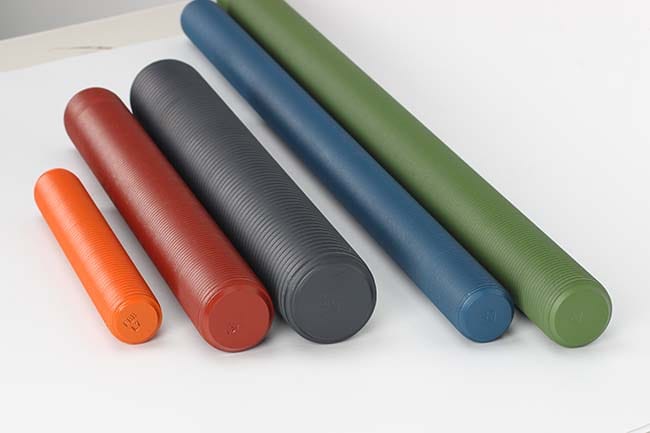
Flybear supplies standard, special, and custom industrial fasteners with project-specific surface requirements. Buyers evaluating coated studs can review the industrial stud range and provide the required standard, thread, material or grade, coating specification, quantity, application, and inspection requirements for technical review.
How PTFE Coated Stud Bolts Work
A fluoropolymer coating forms a thin engineered layer over the stud surface. Depending on the selected system, the coating can reduce friction at the thread interface and provide a barrier between the base metal and the surrounding environment.
The final performance depends on the complete coating system rather than PTFE content alone. Surface preparation, primer or undercoat, fluoropolymer formulation, coating thickness, curing conditions, substrate material, and installation damage can all influence the finished fastener.
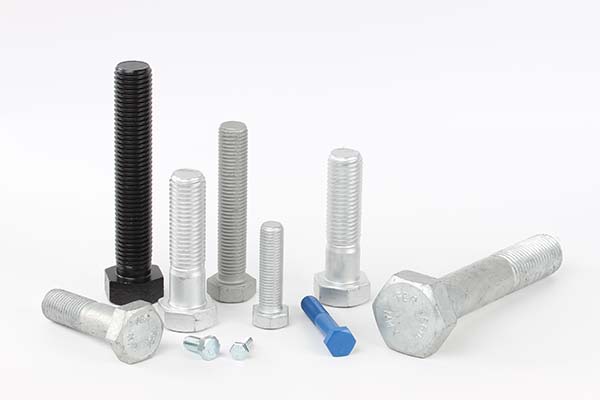
For this reason, two blue or green coated stud bolts should not be assumed to provide identical performance. Color is useful for identification, but it does not establish coating chemistry, thickness, coefficient of friction, chemical resistance, or corrosion-test performance.
PTFE, Fluoropolymer and Xylan Coatings: What Is the Difference?
“Fluoropolymer coated bolts” is a broad description covering coating systems that use fluoropolymer materials to provide properties such as low friction or chemical resistance. PTFE is one fluoropolymer used in industrial coating formulations.
Xylan is a specific branded family of industrial coatings rather than a generic name for all PTFE coatings. Different Xylan formulations can use different resin systems, lubricating materials, corrosion inhibitors, and fluoropolymer content. Some products are designed primarily for low friction, while others emphasize corrosion or chemical performance.
Therefore, an RFQ for Xylan coated studs should ideally identify the approved product or coating system rather than state only “Xylan.” Likewise, a requirement for PTFE should identify the intended performance characteristics instead of assuming that every PTFE-containing formulation is equivalent.
Main Benefits of PTFE-Coated Stud Bolts
Reduced Thread Friction
One of the most useful characteristics of many PTFE and fluoropolymer coating systems is reduced friction. Lower and more controlled friction can make threaded components easier to assemble and can reduce the tendency for threads to seize under suitable conditions.
This is particularly relevant for large stud bolts, flange joints, stainless threaded assemblies, and maintenance work where components may need to be removed after service.
However, low friction also changes the relationship between installation torque and bolt tension. Applying the same torque used for an uncoated fastener to a lower-friction coated fastener can produce a different preload. Installation torque should therefore follow qualified project data for the actual coating and fastener assembly.
Corrosion Protection
A correctly specified coating system can provide additional corrosion protection for carbon or alloy steel studs by creating a barrier between the substrate and the environment. This can make corrosion resistant studs with fluoropolymer coatings useful in chemical-processing equipment, piping systems, valves, outdoor machinery, and other industrial environments.
Actual corrosion performance depends on coating system, thickness, surface preparation, damage during installation, chemicals, temperature, moisture, crevices, and exposure conditions. A fluoropolymer coating should therefore not be described as universally corrosion-proof.
Reduced Galling and Seizing Risk
Low-friction coatings can help reduce metal-to-metal contact at the thread interface and may reduce galling or seizing risk in suitable threaded assemblies. This can be valuable where large studs and nuts require significant installation torque or where future disassembly is expected.
The result still depends on the mating nut, thread condition, load, installation speed, material combination, coating condition, and tightening procedure. Coating should be considered one part of the fastening system rather than a substitute for correct assembly practice.
PTFE Coating Does Not Change the Stud Material Grade
A coating improves surface characteristics but does not convert the base fastener into a different mechanical grade. ASTM A193 B7 alloy steel, ASTM A320 L7 alloy steel, stainless steel, and other stud materials retain their own material and mechanical requirements regardless of the coating applied.
For pressure equipment and engineered machinery, select the substrate material first according to mechanical strength, service temperature, toughness, corrosion requirements, and applicable code. Then evaluate whether the proposed fluoropolymer coating is compatible with that substrate and service environment.
The coating’s temperature capability should also be treated separately from the fastener material’s temperature capability. The fact that a B7 or L7 stud can meet a particular bolting-material requirement does not mean every PTFE coating can operate over the same temperature range.
Thread Fit Is a Critical Coating Issue
Coating adds thickness to the external thread. If this added material is not accounted for, a coated stud can become difficult to assemble with its mating nut even when the thread was correct before coating.
Thread-fit planning should address:
- Thread standard and tolerance or class.
- Coating thickness.
- Whether dimensions are controlled before or after coating.
- Mating-nut thread condition.
- Whether the nut is coated with the same or a compatible system.
- Required Go/No-Go inspection after finishing.
There is no universal rule that permits buyers to add an arbitrary coating thickness to every thread tolerance. The dimensional strategy should follow the thread standard, coating specification, and approved supplier process.
For a coated threaded rod that will be cut into several lengths, buyers should also consider how cut ends will be protected and whether cutting after coating exposes unprotected substrate.
Friction and Torque-Tension Behavior
Friction is one of the most important reasons to specify the coating system accurately. A low-friction fastener can generate substantially different bolt tension at a given torque compared with an uncoated or differently lubricated fastener.
Buyers should avoid specifying only a generic friction coefficient unless the test method, assembly configuration, and acceptable range are also defined. Actual friction can be influenced by:
- Coating formulation.
- Number of coating layers.
- Coating thickness and cure.
- Nut material and finish.
- Washer or bearing surface condition.
- Reuse.
- Installation speed.
- Temperature and contamination.
Where preload matters, torque procedures should be based on qualified data for the actual coated stud, nut, and bearing arrangement. A change from one fluoropolymer product to another should not be treated as cosmetic when the joint uses torque-controlled installation.
Salt-Spray Testing: What the Result Does and Does Not Mean
Salt-spray testing is commonly requested for coated industrial fasteners. ASTM B117 and ISO 9227 are examples of standards that define controlled salt-spray test environments.
These test methods do not by themselves specify how many hours a PTFE-coated stud bolt must pass. The product specification or purchase order needs to define the exposure duration, specimen condition, and acceptance criterion, such as limits on red corrosion, coating failure, or another agreed evaluation.
More importantly, salt-spray hours should not be converted directly into years of outdoor or plant service. Accelerated salt-spray testing is useful for process control and evaluating coating quality against a defined requirement, but service life depends on the actual environment and cannot be predicted reliably from a single chamber-test duration.
A Better Corrosion-Test RFQ
Instead of writing “PTFE coating, 1,000-hour salt spray” without further information, a purchasing specification should identify:
- Test method, such as the required ASTM or ISO procedure.
- Exposure duration.
- Fastener condition to be tested.
- Whether scratches or installation damage are permitted.
- Acceptance criterion.
- Number of samples or sampling method where controlled.
- Required test report.
This makes supplier quotations and test results much easier to compare.
Surface Preparation and Hydrogen-Embrittlement Considerations
The coating process can involve cleaning, blasting, chemical pretreatment, primers, undercoats, and final fluoropolymer layers. The exact process depends on the coating system and substrate.
PTFE itself should not automatically be blamed for hydrogen embrittlement. The risk for high-strength steel depends more on the complete processing route, particularly whether acid cleaning, electrochemical processes, or hydrogen-generating pretreatments are used.
For high-strength alloy-steel studs, the coating supplier should review the substrate hardness and the entire pretreatment and coating process. Where a metallic undercoat, electroplating step, or acid process is specified, applicable hydrogen-embrittlement controls should be included in the technical review.
Coating Damage During Installation and Service
A protective coating is only useful where it remains sufficiently intact. Wrenches, sockets, handling equipment, impact tools, sharp threads, and field installation can damage coated surfaces.
Areas to inspect can include:
- First engaged threads.
- Chamfered ends.
- Nut contact areas.
- Stud surfaces exposed to tooling.
- Packaging contact points.
If a damaged area requires touch-up, the repair procedure should be defined by the approved coating specification. Field application of an unrelated paint or lubricant should not automatically be considered equivalent to the original coating system.
Should the Stud and Nut Use the Same Coating?
The stud and mating nut should be specified as a compatible assembly. Using the same coating family on both components can be appropriate for some projects, while other approved systems use different but compatible surface conditions.
What matters is that the combination provides the required thread fit, friction behavior, corrosion protection, and installation performance.
| Assembly Factor | Buyer Check |
|---|---|
| Thread Fit | Confirm coated male and female threads assemble within the required tolerance |
| Friction | Use qualified torque or preload data for the actual stud-and-nut combination |
| Corrosion | Confirm both components meet the required coating and environmental specification |
| Temperature | Verify both substrate and coating systems against the operating range |
| Reuse | Confirm whether friction and coating performance remain acceptable after required assembly cycles |
Common Specification Mistakes
- Specifying only “PTFE coated.” Define the approved coating system or measurable performance requirements.
- Using Xylan as a generic term. Xylan is a branded coating family with multiple formulations, not a universal synonym for all fluoropolymer coatings.
- Choosing the coating by color. Blue, green, black, or another color does not establish chemistry or performance.
- Ignoring thread buildup. Coating thickness can change thread fit.
- Using uncoated torque values. Reduced friction can significantly change preload at the same installation torque.
- Converting salt-spray hours into expected service life. Accelerated chamber tests do not provide a direct field-life conversion.
- Ignoring the mating nut. Stud and nut threads, coatings, and friction conditions must work together.
- Changing coating systems without approval. Different fluoropolymer systems can have different friction, corrosion, chemical, and temperature behavior.
Quality Control for PTFE-Coated Stud Bolts
Inspection should cover both the base fastener and the finished coating. Depending on the project, relevant checks can include material and certificate review, dimensions, thread gauging, mechanical properties, coating thickness, appearance, adhesion-related requirements, friction or torque testing, and corrosion testing.
Flybear’s quality control process supports dimensional and thread inspection, material verification, hardness and tensile testing, coating-thickness inspection, salt-spray testing when required, and final packaging review according to agreed project requirements.
Where a specific friction range or corrosion performance is critical, the RFQ should identify the applicable test method and acceptance criteria rather than relying on a general request for a “high-performance PTFE coating.”
When a Custom Coated Stud Is Required
Standard stud dimensions do not cover every industrial project. Buyers may require special lengths, fine threads, different threads at each end, unusual materials, controlled thread allowances, project-specific coating systems, or special identification.
For these requirements, buyers can provide an approved drawing or specification through Flybear’s custom fastener support. Coating requirements should be included on the controlled technical documentation when they affect dimensions, friction, corrosion performance, or acceptance testing.
PTFE Coated Stud Bolts Specification Checklist
For a technically comparable quotation from a stud bolt supplier, provide:
- Applicable stud standard or approved drawing.
- Nominal diameter, thread series, pitch or TPI, and thread class.
- Finished stud length and configuration.
- Base material and grade or mechanical property class.
- Required PTFE or fluoropolymer coating system.
- Approved coating brand or product code where mandatory.
- Required coating thickness or specified range.
- Color where identification or appearance matters.
- Required thread condition after coating.
- Matching nut material, grade, thread, and coating.
- Friction or torque-tension requirements where controlled.
- Operating temperature.
- Chemical, salt, humidity, or outdoor exposure.
- Salt-spray test method, exposure duration, and acceptance criterion where required.
- Order quantity.
- Material certificates, mechanical test reports, coating reports, inspection records, marking, traceability, and packaging requirements.
FAQ
What are the main benefits of PTFE coated stud bolts?
Depending on the coating system, benefits can include lower thread friction, additional corrosion protection, easier assembly, and reduced galling or seizure risk. Actual performance depends on the complete fluoropolymer coating system and application.
Is Xylan the same as PTFE coating?
No. Xylan is a branded family of industrial coatings, and different Xylan products use different formulations. Some include PTFE, while other formulations can use different lubricating or resin technologies. Specify the approved product or required performance rather than using the brand name generically.
Does PTFE coating affect tightening torque?
Yes. Many PTFE-containing coatings reduce friction, which can change the preload generated at a given torque. Use qualified tightening data for the actual coated stud, nut, and joint rather than automatically applying values developed for uncoated fasteners.
Does a longer salt-spray result mean longer field service life?
No direct conversion should be made. Salt-spray tests are accelerated controlled tests useful for evaluating coating quality against a defined requirement. They do not reliably predict a specific number of years in an actual industrial environment.
Can ASTM A193 B7 or ASTM A320 L7 studs be PTFE coated?
Suitable B7 and L7 studs can use approved fluoropolymer coating systems when permitted by the project. The coating process, thread fit, temperature, friction requirements, and substrate processing controls should be reviewed before production.
What should buyers send for a PTFE-coated stud bolt quotation?
Provide the standard or drawing, size and thread, base material and grade, coating system and thickness, matching nuts, quantity, application, temperature and corrosion environment, friction requirements, and required inspection or certificate documents.
Conclusion
PTFE coated stud bolts can provide useful corrosion protection and friction control for piping, valves, pressure equipment, machinery, and maintenance applications, but the phrase “PTFE coated” is not enough for a controlled industrial purchase. The coating formulation, thickness, thread fit, friction behavior, substrate material, mating nuts, service environment, and test requirements all need to be defined.
Buyers should also keep laboratory tests and field performance separate. Salt-spray results can verify a specified coating requirement, but they should not be converted directly into guaranteed service life. Likewise, low friction can improve assembly behavior but requires the tightening procedure to match the actual coated fastener system.
For standard or project-specific fluoropolymer coated studs, Flybear can support technical requirement review and quotation. Send your standard or drawing, size and thread, material or property class, coating requirement, quantity, application, and inspection or certificate requirements through the Flybear contact page.