Low-Profile vs Countersunk Screws for Electrical Enclosures: Clearance and Finish Selection
Screws for electrical enclosures must fit within limited assembly space while providing reliable clamping, acceptable surface appearance, suitable corrosion protection, and practical access for installation and maintenance. Low-profile and countersunk screws are both useful when a conventional projecting screw head creates clearance problems, but they solve the problem in different ways and should not be treated as interchangeable.
A low-profile screw reduces the amount of head protruding above the mounting surface without requiring a countersunk hole. A countersunk screw uses a conical head that seats into a matching countersink, allowing the installed head to become flush or nearly flush with the surrounding surface. The correct choice depends on sheet thickness, available clearance, load distribution, manufacturing process, enclosure finish, service access, and the mechanical requirements of the joint.
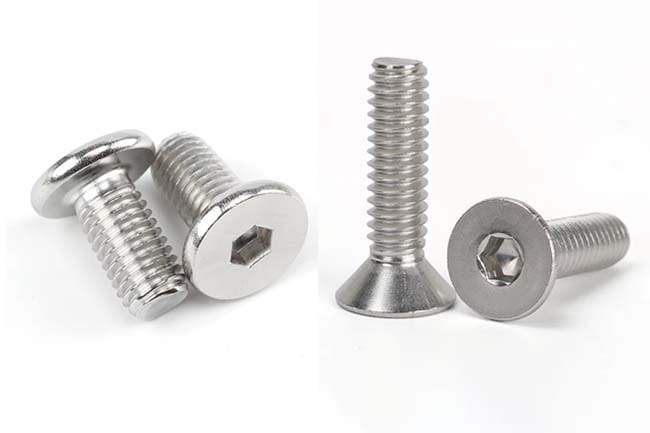
Flybear supplies standard, special, and custom industrial fastening solutions for electrical cabinets, electronics, machinery, sheet-metal assemblies, and other OEM equipment. Buyers selecting industrial screws can provide the enclosure drawing, thread requirement, head style, material, coating, quantity, and inspection requirements for technical review.
Why Screw Selection Matters in Electrical Enclosures
Electrical enclosures often contain closely packed components, wiring ducts, circuit boards, terminals, busbars, fans, switches, and internal mounting plates. A screw head that projects only a few millimeters farther than expected can interfere with a door, internal component, removable cover, cable route, or installation tool.
The external side of the enclosure can create different requirements. Designers may want a smooth surface for appearance, operator safety, labeling, adjacent equipment clearance, or installation inside another cabinet. These factors can make low-profile or countersunk fasteners attractive.
At the same time, reducing head height changes the available material around the drive recess and bearing surface. Countersinking also removes material from the enclosure panel. Head selection should therefore begin with the actual enclosure geometry rather than appearance alone.
Low-Profile vs Countersunk Screws for Electrical Enclosures
| Selection Factor | Low-Profile Screw | Countersunk Screw |
|---|---|---|
| Installed Surface | Head remains above the panel but with reduced projection | Can sit flush or nearly flush when the countersink is correct |
| Hole Preparation | Usually uses a standard clearance or threaded hole | Requires a matching countersink |
| Thin Sheet | Often easier to accommodate without removing additional panel material | Requires careful countersink design to avoid weakening or distorting thin sheet |
| Bearing Condition | Usually bears on a relatively flat surface | Bears against the angled countersink surface |
| Vertical Clearance | Reduces projection compared with taller screw heads | Best option when the surface must be flush |
| Manufacturing Complexity | Usually requires less panel preparation | Adds a countersinking operation or formed countersink feature |
| Service Replacement | Simple when the original head style and drive remain available | Replacement must match the countersink geometry and head dimensions |
When Low-Profile Screws Make Sense
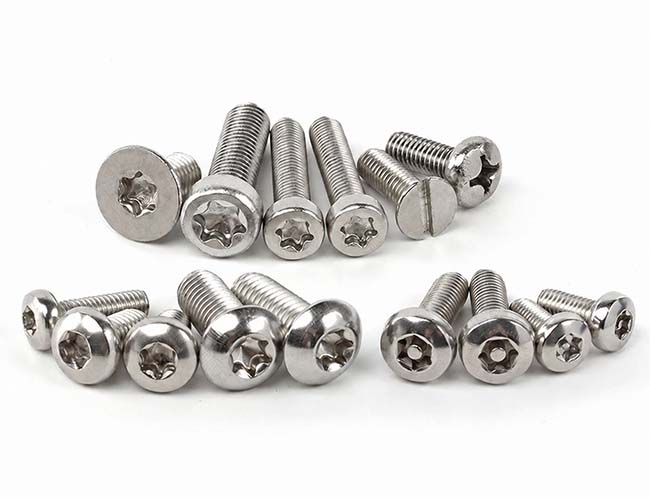
Low profile screws are useful when the enclosure has restricted clearance but does not require a completely flush outer surface. Depending on the product design, options may include button heads, low socket heads, compact pan-head designs, or drawing-specific reduced-head screws.
They can be considered for:
- Electrical cabinet covers.
- Internal mounting brackets.
- Control-panel assemblies.
- Electronic housings.
- DIN rail or accessory brackets where surrounding clearance is limited.
- Removable inspection panels.
- Machine enclosures with closely spaced internal components.
A key advantage is that the panel normally does not need a deep countersink. This can be important for thin sheet because more of the original material remains beneath the screw head.
However, reduced head height can also reduce the space available for the drive recess. Depending on the screw design and applicable product standard, some low-profile head styles have reduced head loadability compared with full-height screw designs. Engineers should therefore verify the actual fastener specification rather than assuming that two screws with the same thread diameter and property designation provide identical performance through the head.
When Countersunk Screws Are the Better Choice
Countersunk screws for sheet metal are generally selected when a projecting screw head is unacceptable. A properly seated countersunk screw can create a smooth enclosure surface that reduces interference with adjacent equipment, sliding components, labels, operator contact, or external covers.
They may be suitable for:
- Flush enclosure doors and removable panels.
- Panels installed directly against another surface.
- Equipment with strict external clearance limits.
- Visible housings where a flush appearance is required.
- Sliding covers or components passing over fastening points.
- Assemblies where protruding screw heads could snag cables or nearby parts.
The countersink must match the screw. Head angle, diameter, depth, concentricity, and seating condition all affect how load is transferred into the panel. A countersunk screw should not be forced into an ordinary hole or an incorrectly shaped countersink.
Thin Sheet Is a Major Design Constraint
Electrical enclosures are frequently fabricated from relatively thin steel, stainless steel, or aluminum sheet. This makes countersink design more challenging than in a thick machined component.
A deep countersink removes material around the hole. If the panel is too thin, the head may not develop a complete bearing surface before the countersink extends through much of the sheet thickness. Excessive tightening can then deform the panel, enlarge the countersink, or pull the head below the intended surface.
Low-profile screws can avoid some of these problems because they can bear against a flatter surface without requiring extensive material removal.
When a flush head is still required in thin sheet, the enclosure manufacturer may need to evaluate formed countersinks, thicker local sections, inserts, backing components, or another joint design. The correct solution depends on sheet thickness, material, loading, appearance, and production process.
Consider Internal and External Clearance Separately
Enclosure fasteners often have two independent clearance problems. The outside of the cabinet may require a low or flush surface, while the inside must avoid interference between the screw end and electrical components.
Buyers should therefore check both head projection and screw length. A flush countersunk head does not solve an internal interference problem caused by excessive thread projection.
For tapped holes, inserts, or captive nuts, confirm:
- Panel and bracket thickness.
- Required thread engagement.
- Available depth behind the joint.
- Clearance to wiring and electrical components.
- Whether the screw can bottom out before clamping.
- Whether excessive thread projection creates a service or safety issue.
For compact electrical equipment, a drawing showing the complete fastening envelope is often more useful than specifying the screw independently.
Choose the Drive for Assembly and Maintenance
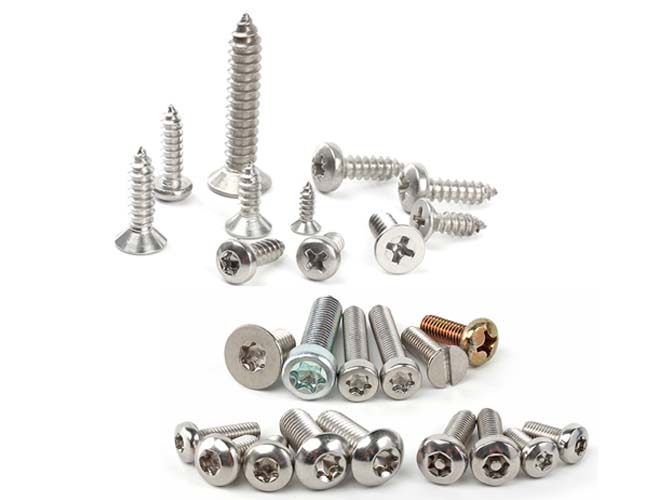
Electrical cabinet screws can use cross recesses, internal hex drives, hexalobular drives, external hex heads, security drives, or other systems. Drive selection should reflect production and service requirements.
A low-profile head may have less room for a deep drive recess, so the tightening method should be verified using the actual fastener. For high-volume OEM production, tool engagement, bit life, automated screw presentation, installation torque, and recess consistency can affect line efficiency.
For service panels, tool availability is important. If authorized technicians will frequently open the enclosure, the chosen drive should allow reliable repeated removal. Where public or unauthorized access is a concern, a tamper-resistant drive may be considered, but security requirements should be treated separately from the basic head-clearance decision.
Material Selection for Enclosure Fasteners
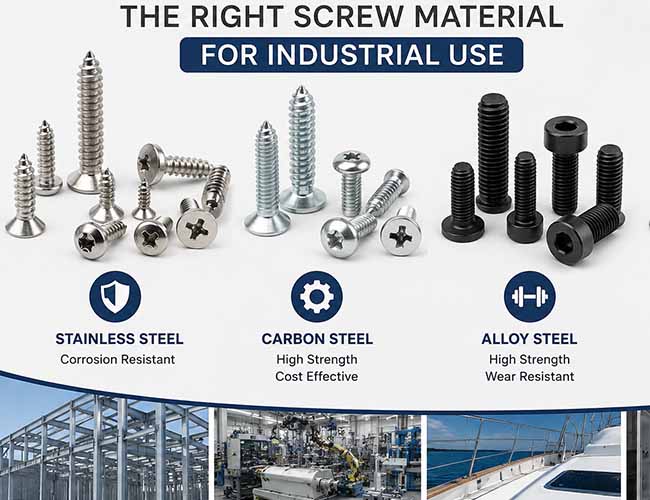
The material used for screws for electrical enclosures should be selected according to mechanical requirements, enclosure material, corrosion exposure, temperature, appearance, and customer specification.
Carbon or Alloy Steel
Steel screws are widely used in indoor electrical cabinets and industrial equipment. They can be supplied with different mechanical properties and surface finishes. The required property class, hardness, or other mechanical criteria should be stated where relevant rather than inferred from head style.
Stainless Steel
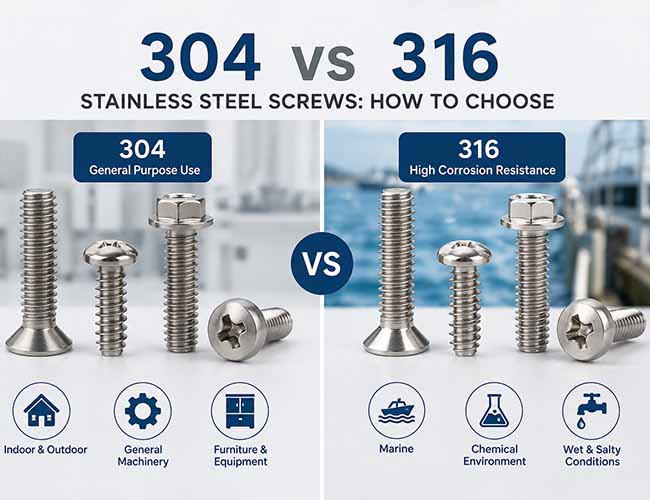
Stainless steel screws can be considered for outdoor enclosures, food-processing equipment, humid environments, or other applications where corrosion resistance is important. However, suitability depends on the actual stainless grade and service environment.
Chlorides, industrial chemicals, temperature, crevices, and contact with dissimilar metals can influence corrosion behavior. Buyers should therefore specify the material grade when it is controlled by the project.
Material Compatibility with the Enclosure
The screw material should also be considered together with the enclosure material. Steel screws in painted steel cabinets, stainless fasteners in stainless enclosures, and stainless screws installed in aluminum panels all create different mechanical and corrosion conditions.
Where galvanic corrosion is a concern, material combination, moisture exposure, coating condition, electrical contact, and enclosure design should be reviewed as a system.
Finish Selection for Electrical Cabinet Screws
Finish selection is especially important for electrical cabinet screws because the enclosure may be powder coated, painted, plated, anodized, or exposed to outdoor and industrial environments.
Common fastener finishes can include zinc-based plating, zinc-flake systems, black finishes, nickel-based finishes, and project-specific coatings. Stainless screws may be used with a natural or specified treated surface.
The correct finish depends on:
- Indoor or outdoor exposure.
- Humidity and condensation.
- Salt or industrial contaminants.
- Required appearance.
- Enclosure material.
- Coating thickness and thread fit.
- Friction and tightening requirements.
- Customer environmental specifications.
Color alone is not an adequate technical coating specification. Two silver-colored screws can use different coating systems with different thickness, friction characteristics, and corrosion behavior.
Powder-Coated Panels Require Additional Attention
Powder coating can change the bearing and seating conditions around a screw hole. On a countersunk joint, coating buildup in the countersink may affect how the screw head seats. Tightening can also damage coating locally, particularly around sharp contact edges.
For a low-profile screw bearing on a painted or powder-coated surface, the head or washer can compress or disturb the finish. If appearance is critical, sample assembly should confirm the acceptable tightening condition.
If the fastener is also expected to contribute to electrical bonding or grounding, the electrical requirement should be verified separately. Paint and powder coating can affect electrical contact, and a mechanically secure screw connection should not automatically be assumed to provide the required electrical bonding performance.
Do Enclosure Screws Need Sealing Washers?
A screw alone does not automatically create a sealed enclosure penetration. If the fastener passes through an enclosure wall and ingress protection is important, the complete joint may require a gasket, sealing washer, sealing compound, captive sealing element, or another approved design.
The sealing solution should be validated together with the enclosure because performance depends on hole geometry, washer material, compression, surface finish, screw preload, temperature, aging, and the enclosure construction.
Do not assume that changing from a projecting head to a countersunk screw will preserve an existing sealing condition. Countersunk geometry changes the contact surfaces and may require a different sealing strategy.
SEMS Screws for Electrical Enclosure Assembly
Where a design requires a screw together with a flat, spring, toothed, or other washer, a captive washer assembly can reduce loose-part handling. SEMS screws can be useful in electrical enclosure production because the washer remains assembled to the screw during kitting and installation.
This can reduce the risk of separate washers being omitted or dropped inside a cabinet. However, washer function still needs to be specified. A captive washer does not automatically provide locking, grounding, sealing, or corrosion protection unless the complete joint has been designed and verified for that function.
Selection Matrix for Electrical Enclosure Fasteners
| Enclosure Requirement | Fastener Option to Evaluate | Reason |
|---|---|---|
| Limited external height but flush surface not required | Low-Profile Screw | Reduces head projection without requiring a countersink |
| Completely flush exterior panel | Countersunk Screw | Head can seat within a properly designed countersink |
| Very thin sheet | Low-Profile Screw | Avoids removing additional material for a deep countersink |
| Panel installed against another surface | Countersunk Screw | Reduces interference from a projecting head |
| Frequent maintenance access | Low-Profile Reversible Drive | Provides reduced projection while retaining practical service access |
| Loose washer must be avoided | SEMS or Captive Washer Screw | Keeps the specified washer assembled with the fastener |
| Public or restricted access | Security Drive Option | Can increase resistance to casual unauthorized removal |
| Outdoor or corrosive environment | Material and Coating Review | Corrosion protection must match the actual exposure |
Quality Control for Screws for Electrical Enclosures
Quality inspection should focus on characteristics that control fit, appearance, and assembly consistency. Depending on the order, relevant checks can include head diameter and height, countersunk geometry, overall length, thread dimensions, drive recess, material verification, hardness or tensile testing when required, coating thickness, and surface appearance.
For countersunk screws, head geometry and seating dimensions deserve particular attention because variation can affect whether the installed head is proud of, flush with, or below the enclosure surface.
Flybear’s quality control process can support dimensional and thread inspection, material verification, hardness and tensile testing, torque testing, coating-thickness inspection, salt-spray testing when required, optical inspection, and final packaging checks according to agreed project requirements.
Common Enclosure Screw Selection Mistakes
- Choosing countersunk screws only for appearance. Thin-sheet thickness and countersink bearing conditions must also be checked.
- Assuming every low-profile screw has the same loadability. Head geometry and applicable product specification can affect performance.
- Checking head clearance but ignoring thread projection. Excessive length can interfere with internal electrical components.
- Specifying the coating only by color. Coating system, thickness, friction, and corrosion requirements may differ.
- Ignoring powder-coating thickness around the hole. The enclosure finish can affect screw seating and appearance.
- Assuming the screw automatically seals the enclosure. Ingress protection depends on the complete joint and sealing design.
- Assuming a mechanical screw joint guarantees electrical bonding. Paint, coatings, washers, and contact surfaces can affect electrical continuity.
- Changing head style without checking tooling. Installation access, drive size, and production equipment may also need to change.
When Custom Enclosure Fasteners Are Needed
Standard low-profile or countersunk screws do not fit every enclosure design. Special requirements can include extra-low head height, unusual head diameter, captive washer combinations, custom countersink geometry, shoulder sections, specific thread lengths, security drives, sealing features, or drawing-controlled finishes.
For these applications, buyers can provide drawings or samples through Flybear’s custom fastener support. The specification should identify head geometry, thread, dimensions and tolerances, material, mechanical requirements, coating, sealing or washer requirements, and inspection criteria.
RFQ Checklist for Screws for Electrical Enclosures
To obtain a technically comparable quotation, provide:
- Applicable standard or latest controlled drawing.
- Head style: low-profile, countersunk, pan, button, or custom.
- Drive type and size.
- Thread diameter, pitch or TPI, and required thread length.
- Overall screw length.
- Enclosure material and sheet thickness.
- Hole, countersink, tapped-hole, insert, or nut details.
- Material and property class or hardness requirement.
- Surface finish or coating specification.
- Outdoor, humidity, chemical, or other environmental exposure.
- Sealing, grounding, bonding, or security requirements where applicable.
- Order quantity and expected repeat demand.
- Critical clearance and appearance requirements.
- Inspection, testing, certificates, traceability, and packaging requirements.
FAQ
Which screws are best for electrical enclosures?
The best option depends on the enclosure design. Low-profile screws are useful where head projection must be reduced without machining a countersink, while countersunk screws are appropriate when a flush surface is required. Material, finish, thread, sealing, and service access should also be considered.
Should I use low-profile or countersunk screws on thin sheet metal?
Low-profile screws are often easier to accommodate because they do not require removing as much sheet material. Countersunk screws can still be used when the panel and countersink design provide suitable bearing conditions, but thin-sheet deformation must be considered.
Are countersunk screws flush with an enclosure surface?
They can be flush when the screw head and mating countersink are correctly matched. Incorrect depth, angle, coating buildup, or sheet deformation can leave the head above or below the intended surface.
What finish should electrical cabinet screws use?
The finish depends on enclosure material, indoor or outdoor exposure, corrosion requirements, appearance, friction, and customer specifications. Buyers should specify the coating system or performance requirement rather than selecting only by color.
Can enclosure screws provide grounding or electrical bonding?
A fastened joint may form part of a bonding design, but electrical performance should be verified separately. Paint, powder coating, plating, washer geometry, contact pressure, and enclosure construction can all influence electrical continuity.
What should I send for an enclosure fastener quotation?
Provide the standard or drawing, screw size and thread, head and drive style, enclosure material and thickness, material or property requirement, finish or coating, quantity, environmental conditions, critical clearances, and inspection or certificate requirements.
Conclusion
Selecting screws for electrical enclosures requires balancing clearance, panel thickness, appearance, corrosion protection, service access, and joint performance. Low-profile screws reduce head projection while generally avoiding the need for a deep countersink. Countersunk screws can provide a flush surface but require compatible panel geometry and careful attention to thin-sheet bearing conditions.
Finish selection is equally important. The screw material and coating should match the enclosure material, operating environment, assembly process, and appearance requirements. Powder coating, sealing, electrical bonding, and internal component clearance should be considered as part of the complete enclosure rather than treated as independent fastener details.
For standard or project-specific enclosure fasteners, Flybear can support technical requirement review and quotation. Send your standard or drawing, size and thread, head and drive style, material or property requirement, finish or coating, quantity, enclosure application, and inspection or certificate requirements through the Flybear contact page.