Eye Bolts for Industrial Assemblies: DIN 580 Specification Basics
A DIN 580 eye bolt is a metric lifting attachment point used where machinery, fixtures, equipment, or other assemblies require a threaded eye for lifting or anchoring. For industrial buyers, the key issue is not simply finding an eye-shaped bolt with the correct thread. The standard edition, material, dimensions, load direction, installation surface, inspection scope, and application all need to match the engineering requirement.
DIN Media lists DIN 580:2024-05 as the current edition of the standard and states that it replaces DIN 580:2018-04. The current document covers lifting eye bolts made of steel and stainless steel and describes their use as parts of slings or as fixed anchor points on machines. Buyers working from older drawings should therefore confirm whether the drawing intentionally references an earlier edition or should be updated to the current standard.
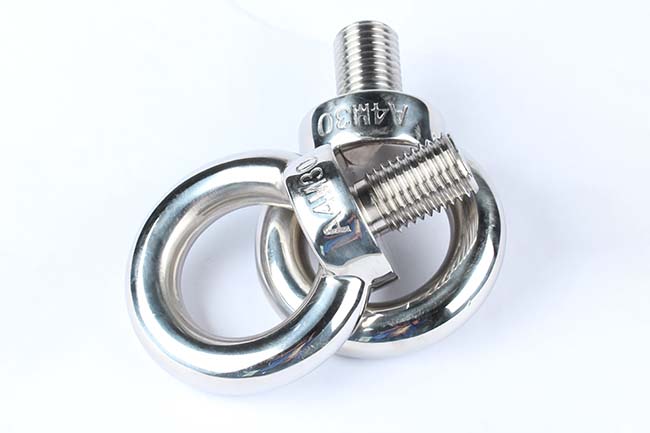
Flybear supplies industrial fasteners and fastening solutions for global OEM and project requirements. Buyers sourcing eye bolts can review the industrial eye bolt range and provide the applicable standard, thread size, material, application, and inspection requirements for technical review.
What Is a DIN 580 Eye Bolt?
A DIN 580 eye bolt combines a male metric thread with an integral circular eye. The threaded portion engages with a tapped hole in the lifted component, while the eye provides a connection point for appropriate lifting or rigging hardware. The geometry is designed so that the eye, shoulder or seating surface, and thread work as a complete load-transfer system.
This is why a generic metric eye bolt should not automatically be treated as a DIN 580 eye bolt. Similar-looking products may differ in eye dimensions, material, manufacturing route, thread details, seating geometry, marking, or rated load. Conformity should be established from the purchase specification and required documentation rather than from appearance alone.
DIN 580:2024-05 and Older DIN 580 Editions
Standard status is an important purchasing detail. DIN 580:2024-05 is the current DIN edition, while DIN 580:2018-04 has been withdrawn and replaced. A legacy drawing may still call out the older edition, but the supplier and buyer should agree whether the order is to follow the legacy drawing exactly or be updated to the current standard.
| Reference | Status and Scope | Buyer Consideration |
|---|---|---|
| DIN 580:2024-05 | Current DIN standard for lifting eye bolts made of steel and stainless steel. | Use the current edition when the purchase specification calls for DIN 580 without an older edition being intentionally frozen by the drawing or contract. |
| DIN 580:2018-04 | Previous edition replaced by DIN 580:2024-05. | Do not mix dimensions, marking, or load information from different editions without engineering verification. |
| ISO 3266:2010 + Amd 1:2015 | Current ISO reference for forged steel eyebolts, grade 4, for general lifting purposes. | Do not assume ISO 3266 and DIN 580 are interchangeable. Their scope and load ratings differ. |
DIN 580 lifting eye bolts and eye bolts specified to other lifting standards should not be treated as equivalent solely because the nominal thread size is the same. Substitution should therefore be based on the complete standard, geometry, load case, material requirements, and engineering approval.
Key DIN 580 Eye Bolt Specification Factors
Thread Size and Engagement
The nominal metric thread is only one part of the specification. Buyers should confirm diameter, pitch when relevant, thread tolerance, thread length, and the available engagement depth in the mating component. The tapped hole must also have suitable thread quality, depth, and surrounding material strength for the intended load case.
Coatings can affect thread fit, especially when the coating system adds measurable thickness. When plated steel eye bolts are specified, the thread condition before and after finishing should be controlled against the purchase requirement.
Eye and Seating Geometry
The eye diameter, ring section, shoulder, and seating face influence how load is transferred. The eye bolt should be able to seat correctly against the mating surface without interference. A rough, angled, recessed, or undersized seating area can create unintended bending or poor contact even when the thread itself is correct.
For this reason, buyers should not specify an eye bolt only by “M size.” If an existing assembly has limited clearance around the eye or shoulder, confirm the relevant dimensions from the current standard or an approved drawing.
Material
The current DIN 580 scope includes steel and stainless steel lifting eye bolts. The exact material requirement should still be stated in the RFQ or drawing. “Steel” or “stainless” alone may be insufficient for a controlled industrial purchase because corrosion behavior, mechanical properties, traceability, and compatibility with the mating component can depend on the specified grade and condition.
The supporting term “forged eye bolt” is also common in sourcing. However, buyers should not use the word “forged” as a substitute for a standard designation. If a forging route, material grade, heat treatment, or specific mechanical requirement is critical, state it explicitly and request the corresponding inspection or documentation.
Finish and Corrosion Environment
Surface finish should be selected according to the material, environment, thread fit, and project specification. Zinc-based finishes may be used on suitable steel fasteners for general corrosion protection, while stainless steel may be selected for environments where greater corrosion resistance is needed. Performance remains application-dependent, especially in chloride, chemical, high-humidity, or outdoor conditions.
A coating does not change the base material into a corrosion-resistant alloy, and stainless steel is not immune to every corrosive environment. Buyers should provide exposure details rather than relying on a generic “corrosion resistant” description.
Load Direction and Installation Matter as Much as the DIN 580 Eye Bolt Standard
Correct product selection does not make installation conditions irrelevant. The eye bolt, tapped component, lifting device, and load path form one system. The applicable DIN 580 requirements and technical documentation should be checked for the intended temperature range, loading direction, installation orientation, and operating conditions.
As a general selection principle, axial loading and inclined loading should never be treated as equivalent. The allowable load can change with load direction, and the eye orientation may need to be controlled. Buyers should use the load tables and usage rules in the applicable standard or approved technical documentation rather than applying a universal reduction factor from an unrelated product.
- Ensure the eye bolt seats fully on a suitable contact surface.
- Confirm sufficient thread engagement in the mating component.
- Keep threads and seating faces free from damage, debris, and interference.
- Confirm the actual load direction, not only the nominal lifted mass.
- Check whether repeated, rotating, impact, or multi-leg loading requires a different lifting point design.
- Do not use a fixed eye bolt as a substitute for a swivel lifting point when the application requires free alignment under changing load direction.
Where Industrial Eye Bolts Are Used
Industrial eye bolts can be used as lifting or attachment points on machinery, fixtures, motors, gearboxes, fabricated equipment, construction machinery, energy equipment, and other assemblies designed with threaded lifting locations. They may be installed temporarily for handling or retained as fixed anchor points, depending on the equipment design and applicable safety requirements.
For OEM projects, standardization can simplify maintenance and replacement, but the designer still needs to define the load case and mating structure. For retrofit or replacement purchasing, the original equipment documentation should be checked before selecting a new eye bolt by thread size alone.
Common Purchasing Mistakes
- Ordering by thread size only. Mating thread, eye geometry, material, seating dimensions, and load requirement also matter.
- Using an obsolete standard edition unintentionally. DIN 580:2018-04 has been replaced by DIN 580:2024-05.
- Assuming DIN 580 equals ISO 3266. Different standards should not be treated as automatic substitutes without dimensional and functional verification.
- Leaving out the load direction. A lifting point selected for axial loading may not be suitable for the same numerical load at an angle.
- Ignoring the mating component. Thread depth, base material, tapped-hole quality, and seating surface affect the assembly.
- Specifying coating without considering threads. Coating thickness and post-finish thread control can affect assembly.
- Requesting “DIN 580” without an inspection scope. Critical projects may need material documentation, dimensional checks, thread inspection, mechanical testing, or surface verification.
Quality Control for DIN 580 Eye Bolt Orders
Inspection should be matched to the purchase specification and risk level. Depending on the order, relevant checks can include material grade and certificate review, dimensional measurement, thread go/no-go inspection, hardness or tensile testing when required, surface-treatment inspection, coating-thickness measurement, appearance checks, marking review, quantity verification, and packaging inspection. When evaluating an industrial bolt supplier, buyers should compare the defined inspection and documentation scope as well as the quoted product.
Flybear’s quality control process supports dimensional and thread inspection, material and certificate review, mechanical testing, coating inspection, salt-spray testing when required, and final packaging checks. The exact inspection plan should be agreed before the order rather than assumed after production.
RFQ Checklist for Industrial Eye Bolts
A specification-driven RFQ helps suppliers quote the correct product and reduces the risk of receiving a visually similar but functionally different eye bolt. For standard or custom requirements, provide:
- Applicable standard and edition, such as DIN 580:2024-05, or an approved drawing.
- Nominal thread size, pitch if non-default, and required thread length.
- Material and grade or other controlled material requirement.
- Surface finish, coating, or passivation requirement where applicable.
- Order quantity and packaging requirements.
- Application, lifted component, expected load direction, and relevant operating conditions.
- Critical dimensional tolerances or interface dimensions.
- Required marking, material certificates, inspection reports, or test documentation.
If a project requires non-standard eye geometry, special thread length, unusual material, or drawing-controlled dimensions, review Flybear’s custom fastener support. Custom parts should be evaluated as engineered components rather than assumed to retain the load rating of a standard DIN 580 product.
FAQ
What is the current DIN 580 standard?
DIN 580:2024-05 is the current edition for lifting eye bolts and replaces DIN 580:2018-04.
Can DIN 580 and ISO 3266 eye bolts be substituted directly?
No automatic interchangeability should be assumed. Confirm dimensions, material, mechanical requirements, load rating, installation conditions, and engineering requirements before substitution.
Does the metric thread size determine lifting capacity?
No. Thread diameter is only one factor. Standard edition, material, eye geometry, load direction, installation, temperature, and mating-component conditions also affect the allowable application.
Can a DIN 580 eye bolt be used for angled lifting?
Only when the applicable standard, load table, installation orientation, and application conditions allow it. Do not apply an axial load value to an inclined load case without verification.
Is stainless steel always the best choice for corrosion resistance?
Not necessarily. Stainless steel selection depends on the specific grade and exposure environment. Chlorides, chemicals, temperature, crevices, and contact with dissimilar materials can affect corrosion performance.
What should buyers send for a DIN 580 eye bolt quotation?
Send the standard or drawing, thread size and pitch, material or grade, finish, quantity, application and load direction, critical tolerances, and required inspection or certificate documents. This information gives the supplier a clear basis for technical review and quotation.
Conclusion
A DIN 580 eye bolt should be purchased as a specified lifting component, not as a generic eye-shaped fastener. The current DIN 580:2024-05 edition, correct material, thread and seating geometry, load direction, mating structure, finish, inspection scope, and documentation all contribute to a controlled industrial purchase.
For standard or project-specific industrial eye bolts, Flybear can support requirement review and quotation. Provide your DIN standard or drawing, size and thread, material or property requirement, finish or coating, quantity, application, and inspection or certificate needs through the Flybear contact page for technical-commercial review.