Socket Head vs Button Head vs Countersunk Screws: Which Head Style Fits?
Socket head vs button head vs countersunk screw selection is mainly a question of available space, required surface profile, tool access, head loadability, bearing conditions, and assembly design. All three styles can use an internal hex drive, but their different head geometries make them suitable for different industrial joints.
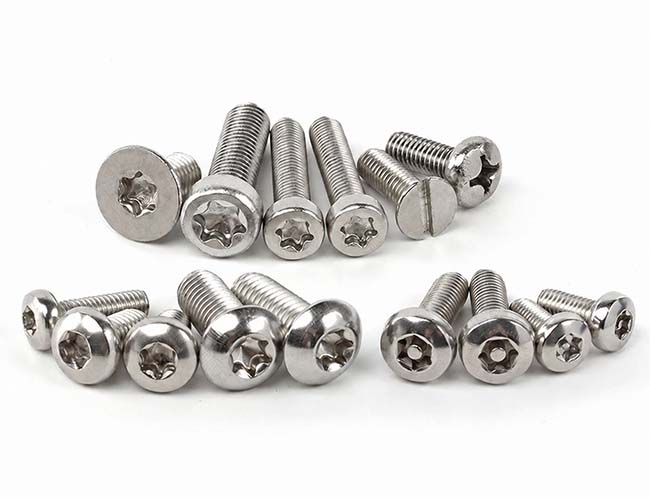
A socket head cap screw has a tall cylindrical head and is commonly selected where compact head diameter and strong tool engagement are important. A button head screw provides a lower, rounded profile with a wider head. A countersunk socket screw sits in a matching countersink so the installed head can be flush or close to flush with the surrounding surface.
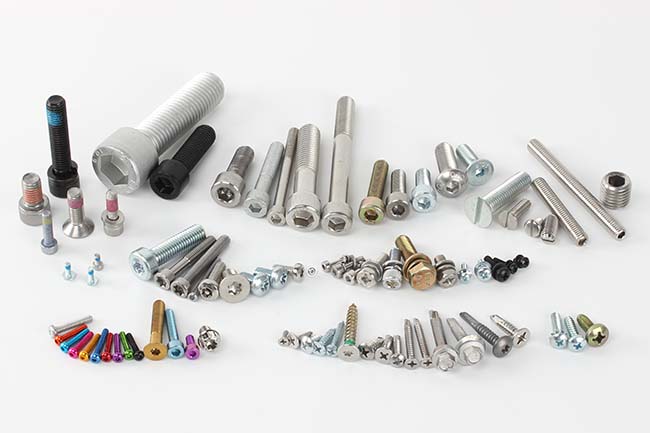
Flybear supplies standard, special, and custom industrial fasteners for OEM and project requirements. Buyers comparing these head styles can review the socket screw range and specify the required standard, thread, material, property class, finish, quantity, and application conditions.
Socket Head vs Button Head vs Countersunk: Quick Comparison
| Head Style | Main Geometry | Typical Selection Reason | Important Limitation |
|---|---|---|---|
| Socket Head Cap Screw | Tall cylindrical head with internal hex drive | Compact head diameter, good tool engagement, machinery and structural assembly | Requires more vertical head clearance |
| Button Head Screw | Low rounded head with relatively wide diameter | Low-profile appearance, limited vertical clearance, covers and panels | Reduced head loadability applies to standardized ISO button head designs |
| Countersunk Socket Screw | Conical head that seats into a matching countersink | Flush surface, sliding clearance, recessed assembly | Requires a correctly designed countersink and has reduced loadability in applicable ISO designs |
No single head style is automatically better. The correct screw depends on the joint. A machinery fixture may benefit from a socket head cap screw, an enclosure cover may favor a button head, and a panel that must remain flush may require a countersunk screw.
Socket Head Cap Screws: When Head Strength and Tool Access Matter
Socket head cap screws use a cylindrical head with a recessed hexagonal drive. For metric coarse-thread screws, ISO 4762:2004 is a commonly used current dimensional product standard. Its scope covers hexagon socket head cap screws from M1.6 through M64 with product grade A.
The relatively tall head provides room for a deeper internal drive compared with many lower-profile head styles. This can make socket head screws useful in machinery where tightening access is available from directly above but clearance for an external wrench is limited.
They are commonly considered for:
- Machine frames and equipment assemblies.
- Fixtures, tooling, clamps, and brackets.
- Motor and gearbox assemblies.
- Automation equipment.
- Counterbored components.
- Applications where radial space around the screw head is limited.
The main packaging disadvantage is head height. If a cover, moving component, operator interface, or adjacent assembly passes close above the screw, a standard socket head may protrude too far.
Counterbores and Socket Head Screws
Socket head screws are often installed in counterbores when the designer wants to recess the cylindrical head without changing to a countersunk bearing geometry. The counterbore must provide enough diameter and depth for the head while maintaining adequate material around the hole.
This arrangement can be useful where a recessed head is needed but a flat bearing surface is preferred. However, the exact counterbore should be based on the selected screw standard and assembly requirement rather than a generic clearance value.
Button Head Screws: Low Profile Without a Countersink
A button head screw has a rounded, low-profile head that generally projects less above the assembly than a conventional socket head cap screw. Its head diameter is typically wider, allowing the designer to trade vertical clearance for greater radial space.
ISO 7380-1:2022 covers metric hexagon socket button head screws within its stated scope. Importantly, the standard specifically identifies these screws as having reduced loadability due to the head design. This means buyers should not assume that a button head screw provides the same tensile behavior through the head as another screw style merely because the thread diameter and nominal material property class appear similar.
Button head screws can be attractive for:
- Machine guards and covers.
- Electrical and electronic enclosures.
- Panels and brackets.
- Visible equipment surfaces.
- Assemblies with restricted vertical clearance.
- Applications where a smooth, rounded external profile is preferred.
The rounded head remains above the surface, so a button head does not provide the same flush condition as a properly installed countersunk screw. It also requires enough radial clearance for its wider head.
Button Head vs Socket Head
Choose between a button head and socket head by looking at the surrounding envelope first. If vertical clearance is the main constraint, the button head may fit better. If radial head clearance, tool engagement, or head loadability is more important, a conventional socket head cap screw may be the more suitable starting point.
Do not make this decision from appearance alone. The applicable product standard, required mechanical properties, tightening method, joint loading, and available space should all be reviewed.
Countersunk Socket Screws: When the Surface Must Be Flush
A countersunk socket screw uses a conical head that enters a matching countersunk hole. When the screw and mating countersink are correctly designed and aligned, the top of the head can finish flush or close to flush with the surrounding surface.
This makes countersunk screws useful where a projecting head would interfere with another component, sliding surface, cover, guide, or external profile.
ISO 10642:2026 is the current ISO standard covering hexagon socket countersunk head screws with reduced loadability within its scope. The 2026 edition covers steel and stainless steel screws with metric coarse threads from M2 to M20 and product grade A. The standard also calls attention to correct alignment between the countersunk head and the countersink bearing surface.
Typical applications can include:
- Machine panels and covers.
- Guide plates and mounting surfaces.
- Fixtures requiring a flush top surface.
- Equipment where protruding screw heads would cause interference.
- Automotive and industrial assemblies with recessed fastening points.
The Countersink Is Part of the Joint
With a countersunk screw, the mating hole geometry is especially important. The head does not simply bear against a flat surface. It seats against the angled countersink, so incorrect countersink geometry, poor alignment, burrs, or insufficient material thickness can affect seating and load distribution.
Thin sheet and softer materials require particular attention. Excessive tightening can locally deform the countersink or pull the head deeper into the component. A countersunk screw should therefore be selected together with the mating part design rather than as an isolated fastener choice.
How Head Style Affects Loadability
One of the most important purchasing mistakes is assuming that all screws with the same nominal thread diameter and property class have identical load capability. Head geometry can become the limiting feature.
Current ISO standards for hexagon socket button head screws and countersunk socket screws explicitly identify reduced loadability associated with their head designs. This is different from simply comparing thread tensile area or reading a property class marking.
For critical assemblies, engineers should verify:
- The applicable screw product standard.
- Required material and mechanical property class.
- Whether the head design has reduced loadability.
- Joint preload and tightening method.
- External tensile, shear, vibration, and fatigue loads.
- Bearing conditions under or around the head.
- Strength and thickness of the mating components.
The screw head should therefore be considered as part of the full load path, not merely a drive feature.
Head Diameter and Clearance
Equipment designers need to consider clearance in two directions: radial clearance around the head and vertical clearance above it.
A socket head cap screw normally has a comparatively compact cylindrical head but greater head height. A button head reduces height but generally occupies more diameter. A countersunk screw moves much of the head into the mating component, but the component itself must provide sufficient space and material for the countersink.
This tradeoff is particularly important in electrical cabinets, compact machinery, automation systems, tooling, and assemblies with moving parts.
Drive Engagement and Installation
All three screw families may use an internal hex drive, but the available socket depth and head geometry differ. A lower head leaves less material available for drive penetration, which is one reason head design and loadability need to be considered together.
Installation tools should match the drive size and should be fully engaged before tightening. Worn keys or bits, poor alignment, contamination in the socket, and excessive tightening torque can damage the drive recess.
For repetitive production assembly, buyers should also consider the tightening tool, access angle, cycle rate, torque control, and whether automated screwdriving is involved.
Material and Property Class Selection
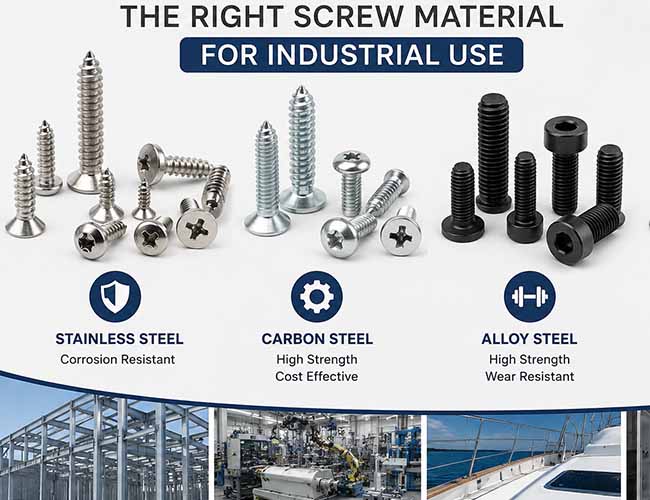
Head style does not by itself determine material. Depending on the applicable standard and application, socket screws can be supplied in carbon or alloy steel, stainless steel, and other materials for special requirements.
The buyer should specify the required material or property class separately from the head-style designation. For example, selecting a button head instead of a socket head does not automatically define the material, hardness, heat treatment, or corrosion resistance.
Stainless steel may be appropriate when corrosion resistance is important, while heat-treated alloy steel may be specified where particular mechanical properties are required. However, performance depends on the actual grade, environment, geometry, and joint design.
Coatings and Finishes
Steel socket screws may use black finishes, zinc-based coatings, zinc-flake systems, nickel-based finishes, or other project-specific surface treatments. Stainless screws may be used without an additional protective coating or may require specific surface treatment depending on the project.
Coating selection should consider corrosion exposure, dimensional allowance, appearance, friction, tightening behavior, and environmental requirements. A coating description based only on color is usually insufficient for a controlled OEM specification.
For close-fit threads or recessed head features, coating thickness can also affect assembly. The finished condition should therefore be considered during dimensional and thread inspection.
Which Screw Head Style Should You Choose?
| Design Requirement | Head Style to Evaluate First | Reason |
|---|---|---|
| Limited radial space around head | Socket Head | Compact cylindrical head can fit into narrow surrounding geometry |
| Limited vertical clearance | Button Head | Lower head profile than a conventional socket head |
| Flush external surface | Countersunk | Head seats into a matching countersink |
| Deep internal drive engagement desired | Socket Head | Taller head provides more room for the socket drive |
| Smooth exposed equipment surface | Button Head | Rounded profile may suit guards, panels, and visible assemblies |
| Sliding component passes over fastener | Countersunk | Proper installation can eliminate a projecting head |
| High joint load | Engineering review required | Head style, material, thread, property class, preload, and joint geometry must all be considered |
Common Screw Head Selection Mistakes
- Choosing by appearance only. Head profile also affects clearance, bearing, drive geometry, and loadability.
- Assuming the same thread size means the same performance. Head geometry and applicable product standards can change the limiting load.
- Replacing socket head screws with button heads without review. ISO button head designs have reduced loadability associated with their head geometry.
- Using a countersunk screw in an unsuitable hole. The mating countersink must match the required geometry and provide proper seating.
- Ignoring radial clearance. A low button head can require more surrounding diameter than a conventional socket head.
- Ignoring tool access. A screw may physically fit but still be difficult to install or service.
- Specifying only the head style. Thread, material, property class, finish, tolerance, quantity, and inspection requirements also need definition.
Quality Control for Socket Screws
Inspection requirements should reflect the applicable standard, drawing, and assembly risk. Depending on the order, useful checks can include head dimensions, overall length, thread length, Go/No-Go thread gauging, drive dimensions, material verification, hardness, tensile testing, torque-related testing, coating thickness, and surface inspection.
Flybear’s quality control process supports dimensional inspection, thread gauge testing, material verification, hardness and tensile testing, torque testing, coating inspection, and additional checks according to agreed order requirements.
If standard head geometry cannot meet the assembly envelope, buyers can also provide a drawing for custom fastener review. A non-standard low head, modified drive, special shoulder, or custom countersunk geometry should be evaluated as a drawing-controlled part rather than assumed to retain the properties of a standard screw.
RFQ Checklist for Socket, Button Head and Countersunk Screws
To obtain a technically comparable quotation, buyers should provide:
- Applicable standard or controlled drawing.
- Required head style.
- Thread diameter and pitch.
- Overall length and required thread length.
- Material and property class.
- Heat treatment where applicable.
- Surface finish or coating specification.
- Order quantity and expected production volume.
- Application and joint information.
- Critical dimensions and assembly clearances.
- Inspection and certificate requirements.
- Packaging, labeling, or traceability requirements where needed.
FAQ
Which is stronger: socket head or button head?
The answer depends on the applicable standard, material, property class, size, and joint. However, ISO 7380-1 specifically identifies standardized hexagon socket button head screws as having reduced loadability due to their head design, so buyers should not assume equal head loadability simply from the same nominal thread size.
When should I use a countersunk screw instead of a button head screw?
Use a countersunk screw when the assembly specifically requires a flush or recessed surface and the mating component can accommodate a correctly designed countersink. A button head is useful when low projection is desired without machining or forming a countersink.
What is the current ISO standard for countersunk socket screws?
ISO 10642:2026 is the current ISO standard for hexagon socket countersunk head screws with reduced loadability within its specified scope. It replaced the previous ISO 10642:2019 edition.
Can I replace a socket head cap screw with a button head screw of the same size?
Not without verification. Check head clearance, loadability, drive size, material, property class, tightening requirement, bearing conditions, and the applicable product standard before substitution.
What information should I send an industrial screw supplier?
Provide the standard or drawing, head style, thread size and pitch, length, material or property class, finish, quantity, application, critical tolerances, and required inspection or certificate documents.
Conclusion
The correct choice in socket head vs button head vs countersunk screw selection comes from the assembly rather than appearance alone. Socket head cap screws are useful where compact head diameter and tool engagement are priorities. Button head screws provide a lower rounded profile but applicable ISO designs have reduced head loadability. Countersunk screws can create a flush surface, but they require a properly designed mating countersink and also have head-loadability considerations.
For standard or project-specific socket screws, Flybear can support technical requirement review and quotation. Send your standard or drawing, head style, thread and length, material or property class, finish or coating, quantity, application, and inspection requirements through the Flybear contact page.