Stainless vs Zinc Plated Washers: Material and Finish Selection
Choosing stainless vs zinc plated washers requires two separate decisions: which material can carry the joint load, and which corrosion protection system suits the environment. A washer can resist rust yet deform under tightening, or provide adequate bearing support while its coating deteriorates in service.
For OEM buyers, mechanical designers and maintenance teams, the useful comparison extends beyond appearance and unit price. Material grade, hardness, coating specification, contact metals and assembly conditions all belong in the purchasing decision. This guide focuses on flat and other bearing washers; sealing and spring washers require additional functional specifications.
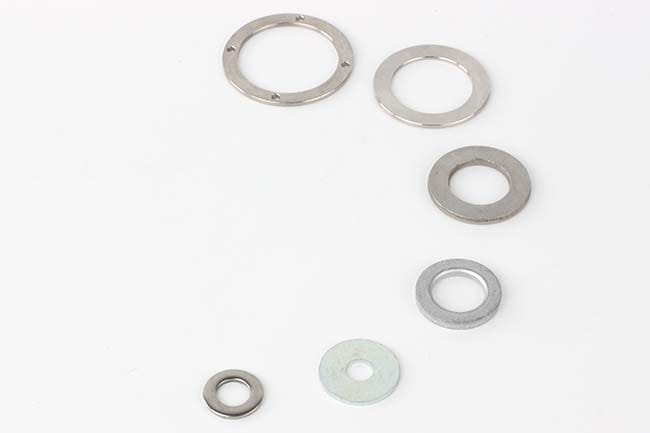
What Are You Actually Comparing?
Stainless steel washers: corrosion resistance from the alloy
Stainless steel develops a thin, chromium-rich passive film that helps protect its surface. The corrosion-resistant alloy extends through the washer, unlike a steel washer protected by a deposited zinc layer. However, stainless steel is not immune to corrosion.
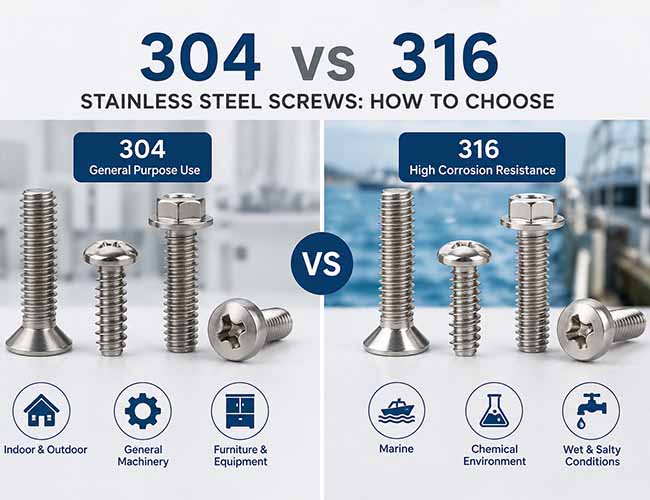
A 304 stainless washer is a common starting point for general equipment applications with relatively mild exposure. Grade 316 contains molybdenum and generally offers better resistance to chloride-induced pitting than 304. Neither designation guarantees suitability for seawater immersion, concentrated cleaning chemicals or stagnant crevices.
Write the required material designation and governing specification on the drawing or purchase order. If a quotation uses an alternative designation, ask the supplier to identify its specification and confirm acceptance before ordering. A generic description such as “stainless washer” leaves the grade unresolved.
Zinc-plated washers: steel plus a protective coating system
A zinc plated flat washer normally has a steel substrate with an electroplated zinc coating. Zinc provides barrier protection and can sacrificially protect exposed steel under suitable conditions. Protection is finite: coating thickness, exposure and local damage influence its performance.
The complete system may include a conversion coating, sealant, topcoat or lubricant. Consequently, two washers described as “zinc plated” can have different corrosion and assembly characteristics. Surface color alone does not establish the coating specification.
Zinc plating and hot-dip galvanizing are different processes
The term galvanized washer is often insufficient for procurement. Confirm whether the supplier means electroplating, hot-dip galvanizing or another zinc-based process.
Hot-dip galvanizing immerses components in molten zinc and typically produces a thicker coating than conventional electroplating. The processes differ in coating structure, finish and dimensional effects. Approve the actual process and finished-part requirements before accepting one as a substitute for the other.
Stainless vs Zinc Plated Washers: Key Selection Differences
| Selection factor | Stainless steel washer | Zinc-plated steel washer |
|---|---|---|
| Primary specification | Defined stainless grade, mechanical properties and surface condition | Defined steel grade or hardness plus the complete coating system |
| Corrosion protection | Passive surface film associated with the alloy | Deposited zinc protection, potentially supplemented by other treatments |
| Wet or chloride exposure | Requires grade selection and assessment of crevices and cleaning conditions | Requires evaluation of coating consumption, damage and maintenance access |
| Load-bearing suitability | Must be established from washer properties and geometry | Must be established from substrate properties and geometry |
| Assembly review | Consider sliding contact, galling and approved lubrication | Consider coating integrity, topcoat and lubrication effects on friction |
| Quotation comparison | Compare the same grade, hardness, dimensions and documentation | Compare the same substrate, coating designation and acceptance criteria |
Start with the washer’s function and geometry, then resolve material and finish. Flybear’s industrial washer range provides a starting point for reviewing flat, square, locking and sealing designs.
Evaluate the Actual Exposure and Contact Metals
Describe more than “indoor” or “outdoor.” An indoor machine exposed to condensation and cleaning fluids may face more demanding conditions than sheltered outdoor equipment. Record wetting frequency, chlorides, chemicals, operating temperature, drainage and access for maintenance.
For stainless washers, examine the space beneath the washer and bolt head. Trapped moisture and restricted oxygen access can create conditions for crevice corrosion, particularly where chlorides accumulate. An exposed surface that looks satisfactory does not establish the condition of the hidden bearing interface.
Also identify every metal in electrical contact. Stainless steel coupled to zinc-coated steel in the presence of a conductive liquid can promote corrosion of the zinc. The relative exposed areas and the environment influence the severity; mixing metals does not automatically cause failure in every assembly.
If electrical isolation is required, design the complete separation arrangement. An insulating washer alone may leave contact through the bolt shank or another surface. Any insulating component must also satisfy the joint’s mechanical and temperature requirements.
Keep Hardness and Dimensions Separate from Corrosion Resistance
Neither “stainless” nor “zinc plated” defines washer strength. The steel beneath a zinc coating may have different hardness levels, while stainless washers also vary with grade and manufacturing condition. Do not transfer a bolt’s property-class designation directly to its washer.
ISO 3506-7:2024 addresses mechanical and physical properties of specified stainless steel flat washers within its scope. It provides a relevant reference when specifying stainless washer properties, but buyers must still identify the applicable dimensional requirements and the intended bolt-and-nut combination.
Check the complete bearing arrangement:
- Hole diameter and clearance around the fastener.
- Outside diameter or square dimensions and available bearing area.
- Thickness, flatness, edge condition and specified tolerances.
- Required hardness and compatibility with the mating surface and clamp load.
- Finished dimensions after coating or other surface treatment.
A corrosion-driven material substitution should therefore receive mechanical review. Where a standard washer does not meet the required geometry, submit the controlled drawing through the custom fastener requirements route and identify which features are critical.
Review Galling, Lubrication and Coating Compatibility
Stainless components can gall when loaded surfaces slide against each other. In bolted assemblies, thread galling between the bolt and nut deserves particular attention. Adding a stainless washer does not by itself prevent that problem.
Review surface condition, cleanliness, material pairing and any approved lubricant or anti-galling treatment. Lubricant selection must also suit the service environment and any process cleanliness requirements.
Changing the washer finish can alter bearing friction during tightening. Adding lubricant or changing a coating system can also change the relationship between applied torque and bolt preload. Confirm the assembly procedure for the actual combination of bolt, nut, washer and lubrication; do not automatically reuse a torque value developed for another surface condition.
For electroplated parts, ISO 4042 covers coating systems for fasteners, including washers, and addresses hydrogen embrittlement risk reduction. Where the specified steel hardness and processing route make this relevant, agree the required controls with the supplier. A generic zinc-plated description does not resolve those requirements.
Application Selection Matrix
The following matrix is a starting point for engineering review, not a universal approval for either material.
| Application conditions | Options to evaluate | Decision to resolve |
|---|---|---|
| Dry, sheltered machinery | Specified zinc-plated steel or stainless steel | Required hardness, occasional condensation, appearance and purchase cost |
| Equipment subject to frequent washing | Stainless grades selected for the cleaning regime | Chemical concentration, temperature, rinsing and trapped liquid |
| Exterior equipment with repeated wetting | Suitable stainless grade or a defined protective coating system | Exposure severity, drainage, coating durability and inspection access |
| Coastal, salt-spray or deicing-salt exposure | 316 or higher-alloy stainless where justified, or a specifically qualified coating system | Chloride exposure and crevice conditions; avoid a blanket “marine grade” approval |
| High-preload machinery joint | Washers with verified mechanical properties in an appropriate material | Hardness, bearing support, dimensions and tightening procedure |
| Connection to galvanized steelwork | A compatible specified washer and coating arrangement | Whole-joint corrosion compatibility and project requirements |
For hydraulic equipment, distinguish external mounting hardware from a pressure-sealing component. This comparison does not qualify an ordinary flat washer for use as a hydraulic seal.
Compare Supplier Offers on a Controlled Specification
Ask each industrial washer supplier to quote the same approved requirements. Otherwise, a lower price may represent a different hardness, reduced thickness, a different stainless grade or an incomplete coating system.
Keep these procurement checks explicit:
- Material identity: agree the required grade evidence and lot traceability.
- Mechanical properties: identify the washer hardness or property requirements and relevant inspection.
- Coating details: specify the process, coating designation, thickness requirement and supplementary treatments.
- Dimensional acceptance: define finished-part tolerances and critical inspection points.
- Substitutions: require approval before changing the material, coating process or governing specification.
Use salt-spray results carefully. ISO 9227 defines test procedures but does not assign a universal exposure duration or acceptance criterion to every washer. Its tests are not intended to rank different materials for real-world corrosion resistance or predict long-term service performance. A reported number of hours is therefore not a conversion into years outdoors.
If corrosion testing is required, specify the method, duration, specimen condition, evaluation criteria and report requirements. Confirm whether acceptance concerns coating corrosion, substrate corrosion or another defined endpoint.
Flybear’s quality control and inspection information outlines available inspection areas. Agree the inspection scope and documents for the particular order before purchase.
What to Include in a Washer RFQ
A useful RFQ makes both the technical requirement and the commercial scope clear:
- Product definition: washer type, standard and edition, or drawing number and revision.
- Size: mating fastener size, hole diameter, outside dimensions, thickness and tolerances.
- Material: exact stainless grade or steel specification, required hardness and heat treatment where applicable.
- Surface system: stainless finishing requirements or zinc process, coating designation and additional treatments.
- Application: contact metals, exposure, temperature, load requirements and assembly method.
- Inspection: dimensional, material, hardness and coating checks, sampling and certificate requirements.
- Supply scope: quantity, packaging, labeling, delivery destination and required delivery schedule.
When requesting alternative materials, ask for separate quotations against clearly identified specifications. Compare purchase price alongside inspection effort, replacement access and the potential disruption of maintenance. Any expected service-life advantage should be supported by application evidence.
Frequently Asked Questions
Are stainless washers always better than zinc-plated washers?
No. The preferred option depends on exposure, mechanical requirements and the complete assembly. A properly specified zinc-plated washer can suit mild service, while stainless may warrant consideration where the selected alloy better matches corrosion and maintenance requirements.
Is a 304 stainless washer suitable for coastal equipment?
Do not approve it from the grade name alone. Chloride deposition, wetting and crevices matter. Grade 316 offers improved chloride-pitting resistance over 304, but severe conditions can require a higher alloy or a different joint design.
Does galvanized mean the same as zinc plated?
It is not a sufficiently precise purchasing description. Confirm the actual process and coating specification. Electroplated zinc and hot-dip galvanizing should not be treated as interchangeable without reviewing fit and service requirements.
Can I replace a zinc-plated washer with stainless without changing anything else?
Review the substitution first. Confirm dimensions, hardness, contact-metal compatibility and assembly friction. An apparently identical washer can change more than corrosion resistance.
How do I specify a corrosion resistant washer?
State the environment, required material or coating system, mechanical properties and inspection criteria. The phrase “corrosion resistant washer” describes an objective; it does not define a complete purchasable specification.
Select the Washer as Part of the Complete Joint
The strongest purchasing decision connects material, mechanical properties, geometry and surface protection to the actual application. Define those requirements before comparing supplier prices, and review any proposed substitution against the same criteria.
Flybear supplies industrial washers and supports standard and custom fastener requirements. To request a washer quotation, send your standard or drawing, dimensions, material and hardness requirements, finish, quantity, application and inspection documents for review.