Does H1150 Improve Corrosion Resistance in 17-4PH Fasteners?
H1150 can improve resistance to stress corrosion cracking in some environments, but it does not make 17-4PH stainless steel more resistant to every form of corrosion. A fastener can be less susceptible to cracking under sustained stress and still develop pits or corrode where liquid is trapped beneath a washer. The distinction matters whether the part is a hex bolt, a stud, an adjustment screw, or a specialty nut.
Consider two fasteners made from the same 17-4PH stainless steel and aged to H1150. One secures a bracket that dries quickly after cleaning. The other sits in a recess that stays wet and collects residue. Their material certificates may look the same, but the second joint creates a different exposure. To understand what H1150 can do, start with what happens around the fastener in service.
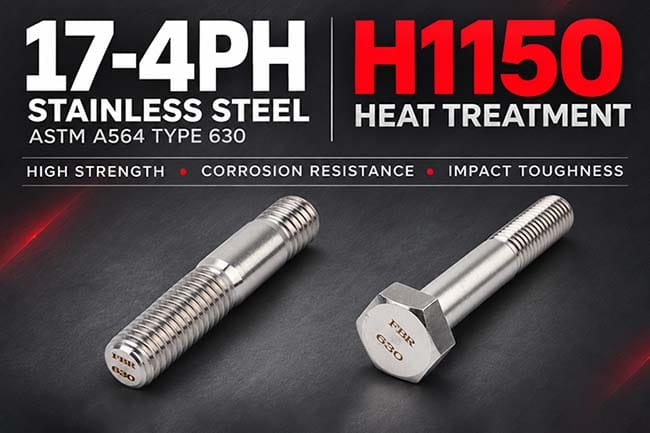
What H1150 Changes in 17-4PH Stainless Steel
17-4PH, also known as Type 630, is a precipitation-hardening stainless steel. The alloy forms a protective surface film, and aging changes its mechanical properties. H1150 identifies an aging condition at a nominal temperature of 1,150°F, or about 621°C. It does not identify a coating or a maximum operating temperature.
Compared with the peak-aged H900 condition, H1150 generally trades some strength and hardness for greater ductility and impact toughness. The aging condition can also influence how the alloy responds to corrosion. That effect depends on the type of attack, which is why “better corrosion resistance” is too broad a claim on its own.
H1150 Corrosion Resistance: Cracking, Pitting, and Crevice Attack
| Corrosion mechanism | What happens | Where to look on a fastened joint |
|---|---|---|
| Stress corrosion cracking | Cracks can develop when a susceptible material is exposed to a specific environment while under sustained tensile stress. | Loaded threaded sections, especially where the environment can reach the fastener. |
| Pitting | Localized attack forms small cavities where the protective surface film breaks down. | Exposed threads, screw heads, or other surfaces where chloride-bearing droplets or deposits collect. |
| Crevice corrosion | Attack develops in a narrow gap where liquid is retained and the chemistry can become more aggressive than on an open surface. | Under washers, between a nut and its bearing surface, or around threads in an exposed recess. |
NASA Marshall’s guidance on stress corrosion cracking in sodium chloride environments identifies aging at 1,150°F as a way to improve the stress corrosion resistance of 17-4PH. This is guidance for a specific corrosion mechanism. It is not a general seawater rating or an approval for a finished fastener in a particular assembly.
Laboratory results also show why the distinction matters. A published study on aging and corrosion in 17-4PH found that electrochemical corrosion performance did not improve steadily as the aging temperature increased in its sodium chloride tests. The result describes the specimens and test conditions used in the study. It does not establish a service life for bolts, nuts, or screws in an installed joint.
How the Joint Changes the Exposure
Occasional moisture on an external mounting bracket
An external equipment bracket may see condensation or occasional splashes, then dry between exposures. A partially threaded hex bolt or a screw may be considered when the design calls for the strength and toughness of 17-4PH H1150. Look at the joint as well as the surrounding environment: a bracket face can dry while a gap beneath a washer stays damp. The exposed bolt head may not tell you what is happening under it.
Washdown around a recessed screw or specialty nut
A machine may be cleaned regularly even though the fasteners never contact the material being processed. A recessed screw head, a nut seated in a pocket, or a close-fitting cover can retain cleaner or rinse water. The useful questions are what cleaner is used, whether it leaves deposits, and whether the joint can drain and dry. An exposed screw head and a recessed one can see different conditions on the same machine.
Salt deposits on studs and threaded assemblies
Outdoor equipment near salt spray or other sources of chlorides may collect deposits at the nut face, around exposed threads, or at the entry to a tapped hole. Repeated wetting can bring those deposits back into solution. The British Stainless Steel Association’s overview of corrosion mechanisms identifies gaps around screw threads, bolt shanks, and nut-and-washer interfaces as locations where crevice attack can develop. For regular salt exposure or immersion, evaluate the material and the joint together rather than assuming H1150 is sufficient.
What This Means for Different Fastener Designs
The same alloy and aging condition can be specified across several fastener designs, but each design creates different surfaces, gaps, and exposure points. These are examples of what to examine when the drawing calls for 17-4PH H1150:
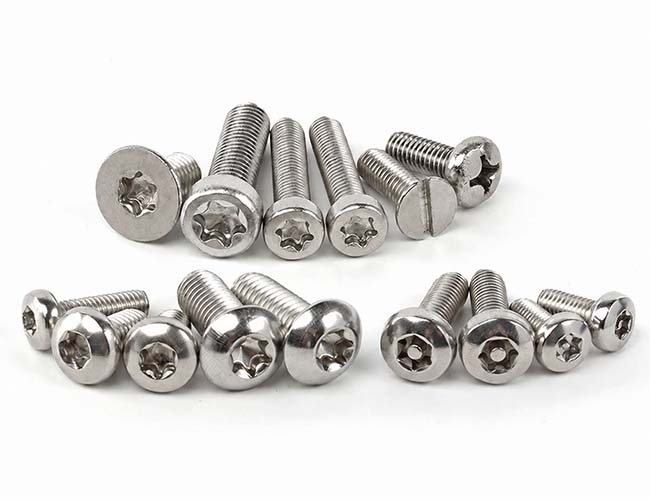
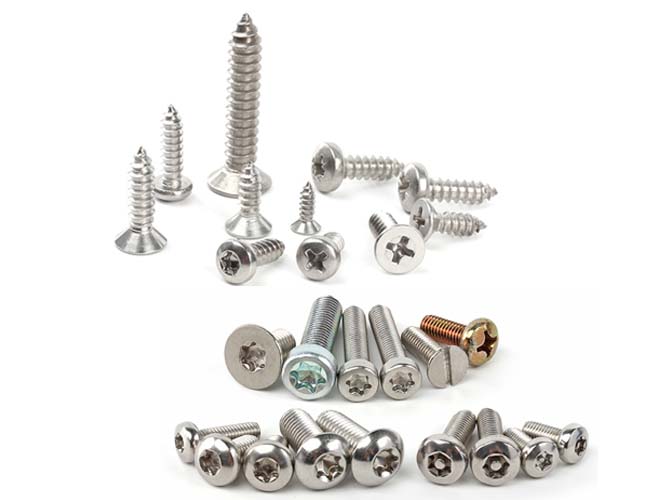
- Bolts and headed screws: Check the bearing face beneath the head or washer, the exposed thread, and any recess that can retain liquid. A partially threaded hex bolt and a recessed screw can share the same material while exposing different areas of the joint.
- Studs and other threaded shafts: Consider the exposed nut end and the end installed in the housing separately. On a double-end stud, those ends can experience different conditions even though they are part of the same piece.
- Specialty nuts and other threaded parts: Consider what happens at the bearing face, inside the thread, and at the interface with the mating part. Confirm the nut and its mating fastener separately. A material chosen for one component does not automatically suit every part of the assembly.
If a joint already shows corrosion, note where the attack starts. Pits on an exposed head, corrosion hidden beneath a washer, and cracking in a loaded thread are different observations. Document the location and exposure before changing the alloy or aging condition. A change in heat treatment alone may leave the cause of the problem in place.
Questions to Ask Before Choosing H1150
- What reaches the joint? Identify condensation, washdown chemicals, salt deposits, or direct contact with a process fluid.
- Where does it stay wet? Look at recesses, washer interfaces, mating threads, and other places that may stay wet after exposed surfaces dry.
- What properties does the joint need? Check the strength and toughness requirements and whether sustained tensile stress and the exposure create a concern for stress corrosion cracking.
- What does the equipment specification require? For pressure-retaining or process-wetted joints, use the approved material and fastener requirements for that equipment.
Frequently Asked Questions
Does H1150 always resist corrosion better than H900?
No. It can improve resistance to stress corrosion cracking in certain environments, but the result does not establish a universal ranking for pitting, crevice corrosion, or other forms of attack.
Is H1150 the same as passivation?
No. H1150 is a heat treatment condition that changes the properties of the alloy. Passivation is a separate surface treatment. If the drawing requires passivation, specify it separately.
Can 17-4PH H1150 be used for screws and nuts as well as bolts and studs?
Yes, where the part drawing calls for it. Check the requirements for each finished part, including the thread, mechanical properties, mating components, and service conditions.
Can a salt spray result predict how long the fastener will last?
A result describes how a sample performed under the conditions of that test. It does not reproduce every combination of load, deposits, cleaning chemicals, temperature, and trapped liquid found in an installed joint.
When evaluating 17-4PH H1150, consider both why the design needs that aging condition and what the joint will encounter in service. If you are sourcing bolts, studs, screws, nuts, or other threaded parts, share your drawing and service conditions with Flybear. For non-standard geometry, see our custom fastener options.