DIN 9021 vs ISO 7093 Large Washers: Dimensions, Applications and Sourcing
Comparing DIN 9021 vs ISO 7093 requires more than matching a washer’s outside diameter. Buyers need to identify the applicable ISO part, dimensional tolerances, hardness class, material and finish before approving a replacement. Two large washers can fit the same bolt while meeting different purchasing requirements.
This guide explains how to translate a legacy DIN 9021 washer specification into a clear sourcing requirement. It also shows why a large OD washer needs adequate thickness and support, particularly around oversized holes, slots and soft clamped materials.
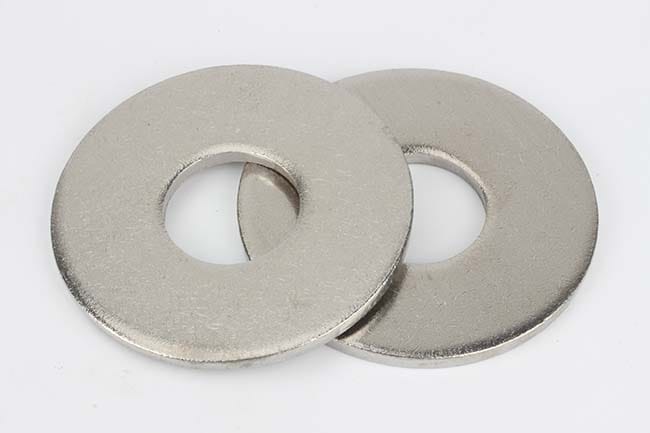
DIN 9021 vs ISO 7093: What Has Changed?
DIN 9021:1990-03 is withdrawn. The German replacement records identify DIN EN ISO 7093-1:2000-11 and DIN EN ISO 7093-2:2000-11. At the international level, ISO 7093 is divided into separate parts for different product grades.
| Reference | Specification position | Purchasing implication |
|---|---|---|
| DIN 9021 | Legacy large-washer standard | Check the drawing edition and original requirements before substitution. |
| ISO 7093-1:2000 | Large-series washers, product grade A; hardness classes 200 HV and 300 HV | Specify the required hardness class alongside size and material. |
| ISO 7093-2:2000 | Large-series washers, product grade C; hardness class 100 HV | Review the different tolerance and hardness requirements before acceptance. |
Product grade and hardness class describe different characteristics. Product grade concerns dimensional and geometrical tolerances; a hardness class concerns a mechanical property. Neither identifies the complete material or coating specification.
Consequently, “ISO 7093 washer” is an incomplete order description. A quotation should identify the part number, such as ISO 7093-1, and the remaining requirements. A supplier’s DIN/ISO cross-reference helps locate candidates, but it does not authorize a drawing change.
Large Washer Dimensions: Check the Hole, Outside Diameter and Thickness
The three basic dimensions are the clearance-hole diameter, d1; outside diameter, d2; and thickness, h. The nominal washer size refers to the associated nominal thread diameter. It is not the actual hole diameter.
The following examples come from the corrected ISO 7093-1:2000 dimensional table. All values are in millimetres.
| Nominal bolt size | d1, nominal/minimum | d2, nominal/maximum | h, nominal |
|---|---|---|---|
| M6 | 6.40 | 18.00 | 1.6 |
| M8 | 8.40 | 24.00 | 2.0 |
| M10 | 10.50 | 30.00 | 2.5 |
| M12 | 13.00 | 37.00 | 3.0 |
| M16 | 17.00 | 50.00 | 3.0 |
This is a selection aid, not a complete acceptance table. The standard also provides dimensional limits. Use those limits and the applicable geometrical requirements when preparing an inspection plan.
A “three times bolt diameter” rule is not a reliable substitute for the table. For example, the M12 entry has a nominal outside diameter of 37 mm, not 36 mm. That difference can matter inside a counterbore or beside a flange wall.
Check both minimum and maximum conditions against the assembly. A washer needs clearance around the bolt and nearby features, while its bearing surface must remain adequately supported. ISO 7093-1 applies its dimensional tolerances before plating or coating; specify any additional finished-part fit requirements.
Can a DIN 9021 Washer Be Replaced by ISO 7093?
A replacement can be appropriate after a documented comparison. It should not be approved solely because a catalogue lists the two references together.
Start with the original drawing or purchase specification. Identify the required dimensions, hardness, material and finish, including any customer-specific limits. Then compare the proposed ISO part against those requirements and the actual joint.
- Dimensional fit: Compare hole size, outside diameter, thickness and tolerances.
- Mechanical suitability: Check hardness against the fastener and assembly requirements.
- Material and finish: Confirm the specified material designation and coating system.
- Functional fit: Check support over holes or slots, available space and installation conditions.
- Approval: Record the accepted substitution in the controlled drawing or purchasing record.
For an existing machine, a worn sample provides useful information but may not reveal the original hardness or coating. Combine sample measurements with drawings, maintenance records and the responsible engineer’s review.
Why Larger Outside Diameter Does Not Set the Load Capacity
A larger bearing footprint can help distribute clamping force over a wider region. However, the benefit depends on contact with the workpiece. A washer extending over a hole or slot contains an unsupported region that must also resist bending.
Both ISO 7093 parts address applications involving soft clamped pieces or large clearance holes, and their scope calls for checking thickness suitability in the latter case. Covering the opening does not, by itself, establish that the washer is suitable for the joint.
For an oversized or slotted hole, assess the opening dimensions, bolt position, supported contact area, washer thickness, material and intended clamp load. At the end of a slot, support may differ from the condition at its centre. Evaluate the adjustment range required by the design.
If a standard washer is unsuitable, a thicker washer or a designed backing plate may be an option. Specify the revised geometry and acceptance requirements rather than treating a larger diameter as an automatic upgrade. Joint-specific engineering review should determine the solution.
Material and Hardness: Separate the Requirements
Match Hardness to the Fastener Specification
Within the stated scope of ISO 7093-1, 200 HV washers are suitable for product-grade-A/B hexagon bolts and screws through property class 8.8, and corresponding nuts through class 8. The 300 HV class covers the stated bolt and screw applications through 10.9, and nuts through class 10.
These scope statements do not establish a load rating for every joint. They also do not justify substituting a lower-hardness washer simply because its dimensions match. For stronger fasteners or a customer-specific assembly, use the governing engineering specification.
Specify Stainless Steel Independently
For stainless steel, state the required material designation and washer hardness separately. Do not use a bolt designation such as A2-70 as though it automatically defines the washer’s acceptance requirements.
The material choice also needs to reflect the service environment and surrounding components. Where a drawing names a specific grade, a quotation for generic “stainless steel” leaves an unresolved requirement. Ask the supplier to identify the proposed material and documentation before approval.
Industrial Applications and the Meaning of “Fender Washer”
Large washers are useful candidates wherever the designer needs a wider bearing footprint. Their suitability still depends on the complete connection.
- Machinery panels and guards: Review sheet thickness, local support and the risk of distortion during tightening.
- Pump, valve and hydraulic equipment mounts: Check the mounting joint requirements; a large plain washer should not be assumed to provide pressure sealing.
- Electrical enclosures: Confirm space around mounting holes and any finish or electrical-contact requirements in the equipment specification.
- Automotive and construction equipment brackets: Assess adjustment slots, installation access and the permitted washer position.
“Fender washer” is a useful commercial description, but it does not identify one universal fender washer standard. Products sold under this name may have different metric or inch dimensions, thicknesses and materials.
When reviewing large-diameter and fender washer options, use the product listing to identify candidates. Use the agreed standard or drawing to define what can be purchased and accepted.
A Practical Selection Guide for Buyers
| Buying situation | Review before ordering | Useful purchasing action |
|---|---|---|
| Legacy machine drawing specifies DIN 9021 | Original edition, material, dimensions and assembly function | Request a documented comparison with the proposed replacement. |
| New drawing specifies only ISO 7093 | Required product grade and hardness | Complete the part number and specification before requesting comparable quotes. |
| Washer covers an oversized hole or slot | Unsupported span, thickness and clamp load | Obtain engineering approval for the selected geometry. |
| Standard outside diameter conflicts with nearby features | Available space and required bearing support | Evaluate a drawing-based washer with explicit tolerances. |
A custom washer should have a controlled drawing that defines its departures from the standard. Describe it as a drawing-based component where appropriate, rather than implying that modified dimensions fully comply with the original standard. Flybear’s custom fastener options provide a starting point for discussing such requirements.
Agree on Finish and Inspection Before Comparing Prices
Specify the coating or surface finish precisely enough for suppliers to quote the same requirement. Colour alone does not identify a complete coating system. Include the coating designation, any thickness requirement and the agreed performance or appearance criteria.
If a corrosion test is required, identify the test method, duration and acceptance criteria. Do not convert a laboratory result directly into a guaranteed service life. Review changes in finish against the assembly specification, including any established tightening procedure.
Inspection should address the characteristics that determine acceptance: dimensions, specified hardness, material evidence, surface condition and coating requirements where applicable. A dimensional report alone does not verify every requirement, and one approved sample does not define the acceptance arrangements for subsequent production.
Agree on sampling, lot identification and required records before order placement. Flybear’s fastener quality control information can support discussions about the inspection scope and documentation needed for the purchase.
What to Include in a Large Washer RFQ
A complete RFQ reduces quotation differences and prevents substitutions from remaining hidden until receiving inspection. Give each industrial washer supplier the same specification so that offers can be compared consistently. Provide:
- Reference: Full standard number and part, edition where required, or drawing number and revision.
- Size: Nominal bolt size and any specified hole, outside-diameter or thickness limits.
- Material and hardness: Material designation, required hardness class and heat-treatment requirements where applicable.
- Finish: Coating specification and any additional finished-part dimensional requirements.
- Assembly details: Bolt property class, clamped material, hole or slot geometry and critical installation constraints.
- Commercial details: Quantity by size, packaging, identification and delivery destination.
- Acceptance: Inspection scope, sampling arrangements, certificates and reports required.
For a proposed DIN-to-ISO substitution, ask the supplier to list deviations explicitly. Engineering can then approve the actual offered specification, and purchasing can compare quotations on the same basis.
Frequently Asked Questions
Is DIN 9021 still used in purchasing?
Yes, the designation remains in legacy drawings and commercial descriptions. Its continued use does not change its withdrawn status. Confirm the requirements attached to the reference before ordering.
Are ISO 7093-1 and ISO 7093-2 interchangeable?
Do not assume so. They specify different product grades and hardness requirements. Review the applicable dimensions, tolerances and joint requirements before approving a substitution.
Does every fender washer comply with ISO 7093?
No. The product name alone establishes neither conformity nor dimensions. Request the exact standard designation or a dimensional drawing and material specification.
Can I order a washer using only the bolt diameter?
Bolt diameter helps identify nominal size, but it does not define the complete washer. The order also needs a standard or drawing, material, hardness where required, and finish.
Will increasing the outside diameter make the connection stronger?
It may improve bearing support in an appropriate design, but diameter alone cannot establish connection strength. Washer bending, substrate behaviour, hole geometry and the rest of the joint still require evaluation.
Conclusion: Purchase an Approved Specification
The useful DIN 9021 vs ISO 7093 comparison ends with a complete, approved specification. Identify the correct ISO part, verify dimensions and hardness, and review support conditions before accepting a replacement.
Flybear supports standard and custom fastener sourcing requirements. To request a review or quotation, send your washer specification and RFQ, including the drawing or standard, material, hardness, finish, quantity and relevant assembly details.