Self-Tapping Screws for Sheet Metal: What Buyers Need to Specify
Self tapping screws for sheet metal can simplify industrial assembly by creating a mating thread as they are installed into a correctly prepared metal hole. For OEM buyers, however, specifying only the screw diameter and length is rarely enough. Sheet thickness, material hardness, pilot-hole size, thread form, head and drive style, screw material, heat treatment, coating, installation torque, inspection, and production volume can all affect whether the fastener performs consistently on the assembly line.
A self-tapping screw is also different from a conventional machine screw installed into a pre-tapped hole. The screw must create or develop its own mating thread during installation, so the relationship between the fastener and the sheet-metal component becomes part of the specification. Small variations in hole diameter or sheet properties can change driving torque, stripping behavior, and final clamp conditions.
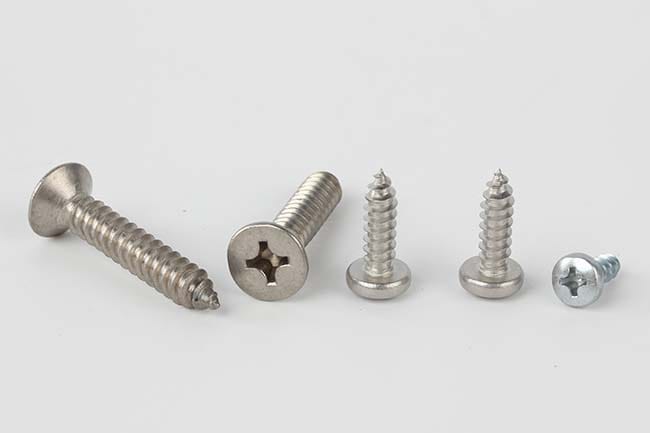
Flybear supplies standard, special, and custom fastening solutions for OEM and industrial applications. Buyers sourcing sheet metal screws can review the self-tapping screw range and provide the applicable standard or drawing, tapping screw size, sheet material, thickness, pilot-hole information, finish, quantity, and inspection requirements for technical review.
What Are Self Tapping Screws for Sheet Metal?
Self-tapping screws are designed to create a mating internal thread in a suitable prepared hole during installation. ISO 2702:2022 describes heat-treated steel tapping screws within its scope as fasteners designed to form mating threads in sheet metals without deformation of the screw thread itself.
ISO 1478:1999 remains the current ISO reference for tapping screw threads. Within the ISO system, common product standards then define particular combinations of head and drive geometry. For example, ISO 7049:2011 covers cross-recessed pan head tapping screws, while ISO 7050:2011 covers cross-recessed countersunk flat head tapping screws.
The standard number should therefore be selected according to the required product. A thread standard, dimensional product standard, mechanical-property standard, and coating specification control different characteristics and should not be treated as interchangeable documents.
Self-Tapping Is Not the Same as Self-Drilling
One of the first RFQ decisions is whether the application requires a self-tapping screw or a self-drilling screw. These terms are frequently mixed in general purchasing discussions, but they describe different fastening concepts.
A conventional self-tapping screw normally requires a pilot hole to be prepared in the sheet before assembly. The screw then creates the mating thread as it is driven into that hole. A self-drilling screw incorporates a drilling point intended to produce the hole and then form the fastening thread during installation in a suitable material and thickness range.
Buyers should not substitute one for the other without reviewing the sheet thickness, material, hole preparation, installation equipment, required thread engagement, and applicable product standard.
Start with the Sheet Metal Before Choosing the Screw
A reliable specification begins with the mating component. The same screw can behave differently in mild steel, stainless steel, aluminum, or coated sheet because each material has different hardness, ductility, surface condition, and resistance to deformation.
Before selecting a screw, define:
- Sheet material and grade where controlled.
- Nominal sheet thickness and thickness tolerance.
- Whether one sheet or multiple layers are being fastened.
- Hole production method, such as drilling, punching, or another process.
- Available engagement length.
- Edge distance and surrounding geometry.
- Surface coating or paint on the sheet.
- Expected clamp, shear, vibration, and service conditions.
Thin sheet provides limited thread engagement. In such applications, simply increasing screw strength does not automatically improve the joint because the mating sheet or formed internal thread may become the limiting component.
Pilot-Hole Size Is a Critical Specification
Pilot-hole diameter is one of the most important variables when using self tapping screws for sheet metal. The hole must leave sufficient material for the screw to create a usable mating thread without requiring excessive installation torque.
If the hole is too small, driving torque may increase substantially, the screw may suffer drive or torsional damage, and the sheet can deform. If the hole is too large, thread engagement can decrease and stripping resistance may be reduced.
There is no universal pilot-hole diameter that should be applied to every screw of the same nominal size. The correct value can depend on:
- Screw thread geometry.
- Nominal screw diameter.
- Sheet thickness.
- Sheet material and hardness.
- Hole manufacturing process.
- Coating condition.
- Required driving and stripping torque relationship.
For high-volume OEM assembly, pilot-hole dimensions should be validated using representative production sheet and actual installation equipment rather than relying only on a generic reference table.
How to Specify Tapping Screw Size and Thread
A complete tapping screw size callout should identify more than nominal diameter. Buyers should state the applicable standard or drawing, thread designation, screw length, and any required thread or point configuration.
ISO 1478 covers tapping screw thread sizes from ST2.2 through ST9.5. A product standard may cover the same or a narrower range. For example, current ISO 7049 and ISO 7050 product standards cover ST2.2 through ST9.5, while ISO 14585:2011 covers specified hexalobular socket pan head tapping screws from ST2.9 through ST6.3.
If an existing drawing uses a DIN, ISO, ASME, customer-specific, or other designation, buyers should retain the complete standard reference during quotation. Do not replace a legacy designation with a visually similar screw solely because nominal diameter and length appear to match.
Select the Head Style for the Assembly
Head geometry determines bearing area, installed profile, tool access, and how the screw interacts with the sheet.
Pan Head
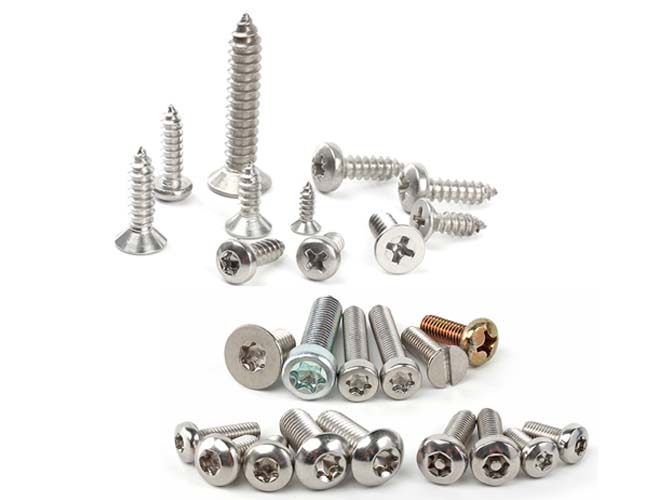
Pan head self-tapping screws are commonly used for sheet-metal panels, electrical cabinets, brackets, covers, and general equipment assemblies. Their bearing surface makes them practical where a projecting head is acceptable.
ISO 7049:2011 is a current product standard for cross-recessed pan head tapping screws within its specified scope.
Countersunk Head
Countersunk self-tapping screws are selected where a flush or nearly flush installed surface is required. The sheet or component must contain a matching countersink that supports the screw head correctly.
ISO 7050:2011 covers cross-recessed countersunk flat head tapping screws within its scope. Thin sheet requires additional attention because an unsuitable countersink can reduce available material or distort the component.
Hexalobular and Other Drive Combinations
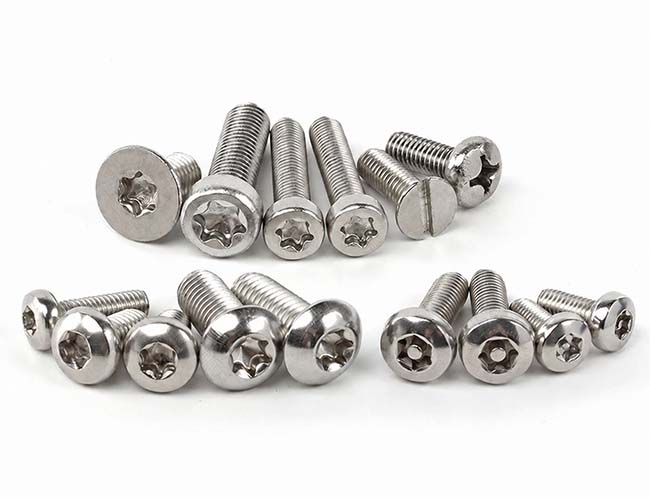
For controlled production, buyers may select hexalobular, cross-recessed, external hex, or other drive systems depending on product availability and assembly requirements. ISO 14585:2011, for example, covers a specified range of hexalobular socket pan head tapping screws.
The drive should be selected with the installation process in mind. Tool engagement, tightening speed, operator access, automated screwdriving, and service requirements can be as important as head appearance.
Steel Self-Tapping Screws and Heat Treatment
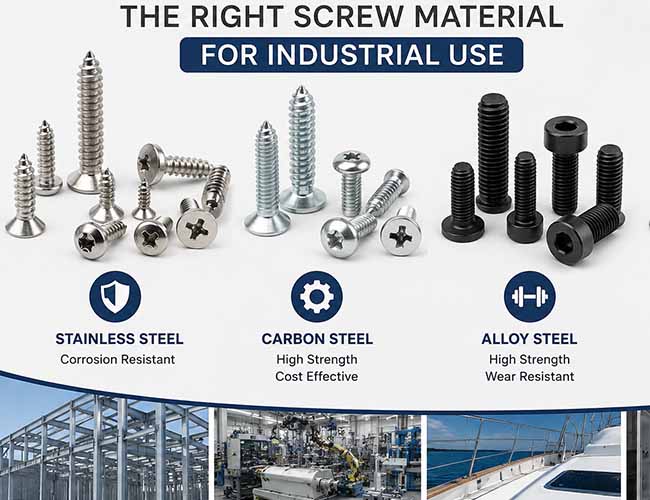
Heat-treated steel is widely used for tapping screws because the screw must create a mating thread in the sheet without unacceptable deformation or failure of its own thread. The required mechanical characteristics should be controlled by the applicable fastener specification rather than assumed from appearance.
ISO 2702:2022 specifies mechanical and physical properties and related test methods for heat-treated steel tapping screws from ST2.2 to ST9.5 with threads according to ISO 1478 within its scope.
The standard also distinguishes tapping screws from fasteners designed primarily for controlled pretensioning. Buyers should therefore avoid treating a sheet-metal tapping screw as a direct substitute for a structural bolt simply because both are made from hardened steel.
Where hardness, case characteristics, torsional performance, or other mechanical tests are required, identify the applicable standard and inspection scope in the RFQ.
Stainless Steel Self-Tapping Screws
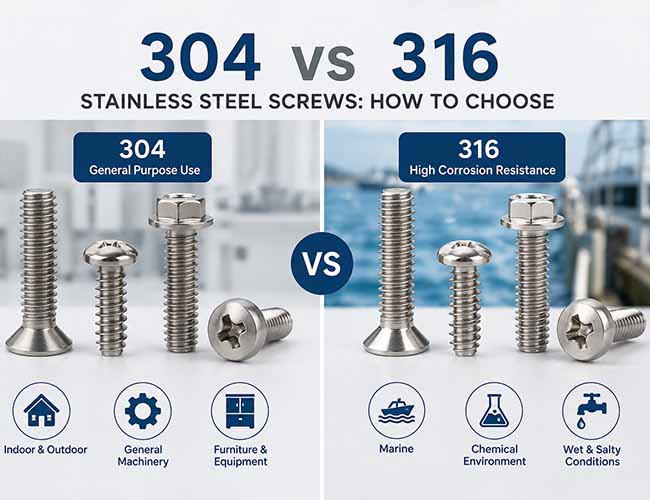
Stainless steel can be selected where corrosion resistance, appearance, or material compatibility is important. However, buyers should specify the required grade or hardness class rather than requesting only “stainless self-tapping screws.”
ISO 3506-4:2025 is the current ISO mechanical-property reference for corrosion-resistant stainless steel tapping screws with specified grades and hardness classes within its scope. It applies to specified tapping screws with ISO 1478 threads from ST2.2 to ST8.
Stainless steel does not provide universal corrosion resistance. Suitability depends on the alloy, chloride exposure, chemicals, temperature, crevices, contact with dissimilar metals, and other service conditions.
The relationship between screw hardness and sheet material also remains important. A corrosion-resistant material should not be selected without confirming that the screw can create the required mating thread in the actual sheet.
Choose the Coating for the Actual Environment
Steel sheet metal screws may use zinc-based plating, zinc-flake coatings, black finishes, or other specified surface treatments. The correct coating depends on corrosion exposure, appearance, friction, electrical requirements, assembly conditions, and customer specifications.
A purchase specification should avoid vague descriptions such as “silver zinc” or “rust-proof.” When corrosion protection is important, define the coating system or applicable standard together with coating thickness or class, test requirements, and acceptance criteria where required.
Coating can also affect assembly. Surface treatment influences friction and can change driving behavior. For hardened steel screws, the finishing process and any applicable hydrogen-embrittlement controls should also be considered as part of the technical specification.
Driving Torque, Stripping Torque and the Assembly Window
Successful sheet-metal fastening requires more than reaching a target installation torque. The screw must first create the mating thread, then seat the head and develop the intended clamping condition without stripping the formed internal thread or damaging the screw.
An OEM assembly trial may therefore examine:
- Thread-forming or tapping torque.
- Head seating behavior.
- Final installation torque.
- Stripping torque in the sheet.
- Screw torsional failure.
- Drive-recess damage.
- Sheet deformation.
- Final clamp and component alignment.
A useful production process needs sufficient margin between normal installation conditions and failure. If the installation setting is too close to stripping or torsional failure, normal manufacturing variation in sheet thickness, pilot holes, coatings, or screw dimensions can cause inconsistent results.
Inspection Requirements for Sheet Metal Screws
Supplier evaluation should include how the specified characteristics will be verified. A low unit price has limited value if screw dimensions, hardness, threads, drive geometry, or coating vary enough to interrupt the assembly line.
Depending on the order, relevant inspection can include:
- Diameter and overall length measurement.
- Head and drive dimensions.
- Thread and point geometry.
- Material and certificate review.
- Hardness or other specified mechanical tests.
- Torque-related testing where required.
- Coating-thickness inspection.
- Salt-spray testing when specified.
- Surface and visual inspection.
- Packaging, label, lot, and quantity verification.
Flybear’s quality control process supports dimensional and thread inspection, material verification, hardness and tensile testing where applicable, torque testing, coating inspection, salt-spray testing when required, and final packaging checks according to the agreed specification.
Supplier Evaluation for Self-Tapping Screw Projects
When comparing a self tapping screw manufacturer or industrial screw supplier, buyers should evaluate technical interpretation as well as price. The supplier should be able to identify missing information, distinguish standard requirements from custom requirements, and confirm how critical characteristics will be inspected.
Useful supplier-evaluation questions include:
- Can the supplier work from the required standard or controlled drawing?
- Can material and heat-treatment requirements be reviewed before quotation?
- Can critical thread, point, head, and drive dimensions be inspected?
- Can required coating and corrosion tests be supported?
- Can sample or first-article approval be arranged when required?
- Can inspection reports or material documents be supplied according to the RFQ?
- Can packaging and labeling be adapted to the OEM assembly process?
For special point geometry, non-standard dimensions, unusual head styles, custom materials, or project-controlled threads, buyers can also provide drawings or samples through Flybear’s custom fastener support.
Sample Approval Before Volume Production
For a new sheet-metal application, samples should preferably be evaluated in the actual or representative production component. Testing only the loose screw cannot confirm how the complete joint will behave.
A sample approval can evaluate screw fit, pilot-hole suitability, installation torque, head seating, stripping behavior, sheet deformation, drive performance, coating appearance, and compatibility with production tools.
If the application uses automated screwdrivers, samples should be tested with the intended feeder, bit, spindle, installation speed, and torque-control strategy. Once the design is approved, the drawing revision, reference sample, or agreed inspection criteria should be controlled for future orders.
Common Purchasing Mistakes with Metal Assembly Screws
- Ordering by diameter and length only. The thread, point, head, drive, material, and finish also affect assembly.
- Assuming every self-tapping screw is self-drilling. Conventional tapping screws commonly require a prepared pilot hole.
- Using one pilot-hole size for every sheet material. Hole requirements depend on material, thickness, screw geometry, and process.
- Ignoring sheet thickness tolerance. Thin-sheet variation can change effective thread engagement.
- Choosing a stronger screw without checking the sheet. The mating thread in the sheet may be the limiting part of the joint.
- Specifying coating by color only. Similar appearances can represent different coating processes and performance.
- Ignoring installation testing. Driving and stripping behavior should be evaluated for important production joints.
- Leaving certificates and inspection requirements until after ordering. Documentation should be included during quotation.
RFQ Checklist for Self Tapping Screws for Sheet Metal
A complete RFQ allows suppliers to quote the same technical requirement and reduces assumptions. Buyers should provide:
- Applicable standard or latest controlled drawing.
- Screw diameter, thread designation, and length.
- Point or tapping-screw configuration.
- Head style and drive type.
- Screw material and required mechanical properties.
- Heat-treatment requirement where applicable.
- Surface finish, coating, lubrication, or corrosion requirement.
- Sheet material and grade.
- Sheet thickness and tolerance where relevant.
- Pilot-hole diameter, tolerance, depth, and production method.
- Order quantity, prototype quantity, and expected repeat demand.
- Manual or automated installation process.
- Critical torque or functional requirements.
- Dimensional, mechanical, coating, and application inspection requirements.
- Material certificates, test reports, traceability, labeling, and packaging needs.
FAQ
Do self-tapping screws need pilot holes in sheet metal?
Conventional self-tapping screws generally use a prepared pilot hole. The required hole diameter depends on screw geometry, sheet material, sheet thickness, and the applicable specification. Self-drilling screws are a separate category designed to create the hole as part of installation in suitable applications.
How do I choose the correct tapping screw size?
Start with the applicable standard or drawing, then consider sheet thickness, required thread engagement, pilot-hole size, head and drive, installation torque, and available assembly space. Do not select tapping screw size from nominal diameter alone.
What is ISO 1478?
ISO 1478:1999 is the current international standard for tapping screw threads. It covers thread sizes from ST2.2 to ST9.5. Separate product and mechanical-property standards may also be required for the finished screw.
What material is commonly used for sheet metal screws?
Heat-treated steel is widely used for tapping screws, while stainless steel can be selected for suitable corrosion-sensitive applications. The correct material and mechanical properties depend on the sheet material, environment, screw design, and applicable standard.
Should I specify installation torque in the RFQ?
If torque is important to the production process, include the required assembly information. For a new application, driving and stripping tests using representative sheet-metal components can help establish a suitable installation window.
What should I send to get a quotation for self-tapping screws?
Send the standard or drawing, screw size and thread, head and drive, material, finish or coating, quantity, sheet material and thickness, pilot-hole information, application, and required inspection or certificate documents.
Conclusion
Sourcing self tapping screws for sheet metal requires a complete view of the fastener and the mating component. Screw diameter and length are only the starting point. Thread geometry, pilot-hole size, sheet material and thickness, head and drive, material and heat treatment, coating, installation torque, inspection, and production conditions all influence assembly performance.
For OEM procurement, the most effective RFQ removes assumptions before quotation. A supplier should know what standard or drawing applies, what sheet the screw will enter, how the hole is produced, how the screw is installed, and which dimensional, mechanical, coating, and documentation requirements determine acceptance.
For standard or project-specific self-tapping screws, Flybear can support technical requirement review and quotation. Send your standard or drawing, screw size and thread, material or mechanical-property requirement, finish or coating, quantity, sheet-metal application, pilot-hole information, and inspection or certificate requirements through the Flybear contact page.