Security Screws: Torx Pin, Spanner and Other Tamper-Resistant Drives
Security screw types use drive geometries designed to make unauthorized or casual removal more difficult than with conventional slotted, Phillips, hex, or standard hexalobular screws. Common options include pin-in-hexalobular drives often called Torx Pin, spanner or two-hole drives, pin hex designs, one-way screws, and other specialized tamper-resistant recesses.
For OEM buyers, selecting tamper resistant screws is not simply a matter of choosing the most unusual-looking drive. Tool availability, assembly torque, service access, head style, screw material, coating, thread, installation environment, and the required level of access control all affect the decision. A security screw can discourage removal with ordinary tools, but no mechanical drive should be described as universally tamper-proof.
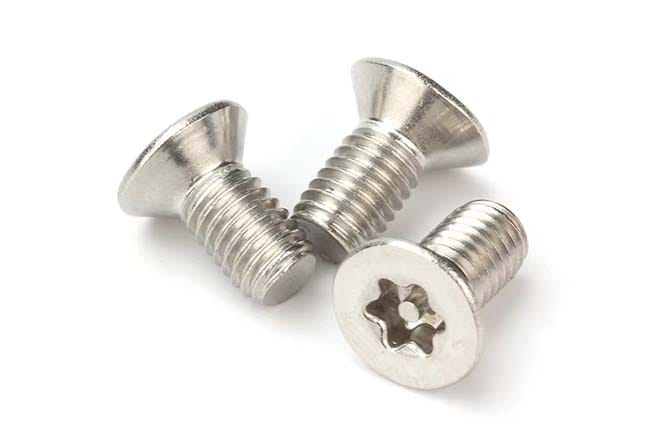
Flybear supplies standard, special, and custom industrial fastening solutions for machinery, electronics, electrical cabinets, sheet-metal products, automotive equipment, and other OEM applications. Buyers evaluating restricted-access fastening can review the security screw category and provide the required drive, head, thread, material, finish, quantity, and application for technical review.
What Are Security Screw Types?
A security screw normally combines a conventional threaded fastening function with a drive that requires a less common or specially shaped installation tool. The purpose is generally to increase resistance to casual removal, discourage unauthorized access, or make equipment more difficult to disassemble with ordinary workshop tools.
The security feature usually concerns the drive rather than the thread itself. A security screw may therefore use a standard metric or inch machine thread, self-tapping thread, or another application-specific thread while using a tamper-resistant recess in the head.
Security screws can be useful for:
- Electrical cabinets and control equipment.
- Electronic housings and communication equipment.
- Public-access machinery and fixtures.
- Automotive and transportation assemblies.
- Guards, covers, panels, and access doors.
- Retail displays and public equipment.
- Industrial devices where access should be limited to authorized service personnel.
Security Screw Types Compared
| Drive Type | Basic Geometry | Typical Advantage | Key Consideration |
|---|---|---|---|
| Pin-in-Hexalobular / Torx Pin | Six-lobe recess with a center pin | Good tool engagement combined with restricted tool access | Requires a matching bit with a center hole |
| Spanner / Two-Hole | Two separated holes or recesses | Simple visible security feature and uncommon conventional tool interface | Tool engagement area can be smaller than deeper multi-lobe drives |
| Pin Hex | Internal hex recess with a center pin | Familiar hex-type geometry with added tool restriction | Requires a hollow-center hex security bit |
| One-Way | Slotted head shaped for installation in one direction | Designed to make normal reverse removal difficult | Maintenance removal may require destructive or specialized methods |
| Three-Point or Multi-Lobe Security Drive | Specialized three-point or proprietary recess geometry | Reduces compatibility with common installation tools | Tool supply and long-term service availability should be controlled |
| Custom Security Drive | Customer-specific or specialized recess | Can provide a higher level of tool restriction | Tool sourcing, inspection, cost, and service management become more important |
Pin Torx Screw and Pin-in-Hexalobular Drives
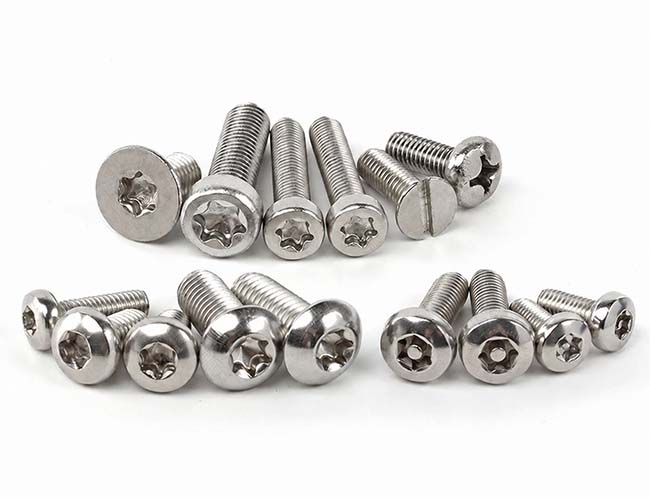
A pin torx screw, commonly described more technically as a pin-in-hexalobular security screw, adds a central pin to the familiar six-lobe internal drive. A standard solid driver cannot enter the recess because the center pin blocks it. Installation and removal require a matching security bit with a hole through its center.
The multi-lobe geometry can provide useful tool engagement for controlled assembly while the center pin creates the tamper-resistant feature. This combination makes the design common in electrical equipment, electronics, covers, public-access products, machinery guards, and other applications where servicing should use designated tools.
ISO 10664:2014 is the current ISO standard defining the shape, basic dimensions, and gauging method for the standard hexalobular internal driving feature used on bolts and screws. However, buyers should not assume that this standard alone defines every center-pin security version. The additional pin geometry, head style, material, thread, and finished screw requirements may need to be defined by the applicable product specification, supplier specification, or customer drawing.
When to Consider a Pin-in-Hexalobular Drive
This drive is useful when the assembly still needs practical maintenance access but should not be removable with a common Phillips screwdriver, ordinary hex key, or standard solid hexalobular bit. It can therefore provide a reasonable balance between serviceability and access restriction.
For automated or torque-controlled production, buyers should verify driver engagement, recess depth, center-pin integrity, installation torque, and bit compatibility using representative production parts.
Spanner Screws: Two-Hole Tamper Resistance
A spanner screw typically uses two holes or recesses in the screw head. It is also commonly called a two-hole or snake-eye security screw in the market. Installation requires a matching driver with two pins positioned to engage the holes.
The geometry is visually distinctive and is less compatible with common household or workshop tools than standard slotted or cross-recess screws. Spanner screws can therefore be considered for covers, access panels, public fixtures, electrical equipment, and applications where moderate tamper resistance is sufficient.
However, drive geometry affects torque capability. The designer should consider the diameter and depth of the holes, head dimensions, required tightening torque, driver material, and installation alignment. A drive with relatively small engagement features may be more sensitive to poor tool positioning than a deeper multi-lobe recess.
Pin Hex Security Screws
Pin hex designs place a center post inside an internal hexagonal recess. Like the pin-in-hexalobular design, the center pin prevents engagement with an ordinary solid hex key. A matching security hex bit contains a central hole that fits around the pin.
This design can be useful when an OEM already uses internal-hex fasteners and wants a visually related security option. However, the security version should not be treated as dimensionally identical to every conventional socket screw. The center-pin feature, available recess depth, head dimensions, and installation torque should be checked.
One-Way Security Screws
A one-way screw uses a drive geometry intended to accept tightening torque more readily than reverse removal torque. The head is typically shaped so a conventional driver can turn it during installation but tends to cam out when reverse torque is applied.
This type can provide a higher barrier to routine removal because it does not simply rely on possessing a special reversible driver. The tradeoff is serviceability. If equipment will require regular maintenance, replacement, calibration, or internal inspection, a one-way screw can create unnecessary service difficulty.
Before specifying one-way screws, the OEM should establish how authorized technicians will remove the fastener if repair becomes necessary.
Other Tamper-Resistant Screw Drives
Industrial buyers may also encounter three-point recesses, multi-pin patterns, specialized lobes, proprietary drives, external security heads, breakaway-head designs, and other restricted-access fasteners. These can offer different levels of removal difficulty, but uncommon geometry also creates sourcing considerations.
For specialized security fasteners, confirm:
- Availability of installation bits or drivers.
- Replacement-tool availability for service teams.
- Required installation torque.
- Suitability for automated assembly.
- Drive inspection method.
- Risk of tool or recess damage.
- Long-term availability of replacement fasteners.
- Whether destructive removal is acceptable.
Tamper-Resistant Does Not Mean Tamper-Proof
Security terminology should be used carefully. A special drive mainly controls which tools can conveniently engage the fastener. If an attacker has enough time, equipment, access, or willingness to damage the assembly, many mechanical fasteners can eventually be removed.
For this reason, “tamper resistant” is usually a more technically useful description than “tamper proof.” The correct level of resistance depends on the threat and application.
An indoor electrical enclosure that needs to discourage casual access may have different requirements from outdoor public infrastructure or equipment containing high-value components. In more demanding applications, security screws may need to work together with enclosure design, restricted access, locks, seals, monitoring, or other security measures.
Choose the Head Style Along with the Security Drive
The security recess is only one feature of the screw. Head geometry determines bearing area, external profile, clearance, and how easily tools can access the drive.
Common combinations can include:
- Pan head security screws for covers and general equipment panels.
- Button head security screws where a lower rounded profile is preferred.
- Countersunk security screws where a flush surface is required.
- Socket or cylindrical head designs for machinery applications.
- Special low-profile or custom heads for restricted assembly spaces.
A countersunk head may also make gripping the outside of the screw head more difficult after installation, but the mating component must have the correct countersink. Conversely, a projecting head may be easier to service but may allow alternative gripping methods depending on its geometry and accessibility.
Thread Selection for Security Fasteners
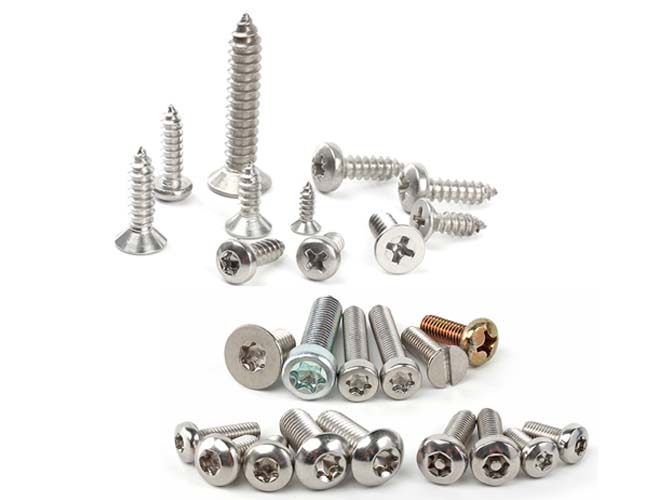
Security screws can use machine threads, self-tapping threads, thread-forming designs, or other thread types depending on the mating component. Drive security should not distract from correct joint design.
For a tapped hole or nut, specify the complete metric or inch thread requirement. For sheet metal or plastic, define the mating material, thickness or boss geometry, pilot hole, and required direct-fastening method.
If the security screw replaces an existing standard fastener, verify the thread, length, engagement, head seating, and clearance before approving the substitution. Matching the nominal diameter alone is not sufficient.
Material Selection for Security Screws
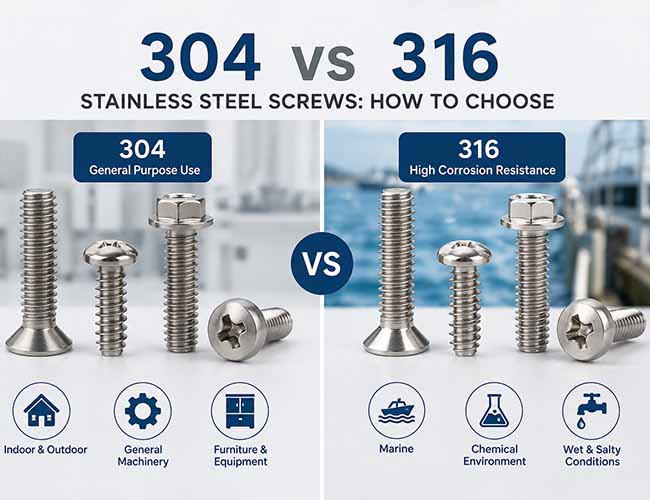
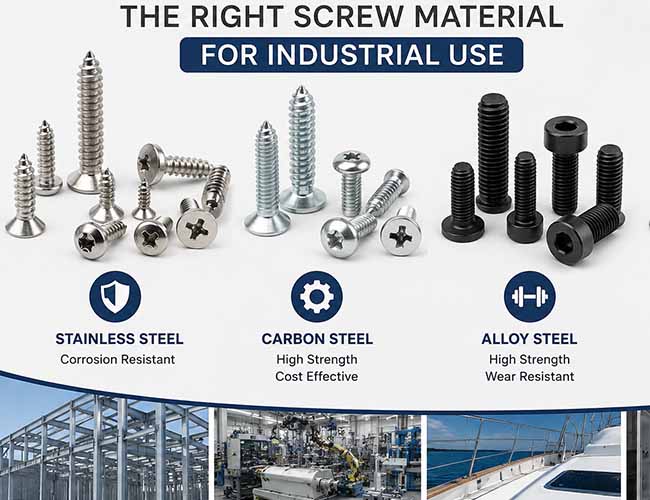
Security fasteners can be supplied in different materials according to mechanical and environmental requirements. Carbon or alloy steel may be selected where particular strength and hardness requirements apply, while stainless steel can be considered for corrosion-sensitive applications.
The required grade or mechanical-property class should be stated rather than inferred from the security drive. A pin-in-hexalobular recess does not define screw strength, and a stainless security screw does not automatically provide the same mechanical performance as a heat-treated alloy-steel screw.
Material selection should consider:
- Required mechanical properties.
- Indoor or outdoor exposure.
- Humidity, salt, or chemical environment.
- Mating material and galvanic compatibility.
- Operating temperature.
- Head and drive geometry.
- Customer or industry specifications.
Coatings and Surface Finishes
Steel security screws may use zinc-based plating, zinc-flake coatings, black finishes, nickel-based treatments, or other specified coating systems. Stainless screws may require a defined surface condition or passivation requirement depending on the project.
Coating affects more than appearance. Thickness can influence thread fit and small drive features, while friction can influence the relationship between tightening torque and clamp load. For center-pin drives, excessive coating buildup or poorly controlled recess geometry can also affect driver engagement.
Where corrosion testing is required, buyers should specify the coating standard or system, test method, duration, and acceptance criteria rather than requesting an undefined “rust-proof” security screw.
How to Select Security Screw Types by Application
| Application Requirement | Security Drive to Evaluate | Reason |
|---|---|---|
| Restricted but serviceable equipment access | Pin-in-Hexalobular | Requires a dedicated bit while retaining practical removal capability |
| Simple public-access panel | Spanner | Uncommon two-pin tool interface discourages ordinary screwdriver use |
| Existing internal-hex design platform | Pin Hex | Provides a security variation of familiar internal-hex geometry |
| Removal should be intentionally difficult | One-Way | Designed to resist normal reverse driving |
| Higher tool restriction required | Special or Custom Drive | Less common geometry can limit convenient tool access |
| Frequent authorized maintenance | Reversible Security Drive | A designated tool allows controlled repeated removal |
Quality Control for Security Fasteners
Security screws require the same basic dimensional, thread, material, and surface controls as other industrial screws, plus attention to the tamper-resistant drive geometry. A recess that is too shallow, an incorrectly positioned center pin, or an oversized or undersized spanner hole can make the correct installation tool difficult to use.
Depending on the order, inspection can include overall dimensions, head geometry, thread Go/No-Go gauging, recess dimensions, pin position, optical inspection, material verification, hardness or tensile testing where applicable, torque testing, coating-thickness inspection, and appearance checks.
Flybear’s quality control process supports dimensional and thread inspection, optical inspection, material verification, hardness and tensile testing, torque testing, coating-thickness inspection, salt-spray testing when required, and final packaging review according to agreed order requirements.
Common Security Screw Purchasing Mistakes
- Using “security screw” as the full specification. State the exact security drive, head, thread, length, material, and finish.
- Calling every security screw tamper-proof. Special drives generally increase removal difficulty but do not guarantee that removal is impossible.
- Ordering screws without matching tools. Installation and maintenance teams need compatible bits or drivers.
- Ignoring installation torque. Small pins, holes, or recess features can be damaged by incorrect tools or excessive torque.
- Selecting an irreversible design for serviceable equipment. One-way screws may complicate maintenance.
- Assuming the drive defines strength. Material and mechanical-property requirements must be specified separately.
- Ignoring coating buildup in the recess. Surface treatment can affect security-tool engagement and thread fit.
- Choosing only by drive rarity. Tool control, assembly speed, service strategy, and long-term sourcing also matter.
When Custom Security Screws Are Needed
Standard security drives do not fit every OEM requirement. A project may require a special center pin, proprietary recess, unusual head profile, captive washer, special thread length, thread-locking feature, non-standard material, unique marking, or customer-controlled drive geometry.
For these requirements, buyers can submit drawings, samples, or technical specifications for custom fastener review. The drawing should define the security recess and head geometry together with thread, dimensions, tolerances, material, mechanical requirements, coating, and inspection criteria.
If specialized installation tooling is part of the design, include tool-interface dimensions or approved driver information during technical review. This reduces the risk of receiving screws that meet general dimensions but do not function reliably with the intended assembly equipment.
RFQ Checklist for Security Screws
To obtain a technically comparable quotation from an industrial screw supplier, provide:
- Applicable standard or controlled drawing.
- Security drive type, such as pin-in-hexalobular, spanner, pin hex, one-way, or custom.
- Head style and drive size.
- Metric or inch thread designation.
- Overall length and required thread length.
- Material and grade or property class.
- Heat treatment where applicable.
- Surface finish, coating, lubrication, or corrosion requirement.
- Order quantity and expected repeat demand.
- Application and required level of access restriction.
- Installation and removal tool requirements.
- Critical dimensions and tolerances.
- Inspection, testing, certificates, traceability, marking, and packaging requirements.
FAQ
What are the most common security screw types?
Common security screw types include pin-in-hexalobular or Torx Pin, spanner or two-hole, pin hex, one-way, three-point, and other specialized or proprietary security drives. The best option depends on required tamper resistance, installation torque, and service access.
What is a pin torx screw?
A pin torx screw commonly refers to a six-lobe security recess with a center pin. The pin prevents an ordinary solid driver from fully engaging the recess, so a matching security bit with a center hole is required.
What is a spanner screw?
A spanner screw uses two holes or recesses that are engaged by a two-pin driver. It is also commonly described as a two-hole or snake-eye security screw.
Are security screws impossible to remove?
No. Security screws are better described as tamper resistant. Their purpose is to increase the difficulty of unauthorized removal or require less common tools, not to guarantee that removal is impossible under every condition.
Can security screws be made in stainless steel?
Yes, suitable security screw designs can use stainless steel or other materials when required. Buyers should specify the exact material grade or mechanical requirement and verify suitability for the operating environment.
What should I include in a security screw RFQ?
Provide the security drive, head style, thread, length, material or property requirement, coating, quantity, application, installation tool requirement, critical tolerances, and required inspection or certificate documents.
Conclusion
Selecting among security screw types requires balancing access restriction with reliable installation and future service. Pin-in-hexalobular drives provide a practical reusable security interface, spanner screws use an uncommon two-hole drive, pin hex adds a center barrier to an internal hex recess, and one-way screws are useful when routine removal is intentionally discouraged.
The security drive should always be specified together with the screw head, thread, length, material, mechanical properties, coating, installation torque, application environment, and inspection requirements. For specialized designs, tool compatibility and long-term maintenance strategy are just as important as the appearance of the security recess.
For standard or project-specific security fasteners, Flybear can support technical requirement review and quotation. Send your standard or drawing, security drive, size and thread, material or property class, finish or coating, quantity, application, and inspection or certificate requirements through the Flybear contact page.