Machine Screws for Tapped Holes: Thread, Head and Material Selection
Machine screws for tapped holes must match more than the nominal thread diameter. Engineers and industrial buyers should consider thread pitch and fit, available engagement, hole depth, head geometry, material, mechanical requirements, coating, installation method, and the material of the tapped component before approving a screw for production.
Unlike self-tapping or thread-forming screws, machine screws are normally selected to engage with an existing internal thread, such as a tapped hole or threaded nut. This makes the quality and compatibility of both external and internal threads especially important. A screw may have the correct nominal diameter but still create assembly problems if the pitch, tolerance, length, coating, or head configuration does not match the joint.
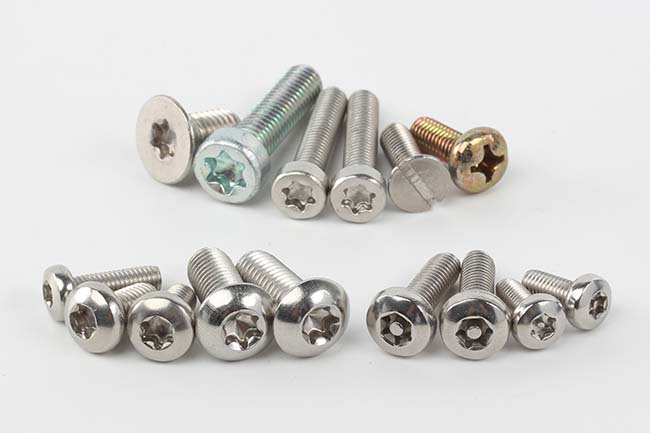
Flybear supplies standard, special, and custom fastening solutions for OEM and industrial projects. Buyers sourcing screws for pre-tapped assemblies can review the machine screw range and provide the required thread, head style, material, finish, quantity, and application information for technical review.
What Are Machine Screws for Tapped Holes?
A tapped hole contains an internal thread created before the machine screw is installed. The hole may be machined directly into steel, stainless steel, aluminum, cast material, or another suitable component, or it may be provided through a threaded insert. The machine screw uses a matching external thread to clamp the assembled components.
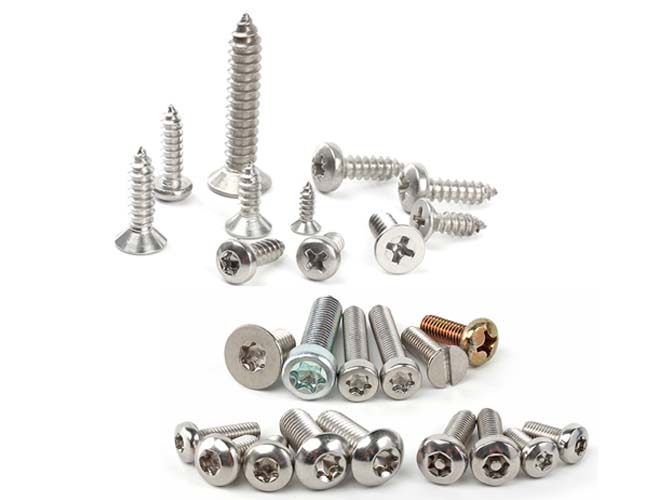
This differs from fastening methods in which the screw forms or cuts its mating thread during installation. Thread-forming and self-tapping screws can be useful in suitable sheet metal, plastics, or other applications, but they involve different hole preparation and joint-design considerations.
For a tapped-hole assembly, the engineer already has two threaded components to control: the screw and the internal thread. Compatibility between them should therefore be specified rather than assumed.
How to Select Machine Screws for Tapped Holes
A practical selection process begins with the mating hole rather than the screw catalog. Identify the internal thread, available hole depth, component material, required clamped thickness, installation access, and joint loading. Then select the screw geometry and material that fit those conditions.
| Selection Factor | What to Confirm | Why It Matters |
|---|---|---|
| Thread | Diameter, pitch or TPI, thread system, and tolerance or class | Determines whether the screw correctly engages the tapped hole |
| Length | Overall length, clamped thickness, usable engagement, and hole depth | Prevents bottoming and insufficient engagement |
| Head Style | Head profile, bearing surface, drive, and installation clearance | Affects tool access, seating, appearance, and surrounding geometry |
| Material | Steel, stainless steel, brass, or project-specific material | Affects mechanical properties, corrosion behavior, compatibility, and cost |
| Finish | Coating system, thickness, lubrication, and appearance requirements | Can affect corrosion protection, friction, and thread fit |
| Inspection | Thread gauges, dimensions, mechanical tests, coating checks, and documents | Establishes how purchased screws will be accepted |
Start with the Machine Screw Thread
The machine screw thread is the primary interface with the tapped component. A complete specification should identify the thread system, nominal diameter, pitch or threads per inch, and required fit or tolerance where controlled.
Metric Machine Screws
Metric machine screws commonly use ISO metric threads. The designation should clearly identify the nominal thread diameter and, where necessary, the pitch. Coarse pitch is frequently used for general industrial applications, while fine pitch may be selected when required by the mating component, available wall thickness, adjustment needs, or an existing equipment specification.
A metric designation should not be converted casually to a similar inch size. Even when diameters appear close, the thread form and pitch can be different and the parts may not assemble correctly.
Unified Inch Threads
Equipment designed for North American markets may use Unified inch threads such as UNC or UNF. The RFQ should identify the complete thread designation and required class rather than stating only an approximate outside diameter.
For replacement projects, verify the existing internal thread before ordering. Forcing a similar but incompatible screw into a tapped hole can damage both the screw and the more expensive mating component.
Thread Fit and Tolerance
The external screw thread and internal tapped thread must provide an appropriate fit after all manufacturing and finishing operations. The required tolerance system depends on the applicable thread standard and application.
Coating deserves particular attention because plating or other deposited finishes can change the effective dimensions of an external thread. Where thread fit is critical, buyers should define whether acceptance applies to the finished coated screw and identify the required inspection method.
Check Screw Length, Engagement and Hole Depth
Correct thread size does not guarantee correct screw length. The designer must consider the thickness of any clearance-hole components, washers where used, the position of the tapped surface, available internal thread depth, and the possibility of the screw reaching the bottom of a blind hole.
A screw that is too short may not provide adequate engagement for the designed joint. A screw that is too long can bottom out before the head clamps the assembly, interfere with an internal component, or project beyond the intended surface.
There is no universal thread-engagement rule that applies to every material and load case. Required engagement depends on factors such as screw material and strength, tapped-component material, thread size and pitch, loading, joint geometry, temperature, and whether repeated assembly is expected. Engineering calculations or application-specific requirements should control critical joints.
Blind Tapped Holes Need Extra Attention
Blind holes do not continue through the component, so usable thread depth may be less than the drilled-hole depth. Tap lead, incomplete threads, chips, debris, coating, and bottom clearance can all reduce the effective space available to the screw.
For assemblies with tight depth limits, specify maximum screw length and confirm usable full-thread engagement rather than relying only on nominal hole depth.
Machine Screw Head Types and Their Applications
Machine screw head types affect installation access, bearing area, overall profile, drive engagement, and the surrounding component geometry. The correct choice should be based on the assembly rather than appearance alone.
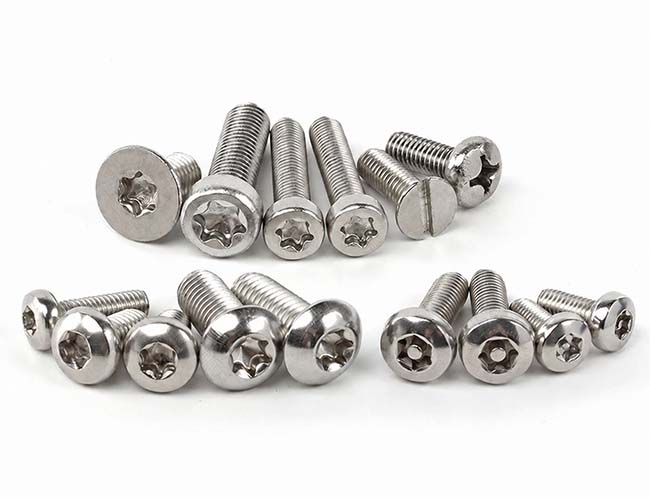
Pan Head
Pan head machine screws provide a relatively broad bearing surface and a moderate projecting profile. They are frequently considered for electrical equipment, enclosures, covers, brackets, and general industrial assemblies where a flush surface is not required.
Socket and Cylindrical Head Styles
Internal-hex socket styles can be useful where external wrench clearance is limited and access is available from above the screw. They are widely used in machinery, automation equipment, fixtures, and other engineered assemblies.
Button Head
A button head offers a lower rounded profile and can be useful for guards, panels, covers, and equipment surfaces. However, low-head geometry can affect the loadability available through the head, depending on the applicable screw standard and design. Buyers should not assume identical performance simply because two screws have the same nominal thread and material specification.
Countersunk Head
Countersunk machine screws are selected where the head must sit flush or nearly flush with the surrounding surface. The mating component requires a correctly designed countersink, and the bearing geometry differs from that of a screw seating against a flat surface.
Thin sections, softer materials, countersink alignment, and head loadability all require consideration. A countersunk screw should therefore be specified together with the mating-hole geometry.
Select the Drive for Installation and Service
The drive system determines how torque is transferred from the installation tool to the screw. Common machine screw drives include internal hex, cross recess, six-lobe designs, slots, and project-specific security drives.
For OEM production, consider more than whether a technician can tighten one sample. Review tool access, automated installation equipment, bit life, risk of drive damage, assembly cycle requirements, serviceability, and whether end users should be able to remove the screw.
If access is restricted by a wall, cable, enclosure, or adjacent component, confirm the installation tool envelope during the design stage.
Material Selection for Industrial Machine Screws
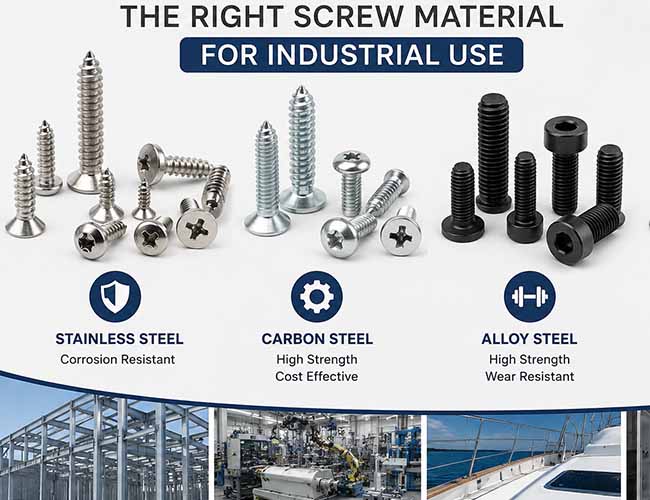
Material should be selected according to mechanical requirements, corrosion exposure, electrical considerations, mating-component compatibility, operating environment, and project specifications.
Carbon and Alloy Steel
Steel machine screws are widely used for industrial equipment and can be specified with different mechanical properties and surface finishes. Where strength is important, the drawing or RFQ should identify the applicable mechanical-property requirement instead of relying on the generic word “steel.”
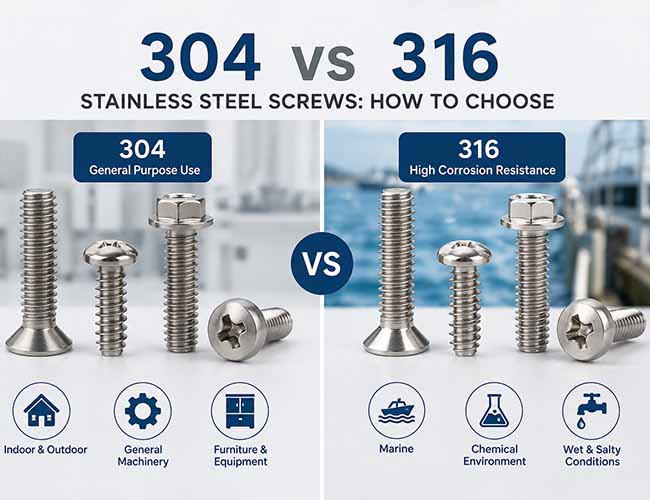
Stainless Steel
Stainless steel machine screws can be considered where corrosion resistance or material compatibility is important. The exact stainless grade and required mechanical properties should be identified when controlled by the project.
Stainless steel performance remains environment-dependent. Exposure to chlorides, chemicals, elevated temperatures, crevices, or dissimilar materials can affect suitability, so “stainless” should not be interpreted as universally corrosion-proof.
Brass and Other Materials
Brass or other non-ferrous materials may be specified for certain electrical, decorative, corrosion-related, or specialized assembly requirements. Their mechanical behavior differs from common steel fasteners, so substitution should be reviewed against the actual joint requirement.
Consider the Material of the Tapped Component
The screw cannot be selected independently from the female thread. A tapped steel component, aluminum housing, cast component, or threaded insert may require different engagement, tightening, wear, and service considerations.
Softer mating materials can be vulnerable to internal-thread stripping if the joint is over-tightened or engagement is insufficient. Repeated maintenance can also wear internal threads over time. In applications requiring frequent removal, engineers may evaluate suitable inserts or other thread-reinforcement solutions where appropriate.
Dissimilar metal combinations should also be reviewed when corrosion exposure is present. Material compatibility depends on the actual metals, environment, surface treatments, and assembly design.
Coatings and Finishes for Machine Screws
Machine screws may be supplied with zinc-based coatings, black finishes, nickel-based finishes, other engineered coating systems, or material-specific surface conditions. The correct finish depends on corrosion exposure, appearance, friction, electrical requirements, and dimensional considerations.
A controlled specification should identify more than color. If important to the project, provide the coating process or standard, thickness or class, lubrication requirement, corrosion test requirement, and any restrictions on substances or finishing processes.
For small machine screws and close thread fits, coating buildup can be significant relative to the available tolerance. Inspection should therefore consider the final surface-treated condition.
Quality Control for Machine Screws and Tapped-Hole Assemblies
Incoming inspection should focus on characteristics that affect assembly and product performance. Depending on the order, this can include overall length, head dimensions, drive geometry, thread dimensions, Go/No-Go thread gauging, material verification, hardness or tensile testing when required, coating thickness, surface appearance, and packaging identification.
Flybear’s quality control support can include dimensional and thread inspection, material and certificate review, hardness and tensile testing, coating inspection, salt-spray testing when required, and final packaging review according to agreed project requirements.
For high-volume OEM assembly, buyers may also define sampling plans, first-article requirements, lot traceability, dimensional reports, or project-specific documentation before production.
Common Purchasing Mistakes with Machine Screws for Tapped Holes
- Ordering by diameter only. Thread pitch, fit, and thread system must also match the tapped hole.
- Ignoring blind-hole depth. A screw can bottom out before providing proper clamp load.
- Assuming one engagement rule works for every material. Internal-thread strength depends on the complete joint design.
- Selecting the head only by appearance. Clearance, bearing geometry, drive access, and loadability also matter.
- Specifying “stainless” without a grade. Different stainless materials can have different mechanical and corrosion characteristics.
- Specifying a finish only by color. Similar-looking finishes can differ in coating thickness, corrosion performance, friction, and process.
- Forgetting the coating’s effect on thread fit. Final thread acceptance may need to be checked after surface treatment.
- Substituting self-tapping screws for machine screws without redesign. A screw intended to create its own thread is not automatically an equivalent replacement for a screw designed for an existing tapped hole.
When a Standard Machine Screw Does Not Fit the Application
An OEM may need a special screw because of unusual thread length, restricted head clearance, reduced shank, shoulder, captive feature, special drive, non-standard material, or controlled dimensional tolerance. In these cases, changing the surrounding assembly simply to accept a catalog screw may not always be practical.
Buyers can provide a controlled drawing for custom fastener requirements. The drawing should define the thread, head geometry, critical dimensions, material, mechanical properties, coating, and inspection criteria needed for the finished part.
RFQ Checklist for Industrial Machine Screws
An industrial screw supplier can prepare a more accurate quotation when the specification clearly defines both the screw and its application. Include:
- Applicable standard or drawing number and revision.
- Metric or inch thread designation.
- Thread diameter, pitch or TPI, and required fit or tolerance where applicable.
- Overall screw length and required thread length.
- Head style and drive type.
- Material and grade or property requirement.
- Heat treatment where applicable.
- Surface finish, coating, lubrication, or corrosion requirement.
- Order quantity and expected repeat volume where relevant.
- Application and tapped-component material.
- Critical tolerances or assembly restrictions.
- Inspection reports, material certificates, traceability, or other documentation requirements.
FAQ
Can machine screws be used directly in tapped holes?
Yes, when the external screw thread matches the internal tapped thread and the joint provides suitable engagement, seating, material strength, and installation conditions. The complete thread designation should be confirmed before ordering.
How do I choose the correct machine screw thread?
Start with the internal thread specification. Confirm metric or inch system, nominal diameter, pitch or TPI, tolerance or class where controlled, and usable thread depth. Do not select a screw only by measuring an approximate outside diameter.
How much thread engagement is required in a tapped hole?
There is no single engagement length appropriate for every assembly. Required engagement depends on screw and tapped-component materials, thread geometry, loads, hole condition, tightening requirements, and application-specific design criteria.
Which machine screw head is best for electrical enclosures?
The choice depends on the enclosure. Pan and low-profile heads may work well for covers and panels, socket styles can help where tool access is restricted, and countersunk screws may be appropriate when a flush surface is required. Clearance, load, material thickness, and installation method should be checked before selection.
What should I include in an RFQ for machine screws?
Provide the standard or drawing, complete thread designation, length, head and drive style, material or property requirement, coating, quantity, application, critical tolerances, and inspection or certificate requirements.
Conclusion
Selecting machine screws for tapped holes requires coordination between the screw, internal thread, joint geometry, installation process, and operating environment. Thread diameter alone is not enough. Pitch and fit, usable engagement, head style, material, surface finish, tapped-component material, and inspection criteria all contribute to a reliable purchasing specification.
For standard or project-specific industrial machine screws, Flybear can support technical requirement review and quotation. Provide your standard or drawing, thread specification, head style, material or property requirement, finish or coating, quantity, application, and inspection requirements through the Flybear contact page.