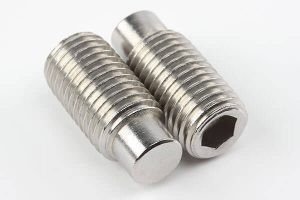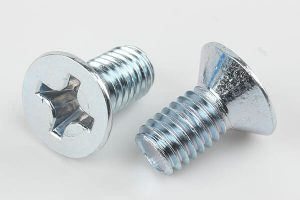
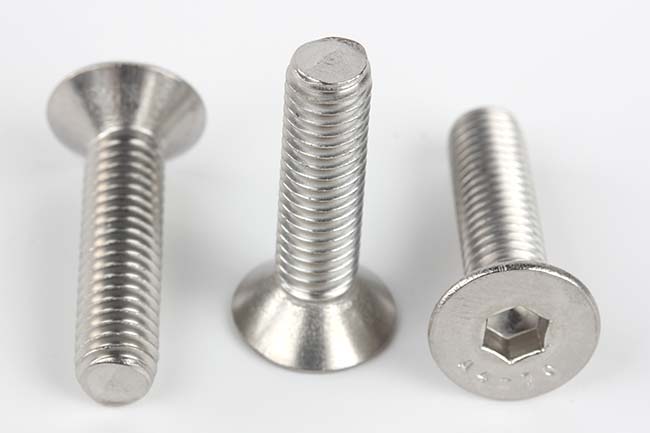
The DIN 7991 countersunk screw is a metric machine fastener with a 90-degree countersunk head and internal hex drive, designed to sit flush with a correctly machined or formed countersink. DIN 7991:1986-01 is withdrawn, but the designation remains widely used in international purchasing and legacy drawings. Its current successor is DIN EN ISO 10642:2026-06 / ISO 10642:2026, which covers steel and stainless steel hexagon socket countersunk head screws with reduced loadability from M2 to M20, product grade A. Typical applications include machinery, automation, enclosures, fixtures, and equipment requiring a smooth, low-profile fastening surface.
Product Overview and Key Features
The countersunk head combines flush installation with an internal hex drive. Because material is removed from the head to form the socket and countersunk profile, its loadability is lower than that of a full-height socket head cap screw.
- Flush installation: the head can sit level with the surrounding surface when the mating countersink is correctly formed.
- Internal hex drive: provides compact tool access and positive torque transfer.
- Metric machine thread: legacy DIN 7991 covers M3 through M24, while current ISO 10642 covers M2 through M20.
- Multiple material options: alloy steel and A2/A4 stainless steel are common market configurations.
DIN 7991 Countersunk Screw Specifications
Specification Overview
| Item | Specification / Common Configuration |
|---|---|
| Legacy standard | DIN 7991:1986-01, withdrawn |
| Current successor | DIN EN ISO 10642:2026-06 / ISO 10642:2026 |
| Product form | Hexagon socket countersunk head screw |
| Head angle | 90° for the common M3-M20 legacy DIN range and current ISO range |
| Legacy DIN range | M3 to M24; M22 and M24 use special legacy 60° head geometry |
| Current ISO range | M2 to M20, metric coarse pitch |
| Product grade | A under current ISO 10642 |
| Common steel grades | 8.8, 10.9, 12.9 depending on specification |
| Common stainless grades | A2 and A4; A2-70 and A4-70 are common market configurations |
Legacy DIN 7991 Dimensions and Thread Details
The table retains selected legacy DIN 7991 dimensions because the product title specifically calls for DIN 7991. P is coarse thread pitch, dk is nominal head diameter, k is head height, s is nominal hex socket size, and b is reference thread length for shorter partially threaded screws. Dimensions are millimetres.
| Thread | P (mm) | dk (mm) | k (mm) | s (mm) | b Ref. (mm) |
|---|---|---|---|---|---|
| M3 | 0.50 | 6 | 1.7 | 2 | 12 |
| M4 | 0.70 | 8 | 2.3 | 2.5 | 14 |
| M5 | 0.80 | 10 | 2.8 | 3 | 16 |
| M6 | 1.00 | 12 | 3.3 | 4 | 18 |
| M8 | 1.25 | 16 | 4.4 | 5 | 22 |
| M10 | 1.50 | 20 | 5.5 | 6 | 26 |
| M12 | 1.75 | 24 | 6.5 | 8 | 30 |
| M16 | 2.00 | 30 | 7.5 | 10 | 38 |
| M20 | 2.50 | 36 | 8.5 | 12 | 46 |
DIN 7991 and ISO 10642 should not be described as dimensionally identical. The ISO successor changed parts of the head geometry and now covers M2-M20. For replacement work, retain DIN 7991 dimensions when the legacy drawing controls. For new designs, use the current ISO 10642 dimensions and reduced-loadability requirements.
Common Materials, Grades and Surface Finishes
Alloy Steel Options
Quenched-and-tempered alloy steel in property classes 10.9 and 12.9 is common where high strength and compact flush geometry are required. Class 8.8 is also permitted in the current ISO system. The countersunk head remains the limiting feature, so do not apply the full tensile-load assumption of an ordinary full-head screw to the finished countersunk product.
Stainless Steel Options
A2 stainless is common for general corrosion-resistant machinery. A4 contains molybdenum and is often selected for greater chloride resistance. A2-70 and A4-70 are common market configurations; other property classes should be specified only when supported by the selected product.
Coating and Finish Options
Carbon or alloy steel screws are commonly supplied black oxide, zinc plated, zinc flake coated, or with another project-specified finish. High-strength electroplated screws require suitable process control for hydrogen-embrittlement risk. Stainless versions are normally natural or passivated. Confirm material, property class, finish, and size combination during quotation.
Typical Applications and Selection Considerations
- Machine covers, guards, fixtures, tooling, and automation equipment requiring a flush surface.
- Electrical enclosures, panels, brackets, and assemblies where projecting heads would interfere with adjacent parts.
- Automotive, transportation, robotics, and industrial equipment with controlled countersunk joints.
Flybear’s socket head versus button head versus countersunk guide explains the head-style tradeoffs. For enclosure applications, see the electrical enclosure screw guide. The mating countersink must support the head correctly; misalignment or an incorrect countersink angle can concentrate load and prevent flush seating.
Ordering and Quality Documentation
An RFQ should state DIN 7991 for a legacy replacement or ISO 10642:2026 for a current design, plus thread size, length, material, property class, finish, quantity, thread length, and mating countersink. Buyers may request material verification, dimensional inspection, thread gauging, mechanical testing, socket inspection, and coating checks. Flybear’s quality control and inspection page describes related inspection support.
Frequently Asked Questions
Is DIN 7991 still a current standard?
No. DIN 7991:1986-01 is withdrawn. It was replaced by DIN EN ISO 10642, and the current German edition is DIN EN ISO 10642:2026-06. DIN 7991 remains widely used on legacy drawings and in fastener trade terminology.
Is DIN 7991 exactly the same as ISO 10642?
No. They describe the same general hex-socket countersunk product family, but dimensions and scope changed. Current ISO 10642 covers M2-M20 and uses revised head geometry, so legacy DIN replacement orders should be checked against the original drawing.
Why does ISO 10642 say reduced loadability?
The countersunk head and internal socket remove more material from the head than a full-height socket cap screw. ISO 10642 therefore limits the head loadability; the 2026 standard treats it as 80% of the loadability of the threaded section.
What materials are commonly used?
Common options include alloy steel in classes 8.8, 10.9, or 12.9 and stainless steel such as A2 or A4. The selected material, property class, coating, and dimensions must be compatible rather than treated as freely interchangeable.
What information should I provide for quotation?
Provide the standard, thread size, length, material, property class, surface finish, quantity, required thread length, and countersink details. Include a controlled drawing when legacy DIN geometry or nonstandard dimensions must be retained.
Request a Quote for DIN 7991 Countersunk Screws
Send Flybear Industrial your DIN 7991 countersunk screw size, length, material, property class, finish, quantity, and countersink requirements. Include a drawing when legacy DIN geometry or special dimensions are required. Submit the project through the Flybear fastener RFQ page for technical review and quotation.