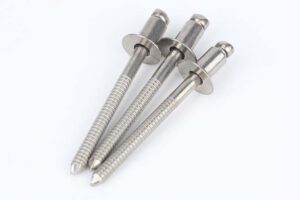
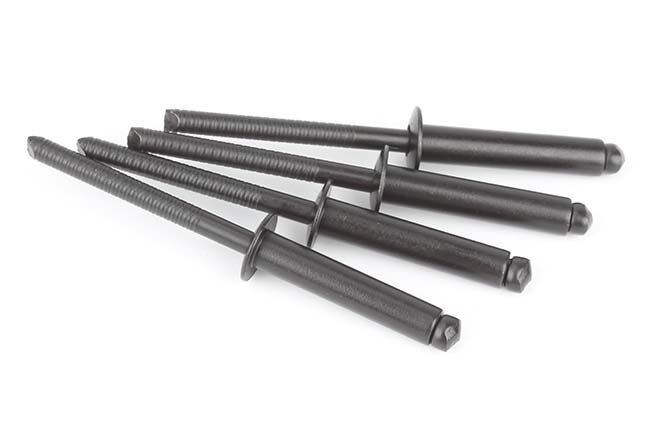
This black stainless steel open-end blind rivet combines a stainless steel rivet body, a dome head and a pull mandrel for installation from one accessible side. It is a practical fastening option for panels, enclosures, brackets and sheet metal assemblies where access behind the joint is limited.
The blackened finish helps visible rivet heads blend with dark-colored equipment and surrounding components. Once installed, the rivet forms a permanent mechanical connection for parts intended to remain assembled during service.
Open-End Blind Rivet: Product Specifications
| Product Type | Open-end blind rivet |
|---|---|
| Head Style | Dome head / protruding head |
| Rivet Body Material | Stainless steel; grade according to the confirmed specification |
| Mandrel Material | According to the confirmed product specification |
| Surface Finish | Blackened finish |
| Setting Mechanism | Break-pull mandrel |
| Installation Access | One accessible side of the joint |
| Size Specification | Rivet body diameter × under-head body length |
| Grip Selection | Combined material thickness within the specified grip range |
Single-Side Installation
A riveting tool grips and pulls the mandrel while supporting the visible rivet head. This action deforms the rivet body on the blind side, bringing the components together between the formed blind-side head and the original dome head.
The mandrel breaks during setting, completing the installation. This allows the connection to be made from the accessible face without holding a nut or supporting the rivet from behind.
The installation method is useful for enclosed sections, fabricated housings and assemblies where rear access becomes restricted after the components are positioned.
Open-End Body and Dome Head
The open-end tubular body is designed to deform during setting and secure the material stack. Correct rivet diameter, grip range and hole preparation help establish a properly formed connection.
The dome head provides a rounded visible profile and a bearing surface against the accessible component. It seats on the surface without requiring a countersunk hole, making it convenient for general panel and sheet assembly.
Where water or air sealing is required, specify the sealing performance as part of the complete joint design.
Stainless Steel Material
The stainless steel rivet body provides the corrosion-resistant alloy base for the connection. The appropriate grade depends on the operating environment, including moisture, cleaning chemicals and chloride exposure.
Rivet body and mandrel materials should be specified separately. Their combination affects setting behavior, mechanical performance and suitability for the service environment.
For project-specific applications, select the material combination together with the required shear and tensile performance, the materials being joined and the installation conditions.
Blackened Finish for Visible Assemblies
The blackened finish gives the rivet a dark appearance that coordinates with black panels, painted housings and equipment frames. This is particularly useful where the dome head remains visible in the finished product.
For appearance-sensitive assemblies, the required color and sheen can be defined using an approved sample. Final appearance depends on the surface preparation and finishing process.
Corrosion performance should be evaluated for the selected stainless steel grade and finished surface condition. Any specific blackening process, supplementary treatment, cleanliness or corrosion-test requirements should be included in the purchase specification.
Typical Applications
- Equipment enclosures: Housing panels and casing components with limited access behind the joint.
- Industrial machinery: Covers, guards and brackets requiring permanent attachment.
- Electrical cabinets: Sheet metal accessories and enclosure components requiring single-side installation.
- Lighting and display equipment: Dark housings and exposed fastening points where appearance matters.
- General metal fabrication: Panel-to-panel and bracket-to-panel connections suited to blind riveting.
Application suitability depends on joint loading, component thickness, hole geometry, material compatibility and environmental exposure.
Choosing the Correct Size and Grip Range
Specify the rivet body diameter and body length. Body length is measured beneath the head and excludes the projecting pull mandrel.
The grip range describes the combined thickness of the materials being joined. Select a rivet whose specified grip range covers the actual material stack, including any interlayers included in the assembly.
Use the recommended hole diameter and provide enough clearance behind the joint for the rivet body to form during setting. Head diameter and available tool access should also be checked against the assembly drawing.
Select a riveting tool rated for the chosen stainless steel rivet, with a suitable nosepiece, pulling capacity and stroke. A trial installation on representative components can confirm seating and joint formation before volume assembly.
Quality Support and Quotation
Flybear supports standard and project-specific requirements across its industrial rivet range. Inspection requirements can include material verification, body and head dimensions, mandrel condition and surface appearance evaluation.
Include any required mechanical-performance acceptance criteria and documentation during quotation. Learn more about our fastener quality control and inspection support.
To request a quotation, provide the rivet diameter, body length, required grip range, body and mandrel materials, quantity and any applicable drawing or standard. Include the materials being joined and any finish or inspection requirements.
Send your specifications or drawing for product review and quotation.