Bonded Seal vs Copper Washer: A Practical Selection Guide
Choosing a bonded seal vs copper washer starts with the connection design, fluid and operating conditions. Both can seal a static joint, but they achieve that seal differently. A bonded sealing washer uses an elastomer lip supported by a metal ring. A copper sealing washer relies on deformation of the copper under the specified clamping load.
That difference affects material selection, installation and replacement. Matching the hole diameter alone does not establish interchangeability. Engineers and buyers must also check the sealing face, washer thickness, fitting geometry and approved assembly procedure.
This guide from Flybear explains the practical differences and the information needed to specify a hydraulic sealing washer for purchasing or maintenance.
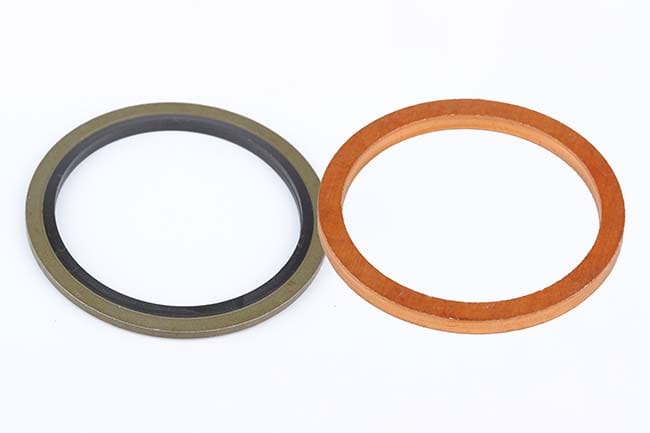
Bonded Seal vs Copper Washer: Key Differences
| Selection factor | Bonded sealing washer | Copper sealing washer |
|---|---|---|
| Construction | Metal carrier with a bonded elastomer sealing lip | For the solid type discussed here, a copper ring without an elastomer lip |
| Sealing action | Compression of the elastomer against the mating faces | Deformation of soft copper against the mating faces |
| Material specification | Carrier material, finish and exact elastomer compound | Copper grade, material condition and any specified surface treatment |
| Installation variables | Lip position, carrier support, face geometry and specified tightening | Seating load, copper condition, face geometry and specified tightening |
| Service limits | Depend on the complete seal design, compound and connection | Depend on the copper specification and complete connection |
| Replacement decision | Follow the equipment and seal manufacturer’s reuse criteria | Plan replacement after disturbance unless an approved procedure permits reuse |
Neither design has a universal pressure rating. A catalog rating for one size, material and installation cannot be transferred to another washer that looks similar.
How a Bonded Sealing Washer Works
A typical bonded seal has an elastomer lip bonded to the inside of a metal annulus. Tightening the connection compresses the lip against the sealing faces. The metal carrier supports the seal and limits elastomer compression in the intended installation.
The carrier does not make unlimited tightening acceptable. The fitting, threads and housing still have their own assembly limits. The seal must sit on the specified supporting surfaces, with the lip located correctly around the connection.
Standard and self-centering designs
Some bonded seals include an additional inner feature that helps locate the washer concentrically on the fastener or fitting. This can simplify handling and reduce positioning errors. A standard design may depend more on the mating geometry to locate the seal.
Confirm which version the drawing requires. A self-centering feature changes the internal profile, so the purchase description should identify the design or part number rather than simply request a “rubber metal washer.”
How a Copper Crush Washer Works
A solid copper crush washer seals through deformation of the metal under clamping load. Soft copper can conform to small surface irregularities, helping close leakage paths between the washer and the mating faces.
The material condition matters. A washer with the correct dimensions but an unsuitable hardness or temper may not seat as intended at the specified tightening condition. Where annealed copper is required, state that requirement on the drawing or purchase order.
This comparison concerns solid copper sealing rings. A copper-colored washer, a copper-plated steel washer and a hollow or filled crush gasket are different products. Color and the general term “crush washer” are insufficient identification.
For product references, review the sealing washer range, then confirm the detailed specification against the connection drawing.
Check the Fluid, Temperature and Pressure Together
Specify the actual fluid and elastomer compound
For a bonded seal, “rubber” is not a complete material specification. Commercial designs may use NBR, HNBR, FKM or EPDM, but these polymer families are not interchangeable. The exact compound must suit the fluid and service temperature.
Provide the fluid name or specification, concentration where relevant, and any cleaning agents the seal will encounter. “Hydraulic oil” may leave important details unresolved. If the equipment changes fluids during service, include those exposures in the review.
A copper washer also needs a compatibility check. Removing the elastomer does not establish that copper is suitable for every chemical environment. Identify both the process fluid and the materials of the surrounding components.
Use service conditions rather than a single maximum number
Record minimum temperature, continuous operating temperature and short-duration peaks. Include cold starts and repeated heating and cooling when they matter to the application.
Similarly, distinguish normal working pressure from pressure spikes, proof testing and burst testing. A published burst value is not a working-pressure allowance. Ask for the conditions behind any performance claim, including washer size, mating geometry and assembly method.
If an approved elastomer cannot meet the service conditions, an all-metal sealing arrangement may warrant evaluation. That decision still requires confirmation of the copper material and the joint design; it is not an automatic substitution.
Dimensions and Sealing Faces Determine Fit
A nominal thread designation identifies only part of the connection. Different sealing systems can surround the same thread size while requiring different shoulders, recesses or contact faces.
- Inside diameter: Check clearance around the thread or shank and the location of any elastomer centering feature.
- Outside diameter: Confirm that the sealing surface supports the required contact area.
- Thickness: Check the specified free dimensions and any requirements for the assembled condition.
- Shoulders and chamfers: Confirm that these features do not interrupt the intended sealing contact.
- Face condition: Specify the required finish, flatness and acceptable defects.
For a bonded washer, distinguish metal carrier thickness from overall lip height. For a copper washer, confirm whether a thickness requirement refers to the supplied part or a defined assembled condition.
A substitution should include a review of thread engagement and the assembled position of the fitting. Changing washer thickness can change both. A photograph or a measurement from an already compressed seal may not capture the original requirements.
How to Specify DIN 7603 Sealing Rings
DIN 7603:2001-05 is a current standard for sealing rings. Type A flat sealing rings are offered in copper and other materials. The standard designation therefore needs the applicable type and material details.
For a copper ring, identify the required standard edition, form, size, material and condition. Verify dimensions and tolerances against the applicable requirements rather than copying a generic online size chart.
For a bonded seal, use the applicable product specification, controlled drawing or manufacturer’s part number. A DIN reference associated with a copper washer does not establish that a bonded washer is equivalent.
Where standard catalog geometry does not suit the connection, submit the mating details for a custom component review. Define the seal profile and acceptance requirements before comparing quotations.
Which Option Fits the Application?
| Application situation | Practical selection approach |
|---|---|
| Existing hydraulic port specifies a bonded seal | Match the approved profile, carrier and compound. Review changes through the equipment’s engineering process. |
| Drain plug or banjo connection specifies copper sealing rings | Use the specified copper rings, replacement procedure and tightening instructions. |
| New pump or valve connection | Evaluate both concepts against the port geometry, fluid, assembly constraints and validation requirements. |
| Frequent maintenance access | Include seal replacement, identification and inspection in the service procedure. |
| Persistent leakage with the specified seal | Investigate the joint condition and installation before selecting a different washer. |
Compare the cost of an installed, validated connection. Include assembly effort, replacement parts, inspection and the consequences of rework. Unit price alone provides little guidance if the alternatives require different installation controls.
Installation and Replacement Considerations
Use the tightening procedure approved for the particular fitting and seal combination. A general bolt torque chart does not establish the seating requirement of a sealing washer.
Before assembly, inspect the contact faces and remove contamination using the specified cleaning method. Check for burrs, scratches, damaged threads and remnants of the previous seal. Confirm that the new washer is the correct part and sits in its intended position.
Do not add washers to compensate for an incorrect thickness or fitting position unless the approved assembly expressly requires that arrangement. Extra interfaces change the sealing arrangement and require engineering review.
For routine maintenance planning, include fresh copper crush washers where the service procedure requires replacement. For bonded seals, follow the stated reuse policy and inspection criteria; a washer that appears intact may still have an unacceptable lip or bond condition.
If the connection leaks
Check part identity, seating geometry, face damage, material compatibility and assembly records. Avoid treating additional tightening as the default remedy. Establish why the seal failed, then correct the cause and verify the repaired connection using the equipment’s test procedure.
Inspection Requirements for Purchasing
Separate incoming component inspection from validation of the assembled joint. Dimensions and material records can confirm conformity to an order; they do not independently prove leak performance in the customer’s equipment.
For bonded seals, define checks for carrier dimensions, lip defects, bond condition and compound identification. For copper washers, define dimensional, surface and material-condition requirements, including hardness verification where specified.
Agree on sampling, traceability and documentation before production. Review the available quality control and inspection information and identify which reports the project requires.
RFQ Checklist for a Sealing Washer
An industrial washer supplier can assess the requirement more accurately when the enquiry includes:
- Product identity: Bonded seal or solid copper washer, drawing revision, applicable standard and existing part number.
- Geometry: Inside diameter, outside diameter, thickness, tolerances and relevant mating details.
- Materials: Copper grade and condition, or carrier material, finish, elastomer compound and specified hardness.
- Service: Fluid, temperature range, working pressure and relevant pressure or temperature cycles.
- Assembly: Fitting type, sealing-face requirements and approved tightening procedure.
- Acceptance: Inspection criteria, traceability, certificates and any agreed functional testing.
- Supply details: Quantity, packaging, identification requirements and requested delivery schedule.
If the original specification is incomplete, identify the unknowns explicitly. Keep a proposed equivalent separate from an approved replacement until the design review is complete.
Frequently Asked Questions
Is a bonded seal better than a copper washer?
Suitability depends on the connection. A bonded seal provides an elastomer sealing interface supported by metal; a copper washer provides a deformable metal interface. Choose the design qualified for the geometry, fluid and operating conditions.
Can I replace a copper washer with a bonded seal of the same size?
Matching nominal dimensions is insufficient. Confirm the sealing profile, supporting faces, thickness, compound compatibility and tightening requirements. The replacement needs approval for the actual connection.
Does DIN 7603 identify a bonded sealing washer?
A DIN 7603 reference alone does not establish a bonded seal specification. Identify the required sealing-ring form and material, and use a controlled product specification or drawing for the bonded design.
Can copper crush washers be reused?
Follow the equipment manufacturer’s service instructions. Plan replacement where specified because the washer deforms during installation. Reuse or reconditioning should require an approved procedure rather than a visual judgment alone.
What pressure can a hydraulic sealing washer withstand?
There is no single rating for the category. Request a rating applicable to the exact washer, materials, mating connection and assembly conditions. Keep working-pressure requirements separate from proof or burst-test values.
Specify the Complete Connection
A useful bonded seal vs copper washer comparison connects the sealing method to the actual joint. Confirm materials, geometry, operating conditions and installation requirements together, then validate the selected arrangement.
To request a quotation, send Flybear your sealing washer specification with the drawing or standard, size, material, finish, quantity, application and required inspection documents. Include the mating connection details when evaluating a replacement or a new design.