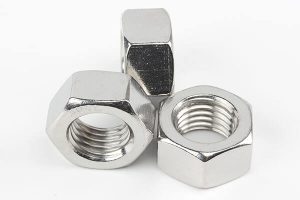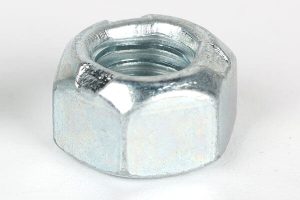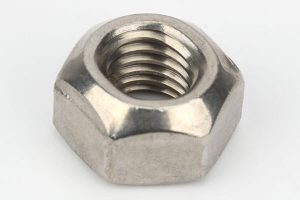
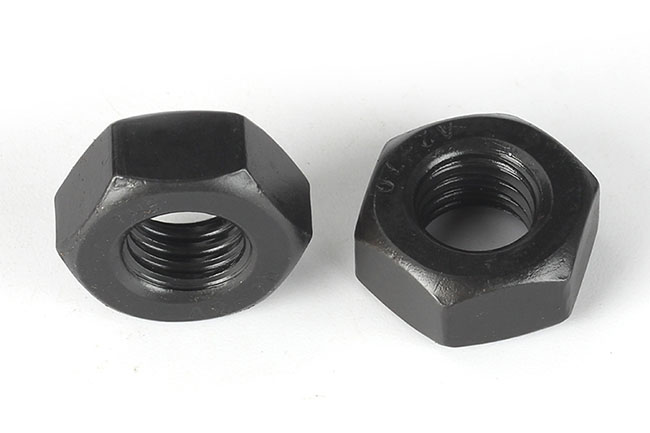
This stainless steel black oxide hex nut combines a corrosion-resistant stainless steel base material with a black surface finish and a conventional six-sided body. Referenced to DIN 934, it is used with matching metric bolts, screws and studs to secure machinery components, equipment frames, brackets and enclosures.
The black appearance helps coordinate visible fastening points with dark-colored equipment and surrounding hardware. Its external hexagon provides access for standard spanners and sockets, making it practical for assembly, adjustment and maintenance.
Black Oxide Hex Nut: Product Specifications
| Product Type | Hexagon nut |
|---|---|
| Material | Stainless steel; grade according to the confirmed specification |
| Surface Finish | Black oxide |
| Dimensional Reference | DIN 934, legacy designation |
| Thread Type | Metric internal thread |
| Drive Style | External hexagon |
| Mating Components | Bolts, screws and studs with matching thread dimensions |
Stainless Steel Material
Stainless steel provides the corrosion-resistant alloy base for this nut. It is a practical material choice for equipment assemblies where exposure conditions call for stainless steel and the finished product requires black hardware.
The appropriate stainless steel grade depends on the operating environment, including moisture, cleaning chemicals and chloride exposure. Surface condition and joint design also influence corrosion performance, particularly where moisture or deposits can remain around the threads and bearing surfaces.
For load-bearing connections, the nut’s specified mechanical properties should be matched to the bolt or stud and the required clamping load. Material grade, nut dimensions and mechanical requirements should be defined together for the intended application.
Black Oxide Finish and Its Benefits
Black oxide is a thin conversion finish that produces a dark surface with minimal dimensional change. This makes it useful for threaded components where appearance and dimensional control both matter.
On this hex nut, the black finish helps exposed hardware blend with painted frames, dark housings and other black fasteners. It is particularly useful for visible assemblies where bright metallic nuts would interrupt the overall appearance.
The final color, sheen and corrosion performance depend on surface preparation, the blackening process and any supplementary sealant. For appearance-sensitive projects, an approved sample can establish the required black tone and finish consistency. Cleanliness, sealing and lubrication requirements can also be defined in the purchase specification.
Hexagonal Body for Assembly and Maintenance
The six external flats allow tightening and removal using a correctly sized spanner or socket. This familiar geometry supports straightforward installation in general machinery and equipment assemblies where adequate tool clearance is available.
When tightened onto a matching bolt or stud, the nut bears against the component or washer to develop the required clamping force. The removable threaded connection allows components to be accessed during inspection, adjustment or replacement.
A suitable washer can be specified where the assembly requires a larger bearing area or protection of the component surface. Nut, washer and bolt materials and finishes should be selected as part of the complete fastening arrangement.
Typical Applications
- Industrial machinery: Covers, mounting brackets, equipment accessories and general bolted connections.
- Automation equipment: Machine frames, peripheral assemblies and component mounting points.
- Electrical enclosures: Cabinet accessories, mounting plates and supporting hardware.
- Instrumentation: Housings, support brackets and equipment mounting assemblies.
- Lighting and display equipment: Visible connections requiring a coordinated black appearance.
Application suitability depends on the selected stainless steel grade, mechanical requirements, mating fasteners and service environment.
Thread Matching and Installation
Specify the nominal metric thread diameter and pitch to ensure correct engagement with the mating bolt or stud. Nut height and width across flats should be checked where bearing capacity, available space or tool access is important.
DIN 934 is a legacy designation. When a project specifies an ISO nut standard, confirm the dimensional and mechanical requirements against that standard or the approved drawing.
Start the nut by hand to check thread engagement, then tighten using the appropriate tool. Tightening settings should reflect the fastener dimensions, specified mechanical properties, lubrication condition and joint design.
Quality Support and Quotation
Flybear supports standard and project-specific requirements across its hex nut range. Inspection requirements can include material verification, dimensional checks, internal thread gauging and surface appearance evaluation.
For projects with defined acceptance criteria, include the required inspection scope and documentation during quotation. Learn more about our fastener quality control and inspection support.
To request a quotation, provide the thread diameter, pitch, stainless steel grade, quantity and applicable standard or drawing. Include any mechanical-property requirements, finish samples, supplementary treatment requirements and inspection documents.
Send your specifications or drawing for product review and quotation.